

The Great Ugandan Disconnect: When Manifestos Meet the Dusty Campaign Trail
In the vibrant, often chaotic, theatre of Ugandan politics, a new act is beginning. As the 2026 general elections loom, presidential hopefuls are crisscrossing the nation, from the bustling streets of Kampala to the remote villages of Karamoja, selling visions of a brighter future. Their weapon of choice? The manifesto—a voluminous document promising everything from economic transformation to universal prosperity. But in a nation where the ruling party has been in power for nearly two generations, and where the campaign trail is littered with the broken promises of elections past, a pressing question emerges: Are these manifestos a genuine blueprint for development, or merely elaborate works of fiction?
As Uganda stands at a critical juncture ahead of the 2026 general elections, a profound disconnect defines its political landscape. This in-depth analysis dissects the chasm between the glossy, voluminous manifestos of parties like the National Resistance Movement (NRM), National Unity Platform (NUP), and Forum for Democratic Change (FDC), and the gritty realities of a campaign trail marked by police intimidation, vote-buying, and empty spectacle. We examine the NRM’s strategy of “protecting the gains” through the politics of survivalism, the opposition’s detailed yet trust-deficient policy pitches, and the fundamental crisis of leadership and accountability that renders many pledges meaningless. From the bloated state bureaucracy and the ghost of infrastructure promises like the Standard Gauge Railway to the suffocation of civic space and the commercialisation of the vote itself, this exploration questions whether 2026 will be a genuine policy debate or a referendum on the very soul of a nation trapped between a rock and a hard place. Join us as we unravel the threads of promise and performance to understand the true battle for Uganda’s future. leftist in writing: 
Twenty Key Insights into Uganda’s Political Crossroads
The Pot that Does Not Cook: Dissecting the NRM’s “Reincarnated” Manifesto
In the vibrant tapestry of Ugandan politics, a familiar scene unfolds with each election cycle. The National Resistance Movement (NRM) unveils its latest manifesto—a weighty, carefully branded document promising a future transformed. This season, it is titled “Protecting the Gains.” Yet, to a growing number of Ugandans, from the intellectual in Kamwokya to the farmer in Kumi, this new pledge bears a hauntingly familiar face. It is what critics aptly term a “reincarnated” manifesto: the same old spirit of past promises, merely inhabiting a new body with a fresh cover.
This is not merely political opposition rhetoric; it is a diagnosis of a political culture that has prioritised presentation over profound change. The phenomenon can be understood through several key facets:
1. The Art of Political Repackaging
The core criticism lies in the perception that the NRM, after nearly four decades in power, is not proposing a new journey but is instead selling a new map for the same well-trodden path. The 185-page “Protecting the Gains” document is seen not as a blueprint for a new house, but as a fresh coat of paint on a structure whose foundations many feel are cracking. The central pillars—peace, security, infrastructure, and wealth creation—are not new. They are the same pillars that have been presented, in various configurations, for multiple election cycles. The argument is that the party has resorted to what one might call “political synonymy”—swapping phrases like “Securing the Future” for “Protecting the Gains” to create an illusion of progress and renewal, while the substantive agenda remains static.2. “Old Wine in New Bottles”
A well-known adage captures perfectly this sentiment: “You cannot put old wine in new bottles and call it a new vintage.” The “wine”—the core policies and approaches—has remained largely unchanged. Programmes like Operation Wealth Creation are repackaged or expanded into initiatives like the Parish Development Model, but the underlying critique of top-down, handout-based economics persists. The “new bottles”—the sleek graphic design, the voluminous page count, the new slogan—are designed to distract from the taste of a vintage that has, for many, failed to mature. It is a theatrical performance where the script is decades old, but the costumes are new.
3. The Theatrics of Progress Versus The Reality of Stasis
For the manifesto to be a “reincarnation,” it must point to past lives. This is done by anchoring its narrative of success not in the immediate, accountable five-year term, but in a long arc stretching back to 1986. By comparing Uganda today to the nation emerging from the turmoil of the 1980s, any marginal improvement can be framed as a monumental “gain.” This cleverly sidesteps more pressing, contemporary questions. Why, after 40 years, do we still speak of “fighting corruption” as a future goal rather than a concluded battle? Why does the promise of a functional Standard Gauge Railway or enduring national roads feel like a recurring dream? The manifesto, in this light, becomes a document that celebrates past battles won to avoid scrutiny of the present war being lost against stagnation.4. A Patriotic Plea for a New Script
This critique is not born of mere cynicism; it is a revolutionary and nationalistic cry for the nation to break free from this cycle. True patriotism is not blind loyalty to a single narrative, but a passionate demand for one’s country to live up to its boundless potential. Uganda is a land teeming with the energy of its youth, the wisdom of its elders, and the riches of its soil. To be presented with a “reincarnated” manifesto is to be told that this dynamic, ever-evolving nation must be content with a recycled vision. It is an insult to the innovative spirit of the Ugandan people.The revolutionary call, therefore, is not for chaos, but for genesis over reincarnation. It is a demand for a political discourse that is as vibrant, creative, and forward-looking as the nation itself. It asks: when will we stop repackaging the past and instead dare to draft an entirely new script—one written with the ink of fresh ideas, bold accountability, and an unwavering belief that Uganda deserves more than a perpetual political groundhog day? The future of the Pearl of Africa depends not on protecting the gains of yesterday, but on having the courage to sow entirely new fields for tomorrow.
The Fishing Hook and the Hungry Fish: The Politics of Survivalism in Uganda
In the grand, vibrant market of Ugandan politics, a profound and unsettling transaction takes place every election cycle. It is not an exchange of visionary ideas for national renewal, but a more immediate, more desperate trade. The ruling National Resistance Movement (NRM) has, over its long incumbency, perfected a strategy that political analysts term the “Politics of Survivalism.” This is the deliberate and tactical targeting of a populace’s most basic, immediate needs, not to empower them, but to ensure their continued dependence—and, by extension, their vote.
This approach is not merely a policy platform; it is a calculated political calculus that understands a fundamental, human truth, perfectly captured in the adage: “A man who is drowning will clutch at a snake.” When a population is consumed by the daily struggle for survival—for the next meal, the next school term, the next medical bill—its capacity to envision and demand long-term, transformative change is severely diminished. It will grasp at any immediate lifeline, even one that may ultimately possess a venomous sting.
The mechanics of this strategy can be broken down into three core components:
1. The Bait and the Hook: From Policy to Transaction
Initiatives like the Parish Development Model (PDM) are paraded as the government’s flagship for poverty eradication. However, when viewed through the lens of survivalism, their function appears more tactical than transformative. The model, which involves direct cash injections into parish-level savings groups, operates as the perfect “hook.”
The Bait: The immediate, tangible promise of capital—a million shillings, a promise of seeds, or a few iron sheets for a roof. In a nation where countless citizens navigate the informal economy day-by-day, this is not a development strategy; it is a survival stimulus.
The Hook: The unspoken political contract. The distribution of these resources, often timed around election cycles and managed through local party structures, creates a powerful, clientelistic bond. The message, though rarely stated explicitly, is clear: This sustenance comes from the Movement. Its continuity depends on your gratitude at the ballot box. It transforms the citizen from a rights-bearing stakeholder into a dependent client, and the state from a duty-bound institution into a patron.
2. The Cycle of Strategic Dependency
A transformative policy would aim to make itself obsolete—to equip people with the skills, infrastructure, and economic environment to graduate from dependency. The politics of survivalism, conversely, requires that dependency be managed, not solved.
The revolutionary critique here is that this system is designed to create a permanent class of supplicants, not a generation of innovators and entrepreneurs. By focusing on handouts that address symptoms (a lack of immediate cash) rather than causes (a lack of industrial jobs, exploitative agricultural value chains, and crippling market access issues), the system ensures the “drowning man” never quite learns to swim. He is merely kept afloat just long enough to be grateful, and to need another lifeline when the next election comes around. This creates a vicious cycle where national potential is sacrificed for short-term political security.3. A Patriotic Call for a Liberation of Ambition
To critique this system is not to scorn the struggling Ugandan who accepts the help. It is a revolutionary and deeply nationalistic act to demand better for one’s compatriots. True patriotism is believing that the people of Uganda—from the fertile hills of Kigezi to the vast plains of Karamoja—are capable of so much more than perpetual survival.
The politics of survivalism is an insult to the ingenuity of the Ugandan spirit. It is a philosophy that tells the youth that their future is a bag of maize flour, not an industrial park or a tech hub. It tells the farmer that his destiny is a handout, not ownership of a fully integrated agricultural value chain. It is a small-minded vision for a nation of boundless potential.
The radical alternative, therefore, is not a different set of handouts, but a complete rejection of the survivalist paradigm itself. It is a call for a political revolution that shifts the entire narrative—from one of managing poverty to one of unleashing national prosperity. It demands a transition from a government that acts as a patron, doling out meagre rations to keep the people quiet, to one that acts as a visionary, building the railways, providing stable electricity, ensuring quality education, and creating a fair economic playing field that allows every Ugandan to become the architect of their own destiny.
The ultimate liberation for Uganda is not just political; it is economic and psychological. It is to move from a nation of individuals clutching at snakes to a nation of sovereign citizens, standing on the solid ground of their own productivity and self-reliance, building a future that is truly, and profoundly, their own.
The Strong Roof and the Fearful Home: The Chasm Between Security and Peace in Uganda
In the heart of every Ugandan, from the bustling trading centres of Kikuubo to the serene shores of Lake Bunyonyi, lies a fundamental desire: to live a life of tranquillity, free from fear and full of promise. The National Resistance Movement (NRM) government rightly points to a singular, monumental achievement in this regard: national security. They have built a strong roof over the nation, one that has largely protected the country from the storms of interstate conflict and the torrential rains of large-scale, organised rebel insurgencies that once plagued our land. For this, they receive due credit. A nation cannot function if it is perpetually at war with itself or its neighbours.
However, a crucial and revolutionary distinction must be made, one that separates the existence of a roof from the quality of life for those dwelling beneath it. This is the profound difference between national security and individual peace.
One is a structural achievement; the other is the lived experience of the citizen. And in today’s Uganda, a disturbing paradox has emerged: the roof stands strong, but the house is filled with a cold draught of apprehension.
1. The Architecture of National Security
National security, as presented by the state, is macro-level stability. It is the absence of war. It is the ability for goods to move on highways without the threat of ambush. It is the deployment of the army to border regions to deter foreign incursions. It is the visible presence of security apparatuses—the police, the military—as symbols of state control and order. This is the “peace” that is often proclaimed from podiums and printed in manifestos. It is a statistic, a geopolitical fact. It is the assurance that the nation-state, as an entity, is not under immediate threat of collapse.
2. The Erosion of Individual Peace
Yet, true peace is not merely the absence of war; it is the presence of justice, the assurance of safety, and the freedom to breathe easily in one’s own home. This is where the architecture fails the people. Individual peace is undermined by a pervasive climate of fear, a climate cultivated by several chilling realities:
The Weaponisation of the Law: When the very laws designed to protect the citizen are perceived as tools for intimidation—be it through the misuse of charges of incitement to violence or the abusive application of public order management—the individual’s peace is shattered. The fear of a midnight knock on the door, of being detained without charge, of facing a politicised judicial process, is a toxin that poisons the soul of a nation.
The Spectre of Unaccountable Force: The heavy-handed dispersal of gatherings, the documented cases of enforced disappearances, and the alleged torture of individuals in safe houses, create a society where people are afraid to assemble, to speak freely, or to challenge prevailing orthodoxies. This is not peace; it is the quiet of the graveyard, a silence enforced by dread.
The Psychological Cage: This environment constructs an invisible prison. As the adage goes, “A bird that lives in a cage thinks flying is an illness.” A generation is being conditioned to believe that to question, to dissent, to demand accountability, is a dangerous and unnatural act. This psychological captivity, where self-censorship becomes a survival instinct, is the absolute antithesis of peace.
3. A Patriotic Demand for Wholeness
To highlight this distinction is not to be ungrateful for the roof overhead. It is a revolutionary and deeply nationalistic act to demand that the house be made a home. True patriotism is believing that Uganda deserves more than just the basic, structural assurance against chaos; it deserves a holistic peace that nourishes every single citizen.
A nation is not truly secure if its mothers fear for their sons who speak out. A country is not at peace if its entrepreneurs must navigate a labyrinth of patronage and intimidation to succeed. A land is not tranquil if its artists and writers must clip their own wings for fear of reprisal.
The call, therefore, is for a new social contract—one that understands that national security is the floor, not the ceiling. The ultimate goal must be a sovereign peace, a peace that is rooted not in fear, but in justice, dignity, and the unshakeable freedom of the individual. We must strive for a Uganda where the strength of the state is measured not by the silence it imposes, but by the confident, vibrant, and unafraid voices of its people, living in genuine and profound peace.The Forest of Overseers and the Barren Field: The Paralysing Bloat of the Ugandan State
In the quest to build a modern nation, a fundamental principle of governance is that a state should serve its people, not suffocate them. Yet, in Uganda, a monstrous and paradoxical creation has taken root: a governmental Leviathan so vast and convoluted that it now actively hinders the very progress it was designed to foster. This is the crisis of the bloated state, a system where the architecture of oversight has become so inflated that it dwarfs the foundation of service delivery.
The statistics are as staggering as they are illogical: nearly three million elective posts. To comprehend this figure is to imagine a scenario where, for every handful of Ugandans engaged in the productive work of healing, teaching, or building, there stands a small committee elected to monitor, supervise, and report on their efforts. We have meticulously cultivated a vast forest of overseers, but the fields of national progress lie increasingly barren.
This predicament can be understood through its three most corrosive consequences:
1. The Tyranny of the Monitor over the Producer
The relationship between the civil servant—the teacher, the nurse, the engineer—and the political office-holder has been inverted. The 367,000 civil servants who form the backbone of public service are now outnumbered by a political class of millions. This creates a system not of facilitation, but of perpetual inspection. The teacher in a primary school in Lira is answerable to a hierarchy of local councillors, who are themselves answerable to sub-county and district officials, all the way up. The energy and resources that should be channeled into purchasing textbooks and repairing classrooms are instead consumed by writing reports for, and attending meetings with, an endless procession of monitors. This embodies the adage, “Too many cooks spoil the broth.” We have a nation where the cooks now spend all their time in meetings about cooking, while the pot remains empty.2. The Systemic Cultivation of Red Tape and Corruption
This labyrinthine structure is not merely inefficient; it is a meticulously engineered ecosystem for corruption and patronage. Every new district, every new constituency, and every new political office creates fresh nodes for the allocation of resources—for salaries, allowances, vehicles, and offices. This diverts colossal sums of the national budget away from direct service delivery and into the self-sustaining machinery of political administration.The revolutionary critique here is that this is not an accident; it is a strategy. A populace entangled in red tape, chasing a signature from one office to the next, is a populace disempowered and easier to manage. Furthermore, this bloat serves as a vast system of patronage, where loyalists are rewarded with political positions, cementing a culture where loyalty to the system is valued far more than competence in service. It is a grand, national-scale clientelism, funded by the very taxpayers it fails to serve.
3. A Patriotic Call for a Sovereignty of Service
To demand the slimming of this bloated state is not a call for less governance; it is a revolutionary and nationalistic demand for better governance. It is a call for a Sovereignty of Service, where the citizen is the ultimate master and the state is a lean, efficient, and accountable servant.True patriotism is believing that Uganda’s immense potential is being strangled by this self-created bureaucracy. The resources spent on maintaining two million monitors could instead build hospitals, equip universities, and power industries. The human capital wasted in redundant administrative roles could be unleashed to innovate, produce, and drive the nation forward.
We must therefore wage a peaceful, intellectual revolution against this bloat. The goal is to dismantle the forest of overseers and replant the field of productivity. It is to champion a radical devolution of power and resources not to another layer of politicians, but directly to the communities, the schools, the health centres, and the productive sectors. It is to envision a Uganda where a citizen interacts with a responsive, automated system to get a permit, not a dozen different office-holders; where a teacher is esteemed above a local councillor; where the budget for a new road is not swallowed by the allowances for the committee formed to oversee its non-construction.
The liberation of Uganda’s potential hinges on this decongestion. We must transform the state from a suffocating Leviathan into a sleek vessel, capable of navigating the fierce currents of the 21st century and delivering its people to the shores of prosperity they so richly deserve.
The Architect’s Blueprint vs. The Painter’s Brochure: The Substance of the Opposition’s Pitch
In the grand marketplace of political ideas, where the incumbent sells the repackaged past, a different stall is being set up by the collective opposition. Parties like the Alliance for National Transformation (ANT), the Forum for Democratic Change (FDC), and the National Unity Platform (NUP) are attempting a fundamentally different sales pitch. Their manifestos are not merely volumes of aspiration; they are presented as detailed blueprints, replete with measurable targets, specific timelines, and costed policies. This shift from vague promise to quantifiable plan represents a significant evolution in Uganda’s political discourse, framing the 2026 election as a choice between a comforting fantasy and a difficult, yet tangible, reality.
This policy-centric approach can be dissected through its three most compelling facets:
1. The Precision of Promise: From “Development” to Data Points
The key differentiator lies in the move from the abstract to the concrete. Where the ruling party speaks in grand, unassailable themes like “wealth creation,” the opposition is attempting to drill down to the specifics. Their documents are noted for containing quantifiable targets:Pledging to raise industrial contribution to GDP from 20% to 30% by a specific year.
Committing to create a defined number of jobs for the youth, often targeting a 60% reduction in youth unemployment.
Vowing to recover a specific sum—the oft-cited 10 trillion shillings—lost annually to corruption.
This approach functions as a tangible contract with the citizenry. It is the difference between an artist’s beautiful but abstract painting of a house and an architect’s detailed blueprint, complete with dimensions, materials, and a bill of quantities. The former inspires a feeling; the latter enables accountability. As the adage goes, “The devil is in the details,” but so too is the proof of genuine intent. By providing details, the opposition is offering voters a yardstick with which to measure them, a calculated risk that signals a confidence in their own plans and a respect for the intelligence of the electorate.
2. The Anatomy of Fiscal Rectitude: A War on Waste
A central pillar of this policy pitch is a direct assault on the NRM’s most glaring failures: fiscal indiscipline and soaring public debt. The opposition narratives are unified in their condemnation of a system that operates on a cascade of supplementary budgets, rendering the national budget a meaningless ritual.Their proposals are revolutionary in their clarity:
Slaying the Leviathan: A commitment to cut the bloated public administration, reducing the number of districts and political offices, thereby freeing up billions for direct service delivery.
Debt Renegotiation: A pledge to audit and renegotiate “unfair and expensive loans” that have mortgaged the nation’s future.
Broadening the Tax Base: A focus on formalising the economy and making taxation more equitable, rather than squeezing existing taxpayers dry.
This is not just an economic policy; it is a moral stance. It frames the current government’s fiscal management not as incompetence, but as a betrayal of the national trust, a deliberate impoverishment of the state for the benefit of a few. The opposition presents itself as the responsible custodian, ready to clean the Augean stables of the national treasury.
3. The Nationalistic Imperative: A Call to Build, Not Beg
Underpinning these technical proposals is a powerful, revolutionary, and deeply nationalistic narrative. It is a call for Uganda’s sovereign awakening. The opposition’s pitch argues that the politics of survivalism and the economics of debt have reduced the nation to a beggar in the international community, its policies dictated by foreign creditors and its resources sold for a pittance.The promise of a diversified, industrialised economy is thus framed as an act of national liberation. It is a vision of a Uganda that is not merely a supplier of raw coffee beans and unprocessed minerals, but a manufacturer of finished goods. It is a vision where Ugandan engineers, not foreign contractors, maintain the railways, and where Ugandan capital funds Ugandan enterprise.This is the ultimate contrast. It is a choice between a government that gives you a fish, fostering a culture of dependency, and a leadership that promises to drain the swamp, teach you to build a net, and restore the river’s health so you can feed yourself and your nation for a lifetime. The opposition’s policy pitch, in its most potent form, is an invitation to participate in a national rebirth—to exchange the fragile security of the handout for the sovereign dignity of self-reliance, and to build a Uganda that is not merely secure, but truly prosperous and master of its own destiny.
The Beautiful Bus with a Broken Engine: The Trust Deficit Plaguing Uganda’s Opposition
The political opposition in Uganda presents a compelling, even seductive, vision. Their manifestos are not mere pamphlets; they are detailed blueprints for a different nation, promising a radical departure from the politics of survival and stagnation. They speak the language of data, of industrialisation, of fiscal responsibility—a symphony of sensible governance that resonates with a populace weary of empty slogans. Yet, hanging over this polished presentation is a single, deafening question from the very people they seek to liberate: “After all we have seen, can we truly trust you with the keys?”
This is not the scepticism of cynics, but the warranted caution of a people who have been promised liberation before, only to be delivered into new forms of servitude. The trust deficit is a chasm forged in the fire of the opposition’s own internal contradictions and a political history that has taught Ugandans to be wary of all who seek power.
This crisis of confidence stems from three fundamental sources:
1. The Contradiction of the ‘Democratic’ Autocrat
A party that campaigns on the platform of democratic restoration and accountable governance immediately forfeits its moral authority when its internal structures are shrouded in secrecy, centralised control, and the suppression of dissent. The very same parties that rightly condemn the NRM’s monolithic structure often replicate it in microcosm.When a seasoned, outspoken legislator is unceremoniously dropped in favour of a politically novice musician, the message sent is not one of meritocracy, but of patronage and blind loyalty. When internal debates are stifled and decisions are handed down from a small, unelected clique, it reveals a profound hypocrisy. It demonstrates that the thirst for power is not to serve the people, but to replace the current occupants of the throne. As the adage goes, “A leaking pot cannot hold water.” How can a political organisation that cannot manage its own internal affairs without acrimony and exclusion be trusted to manage the complex, leaking vessel of the Ugandan state? The public sees the beautiful, newly painted bus, but they have grave doubts about the competence and intentions of the drivers fighting over the wheel.2. The Spectre of Recycled Personnel and Recycled Politics
The trust deficit is deepened by the uncomfortable reality of political recycling. The faces that appear in opposition ranks are often the same figures who were once integral parts of the very system they now decry. They are former ministers, advisors, and beneficiaries of the NRM structure who, having fallen out of favour or failed to achieve their personal ambitions, now posture as champions of change.To the ordinary Ugandan, this creates a terrifying question: are we being offered a genuine alternative, or merely a change of management for the same exploitative enterprise? The fear is that an opposition victory would not be a revolution, but a reshuffling of the deck—a change of the guard, not of the guard’s mentality. The suspicion is that the blueprints for reform are merely a Trojan Horse, behind which lie the same old desires for access to state resources and the privileges of power. The struggle begins to look less like a principled fight for liberation and more like a contest between two wings of the ruling class for control over the national treasury.
3. A Radical Demand for a New Political Genesis
This profound distrust is not an endpoint; it is the most potent starting point for a truly radical and leftist re-imagining of power itself. The failure of the established opposition is not a tragedy, but a revelation. It reveals that the problem is not merely one of personnel, but of the entire structure of representative politics and the state itself.The scepticism of the masses is, in fact, a healthy and correct instinct. It is an understanding that power, in its current concentrated form, corrupts absolutely, regardless of the colour of the flag it flies. Therefore, the radical demand is not for a better set of rulers, but for the dissolution of the very idea that a small group should rule over the many.
The answer to the trust deficit is not to plead for faith in new leaders, but to build power from the ground up, in a way that makes such blind faith unnecessary. It is to champion a system where:
Power is Horizontal, Not Vertical: Where decisions are made in village assemblies, workers’ councils, and community cooperatives, not in distant party headquarters or Parliament.
Recallable Delegates Replace Career Politicians: Where those tasked with administrative duties can be instantly recalled by their communities if they betray their mandate, ensuring that power remains with the people, not with a political class.
The Community Controls the Resources: Where the wealth of the land—from the oil in the Albertine Graben to the fertile soils of Busoga—is managed and enjoyed collectively by the communities that inhabit it, breaking the state’s monopoly on patronage.
The opposition’s trust deficit is their greatest weakness, but it is the people’s greatest strength. It is a clear sign that Ugandans are not easily fooled. The path forward is to reject the false choice between a known dictator and a potential one. It is to build a different kind of power altogether—one rooted in mutual aid, direct action, and the unshakeable sovereignty of the people over their own lives and labour.
The future of Uganda does not lie in trusting a new set of masters, but in trusting ourselves to build a world where masters are no longer needed.The Master Builder’s Illusion: Why Uganda’s Crisis is One of Leadership, Not Blueprints
In the earnest discussions about Uganda’s future, a dangerous illusion persists: the belief that the nation’s primary ailment is a lack of sophisticated plans. We meticulously dissect manifestos, compare policy proposals, and debate economic models as if we are architects squabbling over blueprints for a magnificent new city. Yet, this entire debate wilfully ignores the most glaring, foundational truth: We are not standing on an empty plot of land. We are standing in the midst of a dilapidated, half-built structure, plagued by faulty workmanship and pilfered materials, all under the direction of the same foreman for nearly four decades. The problem is not the design on paper; it is the profound and deep-seated crisis of leadership and accountability in the foreman’s office.
This argument posits that all manifestos, regardless of their intellectual elegance, are rendered meaningless when placed in the hands of a political class that has demonstrated a consistent disregard for the public good. The crisis is not one of ideas, but of character; not of vision, but of virtue.
This leadership deficit manifests in three catastrophic ways:
1. The Cult of the Individual Over the Collective
True leadership is meant to be a stewardship, a temporary responsibility held in trust for the people. In Uganda, it has been transformed into a form of ownership. The state is treated as a private estate, its resources a personal treasury, and its citizens as tenants on the land. This perversion explains why the most beautifully costed manifesto is doomed. It assumes that those in power will be honourable administrators, when the entire structure of the state has been reconfigured to serve the interests of a few.As the piercing adage goes, “A fish rots from the head down.” The systemic corruption, the endemic cronyism, and the blatant nepotism that filters through every government department are not isolated failures; they are the direct consequence of a leadership that has, from the top, prioritised self-enrichment and political survival over national service. You cannot build a straight wall with a crooked plumb line. No policy, however well-intentioned, can survive contact with a system designed to divert its benefits.
2. The Architecture of Unaccountability
A leader is only as good as the constraints placed upon them. Uganda’s crisis is exacerbated by a deliberate and systematic dismantling of every pillar of accountability. When the Parliament functions as a cheering squad rather than a check on power, when the judiciary is perceived as an instrument of political convenience, and when the media is cowed into a whisper, the leadership is liberated from all consequences.This creates an environment where failure is rewarded, incompetence is promoted, and corruption is monetised. A leader who knows they will never be held to account for a failed policy or a stolen trillion has no incentive to follow a manifesto. The document becomes a mere brochure, a piece of campaign theatre to be discarded the moment the votes are counted. The very concept of a social contract—where leaders are accountable to the led—has been severed.
3. A Radical Call for Collective Sovereignty
The conclusion from this analysis is not to seek a new, better leader. That is the old, failed logic of the saviour. The leftist and fundamentally radical response to the leadership crisis is to declare that the people must become their own leaders.This is a call to dismantle the very pyramid of power that concentrates authority in the hands of a few and makes accountability impossible. It is an argument for a new way of organising society:
From Vertical Power to Horizontal Power: Shifting decision-making from a distant, corrupt State House to community assemblies in the villages of Kumi and the wards of Kisenyi. Let the people who are affected by a decision be the ones to make it.
From Representation to Direct Action: Replacing the faith in a political class that consistently betrays its promises with the power of self-organised communities. Let teachers’ cooperatives manage education, let farmers’ unions control agricultural markets, and let neighbourhood councils oversee local security and infrastructure.
The Death of the Master Builder: This philosophy rejects the need for a single, all-powerful foreman. It asserts that a million Ugandans, working together in their own communities, with control over their own resources and destinies, can build a far stronger and more just nation than any single leader or party ever could.
The leadership crisis will not be solved by finding the right person for the crown. It will only be solved by breaking the crown itself and distributing its fragments—its power, its responsibility, its sovereignty—to every single citizen. The future of Uganda does not lie in the palace; it lies in the power of the people, organised, conscious, and finally controlling their own collective destiny.
Beyond the Political Carnival: The Case for a Ugandan National Destiny Plan
Amid the cacophony of the electoral season—the roaring convoys, the vibrant posters, the grand promises—a profound and revolutionary idea challenges the very premise of our political theatre. It is the argument that Uganda’s fundamental error is to treat national development as a partisan football, to be kicked in a new direction with every change of goalkeeper. This critique posits that we must shift our focus from the narrow, party-specific manifestos that serve as campaign tools and rally behind a singular, enduring, and sovereign National Destiny Plan.
This is not a call for a government policy; it is a demand for a national covenant—a sacred pact between the people and their future, transcending the petty ambitions of any individual or political organisation. It recognises that building a nation is a generational endeavour, not a five-year sprint.The argument for this paradigm shift rests on three powerful pillars:
1. The Failure of Partisan Myopia
The current system of party manifestos is inherently flawed and divisive. It encourages a political culture where the incoming regime has a perverse incentive to neglect or dismantle the projects of its predecessor, not because the projects are unsound, but simply because they bear another party’s name. This creates a catastrophic cycle of waste and stagnation, where half-built hospitals and abandoned road projects litter the landscape like monuments to political vanity.As the adage goes, “a family that builds together, grows together.” Yet, we have allowed our national family to be fractured into warring factions, each with its own blueprint for the house, each tearing down what the last one started. This is not development; it is a perpetual demolition derby disguised as progress. A National Plan would serve as the foundational architecture agreed upon by the entire family, ensuring that every generation, regardless of its political leanings, continues to build upon the same walls, raising the roof higher for all.
2. The Vision of a People’s Plan
A true National Destiny Plan would not be drafted in secret by party technocrats. Its creation would itself be a revolutionary act of mass participation. Imagine a process where village assemblies in Nebbi, town hall meetings in Mbale, and workers’ unions in Kampala collectively define the nation’s non-negotiable priorities for the next quarter-century.This would enshrine the people’s will on fundamental questions:
What is the minimum standard of healthcare and education every Ugandan deserves?
What is the definitive, phased timeline for connecting every village to the national grid and clean water?
How do we structurally transform our economy from a raw material exporter to an industrial and knowledge-based powerhouse?
This plan becomes the people’s instruction manual to their government, a document of sovereign will that is immutable to the whims of a changing political wind.
3. The Shift from ‘Who Rules’ to ‘Who Can Best Serve’
Under this new paradigm, the role of political parties is radically transformed. They are neutered of their power to derail the national trajectory. Their purpose is no longer to sell their own unique, and often unrealistic, vision of the future. Instead, they must come before the people and compete on a single, crucial question: “Given the agreed National Plan, which of us has the competence, integrity, and team to implement it most effectively and efficiently?”Elections become a contest of administrative skill, not a clash of contradictory ideologies. It forces parties to showcase their engineers, their project managers, and their accountable leaders, not just their charismatic orators. It moves the political debate from the abstract clouds of promise to the solid ground of implementation, auditing the previous term’s performance against the fixed metrics of the National Plan.
This is the ultimate expression of people power. It dismantles the cult of the leader and establishes the supremacy of the collective will. It tells the political class, in no uncertain terms: “You are not our masters, coming to impose your vision upon us. You are our temporary servants, applying for the job of executing our vision.” It is a call to end the political carnival and begin the serious, solemn, and sovereign work of building a Uganda that truly belongs to all its people, once and for all.
The Potemkin Village Nation: Uganda’s Perpetual Cycle of Infrastructure Mirages
In the grand narrative of Ugandan development, infrastructure projects occupy a sacred space. They are the colossal, tangible proofs of progress that governments promise and citizens desperately crave. Yet, for decades, a haunting spectre has stalked the landscape of our national ambition—the Ghost of Infrastructure Past. This is not a singular phantom, but a collective presence: the legion of projects that live eternally in the realm of promise, perpetually relaunched, re-announced, and rescheduled, but never realised. They are the political equivalent of mirages in the Karamoja plains— shimmering visions of progress that vanish as one approaches, leaving only the dusty reality of the status quo.
The most potent symbol of this ghost is the Standard Gauge Railway (SGR). It is a project that has been so thoroughly announced and re-announced that it has become a national punchline, a ritualised promise devoid of meaning. Like a recurring dream, it appears in every manifesto, at every campaign rally, a testament to a future that never arrives. This phenomenon reveals a political system that has mastered the theatre of development while evading its substance.This cycle of broken infrastructure promises can be understood through three interconnected deceptions:
1. The Spectacle of the New vs. The Neglect of the Existing
A central tactic is the perpetual announcement of new, grand projects to distract from the catastrophic neglect of existing infrastructure. While the government dazzles the public with artist’s impressions of a gleaming SGR, the arteries of our current economy—the national road network—are in a state of perpetual collapse.The Kampala-Masaka highway develops crippling potholes. The Mbale-Soroti road becomes a trial of endurance. The bridge at Karuma becomes a bottleneck. This is not accidental; it is strategic. As the adage goes, “a leopard cannot change its spots.” A system built on patronage and the spectacle of new contracts has no functional incentive for the mundane, unglamorous work of maintenance. It is far more politically lucrative to cut the ribbon on a new, half-built project than to be held accountable for the upkeep of an old one. The ghost is not just the SGR; it is the ghost of every road that was built without a plan for its future, doomed to an early grave.
2. The Political Economy of the Perpetual Project
A project that is always “about to begin” is far more valuable to the current political model than one that is completed. A finished project becomes a public asset, subject to public scrutiny and use. A perpetual project, however, remains a political asset.It exists as a permanent entry in the budget, a continuous stream of feasibility studies, consultancy fees, and preliminary contracts that can be channelled to loyalists. It serves as a campaign promise that never has to be tested against reality. It is a tool to drum up nationalist sentiment, to present the government as a visionary force battling against complex odds. The very failure to complete it becomes part of its utility, allowing the blame to be shifted onto foreign partners, funding shortfalls, or technical complexities. The SGR is not a transport project; it is a political utility, and its continued absence is a feature, not a bug, of the system.
3. A Radical Demand for a Sovereignty of the Tangible
The leftist and revolutionary response to this ghost is not to beg for the SGR to be built. It is to fundamentally question the entire centralized, top-down model of development that produces these phantoms. It is to reject the spectacle and demand a sovereignty of the tangible.This means:
Shifting Power from the Centre to the Community: Instead of a single, multi-billion dollar SGR project controlled by a distant, corruptible ministry, imagine the same resources devolved to districts and communities for a thousand smaller, concrete projects. Let the people of Kasee decide on their feeder roads, let the communities of Lira manage their local grain stores, and let the wards of Jinja control the maintenance of their urban streets.
Valuing Use-Value over Political Value: A system built from the ground up prioritises what is actually useful. A functional, maintained rural road that gets a farmer’s goods to market is infinitely more valuable than a CGI video of a high-speed train. A reliable municipal water system is worth more than the plaque on a never-opened health centre.
Building with, not for, the People: True infrastructure is not something done to a population; it is something a population does for itself, with the state as a facilitator, not a benefactor. It is the difference between being a passive audience for a government’s theatrical productions and being the lead actors in building our own reality.
The Ghost of Infrastructure Past will continue to haunt Uganda only for as long as we consent to a politics of illusion. The exorcism lies in our collective hands. It requires us to turn away from the shimmering mirages on the horizon and focus our energy on building a real, tangible, and resilient nation from the ground up, one maintained road, one community-owned well, and one accountable decision at a time. Our future is too precious to be left to the realm of ghosts and promises.
The Two Ugandas: The Chasm Between the Manifesto Page and the Dusty Road
In the air-conditioned rooms of Kampala, political manifestos are born. They are pristine documents, brimming with the language of economic models, infrastructure timelines, and social contracts. They speak to a Uganda of logic, order, and potential—a nation waiting to be built by reasonable minds. Yet, just a few kilometres outside the city limits, on the dusty, potholed trails where the actual campaign for power is waged, a different, more brutal Uganda asserts itself. This is the Uganda of the campaign trail, a realm where high-minded policy is not merely ignored, but actively suffocated by the blunt instruments of state power, revealing a political reality where the contest is not one of ideas, but of raw, unaccountable force.
This disconnection is not a minor inconsistency; it is the fundamental truth of Ugandan politics. It exposes the manifesto not as a governing agenda, but as a decoy, a piece of political theatre designed for international observers and naïve idealists, while the real battle for power is fought on a field where the rules are written by the incumbent to ensure they never lose.This reality can be broken down into its three core components:
1. The Architecture of Intimidation: The State as a Campaign Tool
The most glaring feature of the campaign trail is the weaponisation of the state. Police, whose mandate is to protect all citizens, are transformed into the enforcement arm of the ruling party. Opposition candidates find their routes mysteriously “diverted” for “security reasons,” their rallies blocked, and their supporters dispersed with tear gas and brute force.This creates a chillingly effective two-tier system. One candidate moves in a seamless, state-funded convoy, their megaphones blaring promises of development, shielded by the very officers who obstruct their rivals. The other candidate spends their day negotiating with hostile police commanders, their energy sapped not by debating policy, but by battling arbitrary arrests and navigating illegal roadblocks. The message is unmistakable: the state does not belong to you, the citizen; it belongs to the Movement. As the adage goes, “The lion’s story will never be known as long as the hunter is the one to tell it.” In this case, the state controls the narrative by physically preventing the other storytellers from speaking.
2. The Unlevel Playing Field: A Pantomime of Competition
What is presented as a democratic race is, in reality, a meticulously staged pantomime of competition. The playing field is not simply uneven; it is a vertical cliff. The incumbent commands bottomless resources from the state coffers, using government programmes, vehicles, and civil servants as extensions of their campaign machinery. Announcements of new projects or cash disbursements are strategically timed for maximum electoral impact, blurring the line between state function and campaign activity.Meanwhile, the opposition is forced to fundraise for every litre of fuel, every poster, and every loudspeaker. They are not competing against a political rival; they are competing against the entire architecture of the state, which has been repurposed as a re-election campaign. This renders their detailed manifestos almost pathetic in their irrelevance. What is the value of a sophisticated agricultural policy when your opponent is physically handing out hoes and seedlings from the back of a government truck, flanked by armed state agents?
3. A Radical Rejection of the Spectacle: The Power of the People’s Assembly
Confronted with this reality, the leftist and revolutionary conclusion is not to try to win a rigged game, but to reject the game itself and create a new one. The stark contrast between the manifesto and the trail proves that the centralised state is irredeemably corrupt and cannot be captured through its own flawed processes for the benefit of the people.The radical response is to withdraw legitimacy from this entire spectacle and to begin building people’s power from the ground up, in spite of the state. This means:
Ignoring the Stage, Building the Community: While the political circus occupies the national stage, the real work begins in the villages, the neighbourhoods, and the workplaces. It means forming popular assemblies, workers’ cooperatives, and community defence networks that operate on principles of direct democracy and mutual aid.
Creating a Counter-Power: The goal is not to petition the state for fairness, but to build a parallel, collective power so resilient that the state’s intimidation becomes irrelevant. When a community can feed itself through its own cooperative farms, educate its children through its own literacy programmes, and guarantee its own security, the power of the state to disrupt a political rally becomes a minor irritation, not an existential threat.
Direct Action Over Electoral Petition: This philosophy prioritises seizing what is rightfully the people’s—be it land, resources, or control over their own labour—rather than begging a hostile government for it. It is the difference between holding a rally to ask for a road and mobilising the community to collectively fill the potholes themselves, asserting their sovereignty over their own space.
The campaign trail reality is the truth serum of Ugandan politics. It reveals that our struggle is not for a better manifesto, but for a different kind of power altogether—a power that is not held in a state house, but woven into the fabric of every community; a power that cannot be diverted by a police roadblock because it is everywhere, belonging to everyone. It is a call to turn our backs on the staged battle at the top and to begin the real work of building a free Uganda from the ground up.
The Price of a Nation: How a ‘Rolex’ Became the Currency of Betrayal
In the vibrant, chaotic theatre of Ugandan elections, a most devastating transaction takes place. It does not occur in boardrooms or at policy seminars, but in the dusty compounds and crowded trading centres where the struggle for daily survival is most acute. Here, the sacred, sovereign power of the vote—the foundational stone upon which the entire edifice of democracy is supposed to rest—is being traded. Its price? A paltry 2,000 to 5,000 Ugandan shillings—the cost of a simple meal, a mobile phone airtime scratch card, or the ubiquitous street-side ‘Rolex’.
This is not merely corruption; it is the systemic, calculated commercialisation of citizenship itself. It represents the most profound disconnect between the political class and the people, reducing the grand vision of self-determination to a momentary alleviation of hunger. This crisis, where a nation’s future is bartered for a temporary fix, reveals a political economy built not on service, but on exploitation.
The anatomy of this betrayal can be understood through three devastating layers:
1. The Transaction of Desperation
To simply condemn the voter for this transaction is to profoundly misunderstand the reality on the ground. When a mother faces the choice between the abstract concept of ‘democracy’ and the concrete need to buy salt and posho for her children’s evening meal, the system has already failed her. Her decision is not one of greed, but of profound necessity.The political class understands this desperation intimately and preys upon it. The adage, “A hungry man cannot appreciate the value of gold,” is their operating principle. By ensuring that a significant portion of the population remains in a perpetual state of economic precarity, they create a market for their political currency. The 5,000-shilling note is not a bribe in the traditional sense; it is a weapon of mass coercion, leveraging poverty to maintain power. The voter, in this context, is not selling their vote; they are being forced to pawn their future to survive the present.2. The Deliberate Devaluation of Sovereignty
This commercialisation is not an accidental byproduct of poverty; it is a deliberate strategy of political control. By reducing the electoral process to a series of petty transactions, the ruling system successfully devalues the very concept of popular sovereignty. It sends a clear, corrosive message: Your power as a citizen is not your inalienable right to shape your government, but a petty commodity to be sold to the highest bidder at a tragically low price.This creates a vicious cycle that entrenches the very system it depends on. The politician who buys votes today has no incentive to govern effectively tomorrow, for their re-election does not depend on their performance, but on their pocketbook. They have not won a mandate; they have purchased a silence. The citizen, having traded their leverage for a momentary benefit, is left with neither accountability nor sustainable improvement, ensuring their desperation—and thus their vulnerability to the same transaction—continues into the next election cycle.
3. A Revolutionary Path: From Petty Commerce to Collective Power
The leftist and revolutionary response to this crisis is not to scold the people for their choices, but to attack the conditions that make such a devastating trade seem rational. It is to recognise that the solution lies not in moralising, but in organising.The answer to the 5,000-shilling note is not a plea for integrity, but the construction of a counter-power of collective self-reliance. This means:
Building Economic Autonomy from the Ground Up: The most powerful defiance to this system is to make communities less dependent on the political handouts. This means forming community-owned cooperative farms that feed the people, creating savings and credit schemes that free them from usurious lenders, and establishing community-controlled enterprises that keep wealth within the locality. When people are not hungry, the value of the ‘Rolex’ bribe evaporates.
Reclaiming the Meaning of the Vote: This involves a grassroots political education that reframes the vote not as an individual commodity, but as a collective expression of power. It is to organise people’s assemblies where communities deliberate and agree on a common agenda before any politician arrives. The message to the candidate then becomes: “We will not sell our votes for your chicken and salt. You will earn our collective endorsement by committing, in writing, to deliver on our community’s stated priorities.”
Replacing Transaction with Solidarity: This model kills the politics of the individual handout and replaces it with the politics of the collective good. It asserts that our strength does not lie in the few coins we can extract from a politician, but in the unbreakable bonds of mutual aid we build with our neighbours. It is the understanding that a community that builds a water source together has achieved something infinitely more valuable than what any single voter could ever be paid.
The ‘Rolex for a vote’ is the ultimate symbol of a system that holds the people in contempt. To defeat it, we must refuse its logic entirely. We must build a Uganda where the people are so economically resilient and politically organised that their sovereignty is not for sale at any price, because they have finally understood its priceless value. It is a call to stop being customers in our own political auction and to become the architects of our own collective destiny.The Loud Drum and the Silent Message: How Political Spectacle Replaces Democratic Substance in Uganda
In the vibrant, pulsating heart of a Ugandan political rally, all the senses are engaged. The thunderous bass of a powerful sound system vibrates through the ground, the colourful sea of branded t-shirts and banners dazzles the eye, and the rhythmic, hypnotic chants of the crowd fill the air. It is a masterfully orchestrated spectacle of power, unity, and celebration. Yet, if one listens closely for the message amidst the noise, they often find only an echo. This is the politics of Spectacle Over Substance, a deliberate strategy where the theatrical performance of power systematically replaces the tedious, but essential, work of democratic engagement and policy scrutiny.
The political rally, in this context, is not a forum for deliberation. It is a carefully choreographed ritual designed to generate emotion, project strength, and bypass the cognitive faculties of the citizenry entirely. It is the political equivalent of a sugar rush—intense, energising, but ultimately devoid of nutritional value for the body politic.
This triumph of spectacle rests on three core pillars:
1. The Sensory Overload: Drowning Out Deliberation
The structure of the modern rally is engineered to prevent, not promote, thoughtful engagement. The sequence is telling: hours of musical performances by popular artists, rhythmic chanting led by hired cheerleaders, and long, repetitive introductions by a succession of speakers. By the time the principal candidate arrives, the crowd is exhausted, euphoric, and emotionally charged.When the candidate finally speaks, the format is itself a barrier to substance. The speech is a series of slogans, attacks on opponents, and grandiose, un-costed promises, punctuated by deliberate pauses for the crowd to erupt in cheers. There is no space for a citizen to stand and ask, “But how will you pay for this?” or “What is your specific plan to fix our collapsing health centre?” The environment is chemically hostile to such questions. As the adage goes, “A loud drum hides a weak message.” The spectacle is the drum, its deafening beat ensuring the poverty of the message remains a secret between the speaker and the few critical minds in the audience.
2. The Cult of Personality and the Death of the Idea
This focus on spectacle serves to elevate the individual leader far above the collective platform. The rally is not about promoting a party’s manifesto; it is about performing the strength, popularity, and inevitability of the candidate. The crowd is not there to assess policies, but to witness and partake in the aura of the leader.This creates a political culture where loyalty is to a person, not to a set of principles or a plan for the nation. It dismantles the very idea of accountable governance, for one cannot rationally debate with a personality cult. You are either a believer or a traitor. The spectacle thus becomes a tool for depoliticisation, transforming citizens from critical stakeholders into adoring fans, and politics from a process of collective problem-solving into a form of entertainment and tribal allegiance.3. A Radical Reclamation: From Passive Audience to Active Assemblies
Confronted with this empty spectacle, the leftist and revolutionary response is not to try to shout louder within the same format. It is to reject the stage and the audience dynamic altogether, and to build an entirely different model of political conversation.This means a conscious shift:
From the Rally to the Assembly: Instead of gathering in a field to be spoken at, the radical alternative is to gather in a community hall, under a tree, or in a cooperative meeting room to speak with each other. These are spaces for popular assemblies where the agenda is set by the people, not by a central committee.
From Spectator to Participant: In these assemblies, there are no stars and no audience. Every person has a voice. The discussion centres on their immediate, material needs—the cost of seeds, the absence of a midwife at the health centre, the exploitative prices of the middlemen for their coffee. This is politics rooted in the concrete, not the abstract spectacle.
Creating a Counter-Spectacle of Solidarity: The true spectacle that can defeat the empty one is the powerful image of a community working collectively. The sight of neighbours collectively digging a communal water channel, of a farmers’ cooperative successfully bargaining for a better price, or of a community literacy programme graduating its first class—these are the authentic displays of power. They represent a people who are far too busy building their own world to be mesmerised by a politician’s performance.
The spectacle of the rally is designed to make you feel small and the leader large. The task of a genuine people’s politics is to reverse this entirely. It is to understand that our power was never in the noise we make for others, but in the quiet, determined conversations we have among ourselves. It is to turn our backs on the carnival and return to the council, to dissolve the audience and reconstitute the sovereign assembly. The future of Uganda will not be written on the banners of a rally, but in the meeting minutes of a thousand community assemblies, where the people, finally, are the only speakers that matter.
The Harvest of Stones: The Political Economy of Broken Promises in Uganda
In the fertile political landscape of Uganda, a bitter and recurring crop is sown each election cycle: the grandiose, on-the-spot pledge. It is a practice as predictable as the seasons, where a visiting candidate, swept up in the fervour of the rally, promises to restock cattle in Lango, to build a factory in Busoga, or to tarmac a road in Kigezi. These are not the costed, deliberative policies of a manifesto, but political lightning strikes—spectacular, immediate, and utterly disconnected from any plan for sustained growth. This is the Empty Promise Cycle, a sophisticated mechanism of political control that cultivates hope only to harvest despair, ensuring a population remains perpetually dependent on the benevolence of its rulers.
This cycle is not a failure of planning; it is the very essence of a political strategy designed to maintain power through the management of disappointment rather than the delivery of development. It functions through three distinct phases:1. The Theatre of Immediacy and the Illusion of Connection
The power of the empty promise lies in its theatricality. It is delivered not from a bureaucratic desk in Kampala, but from the heart of the community, often in response to a staged or genuine plea. This creates a powerful, albeit false, sense of direct connection and empathetic leadership. The candidate presents themselves not as a distant administrator, but as a benevolent patron, capable of cutting through red tape with a single word.This theatre bypasses rational scrutiny. There is no feasibility study, no line in the national budget, and no implementation timeline. The promise exists in the emotional realm, a gift from the leader to the people. As the piercing adage goes, “A promise is a comfort to a fool.” The system is designed to offer this comfort, this immediate emotional payoff, in lieu of the slower, more complex satisfaction of genuine, planned development. The crowd cheers not for a policy, but for a miracle, and at that moment, their critical faculties are surrendered.
2. The Strategic Anatomy of the Unfulfilled Pledge
The emptiness of the promise is not an oversight; it is a calculated feature. A pledge made without a budgetary framework is a debt that was never intended to be paid. Its value is purely electoral and momentary. Once the votes are counted, the promise joins a long and crowded graveyard of similar commitments.This creates a corrosive political logic:
The Absence of Accountability: How can one be held accountable for a promise that was never grounded in a formal plan? The failure is reframed as a “delay,” a “funding shortfall,” or a “priority reassessment,” never as a betrayal.
The Perpetuation of Dependency: The cycle ensures that communities remain in a state of hopeful anticipation. Having received the promise, they now wait for its fulfilment, their political energy focused on reminding the leader of their word rather than on building their own autonomous capacity. They are transformed into supplicants, forever waiting at the gate of the statehouse for the patronage they were promised.
The Weaponisation of Hope: Hope, in this context, becomes a tool for pacification. It is easier to manage a population that is waiting for a promised future than one that is actively building its own present. The constant cycle of promise and disappointment breeds a cynical resignation, a feeling that real change is impossible, and that the best one can do is align with the powerful to receive occasional crumbs.
3. Breaking the Cycle: From Patronage to People’s Power
The leftist and revolutionary response to this cycle is a fundamental rejection of the entire patron-client relationship it reinforces. It is to recognise that freedom lies not in getting the powerful to keep their promises, but in making their promises irrelevant.This requires a radical shift in strategy:
Building Autonomy, Not Appealing to Patrons: The solution to the lack of cattle in Lango is not to beg a politician for a restocking programme. It is for the communities to form pastoralist cooperatives to manage their own herds, pool their resources for veterinary services, and create community-owned seed banks and grazing lands. It is to build an economic reality so resilient that a politician’s promise is seen for what it is: an empty gesture.
Creating a Culture of Concrete Action: This philosophy champions direct action over petition. If a road is needed, the community organises to fill the worst potholes collectively, simultaneously meeting an immediate need and demonstrating their own capacity. This act of self-reliance is a more powerful political statement than any cheer for a promise. It is the people telling the state, “We do not need your charity; we demand the resources that are rightfully ours, and we will manage them ourselves.”
Replacing Hope with Solidarity: The empty promise sells the hope of individual salvation. The radical alternative is to build the concrete reality of collective power. The security of a community that provides for itself through mutual aid is infinitely more valuable than the fragile hope placed in a leader’s word.
The Empty Promise Cycle is a tool that keeps Uganda in a state of political childhood. Breaking it requires a collective coming of age—a conscious decision to stop waiting for a saviour and to begin the difficult, dignified work of building our own future, from the ground up. It is to understand that the most valuable promises are not those made by politicians on a stage, but the ones we make to each other in our communities: to cooperate, to share, and to stand together in unbreakable solidarity.
The Foundation Before the House: The Revolutionary Logic of ‘Freedom First’
In the crowded marketplace of Ugandan political ideas, where parties compete with ever-more detailed catalogues of promises, the People’s Front for Freedom (PFF) presents a stark and radical alternative. Their platform, distilled into the potent slogan “Freedom First,” constitutes a fundamental paradigm shift. It argues that debating policy minutiae under the current system is not just futile, but a dangerous distraction. It is like arguing over the colour of the curtains in a house built on a foundation of quicksand. Before one can discuss the furniture, one must first secure the very ground upon which the house stands.
This philosophy posits that the primary, overriding issue in Uganda is not a lack of specific policies, but the existence of a suffocating, centralized, and oppressive political system that makes the implementation of any truly people-centred policy impossible. Therefore, the first and only meaningful political objective must be the collective liberation of the people from this system itself.
The “Freedom First” framework can be understood through its three revolutionary pillars:
1. The Prerequisite of Liberation
The PFF’s core argument is that there can be no meaningful development, no equitable service delivery, and no social justice without first achieving political and economic emancipation. A manifesto promising better schools is meaningless if the state apparatus is used to arrest teachers who demand better pay. A pledge to build health centres is hollow if the budget for them is systematically looted by an unaccountable patronage network. This approach reframes the political struggle. It is no longer about who can best manage the existing system, but about who is committed to dismantling it and building something new. As the adage goes, “You cannot repair a broken roof while the house is still on fire.” The PFF contends that the entire Ugandan political edifice is ablaze with the fires of oppression and corruption, and the only logical first step is to put out the fire. All other tasks are secondary. This is a direct challenge to the politics of survivalism, insisting that people must fight for sovereignty before they can negotiate for services.
2. Regional Governance as Anti-Colonial Praxis
The advocacy for a radical shift to regional-based governance is not merely an administrative proposal; it is presented as a form of decolonisation. The current highly centralized state in Kampala is framed as a direct descendant of the colonial model, designed for extraction and control, not for empowerment and service. It is a system that disenfranchises communities from their own resources and destinies.The PFF’s model is a direct assault on this structure. It calls for a return to a governance model that recognises the historic, cultural, and economic realities of Uganda’s constituent parts—the 16 regions that originally negotiated the nation’s founding.
Resource Sovereignty: Under this model, the wealth generated from a region’s resources—whether it is marble from Karamoja, coffee from Bugisu, or tourism from Kigezi—would be primarily managed and utilised for the development of that region. This breaks the cycle where local resources are siphoned to the centre, only to be returned as political patronage.
Cultural and Political Autonomy: It allows for diverse communities to govern themselves according to their own unique social fabrics and priorities, ending the imposition of a one-size-fits-all model from a distant capital. This is a vision of unity through voluntary association, not through forced assimilation.
3. “Freedom First” as a Pathway to People’s Power
From a leftist and revolutionary perspective, this is not a call to replace a bad central government with 16 smaller, potentially rivalrous ones. Rather, it is a strategic demand for the dissolution of centralized power itself, creating the conditions for true, direct democracy to flourish from the ground up.The radical potential of regional governance lies in bringing power closer to the people, making it more tangible and therefore easier to hold accountable. It is far more feasible for a community in West Nile to hold its regional assembly to account than to demand accountability from an omnipotent and remote State House in Entebbe. This decentralisation is considered a critical step towards the ultimate goal: the creation of a confederation of self-governing communities, cooperatives, and worker-owned enterprises.
“Freedom First” is, therefore, a call for a national awakening. It argues that Ugandans must first rediscover their voice and their power as distinct communities before they can effectively come together as a nation. It is a rejection of the paternalistic state that treats its citizens as children to be managed. It is a bold declaration that the people of Uganda are mature enough, capable enough, and sovereign enough to manage their own affairs, in their own regions, and in their own communities. The future it envisions is not one where a new set of rulers occupies the old palace, but one where the palace itself is dismantled, and its stones are used to build a thousand new foundations for a truly free and self-governing people.
The Single Tree or the Strong Forest: The Case for Civic Unity in a Divided Uganda
In response to the compelling call for a return to regional governance, a powerful and historically grounded counter-argument emerges. This perspective, often articulated by historians and political thinkers, warns that Uganda’s salvation does not lie in a retreat into ethnic and regional enclaves, but in the courageous and deliberate construction of a unified nation-state, bound not by blood or ancestral land, but by a shared commitment to universal civic values. It is a argument that sees the fragmentation of power not as liberation, but as a recipe for a different, more localised form of tyranny, and proposes instead a radical unity built from the ground up on the principles of justice, not just geography.
This is not a defence of the current, corrupt central state. Rather, it is a visionary call to replace it with a new kind of polity—one that derives its strength from the active participation and unwavering solidarity of all its citizens, regardless of their origin.The civic values argument rests on three foundational pillars:
1. The Peril of the Micro-State: Trading One Master for Many
The critique of regionalism is that it does not dismantle the structure of the state; it merely miniaturises it. A corrupt, unaccountable government in Kampala could easily be replaced by sixteen corrupt, unaccountable governments in Gulu, Mbale, and Mbarara. The problem is not the scale of power, but the very nature of power itself—its tendency to concentrate, corrupt, and exclude.Creating smaller units of governance does not automatically grant power to the people; it can simply create new, more localised elites who control resources and administer patronage. As the adage goes, “When two elephants fight, it is the grass that suffers.” In this case, a fight between sixteen smaller elephants over national resources and boundaries would still see the ordinary Ugandan—the grass—trampled underfoot. The goal, therefore, should not be to create more centres of power, but to dissolve the very concept of centralized power over people altogether.
2. Civic Values as the Architecture of a People’s State
The proposed alternative is to build a national identity around a set of inviolable, shared principles that apply to every individual, in every corner of the country. These are not abstract ideals, but the practical foundations for a functioning, just society:Equality and Social Justice: This means that a child in Nakapiripirit is entitled to quality education and healthcare as a child in Kololo. It demands that the state’s resources are distributed based on need and justice, not on political patronage or ethnic arithmetic. It is a commitment to dismantling the very structures of privilege that create inequality.
The Rule of Law: This principle asserts that no one, from the highest official to the most common citizen, is above or below the law. It is the ultimate weapon against the impunity that defines the current system. In a society built on civic values, a police officer in Fort Portal has the same duty to protect a citizen from Rwenzururu as one from Toro.
Respect for Diversity: This is the active celebration of difference, not merely its tolerance. It understands that the strength of Uganda lies in the rich tapestry of its cultures, languages, and traditions. A civic state does not demand that you abandon your identity, but that you embrace your neighbour’s as having equal validity and worth.
3. A Radical, Leftist Synthesis: Unity from Below
From a revolutionary leftist perspective, this argument for civic values is not a call for a stronger central government. It is a call for a different kind of power structure entirely—a confederation of sovereign communities united by a common ethical framework.This model envisions:
Power Rooted in Community Assemblies: The basic unit of political life is the village, the neighbourhood, the workplace. Here, people practise direct democracy, managing their local affairs through popular assemblies.
A National Covenant of Solidarity: These self-governing communities would then voluntarily federate into larger units, bound together by a national covenant—a set of agreed-upon civic principles that guarantee mutual aid, protect minority rights, and facilitate the sharing of large-scale resources for the common good.
Replacing the State with a Network of Mutual Aid: The “nation” becomes a cooperative network, a web of mutual aid and solidarity, where the wealth of the land is managed collectively for the benefit of all. A factory in Jinja serves the needs of farmers in Masaka, who in turn provide food for teachers in Kasese.
This vision transcends the false choice between a suffocating centralism and a potentially divisive regionalism. It proposes a third way: a Uganda united not by a powerful capital, but by a million acts of solidarity; a nation where one’s dignity and rights are not dependent on which district one was born in, but on one’s inherent worth as a human being living in a community of equals. It is a call to stop fighting over the shade of a single tree and to instead work together to cultivate an entire forest, where every community can grow strong and free under the same canopy of justice.
The King’s Court, Not the People’s Parliament: The Crisis of Internal Party Democracy in Uganda
A revealing drama unfolds within Uganda’s political parties, one that exposes a foundational rot not only in the ruling regime but within the very opposition groups that claim to offer an alternative. The controversial selection of flag bearers—epitomised by the dropping of seasoned legislators in favour of political novices, celebrities, and loyalists—has sparked a crucial debate. This is not merely about individual candidates; it is a symptom of a deeper sickness: the systematic suppression of internal party democracy and the consequent degradation of political quality. It reveals that many parties are not vessels for popular will, but are structured as personalised fiefdoms, where loyalty is valued above competence, and the spectacle of popularity trumps the substance of governance.
 This crisis, which sees the “musicianisation” or “comedianisation” of politics, is not an accident. It is the logical outcome of a political culture that mirrors the very autocracy it claims to oppose, and it operates through three distinct mechanisms:
1. The False Dichotomy: Loyalty Versus Competence
Parties in Uganda, across the spectrum, often present a false choice: either you have a candidate who is perfectly loyal to the party leadership, or you have one who is competent but potentially independent-minded. This is a manufactured crisis designed to consolidate power at the top. A seasoned legislator with a record of questioning dubious party decisions, advocating for constituents, and demonstrating independent thought is branded as “disloyal” or “divisive.”In their place, a candidate with no political record, no history of dissent, and whose public profile is entirely dependent on the patronage of the party leader is presented as the “unifier.” This creates a party of sycophants, not of thinkers; of followers, not of leaders. As the adage goes, “A chain is only as strong as its weakest link.” By systematically weeding out its strongest, most independent links, a party deliberately weakens its own chain, ensuring it cannot form a robust challenge to the status quo and remains dependent on the cult of its leader.
2. The ‘Musicianisation’ of Politics: The Triumph of Spectacle Over Scrutiny
The trend of selecting celebrities over seasoned politicians is a deliberate strategy to devalue political substance. A popular musician or comedian brings a pre-packaged crowd, media attention, and a brand of charisma that requires no tedious explanation of policy. They are a product to be sold, not a leader to be examined.This process represents the full commercialisation and trivialisation of politics. It tells the electorate that their role is not to engage in complex debate, but to be an audience for a performance. It degrades the very concept of political representation, reducing it to a brand endorsement. The message is that understanding legislative procedure, fiscal policy, or constitutional law is less important than being able to hold a tune or tell a joke. This is not democracy; it is demagoguery wrapped in entertainment.3. A Radical Prescription: Parties as Servants, Not Masters
From a leftist and revolutionary perspective, the solution to this crisis is not to plead for existing parties to be more democratic. The solution is to build an entirely different model of political organisation from the ground up—one that makes such top-down impositions impossible.This requires a fundamental re-imagining of power within political structures:
From Appointment to Mandation: Instead of candidates being selected by a central committee, they should be directly mandated by their local communities. Imagine village and parish assemblies where communities deliberate and select their own representatives based on a proven record of local service and a commitment to a specific, community-written agenda. The party’s role would then be to endorse and support the community’s chosen candidate, not to impose its own.
Instant Recall and Rotating Delegates: To prevent the emergence of a new political class, any representative could be instantly recalled by their community assembly if they fail to uphold their mandate. Positions of responsibility should be rotated to prevent the accumulation of power and to cultivate a wider pool of experienced, accountable individuals.
The Death of the Party Boss: This model dismantles the pyramid structure that allows a single leader to anoint or dismiss candidates. Power flows upwards from the community assemblies, not downwards from a presidential nomination. The party transforms from a vehicle for seizing state power into a federation of communities, a tool for coordination and mutual aid between self-governing entities.
The current crisis of internal party democracy proves that the political class, including the official opposition, is often playing the same game as the regime—just with a different team jersey. The revolutionary path is to reject this game entirely. It is to build a politics where leaders are not chosen for their loyalty to a boss or their celebrity status, but for their proven integrity and their accountable service to a sovereign community. It is to create a Uganda where the people do not beg for a place at the table of the powerful, but build their own table, on their own land, and invite only those who have earned a seat through service, not submission.
The Political Marketplace: How Transactional Self-Interest is Hollowing Out Uganda’s Democracy
Beneath the vibrant colours of party flags and the soaring rhetoric of public rallies, a quieter, more insidious economy operates within Ugandan politics. This is the economy of transactional politics, a system where political allegiance is not a matter of ideology or principle, but a commodity to be traded for personal advancement. The phenomenon of politicians seamlessly hopping from one party to another, often from the opposition to the ruling party and back again, is not a sign of a dynamic political landscape. It is the most visible symptom of a political culture that has been utterly hollowed out, a system where self-interest has replaced public service as the primary engine of political life.
This culture transforms the noble concept of representation into a crass commercial enterprise, where the nation and its people are merely the backdrop for a series of lucrative personal deals. Its mechanics and consequences are devastating to the prospect of genuine democracy.1. The Currency of the Self: From Ideology to Opportunity
In a healthy political system, parties are built around a core set of beliefs—a vision for how society should be organised and for whose benefit. In Uganda’s transactional marketplace, these beliefs are the first thing jettisoned. The guiding principle is not “what is right for the nation,” but “what is right for my career.”A politician who fails to secure a nomination in one party simply shops their popularity and influence to the highest bidder. The ruling party, with its control over the state treasury and its machinery of patronage, is often the highest bidder, offering positions, business opportunities, and protection from prosecution in exchange for defection. This behaviour reveals a profound truth: for these individuals, politics was never about serving a constituency or advancing an idea; it was always a vehicle for personal enrichment and social climbing. As the adage goes, “A rolling stone gathers no moss.” These politicians, in their perpetual motion between parties, gather no principles, no lasting commitments, and no depth of ideology—only the polished veneer of opportunism.
2. The Systemic Erosion of Trust and Accountability
This culture of transaction creates a political environment that is inherently unstable and utterly unaccountable. For the citizen, it becomes impossible to hold any representative to their promises. How can you hold a politician accountable to a party manifesto when they themselves do not believe in it? How can you trust a representative who may, by the next election cycle, be sitting on the opposite side of the aisle, championing policies they previously denounced?This constant churn deliberately erodes the very concept of a social contract. The relationship between the citizen and the state is broken down into a series of fleeting, personal deals between the citizen and a politician who is here today and gone tomorrow. It makes a mockery of the electoral process, reducing it to a momentary alliance with an individual who owes their primary loyalty not to their voters, but to their next benefactor. The system is designed to ensure that no one can ever be pinned down, no promise is ever binding, and no betrayal has any lasting consequence for the betrayer.3. A Radical Prescription: Building a Politics of Rootedness
Confronted with this rootless, mercenary political class, the leftist and revolutionary response is not to try to find more “principled” leaders within the same game. It is to change the game entirely by building a fundamentally immune politics to such transactions. This means shifting power away from individuals and parties and embedding it directly within the community itself.The alternative is a model of rooted power, which functions on three core principles:
Mandate, Not Ambition: Candidates should not be self-nominated entrepreneurs. They should be delegates, directly selected and mandated by their local community assemblies—village councils, farmers’ cooperatives, teachers’ unions—to represent a specific, collectively agreed-upon agenda. Their authority comes from below, not from a party boss.
Instant Recall and Rotation: To shatter the careerist model, any delegate who betrays their mandate or attempts to switch allegiance can be instantly recalled by the community that sent them. Furthermore, positions of responsibility should be regularly rotated among community members. This prevents the formation of a professional political class with interests separate from the people it claims to serve.
Wealth as the Community, Not the Individual: The ultimate antidote to transactional politics is to make the community itself the primary source of security and opportunity. When people are organised in cooperatives that control their own land and resources, when mutual aid networks provide support in times of need, and when community-run enterprises generate shared wealth, the individual politician with their bag of goodies loses their power. The community’s wealth is collective, making individual bribes insignificant.
Transactional politics flourishes in a desert of solidarity. It tells people that their only hope is to attach themselves to a powerful patron. The radical task is to make that a lie by building an oasis of collective power from the ground up. It is to create a Uganda where a politician’s promise is worthless, but a community’s collective decision is unbreakable; where there are no lucrative deals to be made by switching sides because true power does not reside in parties or the state, but in the steadfast, organised, and sovereign will of the people in their villages, their neighbourhoods, and their workplaces.
Between the Silence and the Storm: Navigating Uganda’s Political Impasse
Confronted with the relentless cycle of empty promises, the spectacle over substance, and a political class that seems to change its colours as easily as a chameleon, the Ugandan citizenry is presented with what appears to be a stark and grim choice. This is the Apathy vs. Revolution Dilemma: a perceived fork in the road where one path leads to the quiet surrender of citizenship through disengagement, and the other to the terrifying, unpredictable tempest of a popular uprising. Both seem to be desperate responses to a system that has closed all other avenues for meaningful change, yet both, in their purest forms, represent a profound danger to the possibility of a truly liberated Uganda.
This is not a theoretical debate; it is the lived reality of a population pushed to its psychological and political limits. To understand this dilemma is to understand the two greatest threats to a sovereign future.
1. The Slow Death of Apathy: The Silence of the Graveyard
Apathy is not mere laziness or ignorance. It is a rational, if tragic, response to sustained political trauma. When a citizen’s vote is bought for a “Rolex,” when their elected representative defects for a government vehicle, and when their peaceful protest is met with brute force, the logical conclusion is that participation is futile. Apathy is the armour a person puts on to protect themselves from the constant disappointment and humiliation of a political process that treats them with contempt.Yet, this self-protection is a poison for the body politic. As the adage goes, “A pot that is never stirred will surely burn.” A disengaged citizenry allows the ruling system to operate without scrutiny, to plunder without consequence, and to entrench itself indefinitely. Apathy cedes the political battlefield by default. It is not a neutral act; it is a silent vote of confidence for the status quo. It creates a vacuum of accountability, which authoritarianism is all too eager to fill. The silence of the graveyard becomes the greatest ally of the oppressor.
2. The Volatile Fury of Revolution: The Fire that Consumes All
At the other extreme lies the spectre of a sudden, explosive popular revolution, as witnessed in other African nations. This is the politics of last resort, born from a final, shattering loss of hope in all conventional processes. It is the collective scream of a people who believe they have nothing left to lose.While the romantic imagery of the people storming the palace gates is powerful, the reality is often a chaotic and destructive inferno. Revolutions are inherently unpredictable. They can topple a dictator only to install a junta, or unleash sectarian violence that shatters the nation for a generation. The fire that burns down the old prison may also incinerate the very communities it was meant to liberate. Furthermore, the current Ugandan state is a heavily militarised fortress, designed precisely to deter and crush such an uprising, making the potential human cost unimaginably high.
3. The Third Way: The Deliberate, Revolutionary Construction of a New Reality
The leftist and revolutionary perspective rejects this bleak binary. It argues that both apathy and a single, climactic revolution are different sides of the same coin—a reactive politics defined by the power of the oppressor. The true path, it argues, is not a moment of dramatic confrontation, but a slow, deliberate, and collective process of building a new society within the shell of the old.This is neither silence nor a single explosion. It is a constant, humming engine of creation. It involves a conscious, mass withdrawal of energy from the state’s spectacle and the rechannelling of that energy into building autonomous, people-powered institutions. This means:
Cultivating Food Sovereignty: Communities organising into cooperative farms to grow their own food, breaking dependence on bought politicians and exploitative markets.
Creating Parallel Justice and Welfare: Forming community defence networks to resolve disputes and prevent crime, and establishing mutual aid funds to support the sick, the elderly, and the vulnerable, replacing the state’s absent safety net.
Practising Direct Democracy: Ignoring the farce in Kampala and turning village meetings and neighbourhood assemblies into the real centres of political decision-making, where people practise self-governance on issues that affect their daily lives.
This is the revolutionary work that avoids both pitfalls. It is the active opposite of apathy, requiring deep and sustained engagement. Yet, it is not a reckless, head-on collision with the state’s military apparatus. It is a strategy of making the state increasingly irrelevant by building a functioning, parallel society from the ground up.
The choice is not between doing nothing and charging the barricades. The most profound revolution is to stop asking the state for permission to live and to begin building a world where the state’s permission is meaningless. It is to turn our energy away from the decaying, centralised tree of power and to instead tend to a million seeds of self-reliance and solidarity, until they grow into a forest so thick and strong that the old tree is simply swallowed by the new, vibrant, and life-sustaining ecosystem. The future of Uganda will be built not in a single day of rage, but in the countless, quiet days of organised, determined construction.
The Silenced Classroom: How the Suffocation of Civic Space Creates a Captive Electorate
A nation’s political health is not measured solely on election day, but in the countless days between—in the vibrant, untamed spaces where citizens gather to question, to learn, to debate, and to hold power to account. In Uganda, these spaces—the true classrooms of democracy—are being systematically and deliberately suffocated. This strategic suffocation of civic space is not a side effect of governance; it is a primary tool of control. By stifling robust, independent civic education and neutralising the organisations that provide it, the political system ensures the electorate remains disoriented, uninformed, and vulnerable, left with no framework to assess their leaders beyond the immediate, transactional value of a short-term handout.
This process transforms citizens from active participants in their destiny into a captive audience for a political spectacle, and it operates through a multi-faceted assault on the very possibility of an informed public.1. The Deliberate Creation of a Political Vacuum
Civic education is the bedrock upon which a critical citizenry is built. It teaches not who to vote for, but how to think about power: what to expect from a representative, how public finance should work, and what the constitutional rights and responsibilities of a citizen are. When this education is absent—or worse, when it is replaced by state-sponsored propaganda—a vacuum forms in the public consciousness.Into this vacuum rush, the simplistic, emotionally charged narratives of the political campaign. Without a framework to analyse a manifesto’s feasibility, a voter’s only metric for assessment becomes the politician’s charisma or the size of the immediate, tangible “gift” they offer. As the adage goes, “If you do not build your own table, you will always eat from the floor.” The suffocation of civic space is a deliberate effort to ensure the people never build their own intellectual “table”—a stable platform for critical thought—forcing them to forever scrabble for the crumbs that fall from the political high table.
2. The Mechanics of Suffocation: From Legislation to Intimidation
The closure of civic space is not a passive event; it is an active, ongoing project. It is achieved through a combination of legalistic strangulation and overt intimidation:The Legislative Noose: Onerous laws governing NGOs, often framed under the guise of “transparency” or “preventing money laundering,” are used to burden independent civil society organisations with endless bureaucratic compliance, draining their resources and ultimately crippling their operations. Their bank accounts can be frozen, and their registration suspended, effectively halting their educational and watchdog roles.
The Threat of Violence: Community organisers, grassroots educators, and human rights defenders often face surveillance, threats, and physical violence. This creates a climate of fear that deters others from stepping forward to lead community dialogues or civic education workshops, especially in rural areas where state control is most acutely felt.
The Monopolisation of Information: The state, and those aligned with it, dominate the media landscape. Critical voices are marginalised, and the public narrative is carefully managed to celebrate incumbency and frame dissent as a dangerous, unpatriotic act.
3. A Radical Response: The Illegitimate School and the People’s University
Confronted with a state that seeks to keep its people in a state of political infancy, the leftist and revolutionary response is not to plead for the school to be reopened. It is to declare that the state has proven itself an illegitimate and malicious teacher, and to therefore create our own, clandestine network of people’s education.This is a conscious, collective project of intellectual self-defence and empowerment, which operates on several fronts:
The Underground Syllabus: This involves the creation and dissemination of popular education materials—pamphlets, recordings, community radio discussions—that explain power structures in simple, relatable terms. It means using social media and encrypted messaging not for gossip, but for distributing analyses of the national budget, explaining the principles of cooperative economics, and teaching communities about their constitutional rights.
Education as a Practice of Freedom: In this model, every cooperative meeting, every community assembly to fix a road, every shared farming initiative becomes a practical classroom. Here, people learn direct democracy, collective resource management, and mutual accountability not as theory, but through lived experience. They learn to govern themselves by actually doing it.
Building a Counter-Culture of Inquiry: The most radical act in an anti-intellectual climate is to simply ask “why?” and “how?”.
The suffocation of civic space is a bet placed by the powerful—a wager that the people can be kept too divided, too fearful, and too preoccupied with survival to ever coalesce into a conscious, critical mass. Our revolutionary task is to prove this bet wrong. It is to become a nation of underground teachers and relentless students, to transform every village compound and every urban neighbourhood into an unofficial classroom of liberation. For when the people themselves become the university, no state can ever truly shut down the education they need to be free. The future of Uganda will be written not by those who control the official curriculum, but by those who dare to write their own.
The Stalled Engine: How the Betrayal of 1962 Cast a Long Shadow Over Modern Uganda
To understand the political present of Uganda, one must first confront a ghost—the ghost of a future that never was. This is the spectre of the immediate post-independence era, a brief, luminous moment encapsulated by the 1962 Ten-Year Development Plan. This was not merely a policy document; it was the blueprint for a sovereign, self-sufficient, and modern African nation. Its subsequent abandonment, a casualty of the political turmoil and personal ambitions that followed, was more than a policy failure. It was a foundational trauma that established a devastating precedent: in Uganda, long-term national vision would forever be sacrificed on the altar of short-term political survival and personal aggrandisement. This historical lament is not nostalgia; it is a diagnostic tool, revealing the original sin of our political culture—a profound disrespect for the patient, strategic work of nation-building.
The unfulfilled promise of 1962 is not a closed chapter in a history book. It is an open wound that continues to define our national condition, and its legacy manifests in three critical ways:
1. The Original Vision: A Nation Built on a Plan
The 1962 plan was a testament to ambition and self-belief. It was a comprehensive vision for industrialisation, agricultural modernisation, and educational expansion. Crucially, it was a national plan, conceived to transcend the ethnic and regional divisions of the colonial state and forge a new, united Ugandan identity through shared economic progress. Its ethos was that the state was a vehicle for collective advancement, a tool to be wielded deliberately and strategically for the benefit of all.This stands in stark contrast to the politics that followed. The plan was not allowed to run its course. Its interruption signalled a pivotal shift: the state was no longer an instrument for implementing a national vision, but a prize to be captured and used for the benefit of the ruling faction. The adage, “A house built on a weak foundation cannot stand,” finds its tragic meaning here. The foundation of our nation-state was cracked before the walls could even be raised, and every structure built upon it since has been unstable.
2. The Enduring Precedent: The Normalisation of Strategic Failure
The abandonment of the 1962 plan established a corrosive template that has been followed, in various forms, for decades. It normalised the idea that national strategy is disposable. We see its direct descendants today:In the Standard Gauge Railway, a project that exists in a perpetual state of “about to begin,” mirroring the unfulfilled infrastructure dreams of the 1960s.
In the National Development Plans which, while technically existing, are routinely ignored in favour of politically expedient, off-budget expenditures and a cascade of supplementary spending that makes a mockery of any long-term strategy.
In the Parish Development Model, which replicates the top-down, handout approach of later years, rather than the empowering, industrial vision of the original plan.
This has created a culture of strategic short-sightedness, where no government expects to be held accountable for a plan that extends beyond its own political lifespan, and where citizens have been conditioned to expect grand visions to crumble into dust.
3. A Radical Reclamation: Building the Future That Was Promised
The leftist and revolutionary response to this history is not to yearn for a return to 1962. It is to recognise that the centralised state, as then conceived, has proven itself incapable of being a faithful steward of a national vision. The betrayal of 1962 is proof that entrusting a grand plan to a small, powerful elite in a distant capital is a recipe for failure.Therefore, the radical task is to decentralise the very act of nation-building itself. This means:
Rejecting the Single, Central Blueprint: Instead of one master plan from Kampala, we must foster a multitude of local plans, developed by communities, workers’ cooperatives, and regional assemblies based on their own specific needs and resources.
Building from the Ground Up: The vision of 1962 can only be fulfilled by inverting its structure. The new “national plan” will be the sum total of a thousand successfully implemented community plans—a health centre built by a community cooperative here, a cooperative farm achieving food sovereignty there, a community-owned micro-grid providing power elsewhere.
Creating Irreversible Facts on the Ground: This is a strategy of making the state’s failure irrelevant by building a functioning, parallel society. It is the patient, determined work of creating community-owned wealth and infrastructure so robust that the broken promises of the central state simply cease to matter.
The ghost of 1962 haunts us not because the plan was perfect, but because it represented a moment of collective national purpose that was stolen. We honour that lost promise not by trying to resurrect its specific form, but by reclaiming its spirit of self-determination and applying it where it truly belongs—not in the state house, but in the hands of the people, in their villages, their fields, and their factories. The future that was promised in 1962 will not be delivered from the top down; it will be built from the ground up, by a people who have finally decided to stop waiting for a saviour and have become the architects of their own destiny.
 The “new bottles”—the sleek graphic design, the voluminous page count, the new slogan—are designed to distract from the taste of a vintage that has, for many, failed to mature. It is a theatrical performance where the script is decades old, but the costumes are new.
 The revolutionary critique here is that this system is designed to create a permanent class of supplicants, not a generation of innovators and entrepreneurs. By focusing on handouts that address symptoms (a lack of immediate cash) rather than causes (a lack of industrial jobs, exploitative agricultural value chains, and crippling market access issues), the system ensures the “drowning man” never quite learns to swim. He is merely kept afloat just long enough to be grateful, and to need another lifeline when the next election comes around. This creates a vicious cycle where national potential is sacrificed for short-term political security.
 The call, therefore, is for a new social contract—one that understands that national security is the floor, not the ceiling. The ultimate goal must be a sovereign peace, a peace that is rooted not in fear, but in justice, dignity, and the unshakeable freedom of the individual. We must strive for a Uganda where the strength of the state is measured not by the silence it imposes, but by the confident, vibrant, and unafraid voices of its people, living in genuine and profound peace.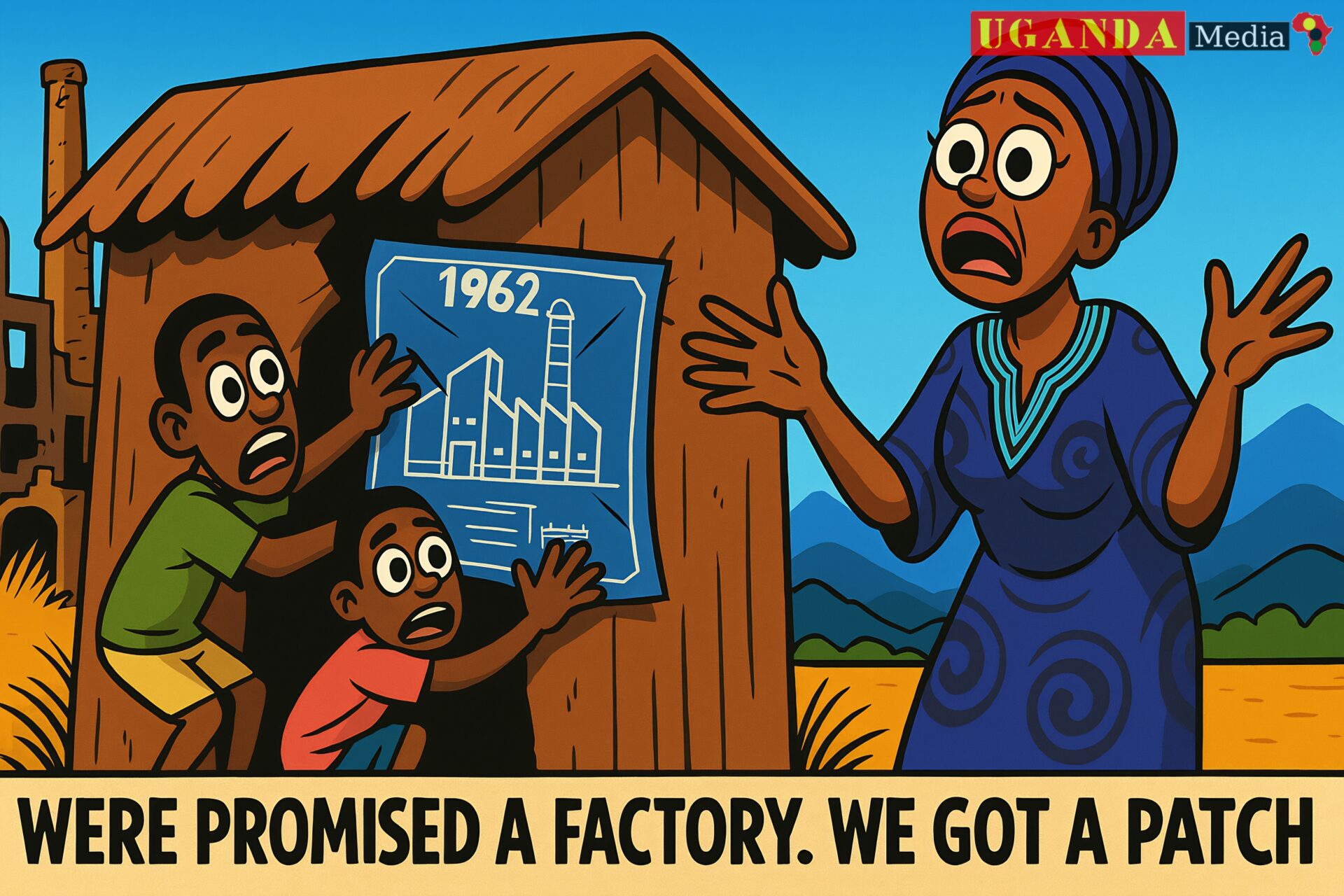
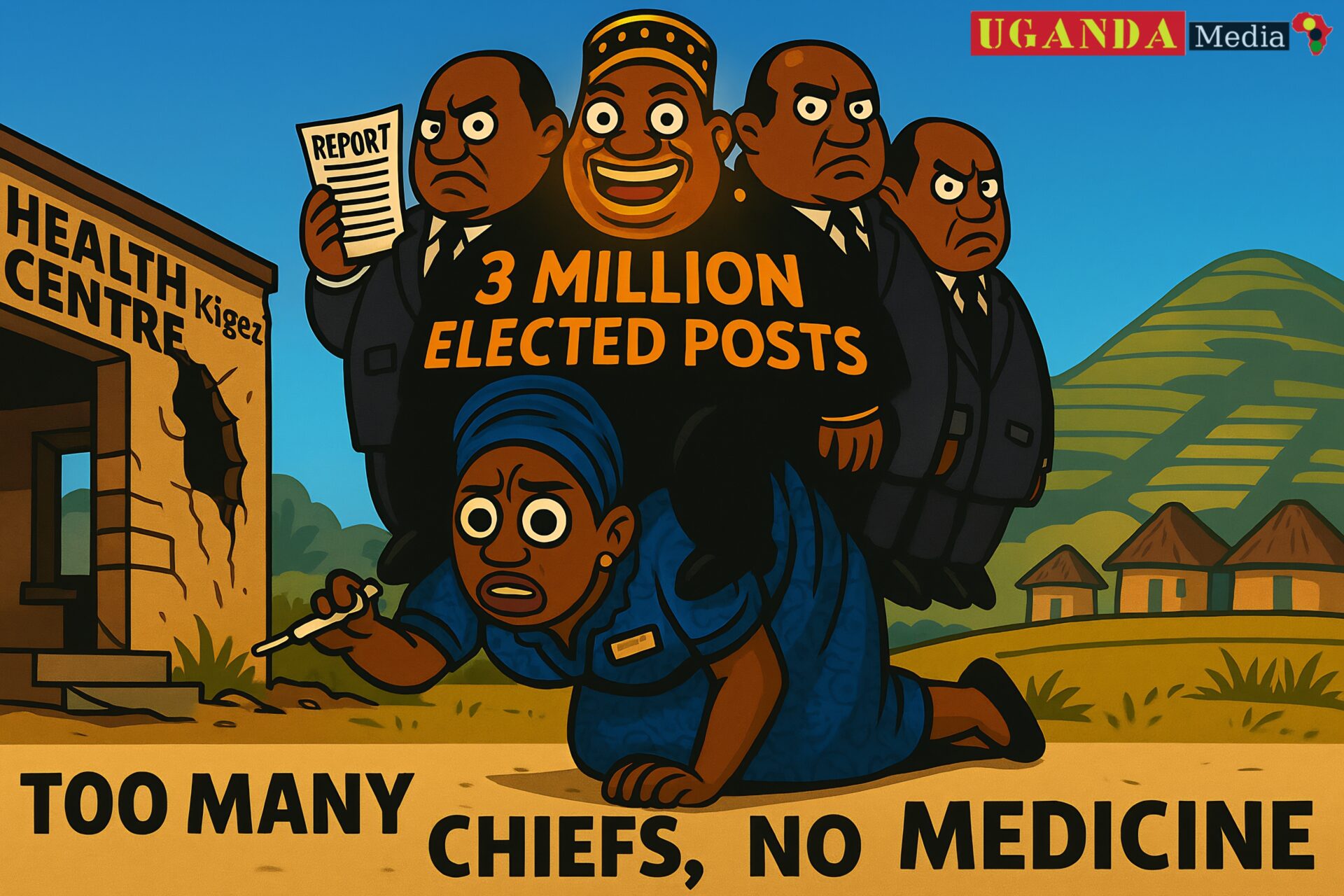 The promise of a diversified, industrialised economy is thus framed as an act of national liberation. It is a vision of a Uganda that is not merely a supplier of raw coffee beans and unprocessed minerals, but a manufacturer of finished goods. It is a vision where Ugandan engineers, not foreign contractors, maintain the railways, and where Ugandan capital funds Ugandan enterprise.
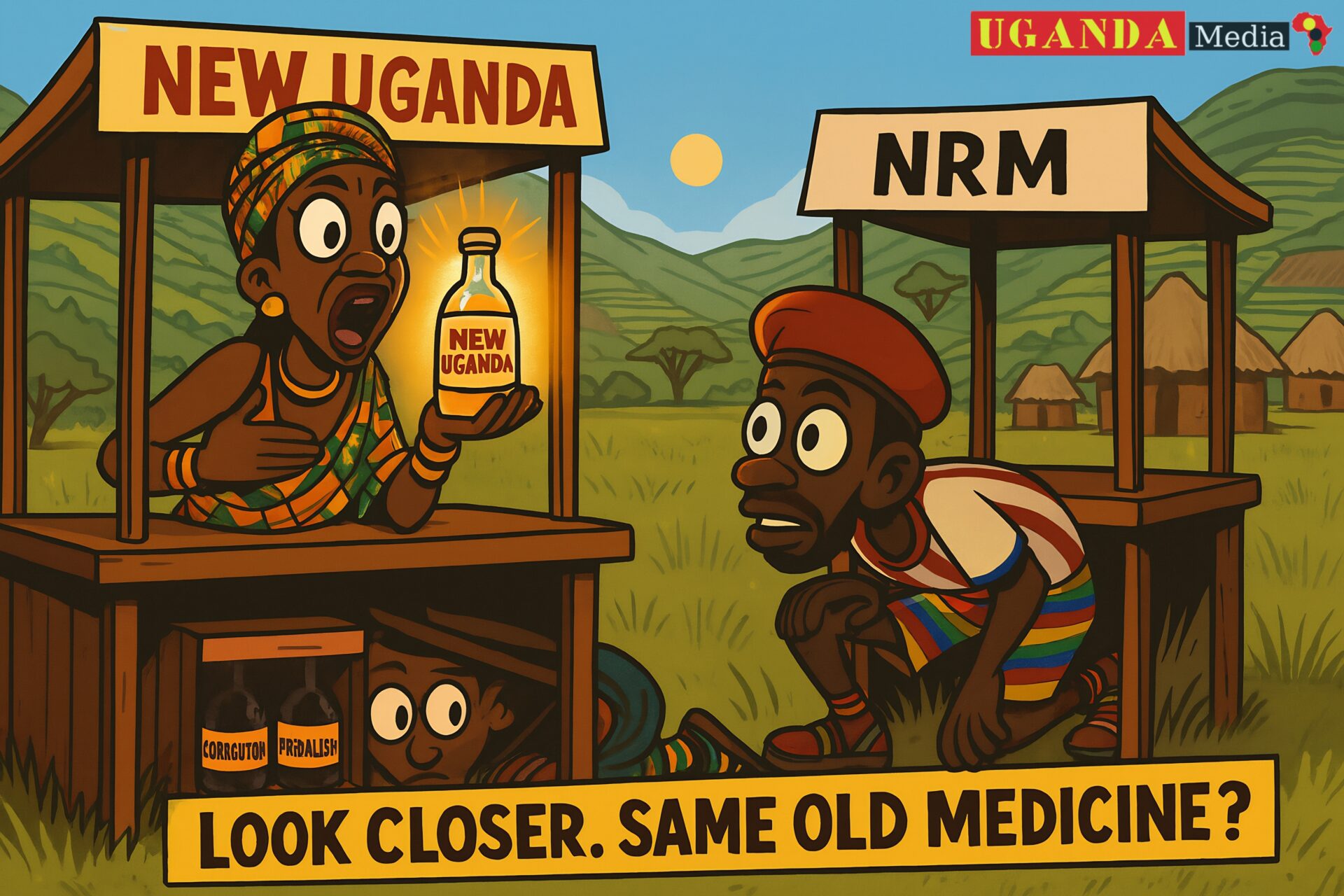 When a seasoned, outspoken legislator is unceremoniously dropped in favour of a politically novice musician, the message sent is not one of meritocracy, but of patronage and blind loyalty. When internal debates are stifled and decisions are handed down from a small, unelected clique, it reveals a profound hypocrisy. It demonstrates that the thirst for power is not to serve the people, but to replace the current occupants of the throne. As the adage goes, “A leaking pot cannot hold water.” How can a political organisation that cannot manage its own internal affairs without acrimony and exclusion be trusted to manage the complex, leaking vessel of the Ugandan state? The public sees the beautiful, newly painted bus, but they have grave doubts about the competence and intentions of the drivers fighting over the wheel.
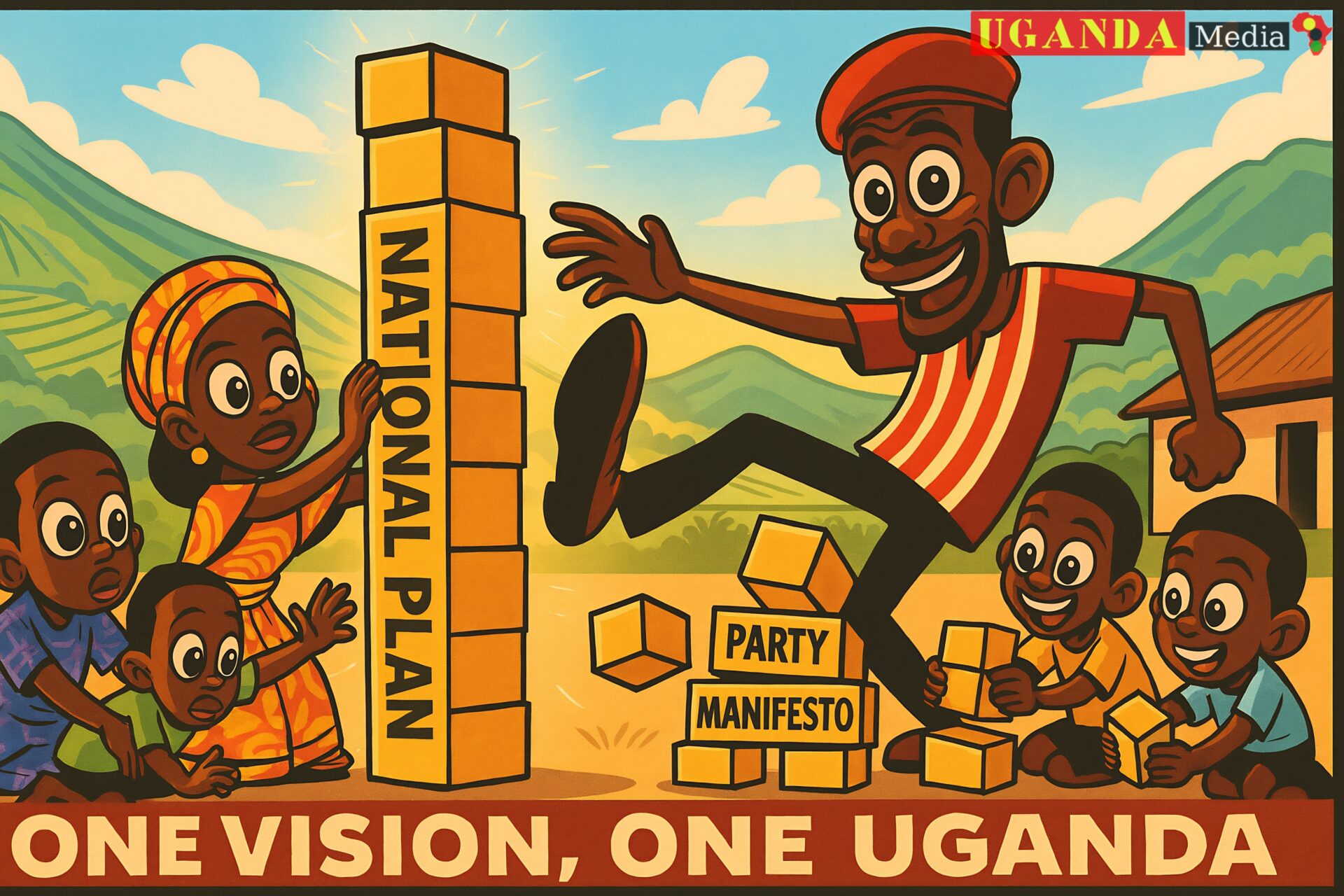 The future of Uganda does not lie in trusting a new set of masters, but in trusting ourselves to build a world where masters are no longer needed.
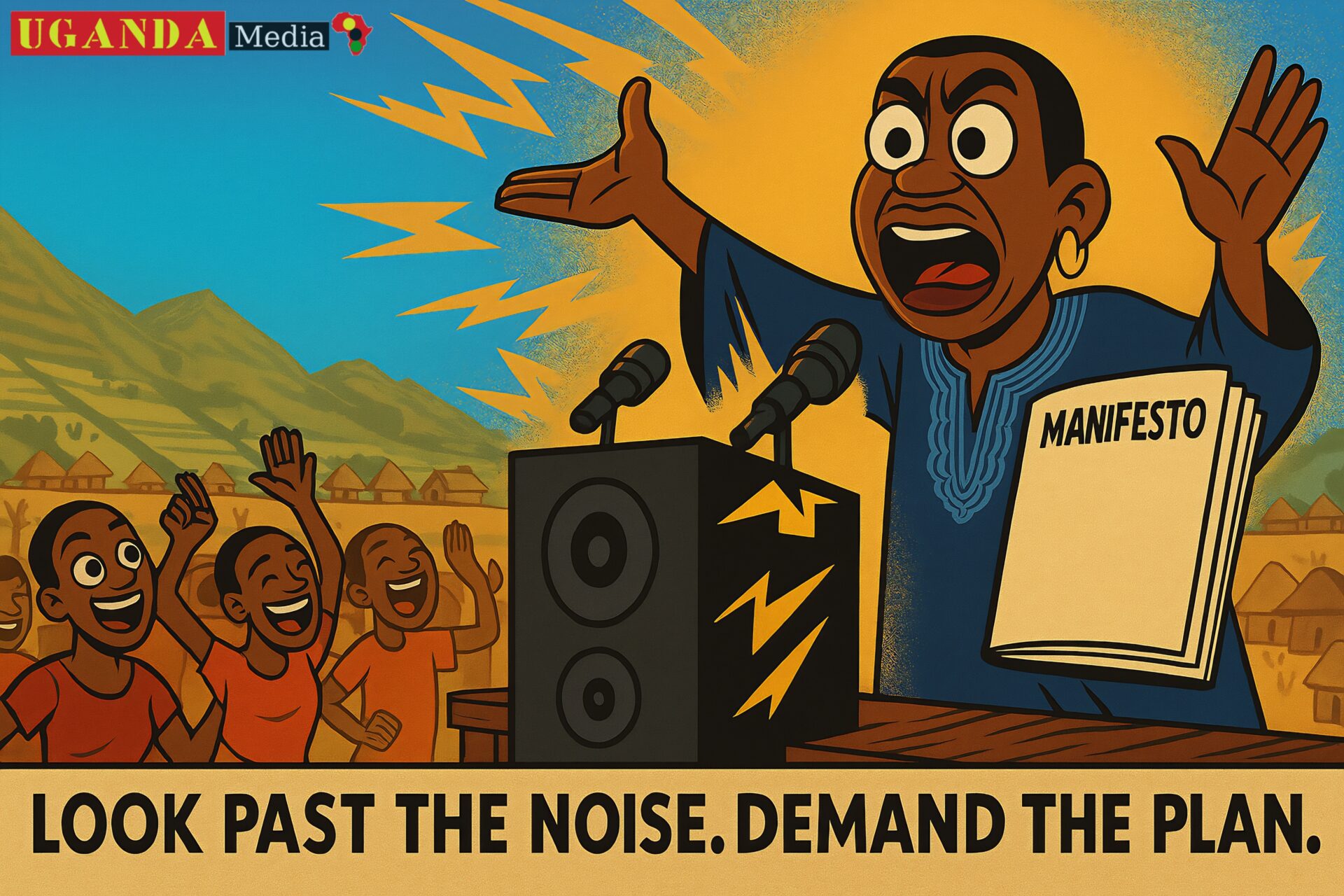 This is not a call for a government policy; it is a demand for a national covenant—a sacred pact between the people and their future, transcending the petty ambitions of any individual or political organisation. It recognises that building a nation is a generational endeavour, not a five-year sprint.
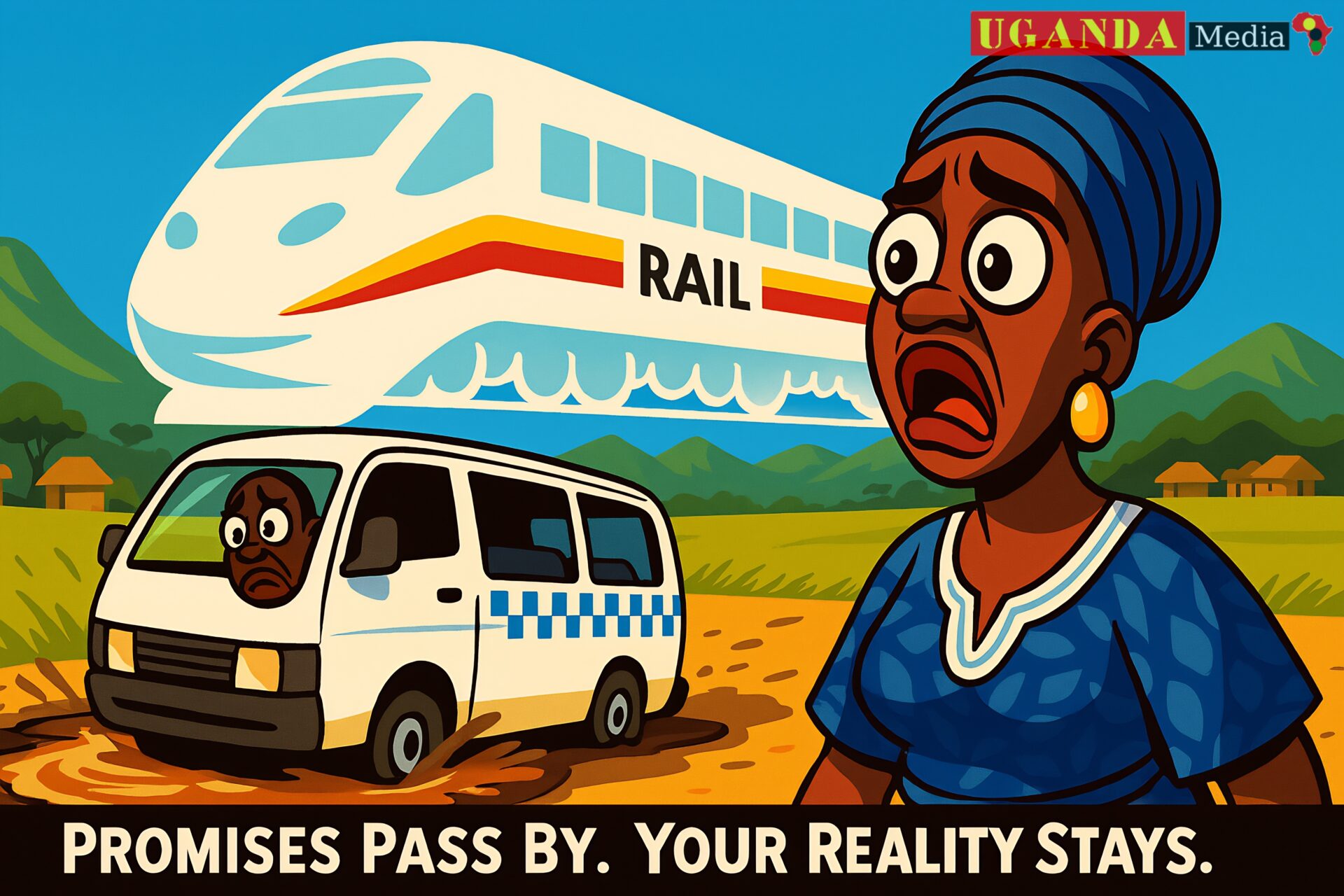 The most potent symbol of this ghost is the Standard Gauge Railway (SGR). It is a project that has been so thoroughly announced and re-announced that it has become a national punchline, a ritualised promise devoid of meaning. Like a recurring dream, it appears in every manifesto, at every campaign rally, a testament to a future that never arrives. This phenomenon reveals a political system that has mastered the theatre of development while evading its substance.
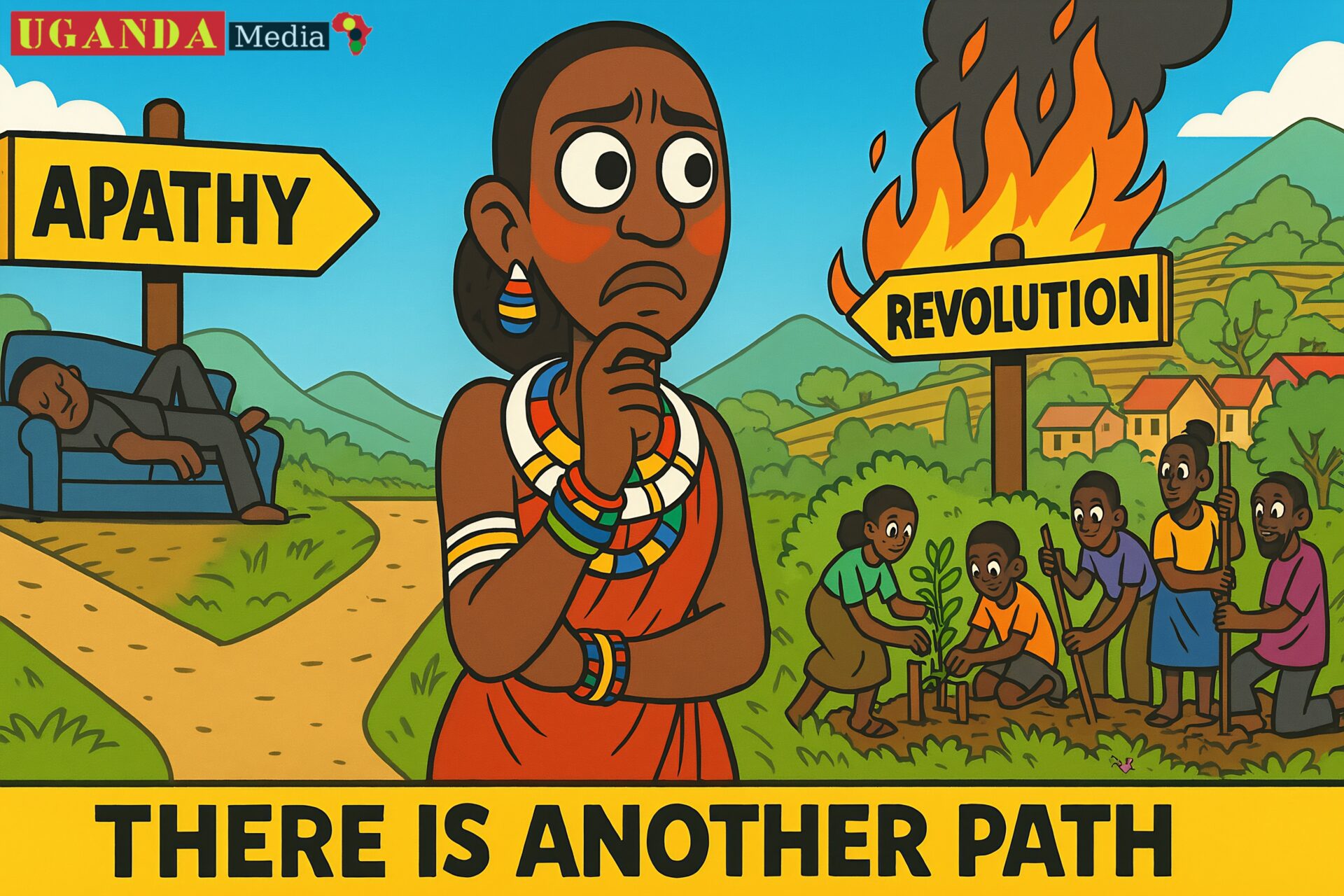 This disconnection is not a minor inconsistency; it is the fundamental truth of Ugandan politics. It exposes the manifesto not as a governing agenda, but as a decoy, a piece of political theatre designed for international observers and naïve idealists, while the real battle for power is fought on a field where the rules are written by the incumbent to ensure they never lose.
 The political class understands this desperation intimately and preys upon it. The adage, “A hungry man cannot appreciate the value of gold,” is their operating principle. By ensuring that a significant portion of the population remains in a perpetual state of economic precarity, they create a market for their political currency. The 5,000-shilling note is not a bribe in the traditional sense; it is a weapon of mass coercion, leveraging poverty to maintain power. The voter, in this context, is not selling their vote; they are being forced to pawn their future to survive the present.
 This creates a political culture where loyalty is to a person, not to a set of principles or a plan for the nation. It dismantles the very idea of accountable governance, for one cannot rationally debate with a personality cult. You are either a believer or a traitor. The spectacle thus becomes a tool for depoliticisation, transforming citizens from critical stakeholders into adoring fans, and politics from a process of collective problem-solving into a form of entertainment and tribal allegiance.
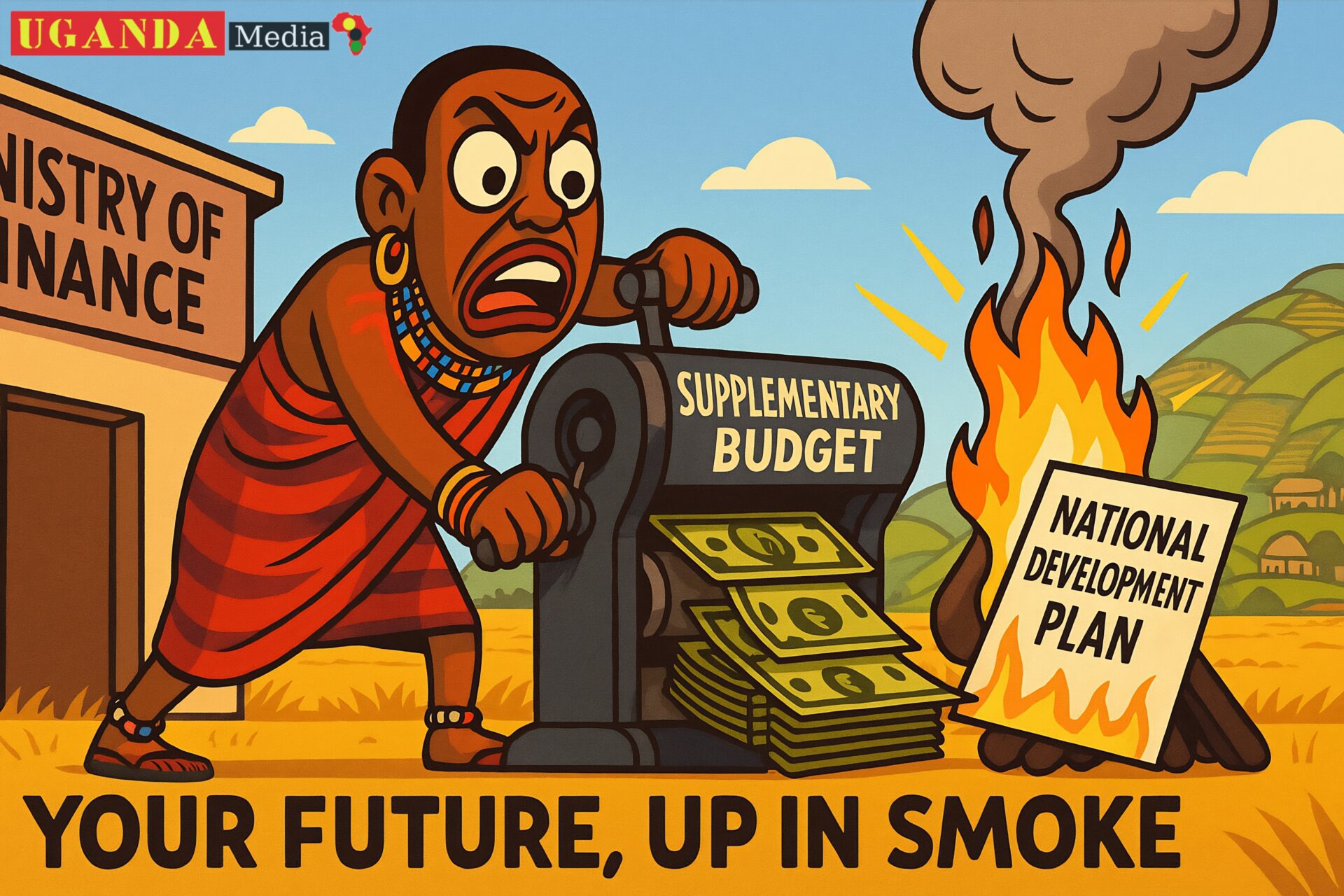 This cycle is not a failure of planning; it is the very essence of a political strategy designed to maintain power through the management of disappointment rather than the delivery of development. It functions through three distinct phases:
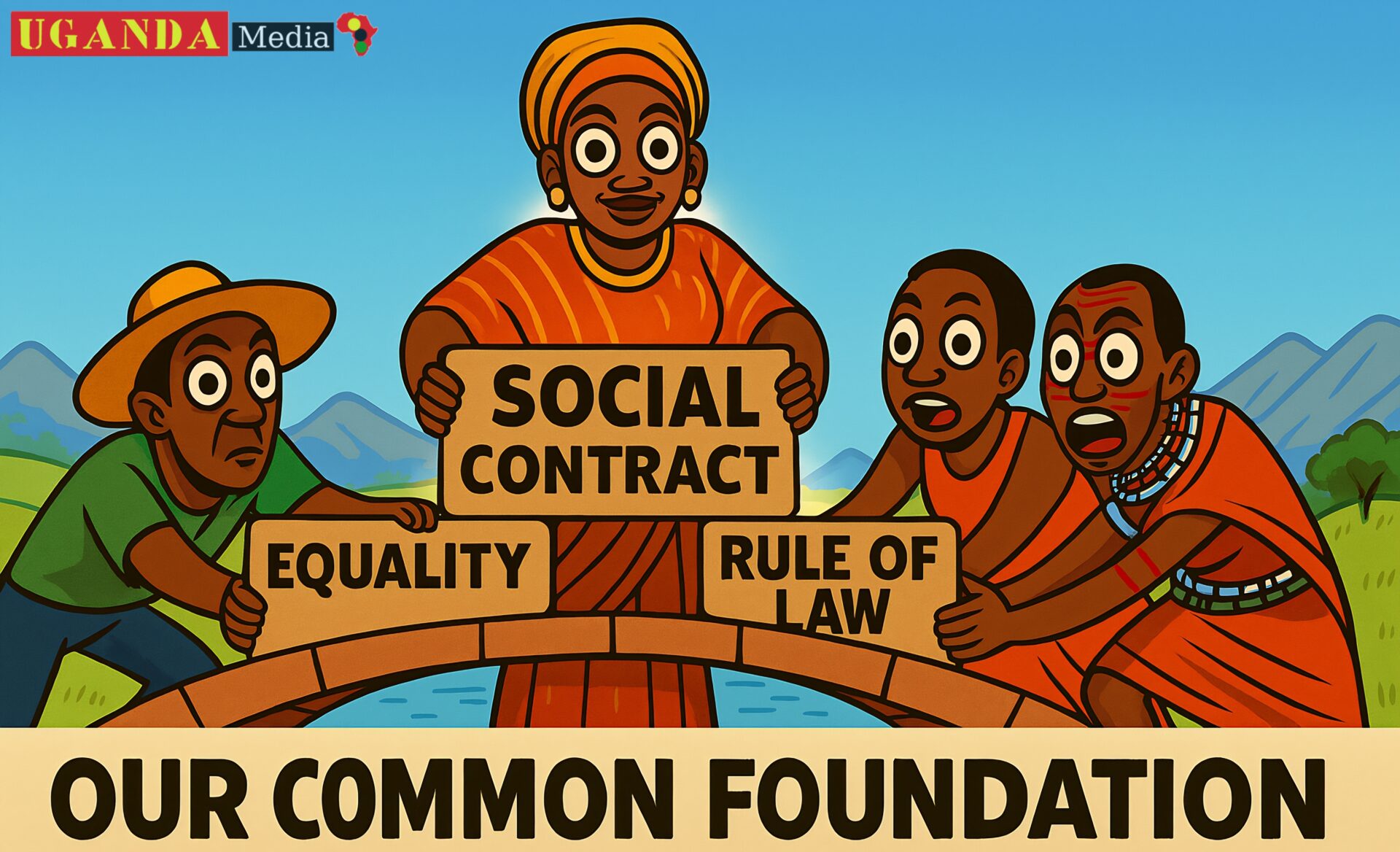 This approach reframes the political struggle. It is no longer about who can best manage the existing system, but about who is committed to dismantling it and building something new. As the adage goes, “You cannot repair a broken roof while the house is still on fire.” The PFF contends that the entire Ugandan political edifice is ablaze with the fires of oppression and corruption, and the only logical first step is to put out the fire. All other tasks are secondary. This is a direct challenge to the politics of survivalism, insisting that people must fight for sovereignty before they can negotiate for services.
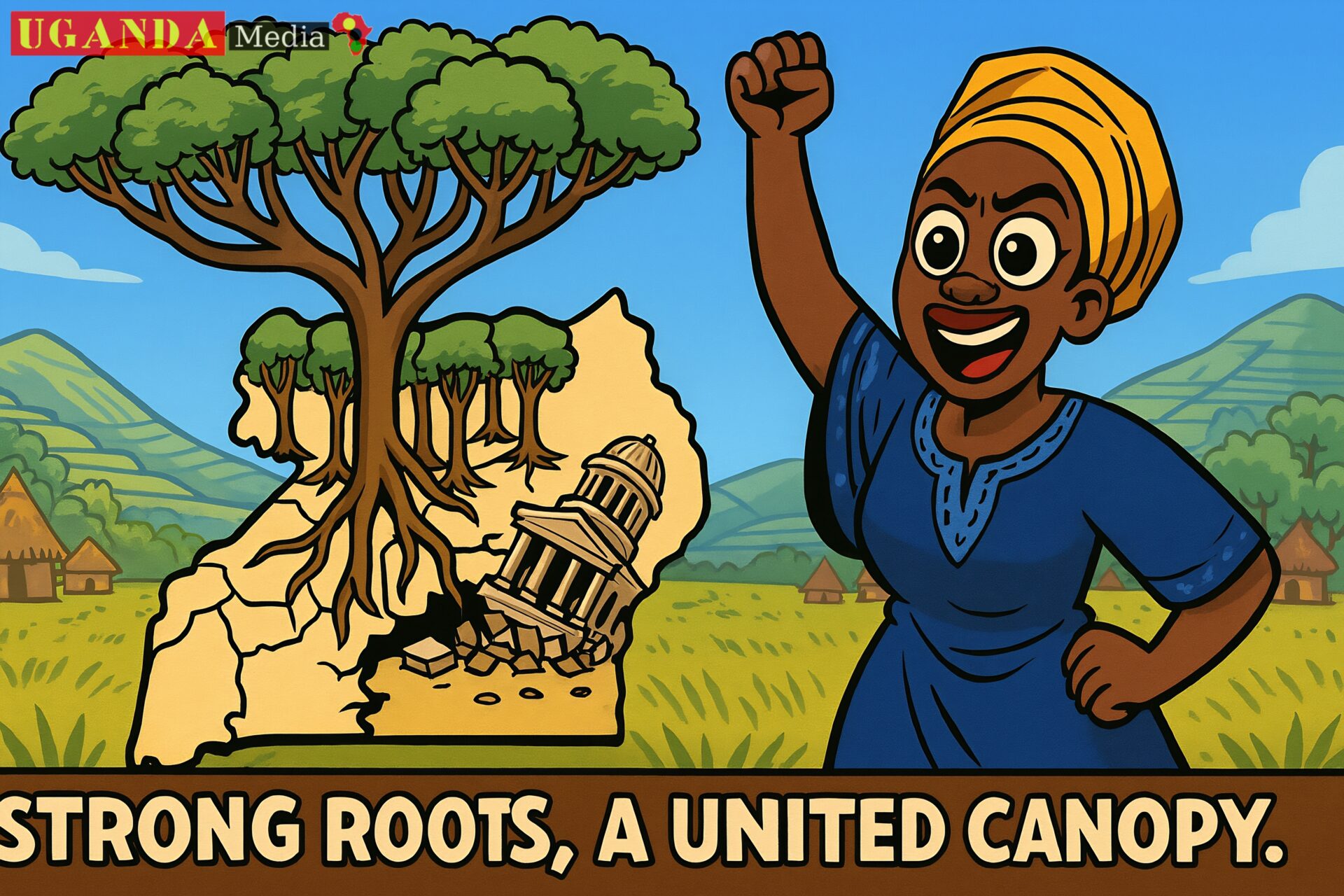 This is not a defence of the current, corrupt central state. Rather, it is a visionary call to replace it with a new kind of polity—one that derives its strength from the active participation and unwavering solidarity of all its citizens, regardless of their origin.
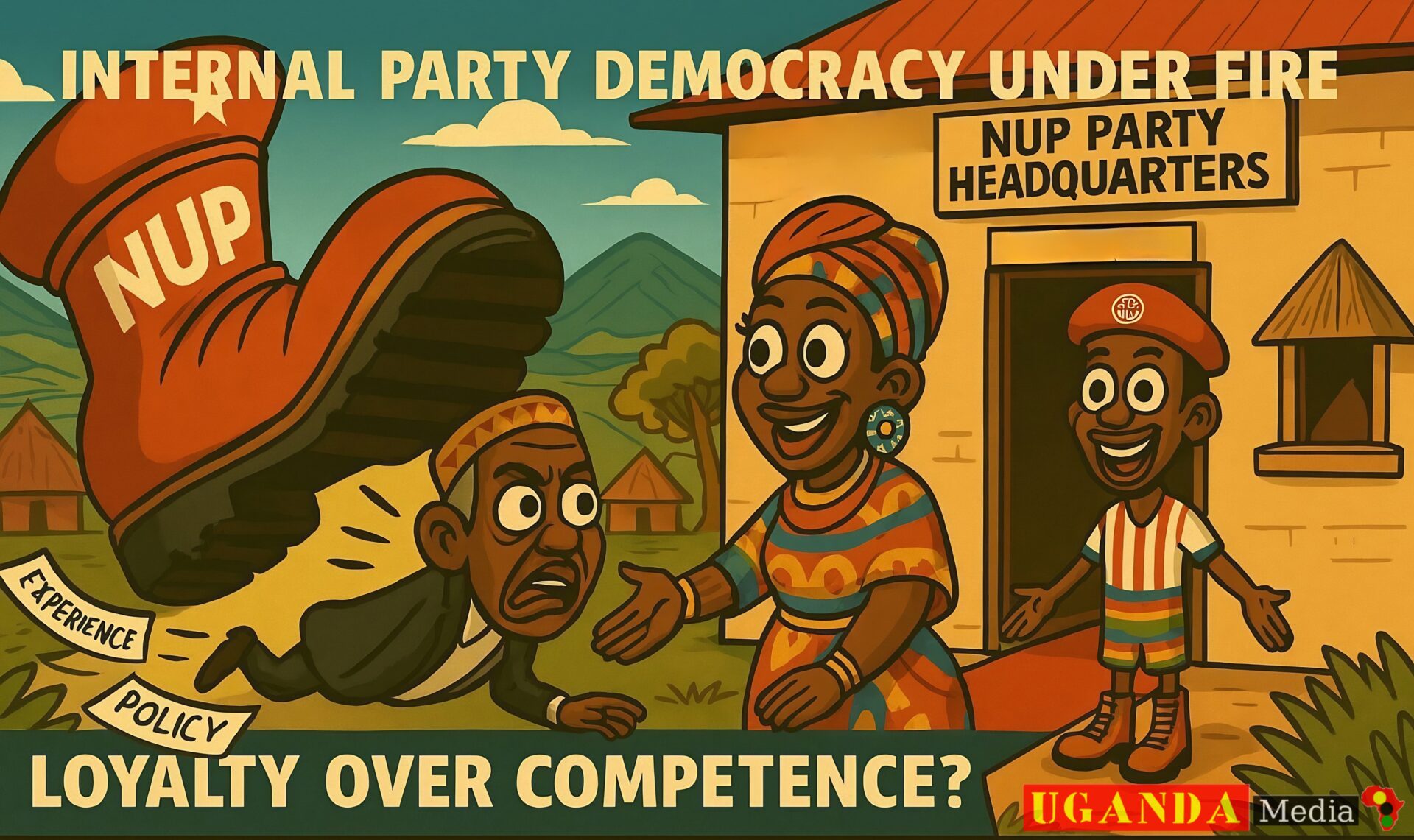 This crisis, which sees the “musicianisation” or “comedianisation” of politics, is not an accident. It is the logical outcome of a political culture that mirrors the very autocracy it claims to oppose, and it operates through three distinct mechanisms:
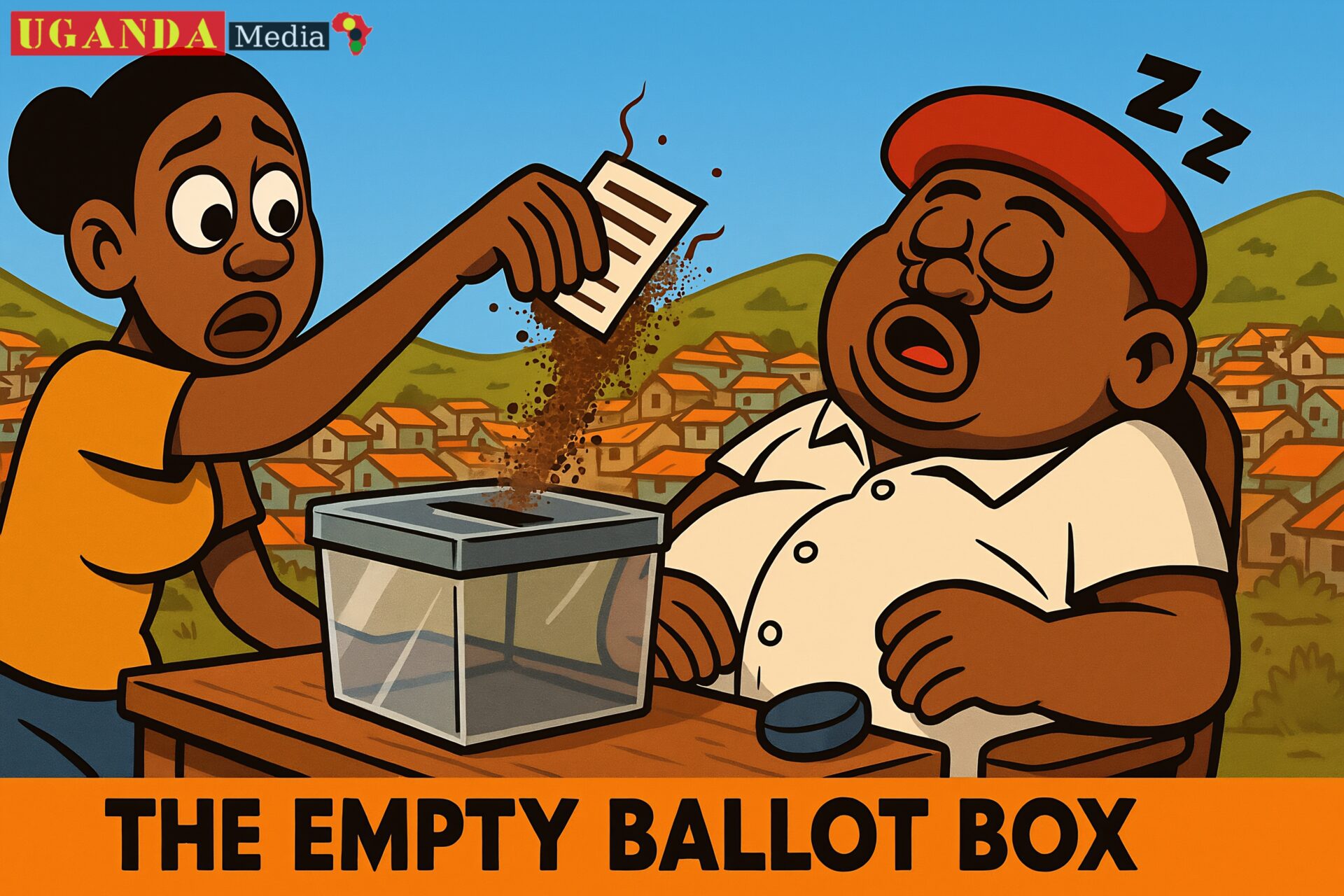 This process represents the full commercialisation and trivialisation of politics. It tells the electorate that their role is not to engage in complex debate, but to be an audience for a performance. It degrades the very concept of political representation, reducing it to a brand endorsement. The message is that understanding legislative procedure, fiscal policy, or constitutional law is less important than being able to hold a tune or tell a joke. This is not democracy; it is demagoguery wrapped in entertainment.
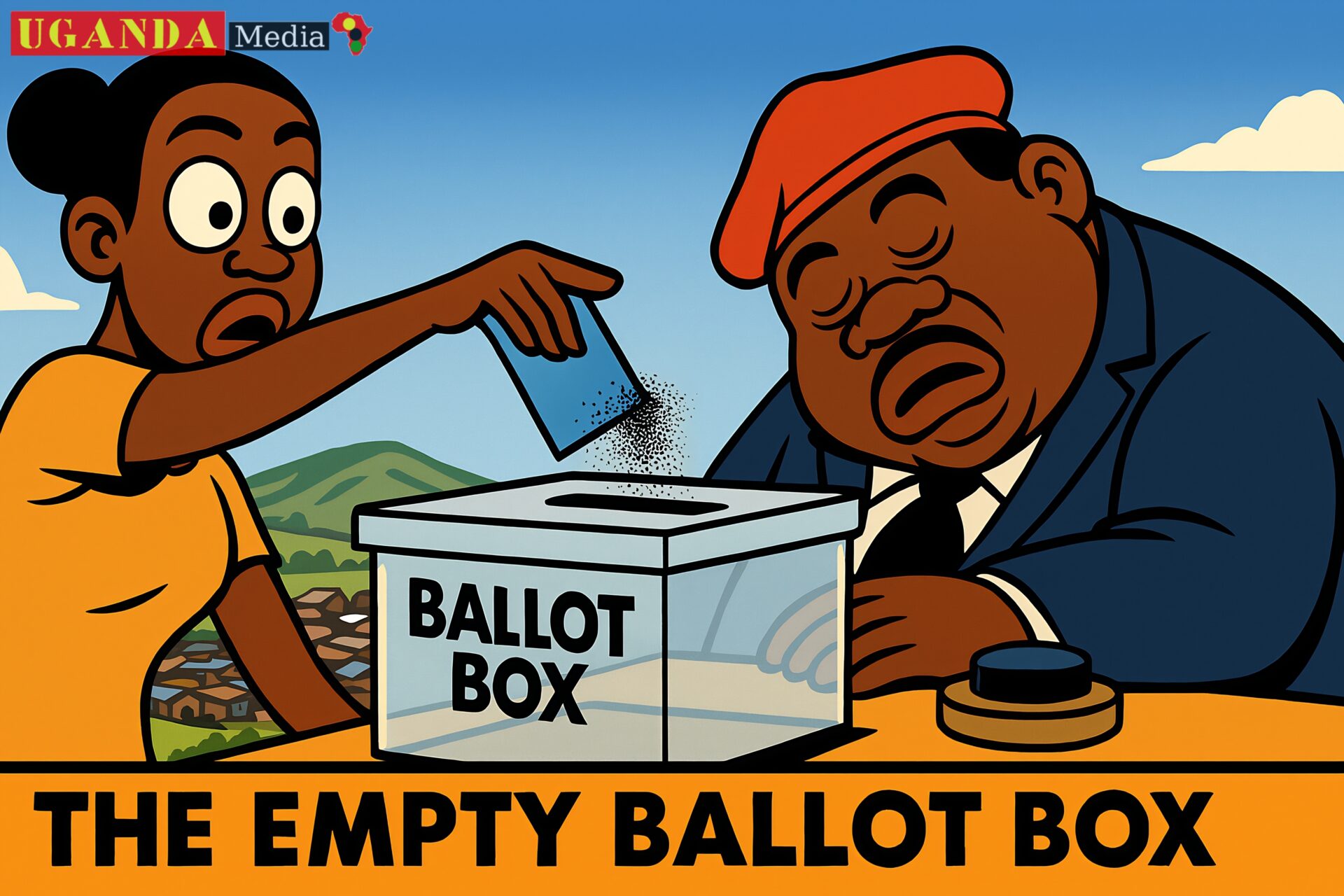 This culture transforms the noble concept of representation into a crass commercial enterprise, where the nation and its people are merely the backdrop for a series of lucrative personal deals. Its mechanics and consequences are devastating to the prospect of genuine democracy.
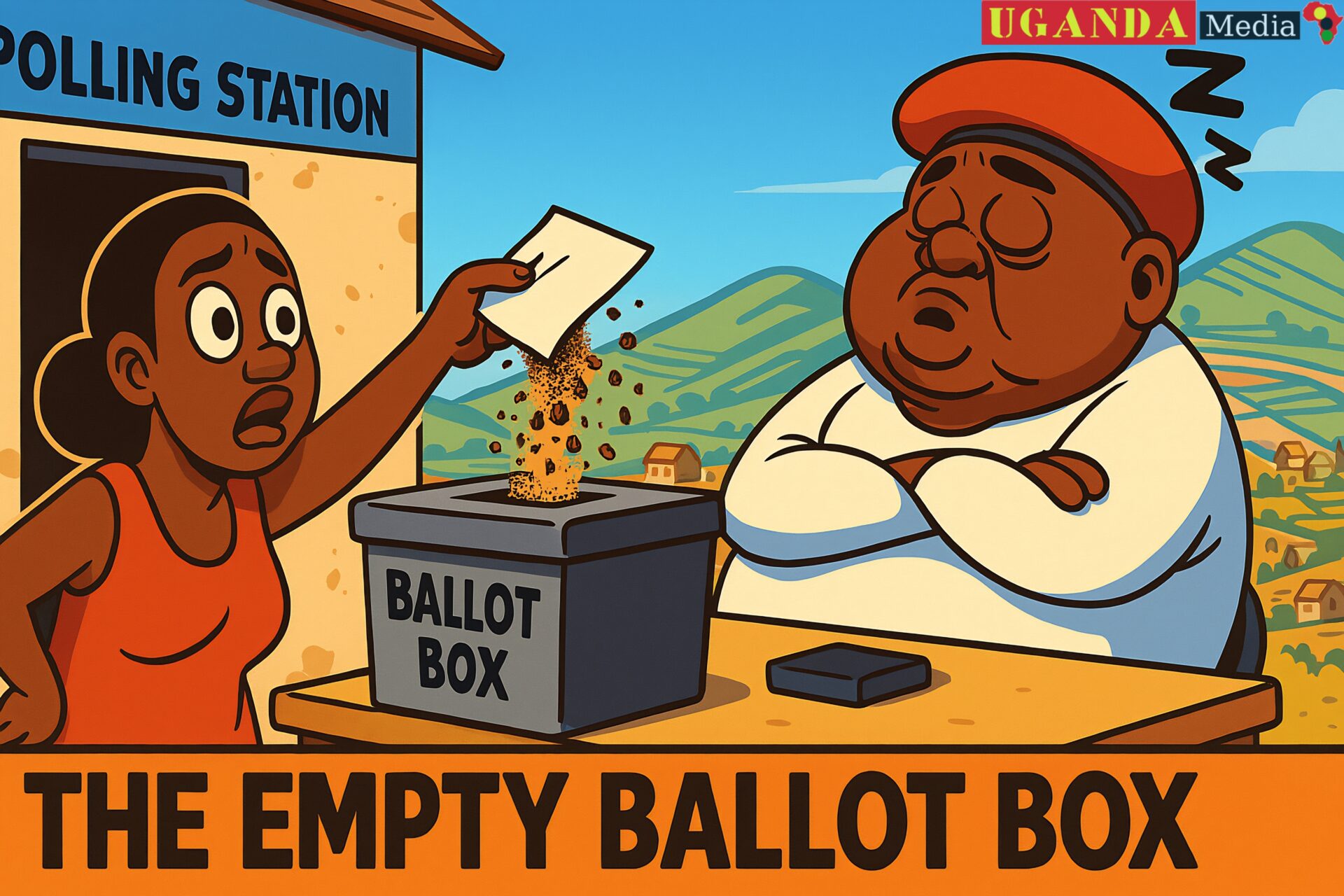 This constant churn deliberately erodes the very concept of a social contract. The relationship between the citizen and the state is broken down into a series of fleeting, personal deals between the citizen and a politician who is here today and gone tomorrow. It makes a mockery of the electoral process, reducing it to a momentary alliance with an individual who owes their primary loyalty not to their voters, but to their next benefactor. The system is designed to ensure that no one can ever be pinned down, no promise is ever binding, and no betrayal has any lasting consequence for the betrayer.
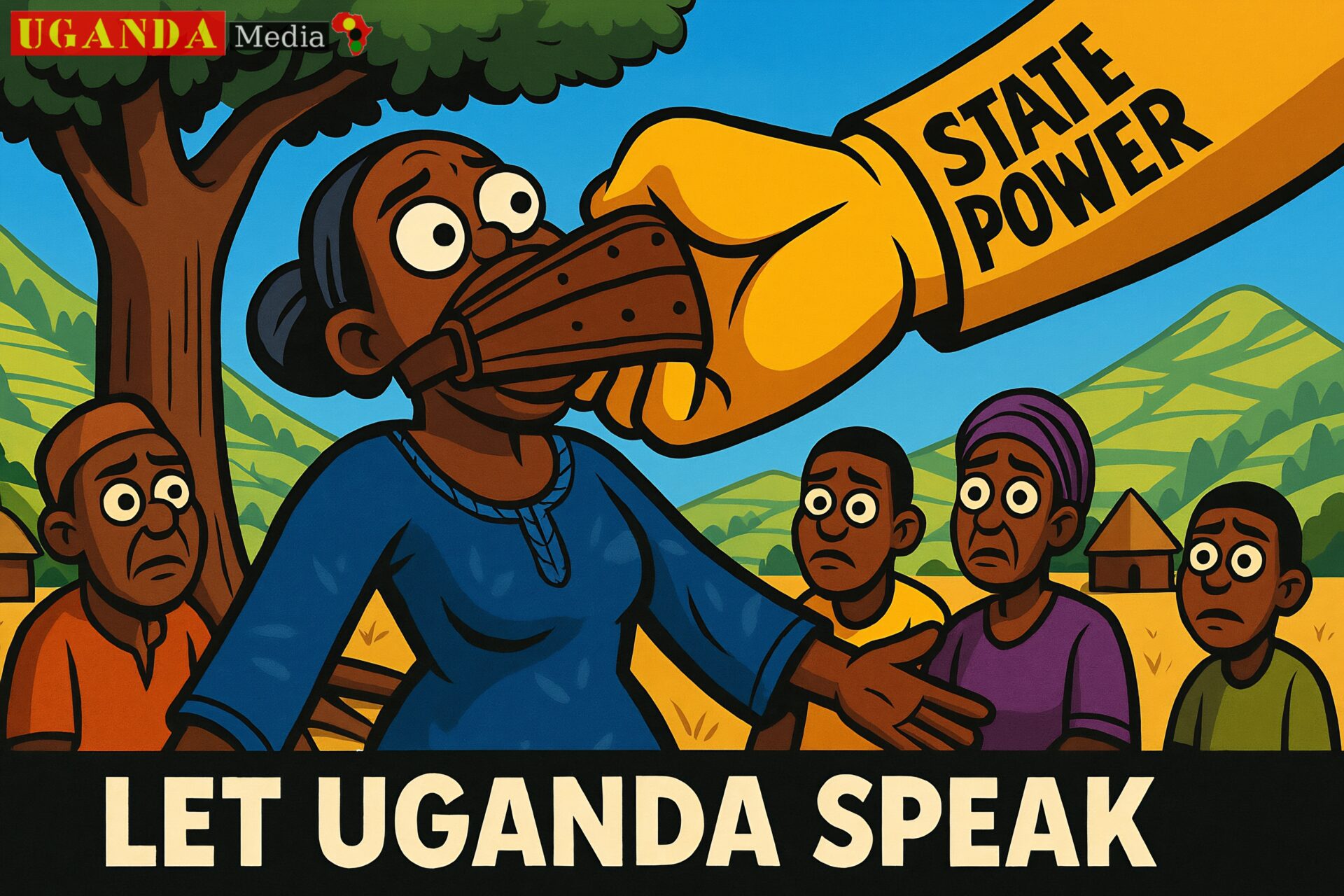 This process transforms citizens from active participants in their destiny into a captive audience for a political spectacle, and it operates through a multi-faceted assault on the very possibility of an informed public.
The Sickle and the Stone: Uganda’s Forced Choice and the Path Less Travelled
The diagnosis is now complete, and the prognosis is stark. Uganda stands at a precipice, not merely between political parties, but between two fundamentally different realities. On one side lies the Rock—the immovable, entrenched system of the past four decades, a structure of power so weathered by time and patronage that it presents itself as the only permanent feature of the landscape. On the other lies the Hard Place—the bleak, uncertain territory of a captured opposition, internal discord, and a political process so contaminated by the very ills it claims to cure that its promise of change feels like a potential leap from the frying pan into the fire. This is the nation’s forced choice, a dilemma that has been meticulously engineered to make genuine sovereignty seem like a dangerous fantasy.
The 2026 election, in this light, is not a contest of ideas. It is a ritual that reinforces this false binary. It is a referendum on whether the populace will continue to seek shelter under the familiar, oppressive rock or dash itself against the hard place of a compromised alternative. This is a choice between two models of power, neither of which serves the people. To escape this trap, one must understand its brutal mechanics and recognise the third, revolutionary path that is being deliberately obscured.
1. The Architecture of a False Dilemma
The rock and the hard place are not accidental formations; they are the twin pillars of a system designed to perpetuate itself. The ruling system maintains its position not solely through force, but by ensuring that any credible alternative is systematically weakened, co-opted, or made to appear equally perilous.
The Rock (The Incumbent System): This is the politics of the known devil. It offers a perverse form of stability—the stability of predictable corruption, of managed decline, of a hand-to-mouth existence punctuated by sporadic handouts. Its message is: “You may be poor, but you are not at war. Stay with the devil you know.”
The Hard Place (The Captured Opposition): This is the politics of the uncertain saviour. It is hamstrung by internal autocracy, a history of defections, and a campaign environment that ensures it can never compete on a level playing field. Its promise is clouded by the justifiable fear that it may merely become a new management team for the same exploitative enterprise, replicating the very structures of patronage and centralised control it claims to oppose.
This forced choice is the ultimate triumph of the status quo. It drains politics of hope and replaces it with a calculus of fear. As the adage goes, “When the only tool you have is a hammer, every problem looks like a nail.” The system has ensured that the only tools presented to the people are these two blunt instruments, preventing them from imagining they could instead build a new world entirely.
2. The Deeper Crisis: A Soil Exhausted by Monoculture
The true battle, however, is not between the rock and the hard place, but for the very soil that lies beneath them. This soil is the political and economic vitality of the Ugandan people themselves. Decades of a political monoculture—a system that extracts wealth and crushes dissent—have exhausted this soil. It has leached it of nutrients like trust, solidarity, and the capacity for collective self-belief.
The politics of the handout and the empty promise are the synthetic fertilisers poured onto this depleted ground. They produce a flash of green—a momentary, desperate loyalty—but they do not restore the soil’s long-term health. They create a dependent, brittle ecosystem that cannot sustain itself without constant, top-down intervention. This is why the debate between manifestos is so hollow; it is an argument over which brand of fertiliser to use on a field that is fundamentally degraded.
3. The Radical Prescription: Becoming the River
The leftist and revolutionary answer to being trapped between a rock and a hard place is to refuse to be the object crushed between them. It is to become, instead, the patient, persistent river that wears down the rock and circumvents the hard place through the slow, powerful accumulation of collective action.
This is not a call for a violent, single-day revolution. It is a call for a million daily acts of quiet, determined construction. It is a strategy of making the state’s choice irrelevant by building a functioning, parallel society based on mutual aid and direct democracy. This means:
Building Community Granaries, Not Begging for Maize: It means communities forming cooperative farms and food stores to achieve sovereignty from the politics of the “handout.”
Creating People’s Assemblies, Not Petitioning Parliament: It means turning village meetings and neighbourhood councils into the real centres of power, where people practise self-governance on issues from local security to resource management.
Weaving a Network of Solidarity, Not Waiting for a Saviour: It means building a web of mutual aid funds, community health initiatives, and skill-sharing networks that make the community resilient and independent of state failure.
The rock and the hard place represent a politics of things done to the people. The river represents a politics of things done by the people, for themselves. The future of Uganda does not depend on choosing the right master from the options presented. It depends on the people recognising that they themselves are the only legitimate source of power. The most profound revolution will be the moment we stop looking at the rock and the hard place and instead look at each other, and begin the slow, steady work of carving a new course, together. The war for Uganda’s soul will not be won on the campaign trail in 2026, but in the countless, quiet places where Ugandans decide to stop being subjects of power and become its architects.

RELATED PUBLICATIONS:
 The NUP Corruption Allegations: A Sign of a Deeper Political Failure?
 Ugandan Politics Exposed: The Illusion of Choice and Managed Opposition
 The Unspoken Truth: Is the 1995 Ugandan Constitution Still Relevant?
 Digital Exile: How Ugandan Writers Are Conquering Censorship
 The Politics of Patronage: Analysing Museveni’s Leadership Style in Uganda
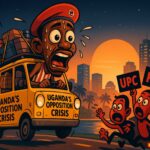 Bobi Wine & NUP Corruption: The Inside Story of Uganda’s Opposition Crisis
 Uganda’s Energy Efficiency and Conservation Bill 2024: A Comprehensive Analysis
 Colonial Legacies and Ethnonationalism in Uganda: The Acholi, Obote, and Post-Independence Struggles
 Uganda Police Force Defends Arrests, Denies Kidnap Allegations
 Parliamentary Insights: Debating Education Reform, Climate Change, and Regional Unity in Uganda
 Jennifer Nakangubi (Full Figure) Assault: How Social Media Amplified Violence Against Women in Uganda
 Uganda Police Briefing: Jennifer Nakangubi (Full Figure)& Electoral Neutrality Pledge
 US-Uganda Asylum Seeker Transfer Deal: What You Need to Know
 GOMBE Junior School Kikajjo-Nateete: Historic Prefects’ Campaign Ignites Passion for Leadership in Uganda
 The Illusion of Dialogue:The Real Meaning of Uganda’s IPOD Dialogue & Political Theatre
 Dictator Museveni’s Security Strategy: The Tribal Capture of Uganda’s Police
 Empowering Tomorrow’s Leaders: The Transformative Role of Student Elections at Rainbow International School Uganda
 Uganda’s Future Leaders: Highlights from the Hillside Schools Naalya Swearing-In Ceremony