
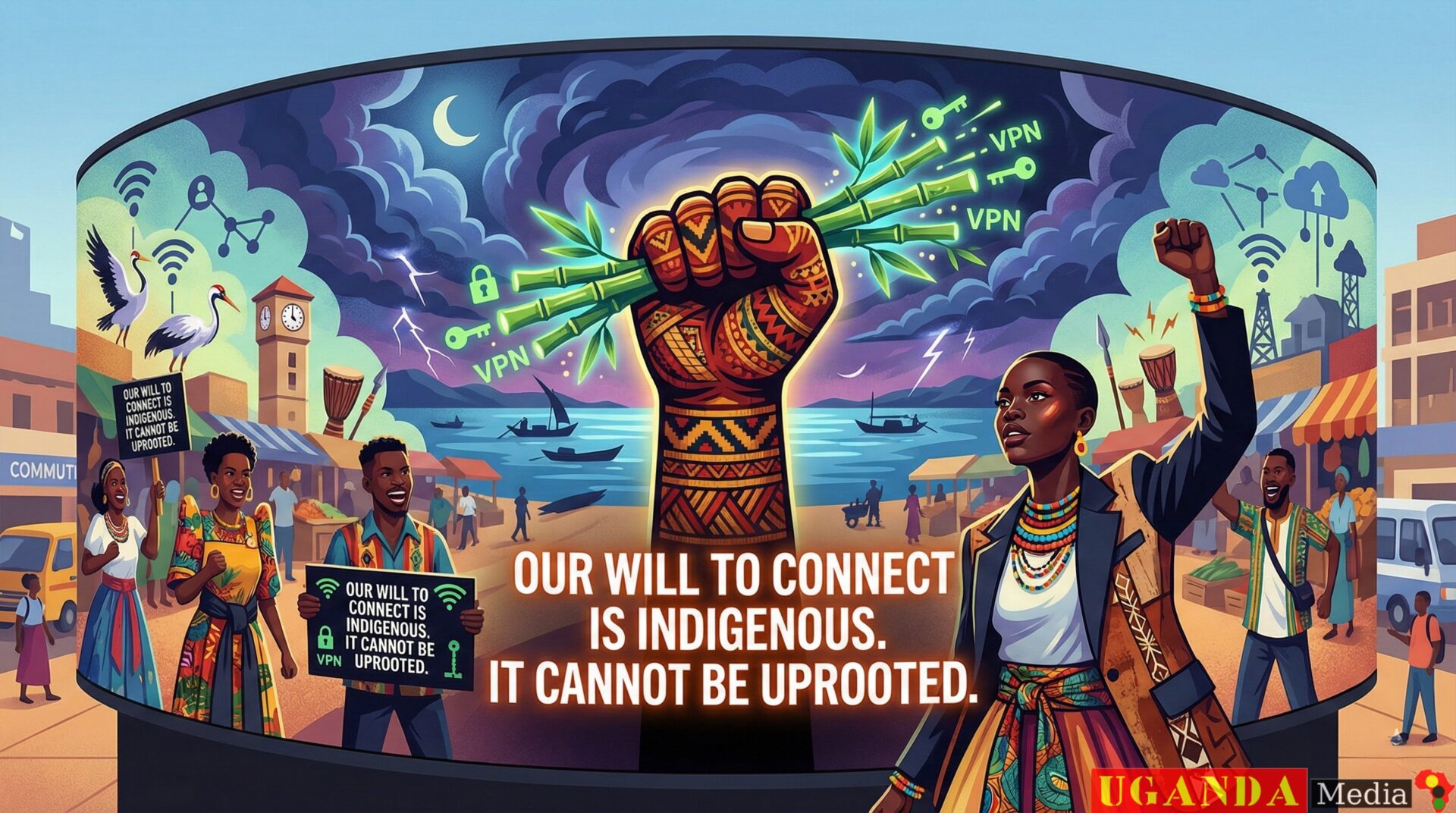
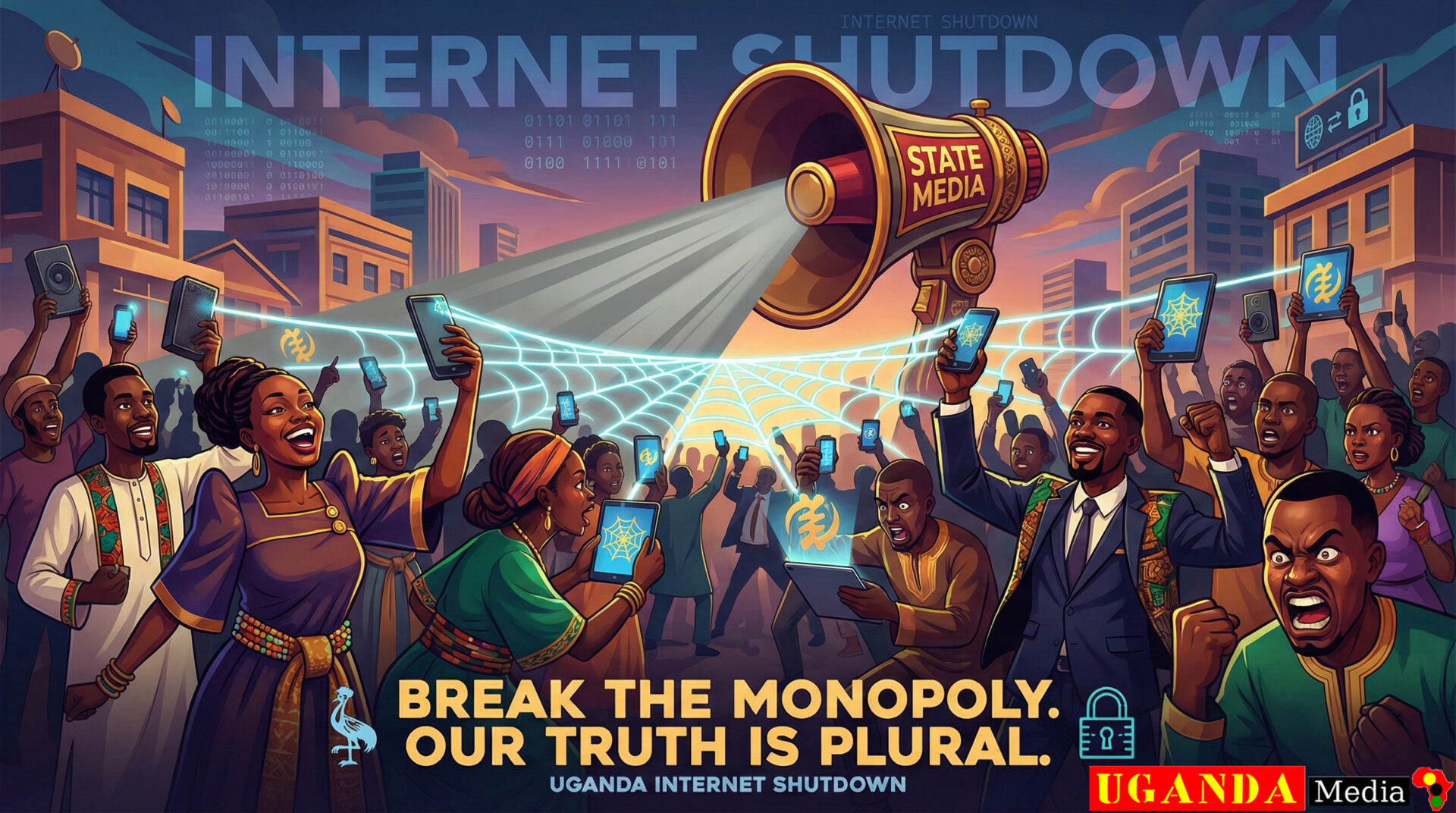
 This analysis moves beyond the official narrative of preventing “misinformation” and safeguarding “orderly conduct.” It dissects the UCC’s own documents to expose a calculated political strategy, not a technical necessity. We explore how these directives function as acts of pre-emptive repression, designed to cripple grassroots mobilisation, monopolise public truth, and strangle the digital economy—all to preserve the interests of an ageing dictatorship. From the revealing hypocrisy of the so-called “Exclusion List” to the chilling, long-term psychological impact on society, this examination uncovers the stark reality behind the shutdown.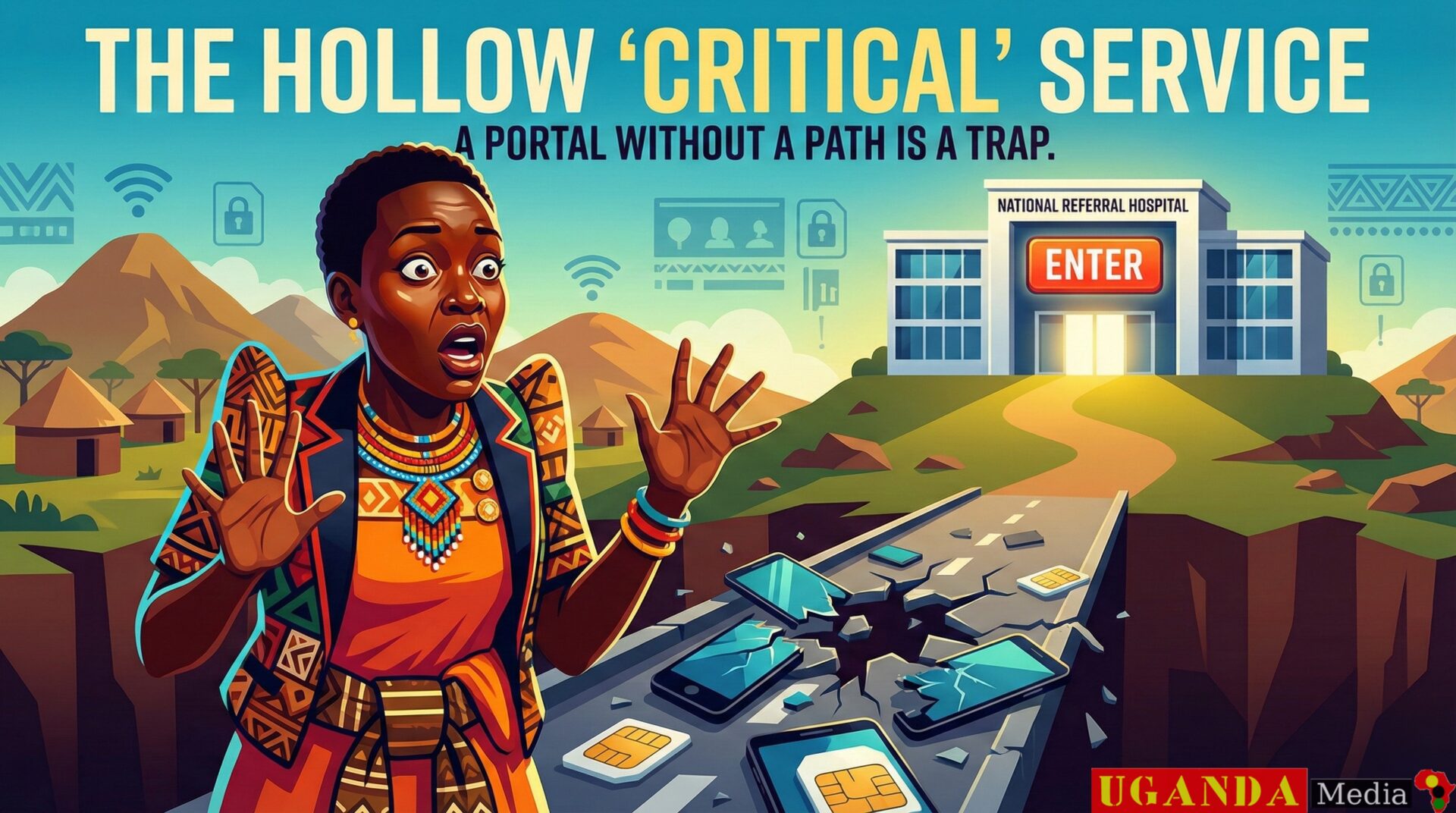
Twenty Key Points of Analysis
The Illusion of “Unauthorised” Information: Who Owns the Truth in Uganda?
In the cool January air of 2026, as another election cycle tightened its grip on Uganda, the state’s communications regulator issued a seemingly mundane notice. It had blocked a website providing voter location information, deeming it “unauthorised.” This single bureaucratic term, dripping with the cold ink of officialdom, reveals a foundational and dangerous lie upon which the entire edifice of control is built: that the people’s knowledge must be granted permission by the state.
This action frames information not as a common birthright, a shared resource for navigating our collective life, but as a controlled commodity. It operates on the principle that truth itself is subject to licensing, that the facts of our own democracy—where to vote, who is registered—are the exclusive intellectual property of a government department. It is the digital equivalent of a colonial officer declaring a community’s ancestral well “unauthorised” because it wasn’t dug by the Crown’s engineers.
Knowledge as a Commons, Not a Crown Copyright
In a truly free society, information is a commons. Like the air we breathe or the water in a public well, it belongs to everyone. Its value multiplies through sharing, and its accuracy is strengthened through collective verification by an engaged populace. Think of the age-old practice in Ugandan villages, where elders gather under the omusizi tree to discuss community affairs; knowledge is pooled, stories are cross-referenced, and a shared understanding emerges from the conversation itself. No single elder holds a “licence” to speak. The UCC’s logic would post a guard by the tree to silence anyone not pre-approved by the parish chief.
 The regime, personified by the long-reigning dictator Yoweri Museveni, understands this power intimately. For a system built on patronage, myth-making, and the careful curation of reality, the unregulated flow of information is existential kryptonite. An independent website mapping voter locations isn’t a technical nuisance; it is a direct challenge to a core mechanism of power. It suggests that the people can organise, verify, and empower themselves without waiting for a handout of “official” data from the Electoral Commission—a body whose independence has been fatally compromised by decades of executive overreach.
The Irony of “Protection” and the Reality of Control
The state’s justification—to “prevent the dissemination of misleading information”—is a patronising deceit. It assumes the public are naive children, incapable of discerning truth, who must be fed only pre-chewed, state-sanctioned morsels. This is the logic of every oppressive system in history. As the old adage goes, “A man who locks away the candles fears not the darkness, but what people might see by the light.” The regime does not fear misinformation half as much as it fears any information it does not directly manufacture and distribute.
What if the official register is flawed? What if names are missing from state-approved lists in opposition-leaning areas? A parallel, community-driven platform could expose such “errors,” holding power to account. This is precisely what the state cannot allow. By declaring such projects “unauthorised,” it criminalises transparency itself. It transforms citizen-led accountability into an act of sedition.
This has a chilling, real-world effect. It stifles the ingenuity of Ugandan tech developers who might build tools for civic empowerment. It tells community organisers that their efforts to inform their neighbours are illegal. It centralises all trust in institutions that have repeatedly betrayed it, forcing people to rely on the very authorities accused of manipulating the process.
Beyond the Ballot: A Fight for Cognitive Liberty
The battle over this voter website is a microcosm of a far larger struggle. It is not merely about an election logistics page; it is about who controls the narrative of Ugandan life. From economic data and public health statistics to historical education and news reporting, the principle of “authorisation” is a tool to keep society in a state of managed ignorance.
Ultimately, the claim to control information is a claim to control people. A populace that can freely share, debate, and verify information is a populace that cannot be easily led or misled. It is a populace that can build its own systems of mutual aid and solidarity, independent of the state’s corroded structures. The regime’s frantic need to stamp “UNAUTHORISED” on any source of knowledge it does not command is the clearest possible admission of its own weakness. It is the fear of a system that knows its legitimacy is so brittle that it cannot withstand the simple, unregulated act of people talking to each other, sharing what they know, and discovering their own collective power. The truth, much like the will of the people, does not require a permission slip from the Uganda Communications Commission to exist.Creating a Monopoly on Truth: The State’s “Exclusive” Right to Reality in Uganda
The Uganda Communications Commission’s statement that “the management of voter registration data… remains the exclusive constitutional responsibility of the Electoral Commission” is not a neutral description of administrative protocol. It is a declaration of intellectual sovereignty. It asserts that the fundamental facts of democratic participation—who is eligible to vote, and where—are not a public resource, but the copyrighted property of the state. This enforces a monopoly on truth, and in a system where the regulator, the Electoral Commission, and the executive are widely perceived as limbs of the same political body, this monopoly has a single beneficiary: the regime of dictator Yoweri Museveni.
The Mechanics of the Monopoly
An enforced monopoly works by outlawing competition. By decreeing the Electoral Commission (EC) as the sole legitimate source of voter data, the state criminalises any parallel, community-driven effort to collect, verify, or share that same information. It is the equivalent of a government declaring itself the only legal cartographer, then distributing maps with certain villages and roads mysteriously omitted. The power lies not in providing a perfect service, but in being the only one allowed to provide any service at all.
This is profoundly anti-democratic. Democracy, at its core, is a system of public verification. It relies on the ability of citizens to check, challenge, and confirm the processes that govern them. A state monopoly on electoral data deliberately breaks this mechanism. It tells the public: “You must trust the product, and you are forbidden from inspecting the factory.” When that factory—the EC—has been under the stewardship of the same political establishment for decades, its operational independence fatally compromised by patronage and pressure, this demand for blind faith is not about integrity; it is about impunity.Shaping Reality to Fit the Fiction
The purpose of this monopoly is not to ensure accuracy, but to control the narrative. It grants the regime the exclusive power to define reality. If the EC’s register is flawed—if names are missing in regions perceived as unsympathetic to the ruling National Resistance Movement (NRM)—there can be no legally sanctioned, independent audit to prove it. Any website or group that attempts to compile its own data becomes, by definition, “unauthorised” and illegal. Thus, the state’s version of events becomes the only version permitted to exist. Discrepancies are not corrected; they are erased by statute.
This creates a perverse incentive. The institution tasked with administering a fair contest is protected from any meaningful public scrutiny of its foundational work. Its performance cannot be measured against any independent standard, because it has outlawed the creation of such standards. This is the ultimate conflict of interest, institutionalised. As the old adage goes, “He who makes the measure will never find himself short.” The regime, through its control of the EC, holds the official ruler. It alone gets to measure the dimensions of the democratic playing field, and it assures us—with the full force of the law—that the field is perfectly level, whether it is or not.
The Social and Philosophical Cost
Beyond the immediate electoral manipulation, this monopoly on truth attacks the very capacity for a free society to function. It dismantles the principle of collective intelligence—the idea that a community, through open comparison and dialogue, is wiser and more accurate than any single authority. It replaces the vibrant, noisy marketplace of ideas, where facts are tested and honed, with a state-run dispensary distributing pre-packaged information.
It also fosters a culture of enforced gullibility. Citizens are commanded to trust, and then systematically shown why that trust is misplaced. The resulting cynicism is not an accident; it is a tool. A population that believes all sources are equally corrupt or unreliable is a population disarmed, unable to mobilise around a shared, verified truth. The monopoly thus achieves two goals: it shapes the immediate facts on the ground, and it degrades the public’s long-term ability to discern fact from fiction at all.Conclusion: Resisting the Single Story
The fight against this information monopoly is, therefore, not a technical squabble over data management. It is a fundamental struggle for cognitive liberty—the right of people to know, to verify, and to understand their own world without a state-appointed intermediary. The regime’s desperate need to brand independent verification as “unauthorised” is a telling admission of weakness. It reveals a power structure so insecure in its own legitimacy that it cannot tolerate the simple act of people comparing notes.
True popular sovereignty begins when the monopoly on truth is broken, and knowledge is returned to the commons, where it belongs—not as a privilege granted by the state, but as a common resource nurtured, shared, and fiercely protected by the people themselves.The Pretext of “Misinformation”: A Patronising Dictate Dressed as Protection
When the Uganda Communications Commission justifies its censorship by citing the need to prevent “the dissemination of information that could potentially mislead the public,” it is deploying the most threadbare and authoritarian of cloaks. This pretext, as ancient as tyranny itself, is not a genuine safeguard for an informed citizenry. It is a patronising dictate that serves a singular purpose: to pre-emptively criminalise any narrative, any fact, any perspective that diverges from the official line. It treats the Ugandan people not as sovereign adults capable of reason, but as a naive flock whose thoughts must be shepherded by the state.
The Logic of Paternalistic Control
This framing is profoundly insulting. It assumes a vast, inherent incompetence within the populace. The logic is clear: the public, in its raw state, is too simple, too emotional, too easily duped to be trusted with the unvarnished flow of information. Therefore, a benevolent authority—in this case, the regime of dictator Yoweri Museveni and its organs like the UCC—must act as the stern but caring parent, filtering the world’s complexity, deciding what is suitable for consumption, and withholding what it deems “harmful.” This creates a sanctioned reality, a nursery version of events where difficult truths and challenging questions are tucked away like dangerous tools.
But this is not protection; it is the engineering of ignorance. By monopolising the role of arbiter, the state places itself beyond challenge. Any attempt by journalists, community organisers, or ordinary citizens to present alternative data, to question official statistics, or to offer a different interpretation of events can be instantly smothered under the blanket accusation of spreading “misinformation.” The term becomes a catch-all warrant to silence dissent. As the old adage warns, “Beware the shepherd who is more afraid of the sheep talking to each other than he is of the wolves.” The regime’s excessive fear of “misleading” speech reveals its true anxiety: not external falsehoods, but the internal, collective conversation of the people it rules.The Destruction of Grassroots Epistemology
A healthy society relies on a distributed process of truth-seeking. It involves debate, cross-referencing sources, and the collective wisdom that emerges when communities share, discuss, and verify what they see and experience. In villages across Uganda, from the trading centres of Kasese to the fishing communities on Lake Victoria, people have always practised this. They piece together information from multiple neighbours, from market chatter, from personal observation, to form a practical understanding of their world.
The state’s “misinformation” pretext is a direct assault on this grassroots epistemology. It declares that this organic, horizontal process of verification is illegitimate and dangerous. The only valid fact is the one stamped and approved by the central authority. This criminalises the very act of independent thought and communal fact-checking. A youth using social media to livestream a discrepancy at a polling station, a farmers’ cooperative documenting price collapses contrary to ministry reports, or a neighbourhood WhatsApp group questioning the official cause of a local blackout—all can be recast not as civic engagement, but as purveyors of “misinformation” threatening public order.A Smokescreen for the Real Deceit
The cruel irony is that this crusade against so-called misinformation actively enables the greatest deception of all: the illusion of a fair and transparent process. By silencing all competing voices at the source, the regime ensures that its own narrative—however implausible or at odds with observable reality—faces no formal challenge. It creates a sterile information environment where the only “truth” is the one that sustains the existing power structure. The demand for “orderly conduct” becomes a demand for silent compliance.
Ultimately, this pretext exposes the regime’s contempt for the intellectual autonomy of its citizens. It is a strategy of power, not pedagogy. A confident and legitimate government, secure in its record and its popular support, would engage with critics, correct errors openly, and welcome public scrutiny as a strengthening force. A regime that instead rushes to pull the fire alarm of “misinformation” at the first spark of independent reporting or communal coordination confesses its own weakness. It admits that its version of reality is too fragile to survive in the open air of free discussion, and so it must construct a closed, controlled space where only its own voice echoes. The true threat to Uganda is not misinformation from below, but the enforced silence that allows deception from above to reign unchallenged.From “Preventive” Action to Pre-emptive Repression: The Logic of the Insecure State
When the Uganda Communications Commission describes its silencing of a voter information website as a “purely administrative and preventive” measure, it is using the cool, clinical language of bureaucracy to sanitise an act of raw political control. This framing is deliberate and revealing. It seeks to recast a targeted strike against public knowledge as a routine, almost technical, procedure—akin to repairing a road or updating a ledger. But beneath this veneer of administrative duty lies a far darker and more revealing logic: the logic of pre-emptive repression. It is a doctrine that declares any potential challenge to the state’s authority not merely an offence, but a threat so profound it justifies suppression before it even fully materialises. This is the nervous heartbeat of a security state, not the confident rhythm of a free republic.
The Alchemy of “Prevention”: Turning Possibility into Crime
The term “preventive” performs a subtle but powerful alchemy. It shifts the justification for state violence—for censorship is a form of violence against the collective mind—from a response to a concrete illegal act, to a reaction against a mere possibility. The website in question was not accused of hacking, of fraud, or of inciting immediate violence. Its crime was its potential: the potential to offer an alternative data source, the potential to enable greater public scrutiny, the potential to empower citizens outside official channels. The state, in its self-appointed role as omnipotent seer, claims the right to silence this potential based on its own prophecy of harm.
This transforms civic initiative into a pre-crime. A farmer pooling resources with neighbours to independently monitor crop prices could be considered “preventing” market instability. A community mapping unreliable water sources could be framed as “preventing” social unrest. The principle is infinitely elastic and thus infinitely dangerous. It places the entire realm of unsanctioned public action under a permanent cloud of suspicion, where the state’s own anxiety becomes sufficient legal grounds for clampdown. As the old adage goes, “A guard who starts shooting at shadows will soon fill the night with real corpses.” The Museveni regime, by shooting down digital “shadows,” creates a tangible corpse: the corpse of public trust and open discourse.Administrative Facades and the Evasion of Accountability
By labelling its action “purely administrative,” the UCC attempts to strip it of political meaning and, consequently, of political accountability. An administrative act is about process, not power; about rules, not rights. It suggests the decision was made by impartial technocrats simply “following the statute,” rather than by political actors serving the interests of a dictatorial system. This is a deliberate evasion. It seeks to move the debate from the high ground of democratic principle—the right to information, freedom of expression—to the low marsh of legalistic procedure, where the state’s lawyers always hold the map.
This facade crumbles under the slightest scrutiny. In a political context where the independence of public institutions has been systematically eroded over decades, no action of this magnitude is “purely” administrative. The directive to block the website followed a “formal request from the Electoral Commission,” a body whose leadership is appointed by and serves at the pleasure of the executive. The “preventive” action is; therefore, a political strategy executed through administrative machinery. It uses the letter of the law to strangle the spirit of democracy.The Chilling Effect: Building a Prison of the Mind
The true power of pre-emptive repression lies not only in the act itself, but in the chilling effect it radiates outward. When the state demonstrates its willingness to dismantle a platform before it can be proven to have caused any tangible harm, it sends a paralysing message to everyone else. The software developer considering a civic tech project, the journalist contemplating a data-driven investigation, the community leader thinking of organising a digital register for local grievances—all are forced to hesitate. They must now self-censor, judging their own ideas not on merit or public need, but on how a paranoid state apparatus might interpret their potential. This builds a prison of the mind, where the bars are made of “what if” and the warden is the state’s limitless suspicion.
Conclusion: The Signature of a Regime in Fear
Ultimately, a state that governs through “preventive” suppression is a state that confesses its own profound insecurity. It lacks faith in the compelling power of its own narrative and in the loyalty of its people. It admits that its continued rule relies not on winning open debates, but on preventing them from ever starting. The Museveni dictatorship, by employing this logic, reveals itself to be fundamentally anti-society. It views the spontaneous, self-organising capacity of its citizens—their ability to create, share, and verify knowledge independently—as the ultimate threat.
The “preventive” block is not a shield for the public, but a barricade erected by power to protect itself from the very people it claims to serve. It is the definitive signature of a regime that fears its own population more than anything else, and in doing so, forfeits any legitimate claim to their governance.The Shutdown as Collective Punishment: Digital Confinement of a Nation
When the Uganda Communications Commission issued its second directive, ordering a blanket suspension of public internet access, it enacted a profound injustice that transcends mere technical regulation. This is not a surgical strike against alleged “misinformation”; it is the digital equivalent of imposing a nationwide curfew. It confines an entire population to a state of informational darkness, not for a crime they have committed, but for the state’s own profound fear of what free and open communication might reveal. It is, in its essence, a policy of collective punishment, where millions of ordinary Ugandans—from market vendors in Kikuubo to software developers in Nakawa, from journalists in Kampala to students in Gulu—are penalised for the anxieties of a ruling elite.
The Anatomy of a Digital Curfew
A curfew operates on a simple, brutal logic: the movements and liberties of all are restricted to pre-empt the potential actions of a few. It treats the entire community as suspect, as a threat to be managed through confinement. The internet shutdown follows this exact punitive blueprint. By severing access to social media, messaging applications, and general web browsing, the state effectively corrals public discourse. It halts the vibrant, chaotic, and essential digital life of a nation. The justification—to prevent incitement, fraud, or misinformation—is a pretext that crumbles under the weight of its own disproportionality. To silence an entire country’s voice to prevent potential “incitement” is to admit that the state views its own citizenry not as partners in a democratic process, but as a volatile mob that must be pre-emptively subdued.
This punishment is felt in the most visceral, economic terms. Consider the small business owner whose entire trade now flows through mobile money and social media advertising, suddenly cut off from customers and capital. Reflect on the freelance writer whose livelihood depends on remote communication, now rendered incommunicado and unable to work. Think of the farmer in Masaka trying to check crop prices, or the family seeking news of a loved one. Their digital lives—and the real-world sustenance and connection they derive from them—are deemed acceptable collateral damage. As the old adage poignantly observes, “When you burn down the forest to catch a single thief, you leave everyone homeless and in the dark.” The regime, in its zeal to control a narrative, sets fire to the entire digital commons upon which modern Ugandan society increasingly depends.The Political Strategy of Paralysis
Beyond the economic shock, the shutdown serves a core political strategy: it is an engineered paralysis. It seeks to dismantle the very architecture of modern, horizontal organisation. In the absence of a free digital sphere, the ability to coordinate, to share evidence of irregularities, to mount a collective response, is catastrophically diminished. It forces society back into isolated, manageable units—individuals and households—severed from the networks of solidarity and mutual aid that could challenge the official story. It is a deliberate regression, a forced return to a slower, more controllable information age.
This act of collective punishment starkly illuminates the regime’s priorities. The detailed “Exclusion List” that maintains internet for banking, government payments, and security services reveals that the suspension is not about a total technological blackout. It is a targeted social blackout. The flow of money and state authority must continue uninterrupted; it is only the flow of ideas, public conversation, and communal empathy that must be stopped. This lays bare the dictatorship’s true nature: it is a system that venerates control and capital above community and conversation.A Confession of Illegitimacy
Most damningly, the resort to collective punishment through a digital curfew is a spectacular confession of political failure and profound illegitimacy. A government confident in its record, secure in its popular support, and committed to a fair electoral contest would have no need for such a draconian, scorched-earth policy. It would engage with criticism, counter misinformation with better information, and trust in the discernment of its citizens. The Museveni dictatorship’s choice to instead impose a blanket silence is an admission that it cannot win in the arena of open discourse. It fears the collective intelligence, the shared witness, and the organising potential of its own people more than any external threat.
By punishing the whole for the potential transgressions of a few, the regime demonstrates its fundamental hostility towards the very concept of a self-governing society. It declares that the people’s right to communicate, to associate freely in the digital sphere, and to participate in the unfettered exchange of ideas is subordinate to the state’s insatiable need for control. The internet shutdown is therefore more than a temporary inconvenience; it is a stark lesson in power. It teaches that the state views the people’s freedom as a threat to be neutralised, and their collective digital life as a privilege it can revoke at will. The true “national security” being protected is not that of the Ugandan people, but the security of an ageing dictatorship from the empowered, connected, and watchful gaze of its citizens.Selective Connectivity Reveals Priorities: The Regime’s Hierarchy of Needs
The second directive’s most damning feature is not its bluntness, but its precision. Within the sweeping edict for a digital blackout lies a meticulously crafted “Exclusion List.” This list is a Rosetta Stone for deciphering the true priorities of the Museveni dictatorship. It reveals, with cold clarity, a brutal hierarchy of value. The systems permitted to remain online—core banking networks, government payment gateways, tax collection portals, and international financial circuits—are not chosen for public welfare, but for systemic continuity. They ensure that the lifeblood of capital and the mechanics of state revenue continue to flow unimpeded, while the lifeblood of democracy—the free flow of ideas, solidarity, and political discourse—is deliberately stilled. This is not an act of national security; it is an act of selective sustenance, feeding the machinery of power while starving the body politic.
The Preservation of the Economic Engine
The exclusions lay bare a fundamental truth: the regime’s stability is inextricably tied to the uninterrupted functioning of financial and administrative capital. Consider what remains accessible:
Interbank transfer systems and ATM networks: Ensuring that commercial transactions and elite financial mobility face no disruption.
URA tax payment systems and government payment gateways: Guaranteeing that revenue collection—the fuel for the state’s patronage and security apparatus—never misses a beat.
International payment gateways: Allowing for the smooth continuation of cross-border commerce and financial dealings critical to connected elites.
This selective connectivity demonstrates that the state views its economic functions as non-negotiable and apolitical. The market must be served, debts must be settled, and the treasury must be filled, even as the public square is dismantled. It creates a grotesque duality: a citizen can pay their taxes online to a government that has simultaneously made it a crime to discuss how those taxes are used. They can access bank loans but cannot access the news that might explain why the economy is faltering. The message is explicit: your role as a consumer and taxpayer is essential; your role as an informed citizen and political agent is criminal.
The Abandonment of the Social Fabric
Contrast this with what is deliberately severed: every tool of mass social connection, public conversation, and grassroots organising. Social media, messaging apps, and general web access—the digital equivalents of the village square, the community noticeboard, and the whispering network—are ruthlessly cut. This dichotomy exposes the regime’s ideological blueprint. It believes a society can, and should, be disaggregated into two parts: the economic unit and the political being. The economic unit—the worker, the consumer, the taxpayer—must be kept functional. The political being—the critic, the organiser, the community witness—must be disabled.
As the old adage starkly puts it, “A master may feed the horse in its stable, but he will always hobble it before it can run free.” The exclusions are the feed in the stable: the technical sustenance for a compliant, economically productive population. The shutdown is the hobble: the deliberate restraint on that population’s capacity for collective action and independent thought. The regime is not managing a crisis; it is enforcing a specific type of order—one where financial obedience is mandatory, and political agency is forbidden.The Illusion of “Essential Services”
The inclusion of a few select public services, like National Referral Hospital systems, serves as a thin fig leaf of legitimacy. Yet, this too is revealing. How accessible are these hospital systems to the average citizen in a blackout? Without mobile communication to arrange transport, without mobile money to pay for it, and without public information channels to know where to go, the “access” is largely theoretical for many. It is a performative gesture, designed to deflect criticism, while the real operational priority remains the financial and administrative infrastructure that underpins state power.
This selective list ultimately dismantles the state’s own narrative of a “necessary” shutdown for universal safety. It proves the action is not about safety, but about control. The continuity of systems that facilitate control and capital is paramount. The continuity of systems that facilitate community, empathy, and shared understanding is deemed dangerous. It is a perfect illustration of a state that exists not to enable society, but to manage and milk it. The dictatorship is willing to paralyse the nation’s social and intellectual life, but it dare not interrupt the ticking of the cash register or the flow of funds into its own coffers. In this calibrated silence, we hear the regime’s truest voice: it values the transaction above the conversation, the ledger above the community, and its own perpetuation above the people’s right to connect, challenge, and choose.The Hypocrisy of “Critical” Services: The Facade of Care in a Crisis
The inclusion of “Healthcare systems at National Referral Hospitals” on the Exclusion List is a masterful stroke of political theatre, designed to project an image of a state that, even in its most repressive moments, retains a core of benevolent concern. It is a thin veneer of care painted over an edifice of control. To present this as evidence of a balanced, welfare-oriented policy is to fundamentally misunderstand—or deliberately obscure—the lived reality of crisis for millions of Ugandans. The stark, unanswered question hangs in the digital silence: of what use is a digital hospital portal to a citizen who cannot call for an ambulance, who cannot access mobile money to pay for transport, who cannot receive public health alerts, and whose community cannot organise to get them help? This selective connectivity does not serve the welfare of the people; it serves the infrastructure of state power, while offering the hollow spectacle of care.
The Theatre of Concern vs. The Mechanics of Survival
The dictatorship’s list betrays a cold, technocratic understanding of “critical.” To the regime, a “critical” system is one that maintains the operational facade of the state and its key economic functions. The hospital system is listed not primarily as a conduit for public aid, but as a piece of essential state infrastructure—like a power grid or a central bank—that must remain nominally functional. Its inclusion is about maintaining a capability, not about enabling access. It is the difference between keeping the lights on in a government building and ensuring every home has a candle.
For the average Ugandan facing a medical emergency during the blackout, the reality is one of profound isolation. The very tools that have woven the modern social safety net—mobile money to pay a boda boda, a WhatsApp group to alert neighbours, a phone call to a relative at the hospital for advice—are deliberately severed. The state offers a digital back door to a referral hospital’s server while bricking up every communal path leading to its actual door. This creates a cruel paradox: the system is “up,” but the people are left down, disconnected, and unable to reach it. As the piercing adage reminds us, “A lifeboat locked in a captain’s cabin saves no one from a sinking ship.” The regime, from its isolated bridge, secures its own lifeboats of critical data while leaving the passengers to drown in a sea of enforced silence and immobility.Power’s Infrastructure Versus People’s Networks
This exposes the central hypocrisy. The exclusions protect vertical systems of command, control, and capital—systems that flow from the populace to the state (taxes, compliance) or between elite institutions (interbank transfers). They actively dismantle horizontal systems of mutual aid and community support—the very networks people rely on in a crisis. A village savings group cannot coordinate, a community health volunteer cannot receive updates, a network of drivers cannot be mobilised. The state preserves the pinnacle of its own health infrastructure, while deliberately dissolving the grassroots web that gives that infrastructure meaning and reach.
Thus, the list is not a plan for public welfare; it is a blueprint for institutional survival. It ensures that the formal, state-recognised apparatus can be seen to be functioning, which is politically necessary for both domestic legitimacy and international optics. The chaotic, human, messy reality of whether people can actually use this apparatus is rendered irrelevant—indeed, the communication blackout ensures that evidence of any failure to access care is itself suppressed. Suffering is rendered invisible, and the state’s ledger of “critical services” remains untarnished.The Revelation of True Priority
This calculated move reveals the regime’s ultimate priority: the preservation of systems that authenticate and sustain its power is non-negotiable. The performance of governance must continue. The actual welfare of individuals, however, is contingent, secondary, and sacrificable to the greater goal of maintaining control. The hospital on the list is a symbol, a checkbox on a regulator’s compliance sheet. The people’s ability to reach it is dismissed as a mere logistical detail, a casualty of the “greater good” of political stability as defined solely by the dictatorship.
In the end, the hypocrisy of the “critical” services list teaches a brutal lesson. It demonstrates that in the eyes of such a state, the people are not the purpose of the infrastructure; they are its subjects, and at times, its impediment. The regime will safeguard the empty shell of a system to maintain its own claim to authority, even as it actively dismantles the living, breathing, communicating community that gives life to that system and upon which true resilience depends. It offers a digital lifeline to a select few within the fortress of state function, while pulling up every ladder of communal connection for the many outside its walls.The Silencing of Grassroots Mobilisation: Severing the Sinews of Self-Organisation
The UCC directive’s surgical precision in targeting social media, messaging applications, and general web access is not a hapless swing at “misinformation.” It is a deliberate and calculated strike at the very architecture of modern grassroots mobilisation. This move seeks to cripple the tools that facilitate horizontal organisation—the spontaneous, person-to-person, community-driven coordination that operates outside the formal, hierarchical channels of the state and its sanctioned institutions. By severing these digital sinews, the regime of Yoweri Museveni aims to render impossible the very forms of mutual aid, independent oversight, and collective action that represent the most potent, organic challenge to its top-down control.
The Anatomy of Horizontal Power
True popular power has never flowed solely from formal institutions or periodic elections. It resides in the daily, often invisible, web of communal connections and cooperative action. Consider the practical fabric of Ugandan society: a network of market vendors warning each other of supply issues via WhatsApp; a community savings group in Jinja coordinating contributions for a member’s emergency; residents in a Kampala suburb using a Facebook group to document inconsistent water supply and collectively pressure authorities; or farmers in Teso sharing weather data and crop prices through simple messaging apps. These are not political acts in the partisan sense, but they are profoundly political in essence—they represent people managing their own affairs, building resilience from the ground up, and creating shared knowledge independent of official diktat.
The state’s blackout is a direct assault on this organic capacity. It recognises that the greatest threat to a rigid, centralised authority is not a single opposing party, but a population that can think, communicate, and act collectively without seeking its permission. Tools like encrypted messengers or social media platforms are the modern equivalents of the village drum or the community noticeboard—instruments for rapid, decentralised communication that enable people to respond to events in real time, based on shared local knowledge rather than filtered official statements.Neutralising the Watchdogs and Weakening the Weave
During an election period, this capacity for horizontal organisation is doubly dangerous to an insecure regime. It enables:
Independent Election Monitoring: Where citizens, not just foreign or partisan observers, can document queues, incidents, or irregularities at polling stations and instantly collate this data into a public, verifiable record that bypasses the Electoral Commission’s monopoly on truth.
Community Alerts and Protection: Where neighbourhoods can quickly share information about security deployments, movements, or disturbances, creating a form of collective situational awareness that counters the state’s exclusive narrative of “order.”
Mutual Aid Logistics: Where volunteers can coordinate the distribution of water, electricity backups, or transport during periods of deliberately engineered uncertainty or restriction.
By silencing these tools, the state does not just ban “politics”; it bans societal resilience and communal self-defence. It forces people back into atomised isolation, where they can only receive information vertically—from the state downwards—and can only respond as individuals, not as a community. As the adage goes, “A chain is only as strong as its links, but a web cannot be broken by cutting a single thread.” The regime understands this. It does not fear individual dissidents; it fears the web. Its strategy, therefore, is not to cut a single thread but to dissolve the entire connective tissue, rendering the web inert.
The Revealing Target: Solidarity, Not Sedition
What is most telling is what the state chooses not to block in this category. It does not merely block known opposition websites. It blocks the very platforms of everyday social and economic life—the same platforms used to arrange a child’s birthday party, to sell crafts, or to check on an elderly relative. This reveals that the target is not seditious content, but solidarity itself in any form that it cannot directly monitor and mediate. The state views any unmonitored gathering of minds—whether to discuss politics, prices, or potholes—as a potential council of resistance.
This action exposes the dictatorship’s fundamental antipathy towards the concept of an active, self-organising citizenry. A confident government would see vibrant grassroots networks as partners in community resilience. A paranoid dictatorship sees them as a shadow government in waiting. The blackout is, therefore, a pre-emptive coup against civil society in its broadest, most organic sense. It is an admission that the regime’s vision for Uganda is one of a managed populace, not an empowered people; of subjects who receive instructions, not citizens who build solutions together. In silencing the tools of grassroots mobilisation, the state seeks to silence the very hum of society thinking and acting for itself, leaving only the sterile, monolithic voice of authority echoing in the void.The Criminalisation of Circumvention: Outlawing the Human Impulse to Connect
The directive’s command to disable mobile Virtual Private Networks (VPNs) and to prohibit “any form of public bypass” transcends mere technical regulation. It is a declaration of total digital siege. This edict does not simply close the gates of information; it stations guards at every potential crack in the wall with orders to shoot. It pathologises and criminalises the innate human impulse to communicate, to seek knowledge, and to connect with others beyond imposed barriers. By rendering the very act of circumvention a primary offence, the Museveni dictatorship reveals its ultimate ambition: not just to control the official narrative, but to suffocate the independent will that seeks alternatives to it.
The Digital Siege: From Restriction to Total Enclosure
A restriction acknowledges the existence of something beyond its boundary. A siege aims to create a perfect, inescapable enclosure. The initial internet suspension was a restriction—a blunt closure of main gates (social media, browsing). But the order concerning VPNs and bypasses is the siege work: the filling of moats, the welding shut of sewer grates, the denial of any secret path. A VPN, in this context, is not a tool for illicit activity; it is a digital expression of a basic human right—the right to privacy and to seek information freely. It is the technological equivalent of whispering in a crowd, of passing a note, of finding a hidden path through a forest when the main road is blocked by soldiers. To outlaw this is to outlaw ingenuity itself, to declare that the state’s artificial reality is the only permissible plane of existence.
This move exposes the regime’s understanding that control, to be absolute, must be psychological as much as technical. It seeks to instil a feeling of futility. The message is: “Do not even think of reaching beyond what we allow. Your curiosity is criminal. Your desire to connect with others outside our sanctioned channels is a threat.” It transforms every citizen with a smartphone from a potential communicator into a potential suspect, where the mere act of installing a privacy tool becomes a latent act of defiance. As the adage starkly frames it, “A jailer who fears the tapping of pipes has already admitted that his prison is built on sand.” The regime’s hysterical focus on stopping every “bypass” confesses its deep insecurity; it knows its wall of control is fragile, that the human will to connect is a relentless, eroding force.The Illusion of “Public” vs “Private” Access
The prohibition on “public bypass” is a carefully constructed deception. It implies a legitimate, private channel exists. But in a total suspension, where all standard access is cut, the distinction is meaningless. The “exclusions” are for institutional, state-aligned functions (banking, government payments), not for private, civic discourse. Therefore, any tool a private citizen uses to access the global internet becomes, by the state’s definition, a “public bypass.” This semantic trick criminalises the personal and the communal. It frames a student researching, a journalist contacting a source, or a family video-calling relatives abroad as participating in a “public” breach of security, equating personal communication with a threat to the state.
This has a deeply chilling effect on solidarity. It aims to atomise resistance before it can even form. If neighbours cannot secretly coordinate, if communities cannot share secure channels, if whispers cannot become a collective voice, then the only organisation that remains is the vertical, top-down kind commanded by the state itself. It is a pre-emptive strike against the very concept of a private, collective conscience operating outside the regime’s surveillance.The Ultimate Admission: Fear of the Unmediated Mind
By criminalising circumvention, the dictatorship admits its greatest fear: the unmediated, self-directed connection between people. It is not solely afraid of specific messages; it is afraid of the autonomy that tools like VPNs represent. A populace that can choose its own sources, that can privately verify facts, that can organise in encrypted spaces, is a populace that has mentally exited the state’s panopticon. This represents a fundamental loss of ideological control.
Therefore, this aspect of the directive is the most telling. It shows the regime moving beyond managing an election period and into the realm of social engineering. Its goal is to cultivate a citizenry that internalises the boundaries of permissible thought, that stops seeking ways over the wall because the very idea of the “outside” has been erased. It is an attempt to engineer not just compliance, but intellectual submission. However, in doing so, it commits a profound error. It mistakes a technical victory for a social one. You can block a VPN connection, but you cannot block the yearning for truth and community that created the desire to use it. That yearning, once awakened and then forcibly repressed, does not vanish. It transforms, waiting for its next, inevitable expression. The regime, in its siege, may silence the pipes, but it only amplifies the pressure building beneath its foundations.The Threat of “Severe Sanctions”: Co-opting Commerce into the Machinery of Control
The directive’s stark warning that “Non-compliance will attract severe sanctions, including fines and potential license suspension” is not a mere clause in a regulatory document. It is the exposed mechanism of coercive force, the point where the state’s will is welded directly to the economic survival of private enterprise. This threat transforms internet service providers (ISPs) and mobile network operators from commercial entities into conscripted enforcers, blurring any meaningful line between corporate operation and governmental oppression. It demonstrates how the Museveni dictatorship leverages economic life itself as a weapon to achieve political silence, forcing the private sector to become the operational limb of its censorship apparatus.
The Economics of Compulsory Compliance
For a business, a licence is its lifeline—the legal and operational foundation of its existence, its investment, and its workforce. The threat to revoke it is existential. Similarly, a severe fine can cripple operations. By wielding these tools, the state bypasses any need to persuade or debate. It issues a blunt ultimatum: become an agent of our repression, or cease to exist. This creates a chilling form of compulsory partnership. The engineer who maintains network stability must now also be the censor who implements blacklists. The company lawyer ensuring regulatory compliance must now enforce directives that violate the spirit of free communication. The corporation’s pursuit of profit is forcibly aligned with the regime’s project of control.
This coerced alignment dismantles the notion of the private sector as any kind of independent sphere. It becomes an annex of the state security apparatus. The ISP’s technical infrastructure—its towers, fibre cables, and servers—is no longer neutral. It is weaponised. Its customer service protocols become mechanisms for enforcing a digital curfew. Its relationship with subscribers transforms from one of service provision to one of surveillance and restriction. As the old adage goes, “When the blacksmith is forced to forge only chains, every piece of iron in the land becomes a potential shackle.” The state, by threatening the smith’s very workshop, ensures that the entire telecommunications infrastructure is bent to the purpose of confinement.The Blurred Line and the Corruption of Purpose
This forced conscription creates a dangerous fusion. It is no longer simply the Uganda Communications Commission policing content; it is every ISP manager and network technician made personally responsible for executing the political will of the regime. This corrupts the very purpose of communications technology. Its foundational principle—to connect people—is forcibly inverted into a mandate to disconnect and isolate. The private company’s brand, built on promises of connectivity and access, is now legally obligated to enact its opposite: disconnection and denial.
This system also manufactures a layer of deniability for the state. The regime can claim it is merely “regulating” private actors, who are “independently” implementing the rules. In reality, it has created a scenario where the private actors have no independent will. The violence of the shutdown is thus outsourced, its technical execution wearing the face of corporate logos rather than only police badges. This diffuses direct accountability while intensifying the effect, as companies use their own expertise to make the censorship more efficient and comprehensive than state actors ever could alone.
The Cultivation of a Compliant Corporate Landscape
Beyond immediate enforcement, this threat of “severe sanctions” serves a longer-term strategic goal: shaping the corporate landscape itself. It ensures that only companies willing to act as political instruments can thrive—or even survive. It deters ethically-minded investors or entrepreneurs who might prioritise principles of net neutrality or digital rights. Over time, it cultivates a telecommunications sector populated by entities selected for their pliability, whose business model incorporates anticipated compliance with political repression as a core operational cost.
This reveals the dictatorship’s holistic view of power. It does not see the economy and the polity as separate realms. It sees the economic sphere as a garden to be cultivated to bear the fruit of political control. The threat against ISPs is a stark lesson to all sectors: your commercial viability is contingent upon your utility to the regime’s political project. Your autonomy is an illusion that can be revoked at any moment.
Ultimately, the “severe sanctions” are more than a penalty; they are a pedagogy of power. They teach that in this system, there is no sanctuary, no apolitical professional space. Every boardroom, every server farm, every customer service centre is a potential annex of the state’s security committee. The directive forces a grim choice upon commerce: become the steward of the people’s connectivity, or become the state’s jailer of their communication. By choosing the latter to survive, these companies don’t just comply with oppression—they become its essential, wired-in architecture, proving that the most effective cage is one where the keepers are also prisoners of their own economic fear.A System Built on Distrust: The Architecture of Permanent Suspicion
The directive’s stipulation for round-the-clock monitoring, exhaustive traffic logs, and immediate incident reporting to the Uganda Communications Commission is not a protocol for technical management. It is the blueprint for a system founded upon a profound and pervasive distrust. This framework reveals a regime that views every licensed operator not as a partner in public service, but as a potential insurgent in its network, and by logical extension, sees every citizen using that network as a latent insubordinate whose digital life must be pre-emptively policed. It is the institutionalisation of paranoia as policy, constructing an architecture where compliance is synonymous with survival, and autonomy is treated as a system fault.
The Panopticon as Policy
The mandate for constant vigilance transforms Network Operations Centres (NOCs) from hubs of maintenance into cells of surveillance. The requirement to maintain “detailed logs of all traffic on excluded systems” and to make them available for UCC inspection upon request, establishes a principle of total retrospective accountability. No action within the system is ephemeral; every data packet in the whitelisted zones of the crippled network is recorded, awaiting future audit. This creates a digital panopticon for the service providers themselves: they can never know when the regulator might scrutinise their logs, so they must act as if every moment is being watched. This internalises the state’s distrust, forcing companies to surveil themselves with the rigour the state would apply.
This logic, however, cannot be contained. A system that views its own licensed, vetted, and corporate partners with such suspicion has already rendered a verdict on the wider populace. If the CEOs and engineers of telecom firms are considered potential bypass enablers requiring this level of oversight, then the teacher, the market vendor, or the student using a mobile phone is implicitly judged as a far greater security concern. The operator’s log becomes a proxy for the citizen’s potential thought-crime. As the adage grimly observes, “A master who counts his spoons every night will never trust a guest at his table.” The regime, by counting every digital ‘spoon’ in the network’s drawer, confesses it sees only thieves in its midst, never guests or partners in a shared society.The Cultivation of a Compliance Mentality
The demand for “immediate reporting” within 30 minutes of any “suspected breach or compliance challenge” is a mechanism to enforce a culture of anxious obedience. It places the onus on the operator to interpret and police the state’s vague directives in real-time, under threat of sanction. This has a corrosive effect on professional judgement. It incentivises over-reporting, pre-emptive blockage, and extreme risk-aversion. A technical anomaly, a surge in encrypted traffic from a hospital server, or even an internal testing procedure could be flagged as a “suspected breach” by a terrified engineer keen to demonstrate vigilance. This transforms the network operator from a service provider into a nervous informant, its technical staff into an extension of the security apparatus.
This system is explicitly designed to eliminate discretion, solidarity, or ethical resistance from within the corporate structure. It ensures there is no room for a technician to quietly look the other way, or for a manager to question the proportionality of a directive. The protocol of instant reporting severs any potential for a quiet, collective pause or a professional consensus that might resist an overreach. It atomises the operators just as the shutdown atomises the public, breaking down any potential for a unified, principled stand from within the industry.The Revelation of Insecurity and the Absence of Social Contract
Ultimately, this obsession with logs, monitoring, and instant compliance is the signature of a power structure that knows its authority is illegitimate and brittle. Trust is the glue of any functional social contract; it is the belief that institutions and citizens will generally act in good faith. The Museveni dictatorship, by constructing this labyrinth of verification and threat, formally renounces that contract. It declares that good faith does not exist—only the constant potential for betrayal, which must be managed by relentless scrutiny.
This reveals a profound truth: a regime that invests so heavily in systems of distrust is one that has failed to command genuine trust. It cannot rely on loyalty, shared purpose, or voluntary cooperation, so it must instead rely on enforceable fear. The detailed logs are not just data; they are the autopsy reports of a dead social compact, evidence of a relationship reduced to that of jailer and inmate, where every action is recorded in the ledger of control. In building this system, the dictatorship does not secure a nation; it merely documents, in exhaustive detail, its own isolation and the depth of its fear of the very people it claims to lead.
The Myth of “Temporary” Measures: The Ratchet of Permanent Control
The assurance that the internet suspension and related measures are “temporary,” to be lifted only upon an “explicit written notice from the UCC,” is a carefully embedded myth designed to pacify immediate outrage. It is a plea for public patience based on a profound historical falsehood. Across the globe, and indeed within Uganda’s own recent history, so-called “temporary” emergency powers have a notorious habit of calcifying into permanent features of the political architecture. Each election cycle, each moment of perceived crisis, becomes an opportunity not to protect a fleeting public order, but to test, expand, and normalise new mechanisms of control. What is introduced as an emergency brake is rarely fully released; instead, it becomes a new baseline, a tightened ratchet on public freedom that only ever turns one way.
The Erosion by Increment
This process relies on the psychology of incrementalism. A complete and permanent announcement of such sweeping digital controls would likely meet fiercer resistance, both domestically and internationally. By framing it as a finite, event-specific measure, the regime lowers the initial cost of imposition. The public, businesses, and diplomats are encouraged to see it as an unfortunate but contained surgical procedure. However, once the technical infrastructure for a total shutdown has been built, tested, and compliance enforced across all operators, it ceases to be an extraordinary measure. It becomes a proven capability, a button on the desk of power. Its very existence creates a temptation for future use.
The normalisation occurs through repetition. If a blackout is enacted in 2021, again in 2026, the precedent is set. It transitions from a shocking aberration to an anticipated part of the “election season” ritual. Each repetition wears down public resistance, conditions businesses to build contingency plans for state-mandated silence, and teaches a new generation that this is simply how things are done. The “temporary” becomes cyclical, and the cyclical becomes a permanent fixture of political life. As the adage warns, “Beware the door built for a storm; once the frame is set, it will be used to lock out the breeze on a sunny day.” The emergency framework, once its sturdy frame is installed, is inevitably repurposed for everyday control.The Expanding Definition of “Emergency”
The true danger lies in the elasticity of the justification. Having established the “election period” as sufficient grounds for a national digital curfew, the regime creates a template. What other events constitute a similar “emergency”? A significant protest? A controversial court ruling? A period of civil unrest, whether real or manufactured? The legal and technical pathway is now paved. The “Inter-Agency Security Committee” that issued the “strong recommendation” for this shutdown is an opaque body whose future determinations of risk are unchallengeable. The “temporary” measure thus seeds a permanent power: the power to declare a communications emergency at will.
Furthermore, these periods of suspension serve as live-fire exercises for the state’s control apparatus. They allow the UCC and security services to audit compliance, identify technical weaknesses in the blocking mechanisms, pressure ISPs, and observe the public’s response. The “restoration notice” does not end this project; it merely concludes a chapter, with all the gathered data used to refine the system for next time. The freedom that returns is thus a diminished one, existing on borrowed time and under the demonstrated threat of easy revocation.A Permanent Shift in the Balance of Power
Ultimately, the myth of the “temporary” measure is a strategic deception that facilitates a permanent shift in the relationship between state and society. It teaches the populace that their fundamental rights to communicate and associate are not inalienable, but are privileges leased by the state, revocable upon its own discretion for its own defined emergencies. It embeds in the legal and regulatory framework a sleeping giant of absolute power.
The Museveni dictatorship, by repeatedly using these tools, is not managing discrete crises; it is engaging in a long-term project of political disciplining. It is creating a society that internalises its own limitations, that plans its life around the state’s capacity for disruption. The promise of restoration is the sweetener that makes the poison of absolutism palatable. But history teaches that each “temporary” concession to unchecked authority is a stitch taken in the fabric of permanent autocracy, a fabric that becomes harder to tear with every election cycle that passes in engineered silence. The ratchet only clicks forward; the “temporary” state of exception is, for those in power, the most desirable permanent state of all.
Exposing the “Security Committee” Charade: The Laundering of Repression
The directive’s stated origin in a “strong recommendation from the Inter-Agency Security Committee” is a masterclass in bureaucratic subterfuge. This naming convention is not a trivial detail of procedure; it is the central mechanism for laundering a profoundly political act of repression through a veneer of technical, official consensus. Such opaque, unelected, and unaccountable bodies are the classic, indispensable tools of any entrenched dictatorship, designed to obscure the source of power, evade direct accountability, and present the crushing of civil liberties as the sober output of collective, apolitical expertise.
The Architecture of Obfuscation
An “Inter-Agency Security Committee” sounds weighty, impartial, and definitive. It implies a convergence of experts from across the state security apparatus—military, police, intelligence—analysing hard data to arrive at a necessary, if regrettable, conclusion. This framing is deliberately depoliticising. It seeks to move the decision from the messy, contested realm of political choice—where a dictator’s fear of electoral scrutiny would be the obvious motivation—into the clinical, secretive realm of “national security,” where only those with clearance can question the verdict.
But who sits on this committee? What are its criteria? To whom does it report? Its deliberations are state secrets. Its members are anonymous. Its recommendations are binding edicts for regulators like the UCC, yet it exists outside the very regulatory and parliamentary oversight it commands others to enforce. This creates a black box of power. Inputs (the regime’s political anxieties) go in, and outputs (orders for a national digital siege) come out, with the internal workings declared too sensitive for public scrutiny. As the adage precisely warns, “Power exercised in a closed room grows in the dark, and poisons the air for everyone outside.” The Committee is that closed room, where the toxic decision to silence a nation is cultivated away from the light of public debate.Laundering Political Will into Administrative Command
This process is a form of political laundering. The raw, self-interested political will of the Museveni dictatorship—to stifle opposition, control narratives, and limit mobilisation—is inserted into the Committee. Through its opaque processes, this will is “cleaned” and emerges as a “strong recommendation” from a collective security body. The UCC then merely “follows orders” from this expert entity. This creates a two-layer shield against accountability:
For the Committee: It hides behind the veil of national security secrecy. It cannot be cross-examined.
For the UCC and the Dictator: They can claim they are simply acting on the best, apolitical advice of the security professionals tasked with keeping the nation safe.
The charade absolves the dictator of direct, personal responsibility for the act of censorship. He is merely heeding the counsel of his security chiefs. It transforms an assault on fundamental freedoms from a tyrannical decree into a regrettable but necessary administrative protocol, much like a decision to close a road for repairs. This is how the substance of dictatorship is preserved while adopting the language and forms of a modern, technocratic state.
The Erosion of Public Trust in Institutions
Beyond enabling a specific act of repression, this charade performs a deeper, more corrosive function. It systematically perverts and hollows out public institutions. It turns bodies that should exist to serve and protect the populace into vectors for its suppression. When a “Security Committee” becomes synonymous not with protecting citizens from harm, but with protecting the regime from citizens, it severs the last vestiges of public trust. It teaches people that the entire architecture of the state—its committees, its recommendations, its directives—is not a framework for their welfare, but a weaponised instrument for their management.
The ultimate goal is to create a sense of fatalistic inevitability. By attributing such draconian measures to a faceless, expert committee, the regime suggests that this is not a choice, but an inescapable technical reality. It seeks to stifle dissent not just by force, but by fostering a belief that resistance is futile against the monolithic, informed judgement of the security state. This is the pinnacle of anti-democratic manipulation: making oppression appear not as the will of a man, but as the imperative of an immutable system. In doing so, it exposes the true nature of the regime—not as a government, but as a self-perpetuating security apparatus masquerading as one, using committees as gavels to hammer down the lid on society’s voice.The Impact on Livelihoods: Sacrificing Subsistence for Survival – The Regime’s Survival
The regime’s digital curfew is often discussed in terms of silenced dissent and stifled democracy. But its most immediate and visceral violence is economic. It is a targeted assault on the very means of subsistence for millions of Ugandans, whose lives and livelihoods are now woven into the digital fabric. By severing public internet access, the state does not merely silence political speech; it freezes the accounts, halts the transactions, and strangles the informal hustle that sustains the majority. In this act, the Museveni dictatorship lays bare its ultimate priority: it will willingly sacrifice the economic welfare and daily survival of its people on the altar of its own political preservation.
Strangling the Digital Hustle Economy
Uganda’s economic resilience has long been rooted in its agile, informal sector. The digital revolution did not replace this; it supercharged it. Mobile money platforms like MTN MoMo and Airtel Money became the circulatory system of this economy. The shutdown severes this system at its peak. Consider the reality from sunrise on 14th January 2026:
The Market Vendor in Nakasero: Her customers can no longer send mobile payments. Cash, perpetually scarce, cannot be sourced. Sales collapse. The savings she stored digitally for safety are functionally inaccessible for daily trade.
The Freelance Graphic Designer in Najjera: Her clients are overseas. Her deadlines are immediate. With cloud storage, email, and communication platforms blocked, her income evaporates mid-project. Her professional reputation, built over years, is jeopardised.
The Ride-Hail Driver in Kampala: His entire business model vanishes. No app means no customers, no mapped routes, no secure cashless payments. His vehicle, often financed through loans repaid daily from earnings, becomes a stranded asset.
The Small Online Business Owner: Whether selling crafts on Instagram or coordinating deliveries via WhatsApp, their storefront is forcibly shuttered. Their supply chains break down. Their customer relationships are frozen.
This is not an economic slowdown; it is a state-mandated economic seizure. The regime’s “Exclusion List,” which keeps interbank transfers humming for large institutions, makes the targeting explicit: the macro-financial architecture of the elite must be preserved, while the microtransactions of the masses are criminalised. The lifeblood of the national economy is deliberately drained to dehydrate the body politic.
Welfare as Collateral Damage
The directive’s architects may dismiss this as temporary, collateral damage. But for those living hand-to-mouth, there is no such thing as temporary destitution. A day without income can mean a missed rent payment, a child sent home from school over unpaid fees, or a meal skipped. The shutdown weaponises economic precarity. It uses people’s fear of ruin as a tool of social control, hoping that anxiety over tomorrow’s meal will overwhelm the desire for political change.
This reveals a brutal calculus. The regime understands that political power rests not only on guns and laws, but on economic leverage. By demonstrating its capacity to paralyse the digital marketplace with a single directive, it teaches a harsh lesson: your economic existence is contingent upon your political silence. Your right to trade, to work, and to provide is a privilege it can revoke. As the adage starkly frames it, “A ruler who burns the fields to deny cover to his enemies must watch his own people starve in the winter.” In its scorched-earth policy against digital mobilisation, the dictatorship willingly sets fire to the economic fields that feed the nation.The Revealing Sacrifice
This economic self-sabotage is the regime’s most telling confession. No government genuinely concerned with national welfare, stability, or development would wilfully inflict such widespread and immediate economic harm. The choice to do so exposes a chilling truth: the regime values its own continuity above the prosperity, and even the basic sustenance, of the populace.
The impact on livelihoods transcends “inconvenience.” It is a demonstration of power that operates through economic dispossession. It proves that the state views the people not as citizens to be served, but as an economic resource to be switched on and off, whose productive energy can be cut to prevent its transformation into political energy. In sacrificing their welfare, the dictatorship admits it no longer sees its legitimacy as deriving from the people’s well-being, but solely from its own enduring control. The silence it purchases is not just political; it is the terrified, hungry silence of a people calculating the cost of their next word against the price of their next meal.A Bankrupt Political System: The Darkness of a Failed State
The implementation of a nationwide digital lockdown is not the action of a strong and secure government, but the final, damning admission of a bankrupt political system. It is a spectacle of profound failure, dressed in the language of strength. A state confident in its own legitimacy, assured of its record in office, and committed to a genuinely fair electoral contest would have no conceivable need to plunge its own nation into a state of informational darkness and economic paralysis. Such a state would welcome scrutiny, engage in robust debate, and trust the discernment of its citizens. The Museveni dictatorship’s recourse to the digital blackout is, therefore, not a show of force, but a tremor of deep-seated terror. It reveals a regime that is viscerally, operationally afraid of its own people.
The Syntax of Fear
Every aspect of the directive articulates this fear. It is written in the syntax of panic. The pre-emptive blocking of a voter information website betrays a fear of informed citizenry. The blanket ban on social media and messaging confesses a fear of public conversation and communal coordination. The criminalisation of VPNs shrieks of a fear that even in isolation, people might find a way to connect and compare notes. This is not governance; it is the political equivalent of a child hiding under the blankets, believing that if they cannot see the world, the world cannot see them.
The regime seeks to create a collective sensory deprivation tank, hoping that in the absence of light and sound, the people will forget their own power and the state’s own failing report card. As the old adage cuts to the heart of it: “An empty house makes the most noise when trying to seem full.” The deafening crackle of the state’s shutdown order is the sound of a hollowed-out system, desperately banging pots and pans to simulate the substance and security it utterly lacks.The Bankruptcy of Ideas and Consent
A political system’s health is measured not by its capacity to repress, but by its ability to generate consent, to solve collective problems, and to inspire voluntary participation. On these measures, the Ugandan system under Museveni stands utterly bankrupt. Having long exhausted any reservoir of inspirational ideology or transformative national project, it offers nothing but the perpetuation of itself. It cannot win arguments, so it silences debaters. It cannot boast of achievements that resonate broadly, so it prevents the sharing of alternative assessments. It cannot secure willing consent, so it engineers compulsory compliance through economic and digital strangulation.
This bankruptcy is evident in what the state prioritises. Its “Exclusion List” safeguards revenue collection and financial flows—the mechanisms of its own sustenance—while abandoning the communicative and economic networks of the populace. It acts as a corporate receiver for a failed state, securing the assets of the ruling clique (capital, control mechanisms) while leaving the liabilities (the people, their welfare) to fend for themselves in the dark. The system no longer pretends to be a social contract; it operates as a extractive enterprise, and the shutdown is a dramatic form of asset protection.
The Terror of the Unmediated People
Ultimately, the regime’s terror is specifically of the unmediated people—the populace organising, thinking, and communicating outside the strict, stage-managed channels of the state and the ruling party. It fears the teacher’s WhatsApp group that might turn into a union, the market vendors’ coordination that might transform into a strike, the shared video evidence that might contradict the official narrative. It fears, above all, the moment when society realises its own collective strength and capacity for self-organisation, rendering the overbearing, centralised state not just unnecessary, but an obstructive nuisance.
The digital lockdown is therefore a last-ditch effort to prevent this realisation. It is the political equivalent of cutting the wires on a jury’s microphone before they can deliver a verdict. The regime knows the judgement of the people, if freely expressed and organised, would be one of condemnation. Its only recourse is to sabotage the very courtroom of public discourse.
In this single, sweeping act of isolation, the dictatorship writes its own most accurate review. It confesses that it has no positive case to make for its continuation. It admits that its survival depends not on persuasion, but on the enforced ignorance and disconnection of the governed. A government that must blindfold its citizens to keep them from walking away is not a leader; it is a captor. And a system that can only function in the dark is not a political order—it is the negation of politics itself, a void where the voice of the people has been replaced by the hollow, fearful static of a state that long ago ceased to serve anyone but itself.Grassroots Resistance vs. State Control: Weaving a New Net When the Old One Fails
The emergence of an “unauthorised” voter information website, and the state’s panicked reaction to it, illuminates a fundamental dynamic at play in Ugandan society. It points not to a mere technical breach, but to a profound social impulse: the drive of ordinary people to create clarity, transparency, and practical solutions where official structures have failed, become obstructive, or are actively working against the public interest. This instinct to build alternative, decentralised systems from the ground up is not a novel form of dissent; it is the timeless practice of communities ensuring their own survival and dignity when the institutions meant to serve them have been corrupted or commandeered by power. It represents a practical, functional resistance that operates not by directly seizing the state’s podium, but by building a new meeting hall altogether.
The Logic of Practical Self-Help
When a government agency like the Electoral Commission is widely perceived as an instrument of the ruling clique rather than an independent arbiter, its data and processes are met with justifiable suspicion. The community response to such a failure of trust is not always a protest march. Often, it is something more pragmatic: the collective decision to do it ourselves. The suspected voter information website is a potential digital manifestation of this principle. It suggests a network of individuals—tech volunteers, community organisers, concerned citizens—pooling time, skill, and local knowledge to create a parallel, crowdsourced, or independently verified set of data.
This mirrors the way Ugandan communities have historically functioned beyond the reach of distant capitals. It is the digital-age equivalent of a village collectively maintaining a clean water source after the district council’s promises dry up, or a neighbourhood watch organising its own patrols when police are absent or partisan. The action is focused on solving an immediate, concrete problem: “We need to know where to vote, and we cannot trust the only source we are told to rely on.” The solution is decentralised, relying on voluntary cooperation and shared effort rather than central decree. As the adage wisely observes, “When the bridge is washed away, the wise do not merely curse the river; they begin gathering stones from the bank.” The state, in this metaphor, is the failed bridge. The grassroots initiative is the collective gathering of stones to forge a new crossing.A Challenge to Monopolistic Authority
Such initiatives represent the most potent kind of challenge to a dictatorship like Museveni’s. They do not just argue against the regime’s policies; they actively bypass its monopolies. The state claims an exclusive monopoly on legitimate voter information, just as it claims monopolies on security, justice, and economic management. A grassroots website directly contests that monopoly by demonstrating that the service—providing crucial public information—can be organised horizontally, without permission, and potentially with greater integrity.
This is why the state’s response is so disproportionately severe. It is not suppressing “misinformation”; it is suppressing rival infrastructure. It understands that the true threat lies not in a single piece of data, but in the demonstrated possibility that people can organise essential civic functions without the state’s intermediation. Every successful, voluntary, community-run project—be it a well, a savings co-operative, or a data portal—serves as a living critique, proving that authoritarian centralism is not necessary for societal function, and is often its greatest obstacle.
The Quiet Building of a Different Future
This form of resistance is less about immediate confrontation and more about the quiet, persistent construction of alternative capacities. It operates on a simple, powerful logic: where the official system is broken or oppressive, we will build our own systems of verification, mutual aid, and support. It is a philosophy of empowerment that builds resilience from the village outwards, rather than waiting for permissions from the capital downwards.
The regime, whose power is based on centralised control and a hierarchy of patronage, correctly identifies this impulse as subversive. Its entire legitimacy is built on the claim that it is the sole, indispensable provider of order and progress. Grassroots self-organisation fatally undermines this myth. It indicates that society can coordinate, problem-solve, and care for itself. In attempting to crush the “unauthorised” website, the dictatorship is not just censoring information; it is trying to stamp out the very idea that people have the right, and the ability, to manage their own common affairs. It fears the stones being gathered from the bank, for they are the foundations of a bridge to a future it cannot control, built by hands it never commissioned.The International Facade: The Gilded Cage and Its Slogan
Beneath the stark, bullet-pointed directives of the Uganda Communications Commission’s orders lies a final, polished flourish: the slogan “Communication for All.” In the context of a mandated national internet blackout, this phrase transforms from a bureaucratic motto into a grotesque and revealing irony. It is not a statement of intent, but a piece of political theatre, meticulously crafted for a dual audience. It highlights the regime’s central preoccupation with maintaining a facade of normative, lawful governance for international observers, donor institutions, and diplomatic partners, even as it orchestrates the brutal suppression of basic communication for its own citizens at home. This dichotomy exposes a regime that is deeply concerned with its external image while being contemptuous of its internal reality.
The Dual Reality: Exports and Domestic Truth
The Museveni dictatorship has long cultivated a delicate balancing act. To the World Bank, the IMF, and foreign capitals, it must project an image of a stable, developing state adhering to the frameworks of modern governance—complete with regulatory bodies like the UCC that issue statements in professional English, citing statutes and expressing commitment to universal ideals like “Communication for All.” This performance is crucial for securing loans, attracting investment, and retaining a seat at international tables.
Simultaneously, it must enforce a reality of rigid, uncompromising control to maintain its grip on power domestically. The internet shutdown is the ultimate expression of this domestic truth. The slogan, therefore, operates as a psychological and diplomatic firebreak. It is a piece of narrative insulation designed to contain the fallout. The regime calculates that the international community, faced with the technical language of a “temporary, administrative, and preventive measure” from a “Communications Commission” that professes to enable “safe, reliable, and lawful communication services for all,” will default to giving a dubious benefit of the doubt. The brutality is laundered through paperwork; the gag order is dressed in the lexicon of legitimacy.The Architecture of Plausible Deniability
“Communication for All” is the capstone of an entire architecture of plausible deniability. It follows the references to the “Uganda Communications Act,” the mention of an “Inter-Agency Security Committee,” and the clinical listing of exclusions. Together, these elements construct a Potemkin village of due process. The intended message to external observers is clear: Look, we are not lawless autocrats; we have a commission, we follow procedures, we have a noble slogan. This difficult action is a regrettable but lawful exception.
This facade is weaponised against domestic dissent. When citizens protest the shutdown, the regime can point to the UCC’s documentation and its lofty slogan, framing critics as unreasonable actors opposing a lawful, professionally managed security operation. It creates a maddening dissonance for the populace, who live the harsh reality of the shutdown while their government broadcasts a serene, legalistic fiction to the world. As the piercing adage puts it, “The most ornate gates often front the most oppressive prisons.” The slogan “Communication for All” is that ornate gate—a beautifully crafted promise that only heightens the cruelty of the confinement it conceals.A Confession of Illegitimacy
Ultimately, the need for such a stark facade is itself a confession. A government secure in its legitimacy, one whose actions genuinely aligned with the wellbeing of its people, would feel no compulsion to cloak a security measure in such glaringly ironic propaganda. The effort expended on this narrative performance reveals a deep insecurity. The regime knows its actions cannot stand scrutiny under the very ideals it nominally espouses. It understands that the shutdown is an act of profound communication against the people, not for them.
The slogan, therefore, does not mitigate the act; it condemns the actor. It proves that the dictatorship is fully aware of the gap between accepted standards of civilised governance and its own repressive practices. Its solution is not to change its practices, but to invest in better signage—to hide the prison bars behind a gilded motto. In the end, “Communication for All” stands as the regime’s own unintended epitaph, a monument to its hypocrisy. It reminds the world that in today’s Uganda, communication is not a right for all, but a weapon of the state, switched on for its own solipsistic dialogue with power, and switched off to silence the nation it claims to serve. The facade, however polished, cannot forever conceal the silence it is built to justify.
No Room for Counterargument: The Finality of the Decree
The architecture of the UCC’s directive is built upon a foundation of absolute, unquestionable finality. At no point does it entertain the possibility of error, miscalculation, or disproportionate overreach. It establishes no channel for public consultation, no tribunal for independent review, and no mechanism for lawful appeal. This omission is not an oversight; it is the very essence of the document’s purpose. It embodies the core logic of authoritarian power: a decree is legitimate, just, and binding for no other reason than that the state—or more accurately, the ruling clique that has captured its institutions—has issued it. The directive does not seek to persuade; it exists to be obeyed.
The Closure of the Civic Forum
In any system that claims a basis in public consent, even deeply flawed ones, there exists a nominal space for rebuttal. Laws can be challenged in court. Regulations can be questioned by legislators. Decisions can be debated in the press. The UCC’s order systematically abolishes this space. By invoking the spectral authority of an opaque “Inter-Agency Security Committee” and wrapping its command in the impenetrable armour of “national security,” it places its content beyond the realm of civilian debate. The issues at hand—the right to communicate, the need for transparency, the economic impact—are not presented as subjects for discussion. They are presented as settled conclusions, delivered from a closed security cabinet to the public as immutable facts.
This achieves a profound disempowerment. It tells the software engineer who could build a more efficient system, the lawyer who could argue a case for proportionality, the economist who could quantify the damage, and the ordinary citizen who simply feels this is wrong, that their knowledge, their reason, and their voice are irrelevant. The civic forum, however diminished it may have been, is declared permanently closed for this matter. As the adage starkly illuminates, “A judge who wears his own blindfold hears only the sound of his own gavel.” The regime, acting as prosecutor, judge, and jury in its own case, has blindfolded itself to any evidence or plea from the defence—the people. The only sound it acknowledges is the echoing thud of its own edict.The Illusion of Infallibility and the Reality of Fear
This posture of infallibility is a mask for profound political fear. A state confident in its reasoning can withstand scrutiny. It can publish its threat assessments, outline its evidence, and defend its logic in open court. The refusal to do so—the insistence that the directive is “purely administrative” and thus beyond challenge—betrays a terror of having its justifications subjected to the light. The regime knows its real motivation (political preservation through public incapacitation) cannot withstand the scrutiny its stated justification (“preventing incitement, misinformation”) would demand. Therefore, it shuts down not just the internet, but the entire discursive process.
This creates a perverse reality where the burden of proof is inverted. The state does not need to prove the necessity of suspending a fundamental liberty. The citizen is placed in the impossible position of having to disprove a negative, to argue against a secret security assessment they are forbidden from seeing. It is the ultimate bureaucratic trap, designed not to facilitate sound governance, but to render dissent procedurally extinct before it can even begin.The Ultimate Expression of Contempt
The absence of an appeal mechanism is the ultimate expression of the regime’s contempt for the governed. It declares that the people’s judgement, their collective intelligence, and their lived experience are worthless in the face of the state’s prerogative. It reduces the relationship to that of commander and subordinate, where the only appropriate response is compliance.
In the final analysis, this aspect of the directive is its most revealing. While the shutdown demonstrates the regime’s fear of the people’s collective voice, the lack of an appeal process demonstrates its disdain for the people’s individual and collective reason. It seeks to create not merely a silent population, but a cognitively disenfranchised one—a populace that internalises the belief that its questions have no place, its arguments have no weight, and its role is merely to await and follow the next instruction from the anonymous committee in the sealed room. This is not governance; it is the administration of captivity, where the first and most important right removed is the right to question the jailer’s decree.
The Chilling Effect: The Frost That Lingers Long After the Storm
The restoration of internet connectivity, whenever it is graciously permitted by the state, will not signify a return to normality. It will mark the beginning of a new, more insidious phase of control. The shutdown’s most pernicious legacy will not be the days of economic paralysis or silenced voices, but the psychological frost it leaves behind—a deep, permeating chill that alters the very climate of public life long after the technical storm has passed. This is the “chilling effect”: the profound lesson taught to every citizen and business that the state holds, and is willing to use, an ultimate kill switch over the digital nervous system of society. This knowledge breeds a pervasive culture of fear and anticipatory self-censorship, which corrodes the social trust and spontaneous cooperation upon which any healthy society depends.
The Internalisation of the Kill Switch
Before the shutdown, the internet’s availability, however imperfect, was a baseline condition—a utility like water or electricity, whose interruption was seen as a failure. The UCC’s directive re-engineers this perception. It transforms the internet from a public utility into a privileged concession. It teaches a brutal lesson in power dynamics: your ability to communicate, trade, learn, and organise is not a right, but a provisional allowance, revocable at the discretion of an unaccountable committee for reasons you are not permitted to contest. This lesson becomes internalised.
The freelance journalist will hesitate before embarking on a sensitive investigation, wondering if their work might trigger the next “security recommendation.” The community organiser will second-guess planning a meeting on a digital platform, fearing the gathering itself could be construed as a threat. The business owner, burned by the sudden loss of income, will be reluctant to invest further in the digital economy, seeing it as an unstable foundation. As the adage coldly observes, “A single winter can teach a tree to grow bent, away from the wind.” The shutdown is that harsh winter. The bent growth is the future behaviour of a society that has learned to anticipate and pre-emptively comply with the state’s capricious gales of control, growing away from the open, upright posture of a free public sphere.The Corrosion of Social Trust and Spontaneous Solidarity
A healthy society thrives on what sociologists call “spontaneous sociability”—the unplanned, informal connections and acts of cooperation that bind people together. The digital sphere has become a primary arena for this, from coordinating neighbourhood aid to sharing cultural creations. The chilling effect attacks this at its root. If people fear that their digital associations are being logged for a future audit, or that a group chat could be cited as evidence of “incitement,” they will withdraw. The vibrant, messy, and essential hum of informal public life grows quiet.
This erosion of trust is multidirectional. Citizens begin to distrust the platforms they use, knowing they are compelled to enforce state diktats. They may even begin to distrust each other, as the state’s demonstrated power to isolate individuals makes collective action seem more risky and futile. The very idea of building something together—a business, a campaign, a support network—is shadowed by the knowledge that the state can dissolve its foundational infrastructure with a signature. This breeds a society of cautious atoms, not confident communities.The Permanent Expansion of the Unsayable
The ultimate goal of this chilling effect is to expand, permanently, the boundaries of the “unsayable” and the “un-organisable.” It is not enough for the state to ban specific topics; it is more efficient to create an atmosphere where people voluntarily avoid entire avenues of thought and action for fear of triggering the ultimate sanction. The shutdown serves as a traumatic, nationwide demonstration of this sanction’s reality.
Consequently, the return of connectivity is not a liberation, but a probation. The digital space is returned, but it is now haunted. Every user becomes their own censor, mentally referencing the UCC’s directives before posting, before planning, before connecting. The regime achieves its goal not through the constant labour of monitoring every conversation, but through the implanted memory of its own overwhelming power to simply end the conversation altogether. The silence it desires is no longer just the one it imposes, but the one we impose upon ourselves, having learned the cost of making too much noise. The chill becomes ambient, and society learns to live, work, and think within its cold, new limits.Alternatives From the Ground Up: Building Networks of Sovereignty
The suffocating control enacted by the UCC’s directive forces a fundamental question: if the centralised state views public communication as a threat to be switched off at will, what model of communication would treat it as a foundation of community strength? The answer lies not in seeking a more benevolent regulator, but in re-imagining the architecture of connection itself. It involves moving away from systems that require permission from a central commission in Kampala, and towards decentralised, resilient structures built on voluntary association and local cooperation. The state’s own Draconian overreach provides the most compelling case for why such alternatives are not a utopian fantasy, but a practical necessity for survival and dignity.
The Principle of Decentralised Resilience
Contrast the UCC’s model—a single, top-down command point that can incapacitate a national network—with a system modelled on a distributed mesh. Imagine community-run wireless mesh networks, where neighbourhoods or towns operate interconnected nodes. In such a system, there is no central switch to throw. Authority and maintenance are distributed among the users themselves. If one node is pressured or fails, the network routes around it. This technical design mirrors a social principle: genuine resilience comes from multiple, independent points of strength and decision-making, not from a single, vulnerable source of control. It is the difference between a vast, brittle pane of glass and a robust, interconnected web; one shatters from a single blow, the other absorbs and redistributes pressure.
This approach aligns with how communities have historically managed common resources, from maintaining a local water source to organising collective labour. The knowledge and responsibility are held locally. Applied to communications, it means a trading centre in Mbale could maintain its own network for market information, independent of a political decision made in the capital. As the adage affirms, “A forest is not felled by a single axe, but by many; yet it is also regrown by many seeds, scattered by the wind.” The state’s shutdown is the swing of a single, massive axe. A mesh network represents the countless, scattered seeds of local connectivity, each capable of taking root and linking with others.Peer-to-Peer Tools and the Right to Verify
Beyond infrastructure, the philosophy extends to how information is shared. The state’s obsession with “unauthorised” platforms reveals its fear of peer-to-peer verification—people sharing information directly with each other, cross-referencing facts without an official intermediary. Alternatives champion this very principle. They involve tools and protocols that allow for the secure, direct sharing of data, documents, and messages between users, without that data passing through or being stored on servers controlled by a corporation or state that could be coerced.
This could mean communities using open-source software to create and share their own verified voter rolls, or disaster response teams coordinating with encrypted, off-grid messaging apps. It empowers what the state forbids: the public’s right to collectively establish truth through dialogue and evidence, rather than passively receiving a sanctioned broadcast. It turns communication from a one-way broadcast into a collaborative, common practice.Voluntary Association Without Permission
At its heart, this alternative model is about the right to associate and cooperate voluntarily, without seeking a licence from the UCC or any other body of the Museveni dictatorship. It holds that people in a village, a university, or a district have the inherent capacity and right to solve their own communication needs. They can pool resources to set up a local network, agree on its fair use, and maintain it for their mutual benefit. This doesn’t require the abolition of all wide-scale internet providers, but it creates vital, autonomous spaces alongside them—spaces that are politically and technically sovereign.
The regime’s violent reaction to a simple voter information website shows precisely why this is needed. When the state actively prohibits transparency and labels independent coordination a threat, society must be able to build the tools for transparency and coordination outside the state’s control. These are not tools of secession, but of self-defence and self-determination. They ensure that the basic human need to connect, inform, and organise can never be fully extinguished by a decree from a committee of elites.In demonstrating its willingness to plunge the nation into darkness, the dictatorship has inadvertently written the clearest possible blueprint for its own alternative. It has shown that reliance on centralised, state-controlled or state-coerced infrastructure is a critical vulnerability. The response, therefore, is to begin the patient work of building networks that are not controlled, but shared; not issued from above, but cultivated from below. These are the seeds of a communication system that serves communities, not commissars; a system where the power to connect is a right exercised by the people, not a privilege granted by their rulers.
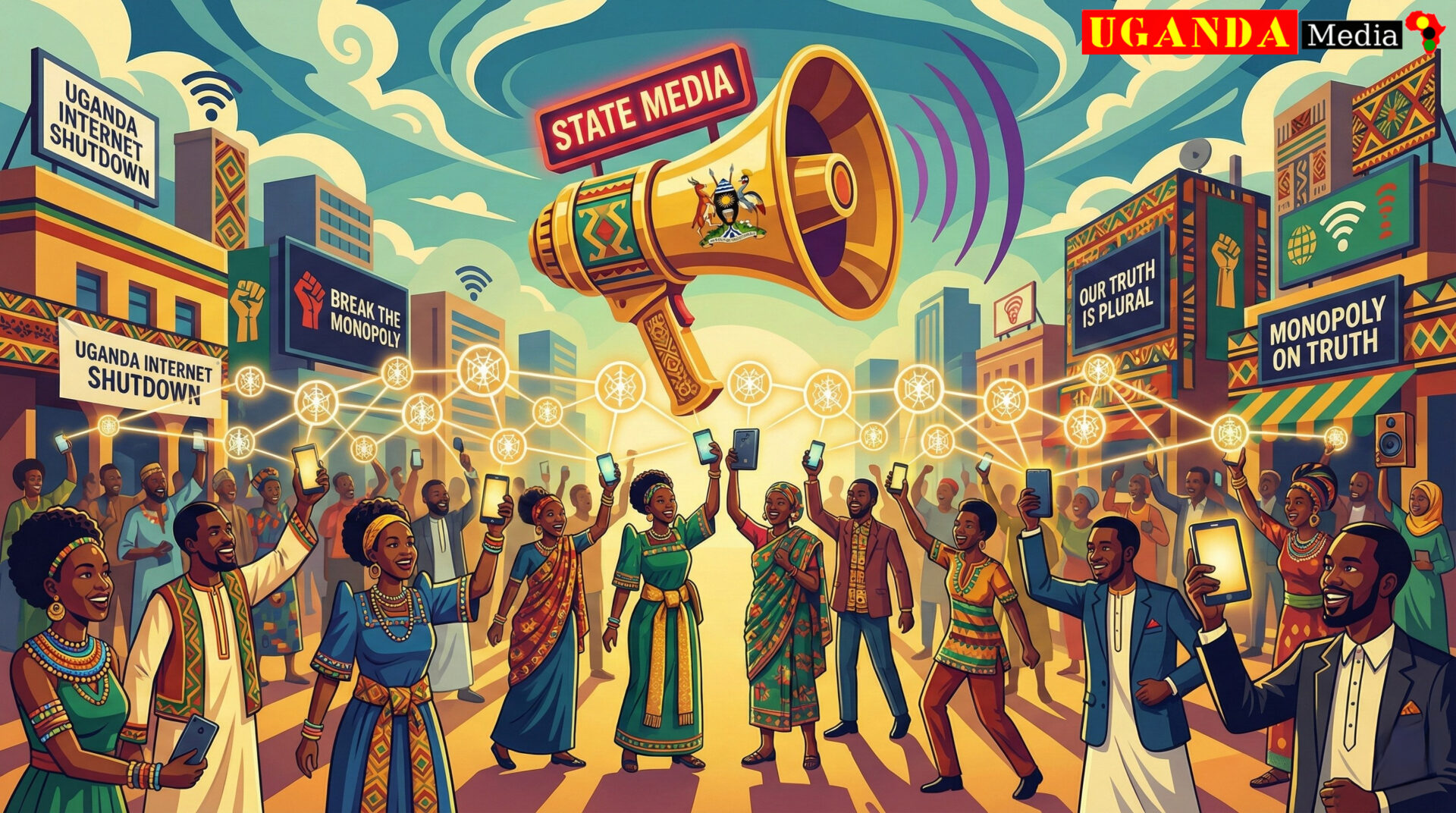 The regime, personified by the long-reigning dictator Yoweri Museveni, understands this power intimately. For a system built on patronage, myth-making, and the careful curation of reality, the unregulated flow of information is existential kryptonite. An independent website mapping voter locations isn’t a technical nuisance; it is a direct challenge to a core mechanism of power. It suggests that the people can organise, verify, and empower themselves without waiting for a handout of “official” data from the Electoral Commission—a body whose independence has been fatally compromised by decades of executive overreach.
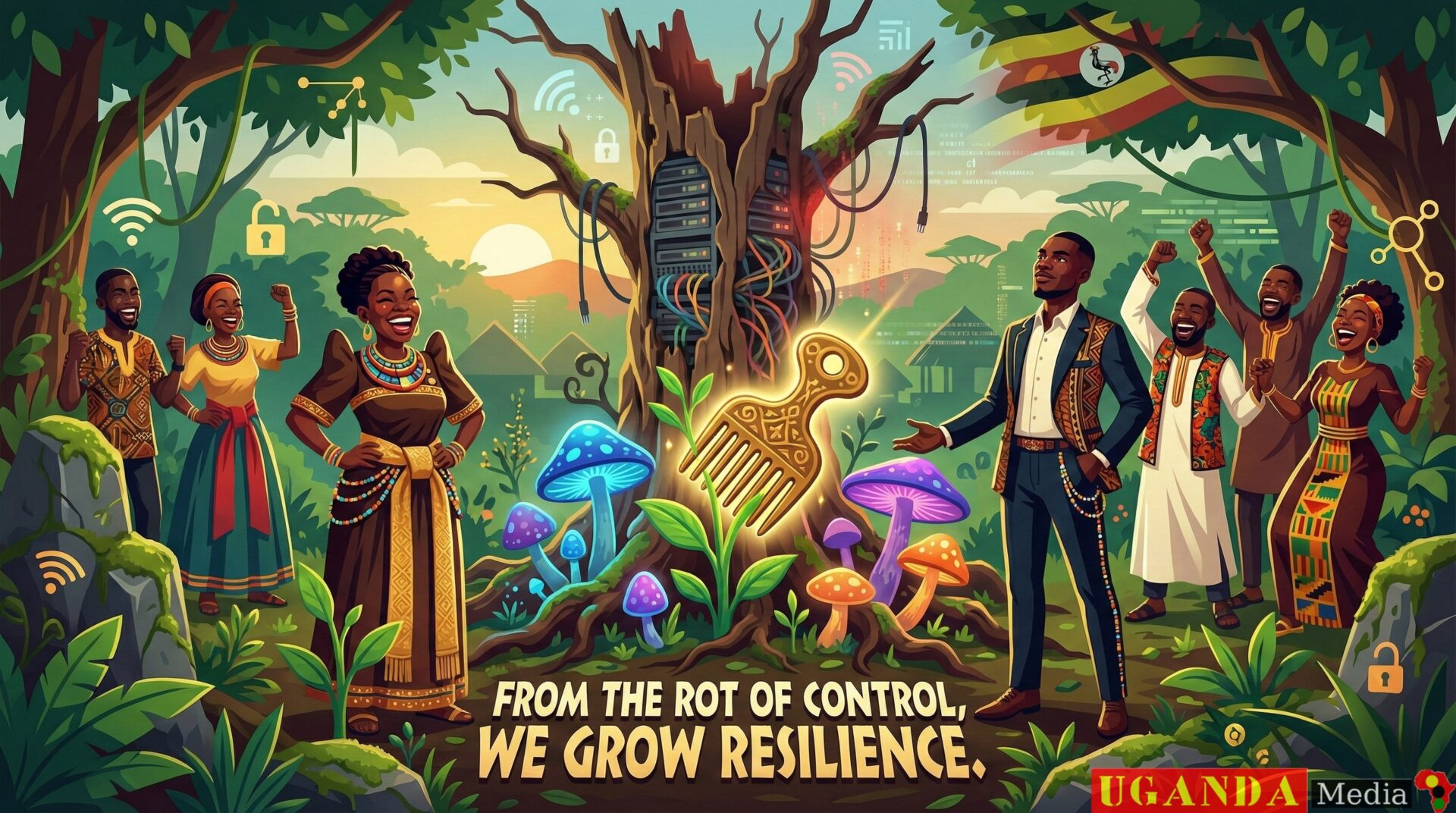 Ultimately, the claim to control information is a claim to control people. A populace that can freely share, debate, and verify information is a populace that cannot be easily led or misled. It is a populace that can build its own systems of mutual aid and solidarity, independent of the state’s corroded structures. The regime’s frantic need to stamp “UNAUTHORISED” on any source of knowledge it does not command is the clearest possible admission of its own weakness. It is the fear of a system that knows its legitimacy is so brittle that it cannot withstand the simple, unregulated act of people talking to each other, sharing what they know, and discovering their own collective power. The truth, much like the will of the people, does not require a permission slip from the Uganda Communications Commission to exist.
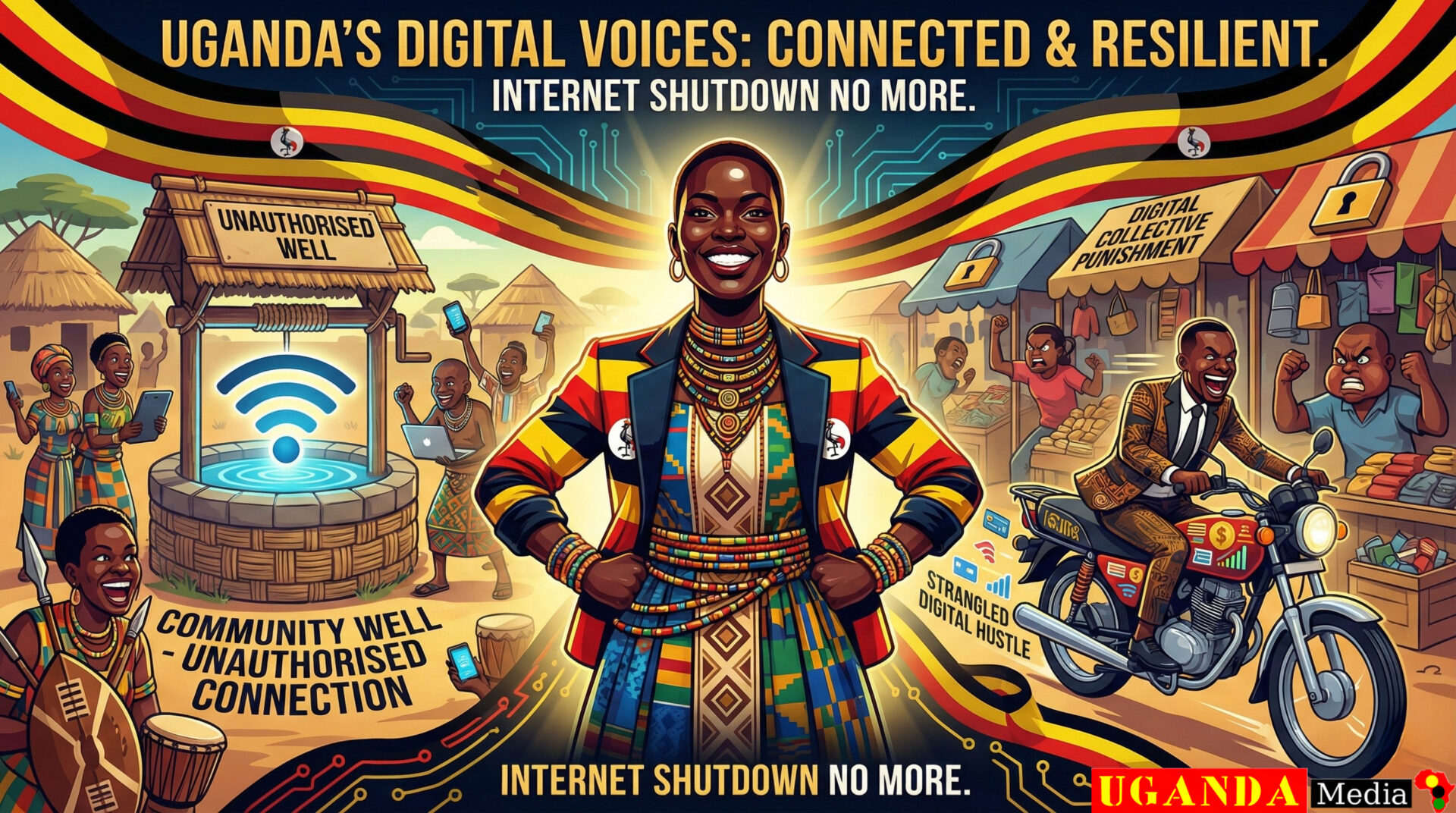 This is profoundly anti-democratic. Democracy, at its core, is a system of public verification. It relies on the ability of citizens to check, challenge, and confirm the processes that govern them. A state monopoly on electoral data deliberately breaks this mechanism. It tells the public: “You must trust the product, and you are forbidden from inspecting the factory.” When that factory—the EC—has been under the stewardship of the same political establishment for decades, its operational independence fatally compromised by patronage and pressure, this demand for blind faith is not about integrity; it is about impunity.
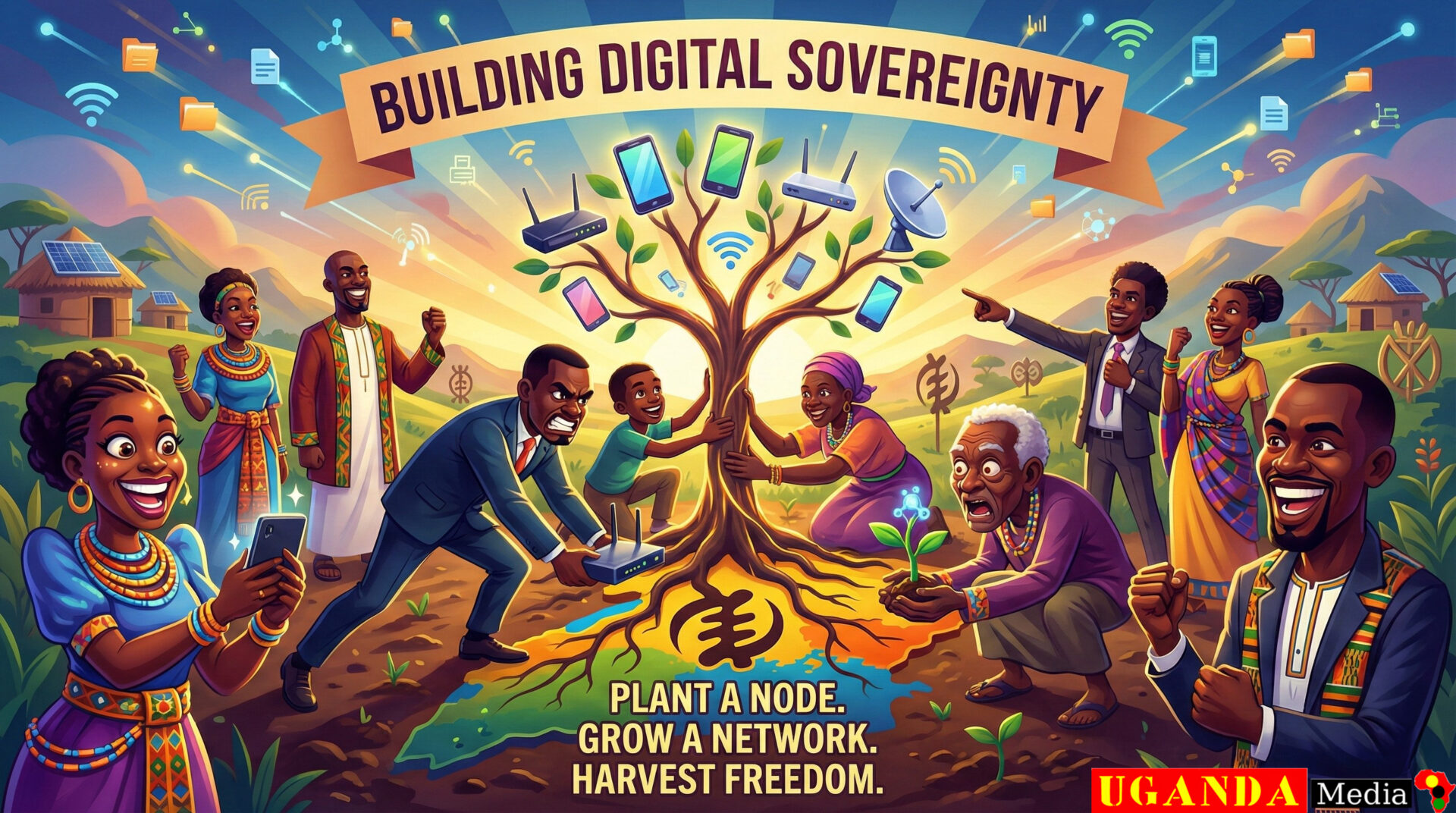 It also fosters a culture of enforced gullibility. Citizens are commanded to trust, and then systematically shown why that trust is misplaced. The resulting cynicism is not an accident; it is a tool. A population that believes all sources are equally corrupt or unreliable is a population disarmed, unable to mobilise around a shared, verified truth. The monopoly thus achieves two goals: it shapes the immediate facts on the ground, and it degrades the public’s long-term ability to discern fact from fiction at all.
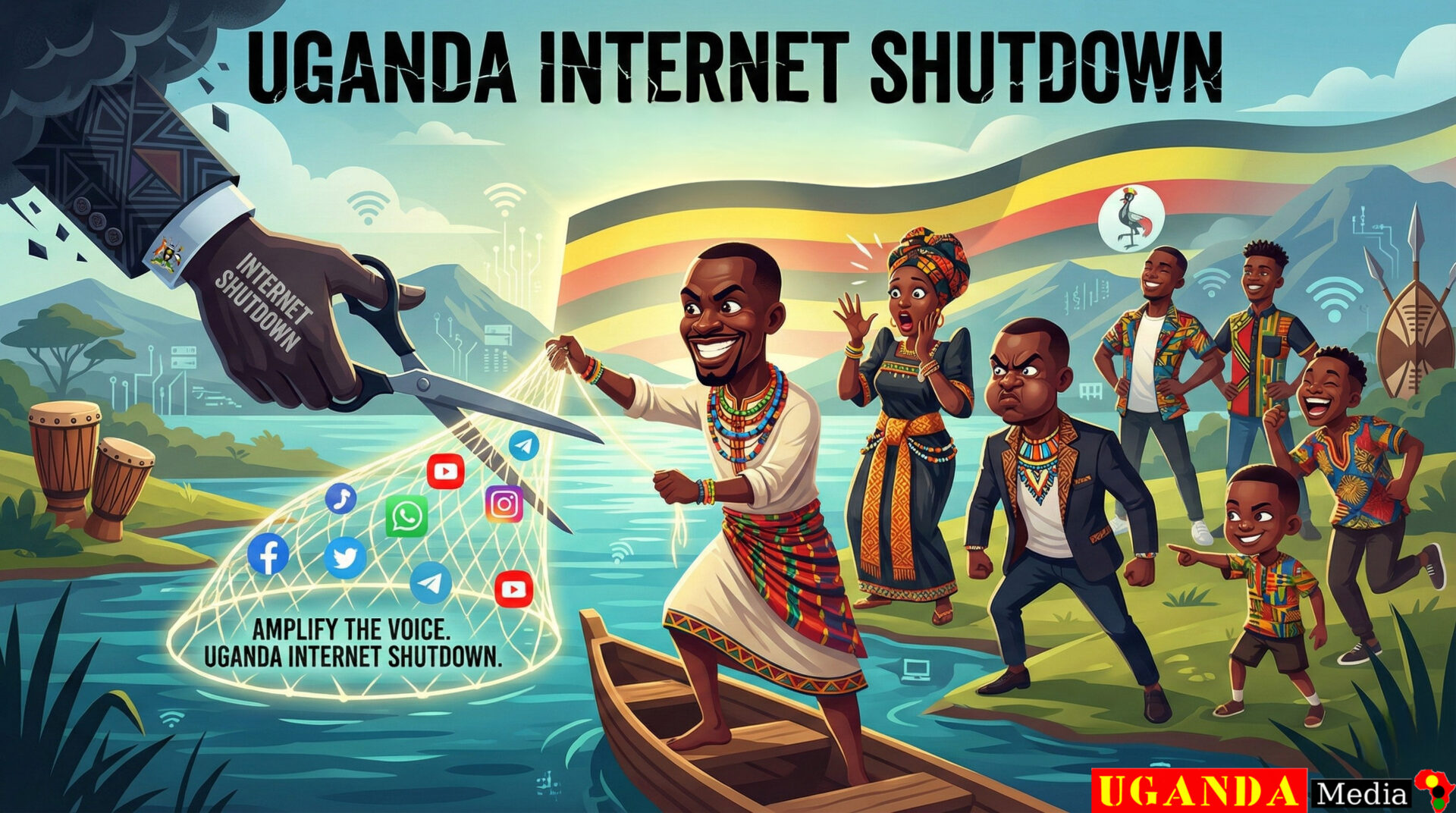 True popular sovereignty begins when the monopoly on truth is broken, and knowledge is returned to the commons, where it belongs—not as a privilege granted by the state, but as a common resource nurtured, shared, and fiercely protected by the people themselves.
 But this is not protection; it is the engineering of ignorance. By monopolising the role of arbiter, the state places itself beyond challenge. Any attempt by journalists, community organisers, or ordinary citizens to present alternative data, to question official statistics, or to offer a different interpretation of events can be instantly smothered under the blanket accusation of spreading “misinformation.” The term becomes a catch-all warrant to silence dissent. As the old adage warns, “Beware the shepherd who is more afraid of the sheep talking to each other than he is of the wolves.” The regime’s excessive fear of “misleading” speech reveals its true anxiety: not external falsehoods, but the internal, collective conversation of the people it rules.
 The state’s “misinformation” pretext is a direct assault on this grassroots epistemology. It declares that this organic, horizontal process of verification is illegitimate and dangerous. The only valid fact is the one stamped and approved by the central authority. This criminalises the very act of independent thought and communal fact-checking. A youth using social media to livestream a discrepancy at a polling station, a farmers’ cooperative documenting price collapses contrary to ministry reports, or a neighbourhood WhatsApp group questioning the official cause of a local blackout—all can be recast not as civic engagement, but as purveyors of “misinformation” threatening public order.
 Ultimately, this pretext exposes the regime’s contempt for the intellectual autonomy of its citizens. It is a strategy of power, not pedagogy. A confident and legitimate government, secure in its record and its popular support, would engage with critics, correct errors openly, and welcome public scrutiny as a strengthening force. A regime that instead rushes to pull the fire alarm of “misinformation” at the first spark of independent reporting or communal coordination confesses its own weakness. It admits that its version of reality is too fragile to survive in the open air of free discussion, and so it must construct a closed, controlled space where only its own voice echoes. The true threat to Uganda is not misinformation from below, but the enforced silence that allows deception from above to reign unchallenged.
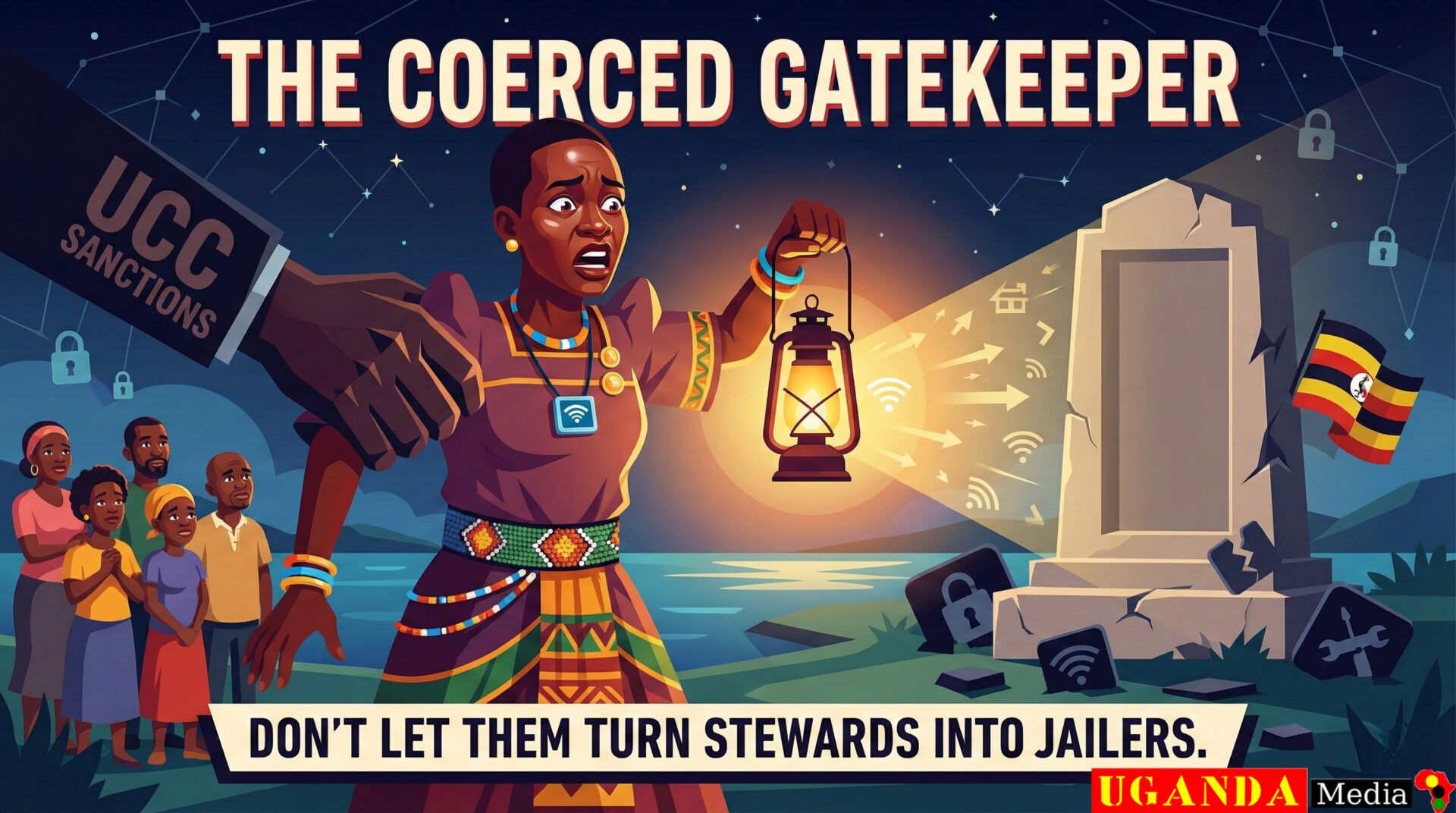 This transforms civic initiative into a pre-crime. A farmer pooling resources with neighbours to independently monitor crop prices could be considered “preventing” market instability. A community mapping unreliable water sources could be framed as “preventing” social unrest. The principle is infinitely elastic and thus infinitely dangerous. It places the entire realm of unsanctioned public action under a permanent cloud of suspicion, where the state’s own anxiety becomes sufficient legal grounds for clampdown. As the old adage goes, “A guard who starts shooting at shadows will soon fill the night with real corpses.” The Museveni regime, by shooting down digital “shadows,” creates a tangible corpse: the corpse of public trust and open discourse.
 This facade crumbles under the slightest scrutiny. In a political context where the independence of public institutions has been systematically eroded over decades, no action of this magnitude is “purely” administrative. The directive to block the website followed a “formal request from the Electoral Commission,” a body whose leadership is appointed by and serves at the pleasure of the executive. The “preventive” action is; therefore, a political strategy executed through administrative machinery. It uses the letter of the law to strangle the spirit of democracy.
 The “preventive” block is not a shield for the public, but a barricade erected by power to protect itself from the very people it claims to serve. It is the definitive signature of a regime that fears its own population more than anything else, and in doing so, forfeits any legitimate claim to their governance.
 This punishment is felt in the most visceral, economic terms. Consider the small business owner whose entire trade now flows through mobile money and social media advertising, suddenly cut off from customers and capital. Reflect on the freelance writer whose livelihood depends on remote communication, now rendered incommunicado and unable to work. Think of the farmer in Masaka trying to check crop prices, or the family seeking news of a loved one. Their digital lives—and the real-world sustenance and connection they derive from them—are deemed acceptable collateral damage. As the old adage poignantly observes, “When you burn down the forest to catch a single thief, you leave everyone homeless and in the dark.” The regime, in its zeal to control a narrative, sets fire to the entire digital commons upon which modern Ugandan society increasingly depends.
 This act of collective punishment starkly illuminates the regime’s priorities. The detailed “Exclusion List” that maintains internet for banking, government payments, and security services reveals that the suspension is not about a total technological blackout. It is a targeted social blackout. The flow of money and state authority must continue uninterrupted; it is only the flow of ideas, public conversation, and communal empathy that must be stopped. This lays bare the dictatorship’s true nature: it is a system that venerates control and capital above community and conversation.
 By punishing the whole for the potential transgressions of a few, the regime demonstrates its fundamental hostility towards the very concept of a self-governing society. It declares that the people’s right to communicate, to associate freely in the digital sphere, and to participate in the unfettered exchange of ideas is subordinate to the state’s insatiable need for control. The internet shutdown is therefore more than a temporary inconvenience; it is a stark lesson in power. It teaches that the state views the people’s freedom as a threat to be neutralised, and their collective digital life as a privilege it can revoke at will. The true “national security” being protected is not that of the Ugandan people, but the security of an ageing dictatorship from the empowered, connected, and watchful gaze of its citizens.
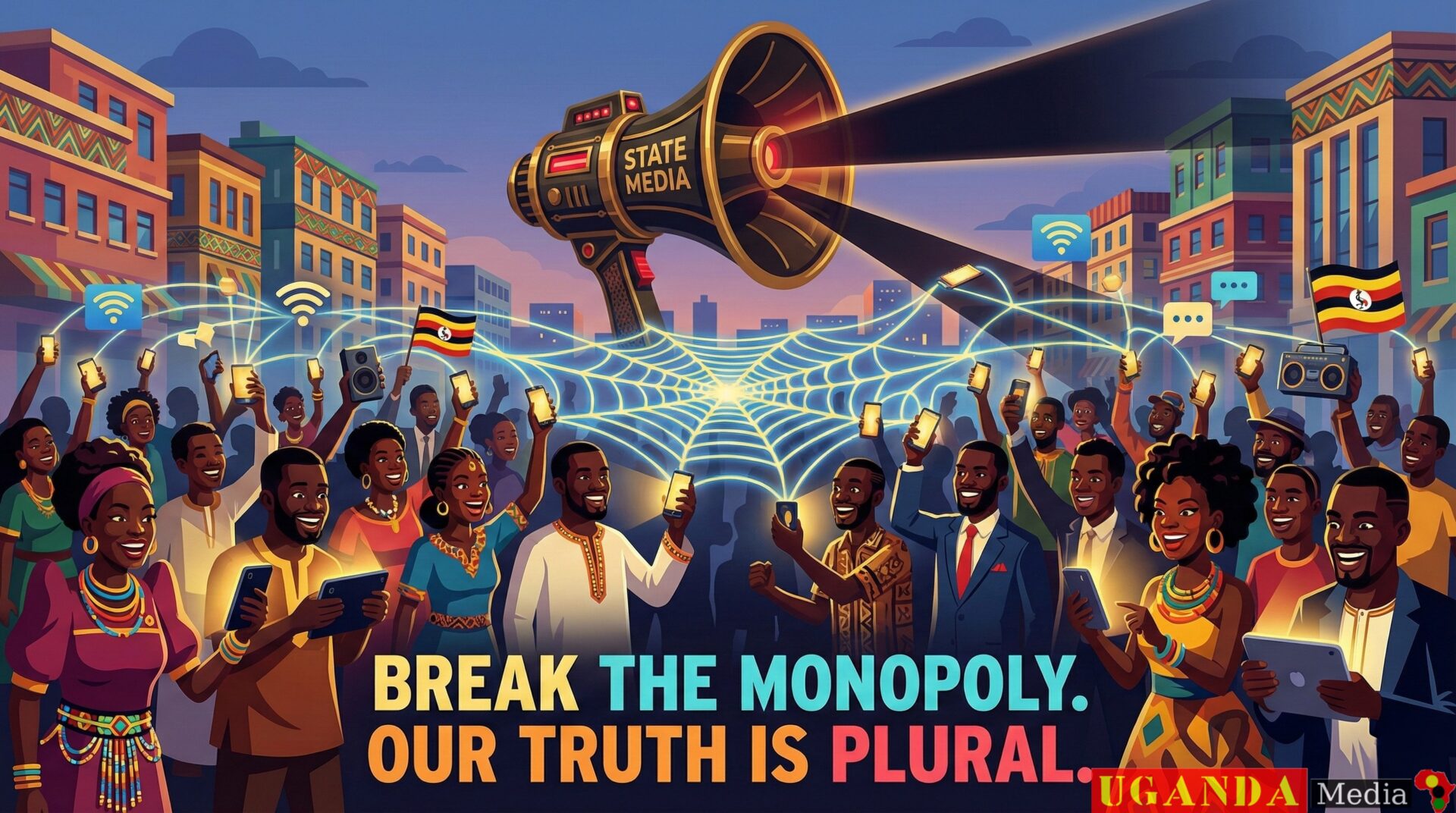 As the old adage starkly puts it, “A master may feed the horse in its stable, but he will always hobble it before it can run free.” The exclusions are the feed in the stable: the technical sustenance for a compliant, economically productive population. The shutdown is the hobble: the deliberate restraint on that population’s capacity for collective action and independent thought. The regime is not managing a crisis; it is enforcing a specific type of order—one where financial obedience is mandatory, and political agency is forbidden.
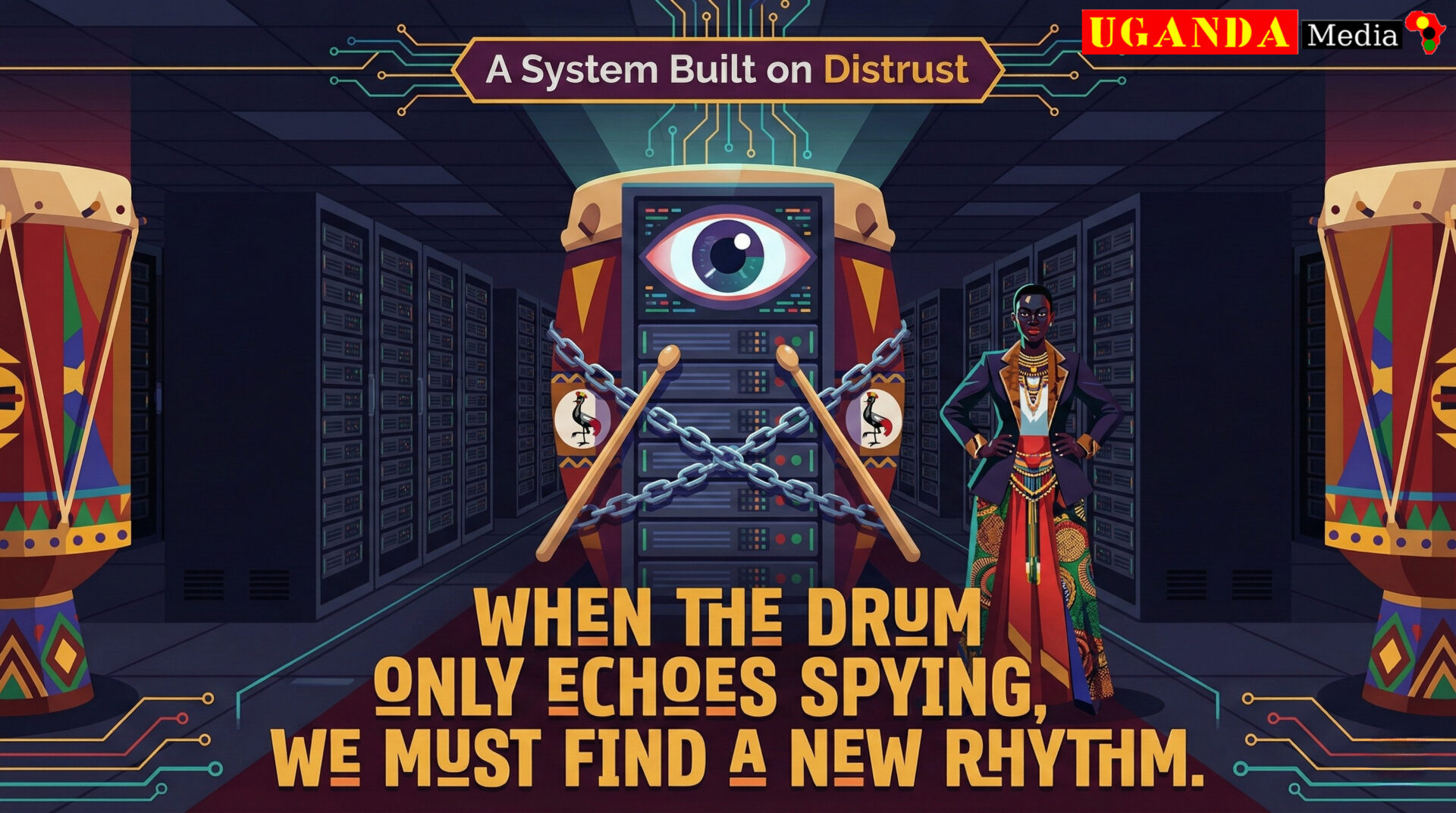 This selective list ultimately dismantles the state’s own narrative of a “necessary” shutdown for universal safety. It proves the action is not about safety, but about control. The continuity of systems that facilitate control and capital is paramount. The continuity of systems that facilitate community, empathy, and shared understanding is deemed dangerous. It is a perfect illustration of a state that exists not to enable society, but to manage and milk it. The dictatorship is willing to paralyse the nation’s social and intellectual life, but it dare not interrupt the ticking of the cash register or the flow of funds into its own coffers. In this calibrated silence, we hear the regime’s truest voice: it values the transaction above the conversation, the ledger above the community, and its own perpetuation above the people’s right to connect, challenge, and choose.
 For the average Ugandan facing a medical emergency during the blackout, the reality is one of profound isolation. The very tools that have woven the modern social safety net—mobile money to pay a boda boda, a WhatsApp group to alert neighbours, a phone call to a relative at the hospital for advice—are deliberately severed. The state offers a digital back door to a referral hospital’s server while bricking up every communal path leading to its actual door. This creates a cruel paradox: the system is “up,” but the people are left down, disconnected, and unable to reach it. As the piercing adage reminds us, “A lifeboat locked in a captain’s cabin saves no one from a sinking ship.” The regime, from its isolated bridge, secures its own lifeboats of critical data while leaving the passengers to drown in a sea of enforced silence and immobility.
 The state’s blackout is a direct assault on this organic capacity. It recognises that the greatest threat to a rigid, centralised authority is not a single opposing party, but a population that can think, communicate, and act collectively without seeking its permission. Tools like encrypted messengers or social media platforms are the modern equivalents of the village drum or the community noticeboard—instruments for rapid, decentralised communication that enable people to respond to events in real time, based on shared local knowledge rather than filtered official statements.
 This action exposes the dictatorship’s fundamental antipathy towards the concept of an active, self-organising citizenry. A confident government would see vibrant grassroots networks as partners in community resilience. A paranoid dictatorship sees them as a shadow government in waiting. The blackout is, therefore, a pre-emptive coup against civil society in its broadest, most organic sense. It is an admission that the regime’s vision for Uganda is one of a managed populace, not an empowered people; of subjects who receive instructions, not citizens who build solutions together. In silencing the tools of grassroots mobilisation, the state seeks to silence the very hum of society thinking and acting for itself, leaving only the sterile, monolithic voice of authority echoing in the void.
 This move exposes the regime’s understanding that control, to be absolute, must be psychological as much as technical. It seeks to instil a feeling of futility. The message is: “Do not even think of reaching beyond what we allow. Your curiosity is criminal. Your desire to connect with others outside our sanctioned channels is a threat.” It transforms every citizen with a smartphone from a potential communicator into a potential suspect, where the mere act of installing a privacy tool becomes a latent act of defiance. As the adage starkly frames it, “A jailer who fears the tapping of pipes has already admitted that his prison is built on sand.” The regime’s hysterical focus on stopping every “bypass” confesses its deep insecurity; it knows its wall of control is fragile, that the human will to connect is a relentless, eroding force.
 This has a deeply chilling effect on solidarity. It aims to atomise resistance before it can even form. If neighbours cannot secretly coordinate, if communities cannot share secure channels, if whispers cannot become a collective voice, then the only organisation that remains is the vertical, top-down kind commanded by the state itself. It is a pre-emptive strike against the very concept of a private, collective conscience operating outside the regime’s surveillance.
 Therefore, this aspect of the directive is the most telling. It shows the regime moving beyond managing an election period and into the realm of social engineering. Its goal is to cultivate a citizenry that internalises the boundaries of permissible thought, that stops seeking ways over the wall because the very idea of the “outside” has been erased. It is an attempt to engineer not just compliance, but intellectual submission. However, in doing so, it commits a profound error. It mistakes a technical victory for a social one. You can block a VPN connection, but you cannot block the yearning for truth and community that created the desire to use it. That yearning, once awakened and then forcibly repressed, does not vanish. It transforms, waiting for its next, inevitable expression. The regime, in its siege, may silence the pipes, but it only amplifies the pressure building beneath its foundations.
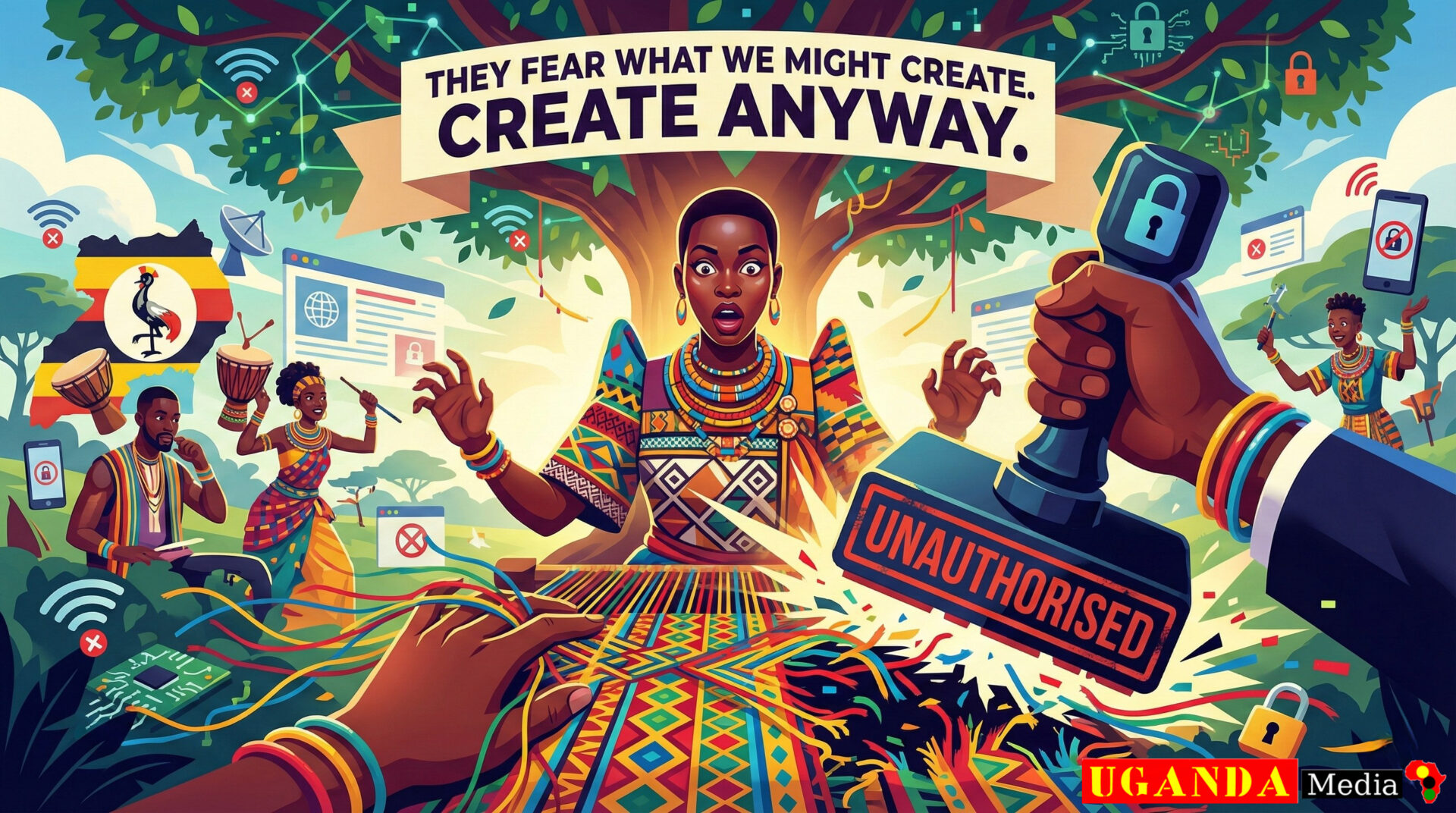 This coerced alignment dismantles the notion of the private sector as any kind of independent sphere. It becomes an annex of the state security apparatus. The ISP’s technical infrastructure—its towers, fibre cables, and servers—is no longer neutral. It is weaponised. Its customer service protocols become mechanisms for enforcing a digital curfew. Its relationship with subscribers transforms from one of service provision to one of surveillance and restriction. As the old adage goes, “When the blacksmith is forced to forge only chains, every piece of iron in the land becomes a potential shackle.” The state, by threatening the smith’s very workshop, ensures that the entire telecommunications infrastructure is bent to the purpose of confinement.
 Ultimately, the “severe sanctions” are more than a penalty; they are a pedagogy of power. They teach that in this system, there is no sanctuary, no apolitical professional space. Every boardroom, every server farm, every customer service centre is a potential annex of the state’s security committee. The directive forces a grim choice upon commerce: become the steward of the people’s connectivity, or become the state’s jailer of their communication. By choosing the latter to survive, these companies don’t just comply with oppression—they become its essential, wired-in architecture, proving that the most effective cage is one where the keepers are also prisoners of their own economic fear.
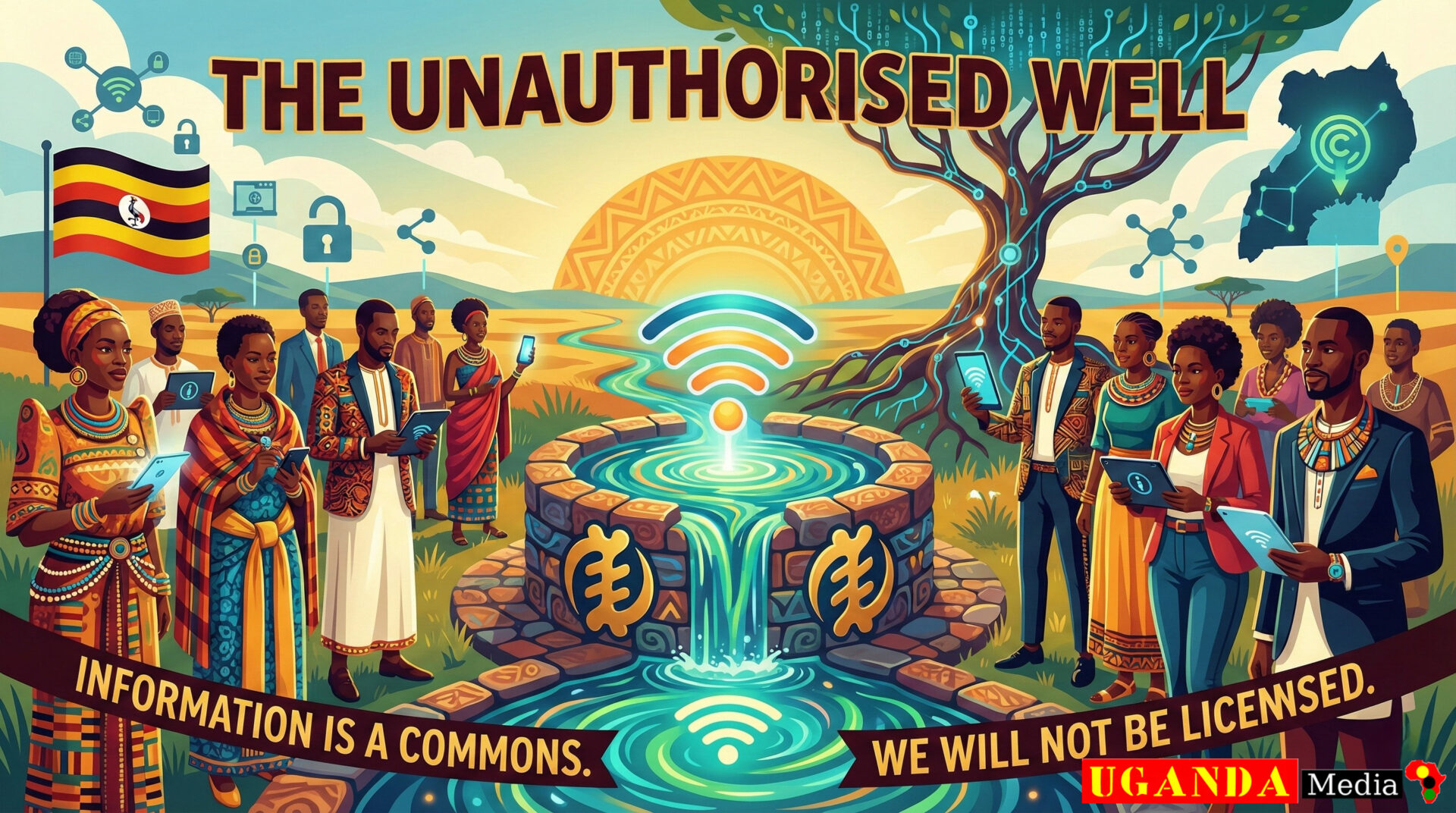 This system is explicitly designed to eliminate discretion, solidarity, or ethical resistance from within the corporate structure. It ensures there is no room for a technician to quietly look the other way, or for a manager to question the proportionality of a directive. The protocol of instant reporting severs any potential for a quiet, collective pause or a professional consensus that might resist an overreach. It atomises the operators just as the shutdown atomises the public, breaking down any potential for a unified, principled stand from within the industry.
 The normalisation occurs through repetition. If a blackout is enacted in 2021, again in 2026, the precedent is set. It transitions from a shocking aberration to an anticipated part of the “election season” ritual. Each repetition wears down public resistance, conditions businesses to build contingency plans for state-mandated silence, and teaches a new generation that this is simply how things are done. The “temporary” becomes cyclical, and the cyclical becomes a permanent fixture of political life. As the adage warns, “Beware the door built for a storm; once the frame is set, it will be used to lock out the breeze on a sunny day.” The emergency framework, once its sturdy frame is installed, is inevitably repurposed for everyday control.
 Furthermore, these periods of suspension serve as live-fire exercises for the state’s control apparatus. They allow the UCC and security services to audit compliance, identify technical weaknesses in the blocking mechanisms, pressure ISPs, and observe the public’s response. The “restoration notice” does not end this project; it merely concludes a chapter, with all the gathered data used to refine the system for next time. The freedom that returns is thus a diminished one, existing on borrowed time and under the demonstrated threat of easy revocation.
 But who sits on this committee? What are its criteria? To whom does it report? Its deliberations are state secrets. Its members are anonymous. Its recommendations are binding edicts for regulators like the UCC, yet it exists outside the very regulatory and parliamentary oversight it commands others to enforce. This creates a black box of power. Inputs (the regime’s political anxieties) go in, and outputs (orders for a national digital siege) come out, with the internal workings declared too sensitive for public scrutiny. As the adage precisely warns, “Power exercised in a closed room grows in the dark, and poisons the air for everyone outside.” The Committee is that closed room, where the toxic decision to silence a nation is cultivated away from the light of public debate.
 The ultimate goal is to create a sense of fatalistic inevitability. By attributing such draconian measures to a faceless, expert committee, the regime suggests that this is not a choice, but an inescapable technical reality. It seeks to stifle dissent not just by force, but by fostering a belief that resistance is futile against the monolithic, informed judgement of the security state. This is the pinnacle of anti-democratic manipulation: making oppression appear not as the will of a man, but as the imperative of an immutable system. In doing so, it exposes the true nature of the regime—not as a government, but as a self-perpetuating security apparatus masquerading as one, using committees as gavels to hammer down the lid on society’s voice.
 The impact on livelihoods transcends “inconvenience.” It is a demonstration of power that operates through economic dispossession. It proves that the state views the people not as citizens to be served, but as an economic resource to be switched on and off, whose productive energy can be cut to prevent its transformation into political energy. In sacrificing their welfare, the dictatorship admits it no longer sees its legitimacy as deriving from the people’s well-being, but solely from its own enduring control. The silence it purchases is not just political; it is the terrified, hungry silence of a people calculating the cost of their next word against the price of their next meal.
 The regime seeks to create a collective sensory deprivation tank, hoping that in the absence of light and sound, the people will forget their own power and the state’s own failing report card. As the old adage cuts to the heart of it: “An empty house makes the most noise when trying to seem full.” The deafening crackle of the state’s shutdown order is the sound of a hollowed-out system, desperately banging pots and pans to simulate the substance and security it utterly lacks.
 In this single, sweeping act of isolation, the dictatorship writes its own most accurate review. It confesses that it has no positive case to make for its continuation. It admits that its survival depends not on persuasion, but on the enforced ignorance and disconnection of the governed. A government that must blindfold its citizens to keep them from walking away is not a leader; it is a captor. And a system that can only function in the dark is not a political order—it is the negation of politics itself, a void where the voice of the people has been replaced by the hollow, fearful static of a state that long ago ceased to serve anyone but itself.
 This mirrors the way Ugandan communities have historically functioned beyond the reach of distant capitals. It is the digital-age equivalent of a village collectively maintaining a clean water source after the district council’s promises dry up, or a neighbourhood watch organising its own patrols when police are absent or partisan. The action is focused on solving an immediate, concrete problem: “We need to know where to vote, and we cannot trust the only source we are told to rely on.” The solution is decentralised, relying on voluntary cooperation and shared effort rather than central decree. As the adage wisely observes, “When the bridge is washed away, the wise do not merely curse the river; they begin gathering stones from the bank.” The state, in this metaphor, is the failed bridge. The grassroots initiative is the collective gathering of stones to forge a new crossing.
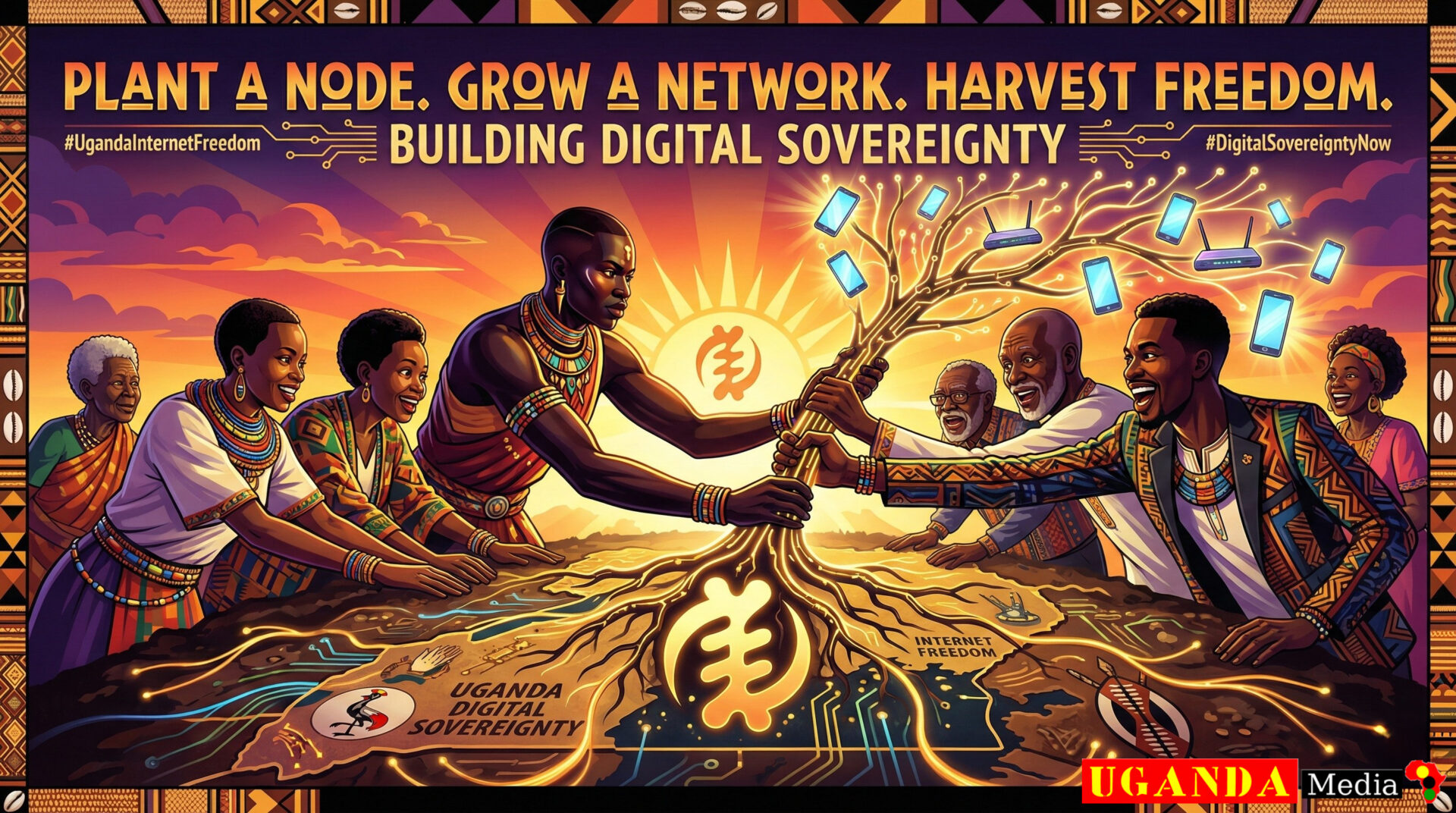 The regime, whose power is based on centralised control and a hierarchy of patronage, correctly identifies this impulse as subversive. Its entire legitimacy is built on the claim that it is the sole, indispensable provider of order and progress. Grassroots self-organisation fatally undermines this myth. It indicates that society can coordinate, problem-solve, and care for itself. In attempting to crush the “unauthorised” website, the dictatorship is not just censoring information; it is trying to stamp out the very idea that people have the right, and the ability, to manage their own common affairs. It fears the stones being gathered from the bank, for they are the foundations of a bridge to a future it cannot control, built by hands it never commissioned.
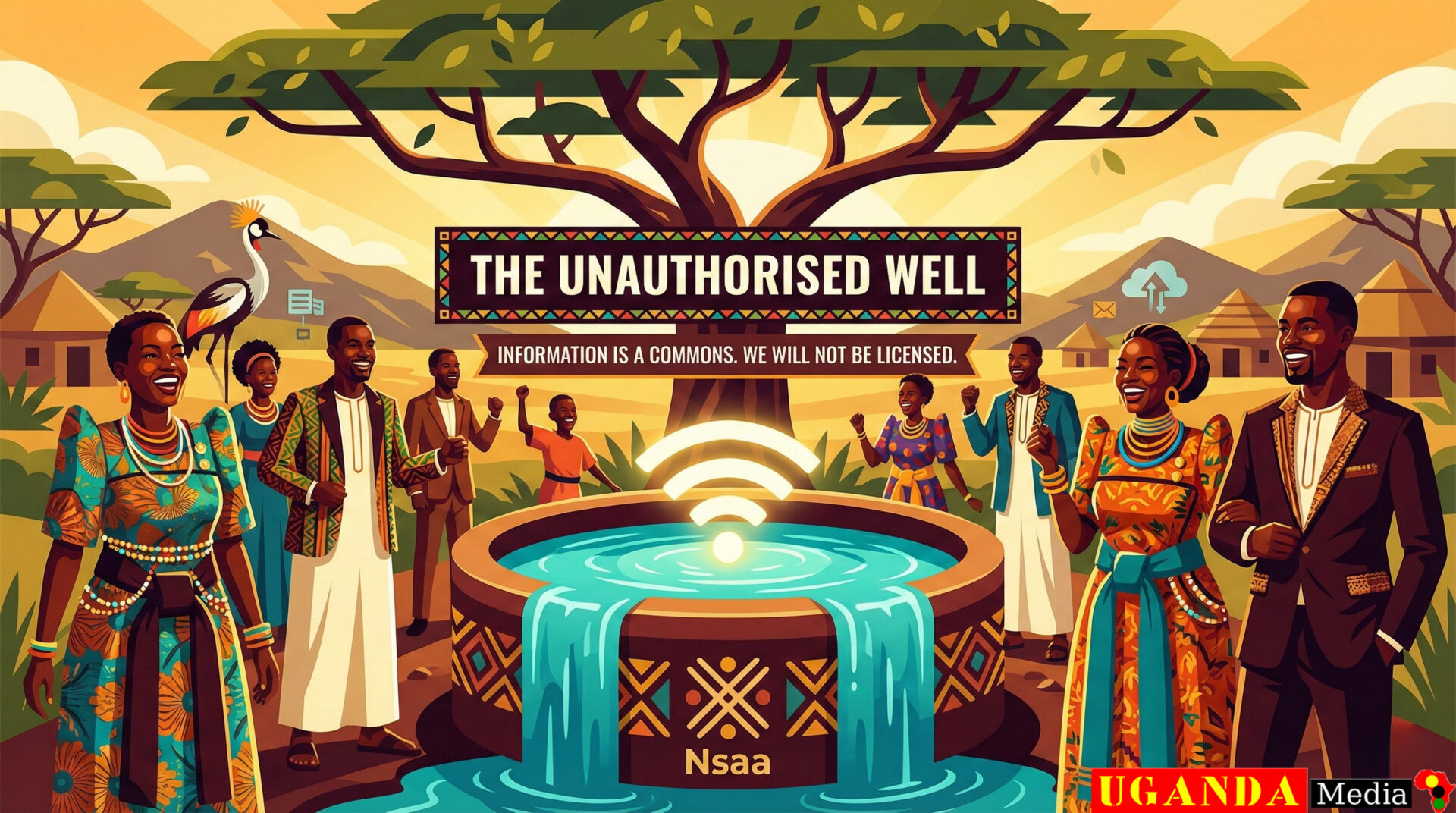 Simultaneously, it must enforce a reality of rigid, uncompromising control to maintain its grip on power domestically. The internet shutdown is the ultimate expression of this domestic truth. The slogan, therefore, operates as a psychological and diplomatic firebreak. It is a piece of narrative insulation designed to contain the fallout. The regime calculates that the international community, faced with the technical language of a “temporary, administrative, and preventive measure” from a “Communications Commission” that professes to enable “safe, reliable, and lawful communication services for all,” will default to giving a dubious benefit of the doubt. The brutality is laundered through paperwork; the gag order is dressed in the lexicon of legitimacy.
 This facade is weaponised against domestic dissent. When citizens protest the shutdown, the regime can point to the UCC’s documentation and its lofty slogan, framing critics as unreasonable actors opposing a lawful, professionally managed security operation. It creates a maddening dissonance for the populace, who live the harsh reality of the shutdown while their government broadcasts a serene, legalistic fiction to the world. As the piercing adage puts it, “The most ornate gates often front the most oppressive prisons.” The slogan “Communication for All” is that ornate gate—a beautifully crafted promise that only heightens the cruelty of the confinement it conceals.
 This achieves a profound disempowerment. It tells the software engineer who could build a more efficient system, the lawyer who could argue a case for proportionality, the economist who could quantify the damage, and the ordinary citizen who simply feels this is wrong, that their knowledge, their reason, and their voice are irrelevant. The civic forum, however diminished it may have been, is declared permanently closed for this matter. As the adage starkly illuminates, “A judge who wears his own blindfold hears only the sound of his own gavel.” The regime, acting as prosecutor, judge, and jury in its own case, has blindfolded itself to any evidence or plea from the defence—the people. The only sound it acknowledges is the echoing thud of its own edict.
 This creates a perverse reality where the burden of proof is inverted. The state does not need to prove the necessity of suspending a fundamental liberty. The citizen is placed in the impossible position of having to disprove a negative, to argue against a secret security assessment they are forbidden from seeing. It is the ultimate bureaucratic trap, designed not to facilitate sound governance, but to render dissent procedurally extinct before it can even begin.
 The freelance journalist will hesitate before embarking on a sensitive investigation, wondering if their work might trigger the next “security recommendation.” The community organiser will second-guess planning a meeting on a digital platform, fearing the gathering itself could be construed as a threat. The business owner, burned by the sudden loss of income, will be reluctant to invest further in the digital economy, seeing it as an unstable foundation. As the adage coldly observes, “A single winter can teach a tree to grow bent, away from the wind.” The shutdown is that harsh winter. The bent growth is the future behaviour of a society that has learned to anticipate and pre-emptively comply with the state’s capricious gales of control, growing away from the open, upright posture of a free public sphere.
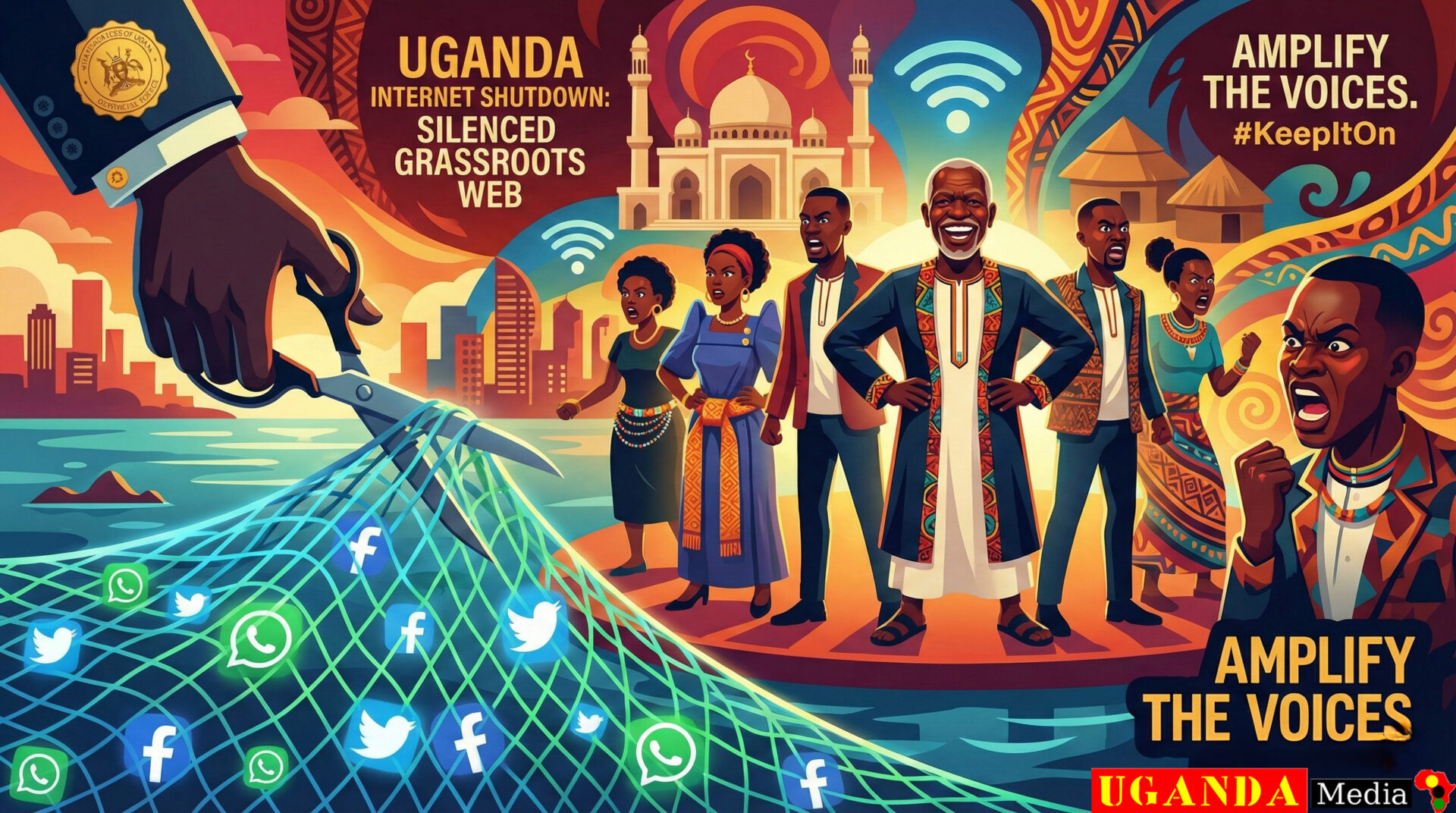 This erosion of trust is multidirectional. Citizens begin to distrust the platforms they use, knowing they are compelled to enforce state diktats. They may even begin to distrust each other, as the state’s demonstrated power to isolate individuals makes collective action seem more risky and futile. The very idea of building something together—a business, a campaign, a support network—is shadowed by the knowledge that the state can dissolve its foundational infrastructure with a signature. This breeds a society of cautious atoms, not confident communities.
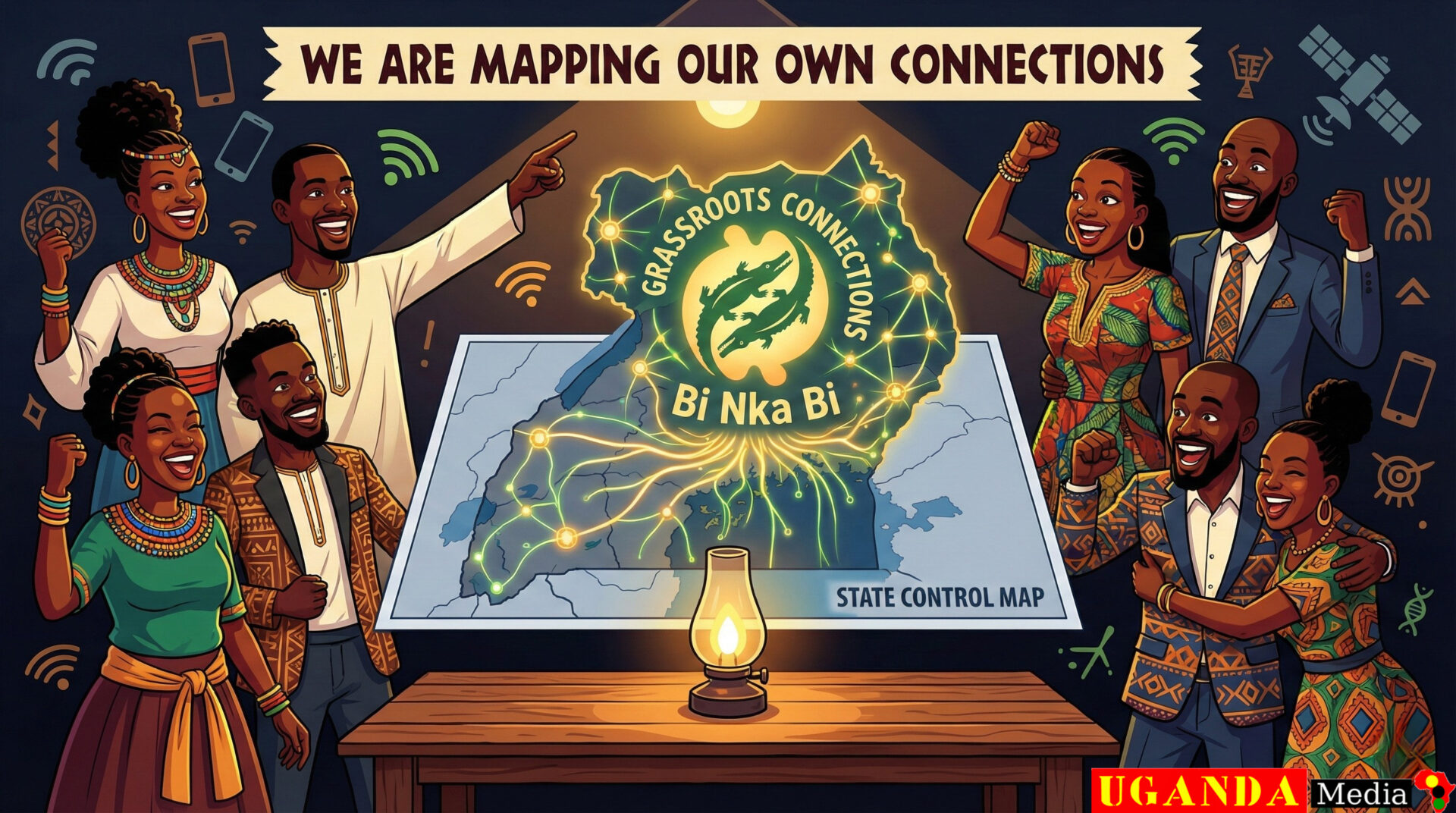 Consequently, the return of connectivity is not a liberation, but a probation. The digital space is returned, but it is now haunted. Every user becomes their own censor, mentally referencing the UCC’s directives before posting, before planning, before connecting. The regime achieves its goal not through the constant labour of monitoring every conversation, but through the implanted memory of its own overwhelming power to simply end the conversation altogether. The silence it desires is no longer just the one it imposes, but the one we impose upon ourselves, having learned the cost of making too much noise. The chill becomes ambient, and society learns to live, work, and think within its cold, new limits.
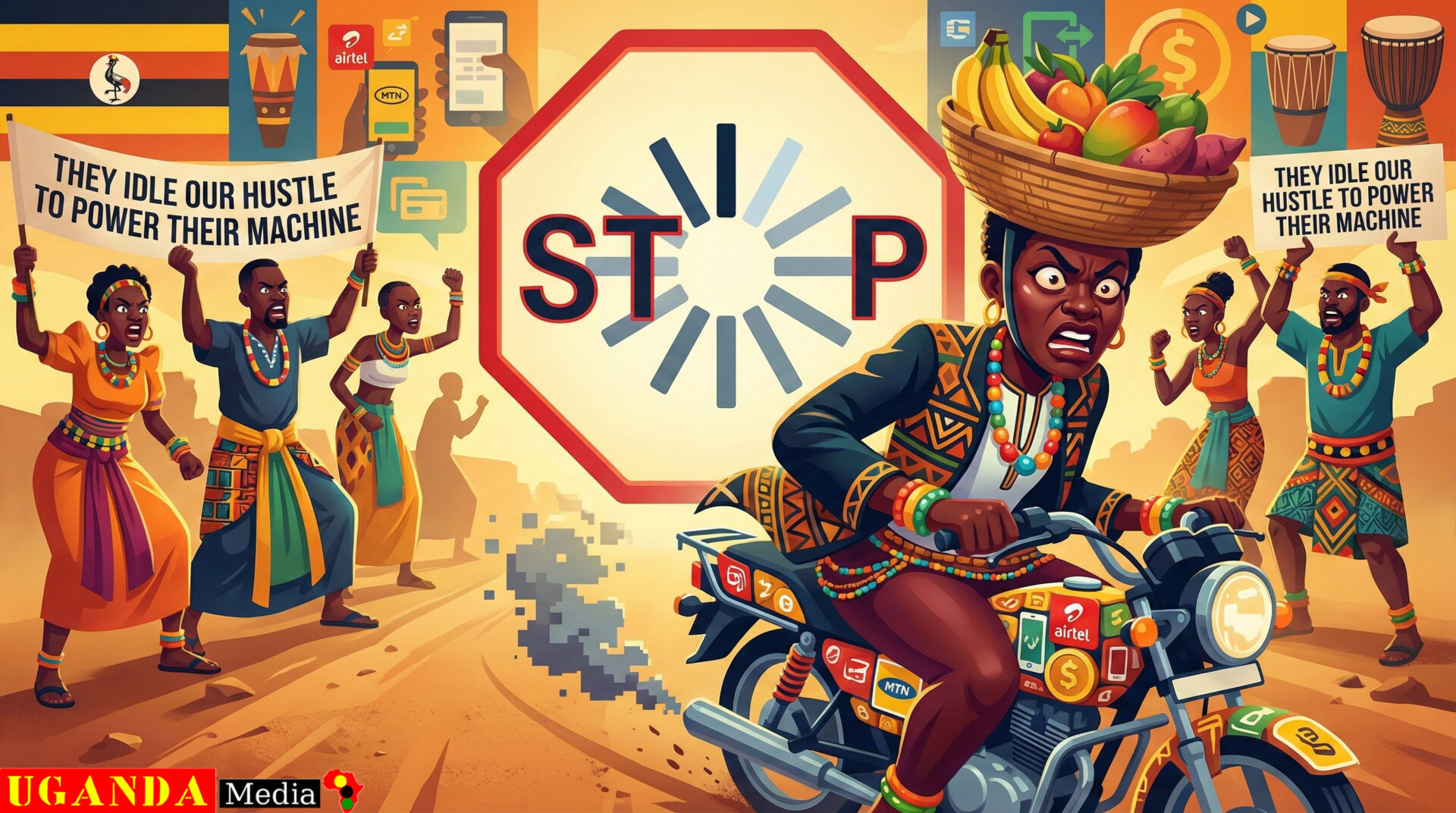 This approach aligns with how communities have historically managed common resources, from maintaining a local water source to organising collective labour. The knowledge and responsibility are held locally. Applied to communications, it means a trading centre in Mbale could maintain its own network for market information, independent of a political decision made in the capital. As the adage affirms, “A forest is not felled by a single axe, but by many; yet it is also regrown by many seeds, scattered by the wind.” The state’s shutdown is the swing of a single, massive axe. A mesh network represents the countless, scattered seeds of local connectivity, each capable of taking root and linking with others.
 This could mean communities using open-source software to create and share their own verified voter rolls, or disaster response teams coordinating with encrypted, off-grid messaging apps. It empowers what the state forbids: the public’s right to collectively establish truth through dialogue and evidence, rather than passively receiving a sanctioned broadcast. It turns communication from a one-way broadcast into a collaborative, common practice.
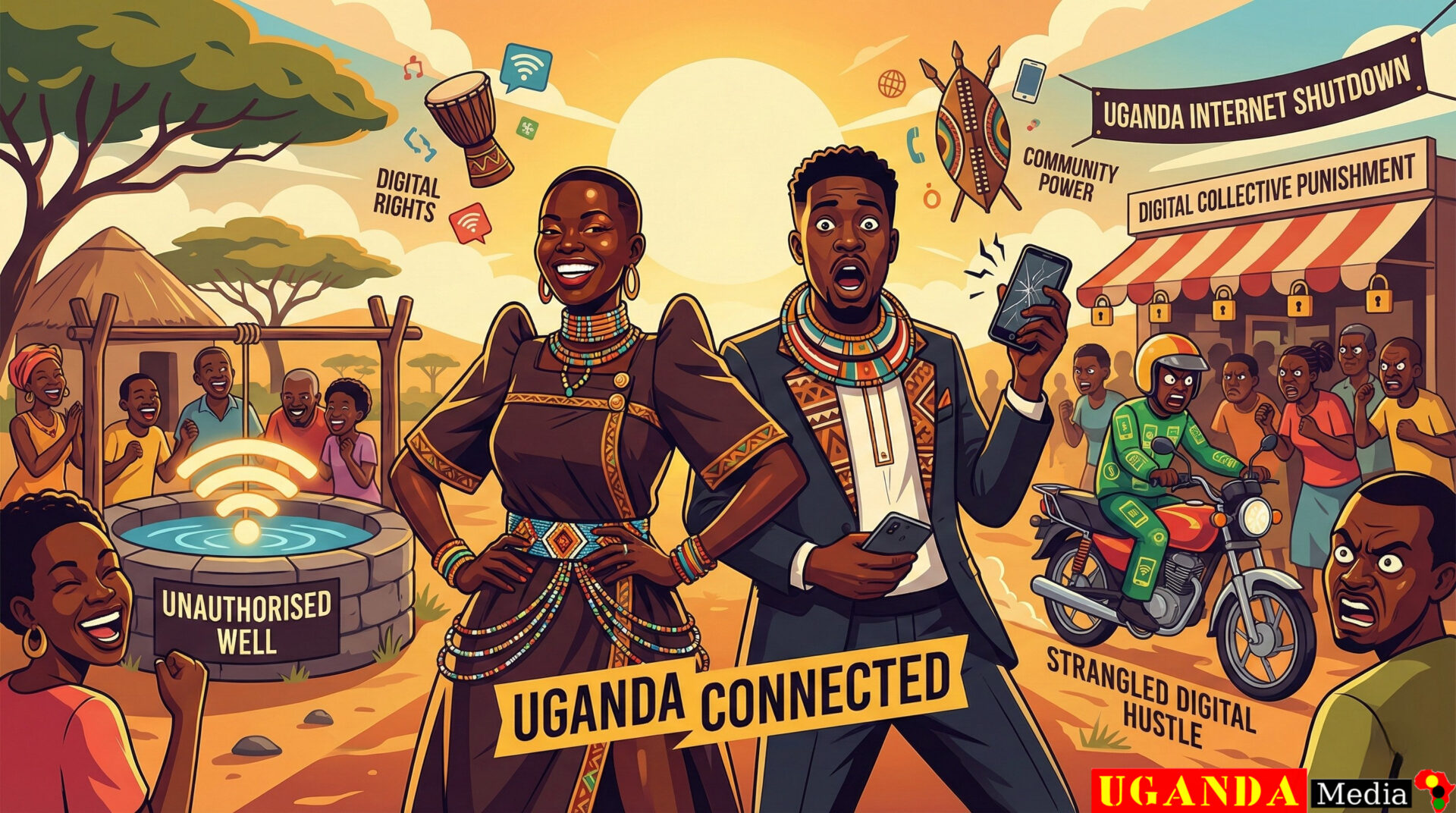 The regime’s violent reaction to a simple voter information website shows precisely why this is needed. When the state actively prohibits transparency and labels independent coordination a threat, society must be able to build the tools for transparency and coordination outside the state’s control. These are not tools of secession, but of self-defence and self-determination. They ensure that the basic human need to connect, inform, and organise can never be fully extinguished by a decree from a committee of elites.
Conclusion: The Silence That Speaks Volumes
The directives issued by the Uganda Communications Commission in January 2026 will be recorded in history not as technical bulletins, but as political manifestos. They are unequivocal declarations of war against the cognitive and social autonomy of the Ugandan people. These documents, dripping with the sterile language of administration, expose the Yoweri Museveni dictatorship and the ossified political class it sustains as entities fundamentally opposed to the interests of the nation they claim to lead. Their explicit priority is not welfare, transparency, or self-determination, but the preservation of a control so total it demands the deliberate creation of ignorance and isolation. In weaponising the noble concepts of “order” and “security,” the regime attempts to sanctify its greatest crime: the enforced silencing of a nation’s collective mind and voice on the eve of its most important collective decision.
 The official justifications collapse under the weight of their own contradiction. True integrity in a public information system is not achieved by monopolising and then severing it, but by fostering its openness, its plurality, and its resistance to manipulation. Genuine order in an electoral process does not spring from a populace that is gagged, blinded, and atomised, but from one that is informed, actively engaged, and free to associate, discuss, and scrutinise. The regime’s version of “order” is the quiet of the graveyard; the authentic order of a democracy is the vibrant, sometimes chaotic, hum of the marketplace of ideas.
As Uganda stands at this familiar, yet increasingly perilous, crossroads, the digital blackout must be recognised for its true nature. It is not a shield. It is a confession. It is the desperate, flailing action of a bankrupt political system, terrified of the illuminating light its own people might generate if allowed to communicate freely. The darkness it imposes is meant to hide the emptiness of its own promises and the hollowness of its own legitimacy. As the adage reminds us, “A candle is not dimmed by lighting another; and a room grows brighter still when many flames are free to gather.” The regime, in its profound insecurity, seeks to snuff out every candle but its own, fearing the collective radiance of a people united in conversation.
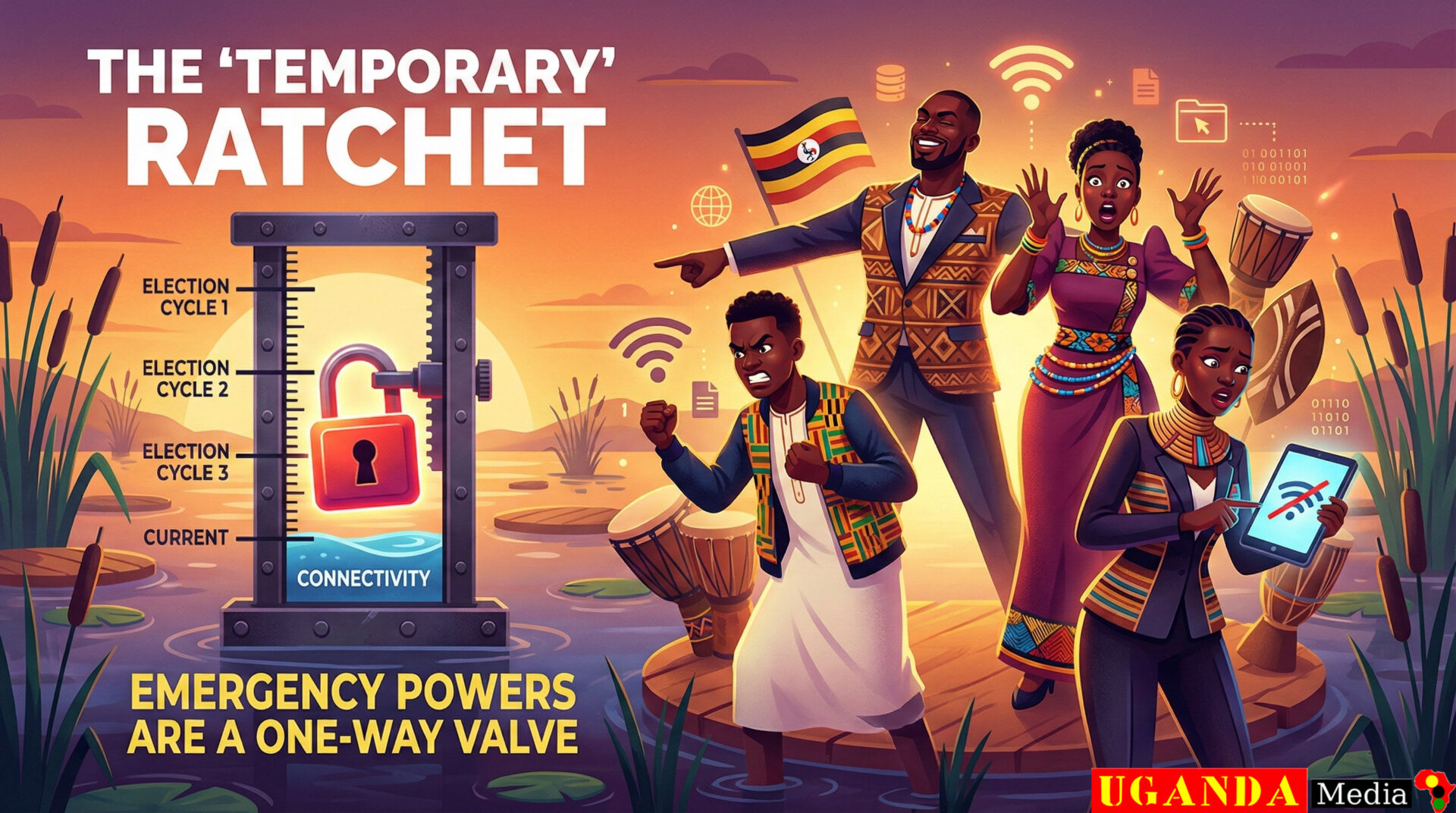 Therefore, the defining struggle for Uganda’s soul is no longer confined to the physical barricades or polling stations. It is now equally waged in the digital ether—in the codes, the frequencies, and the data packets that form the nervous system of modern society. It is a battle between two irreconcilable powers: the centralised, coercive power of the state to impose silence, and the decentralised, organic power of the people to establish connection. The first builds fortresses and kill-switches. The second weaves meshes and plants seeds. The shutdown is a stark lesson in the vulnerability of dependence on a single, hostile point of control. The enduring response must be the quiet, determined, and collective work of building systems of communication and solidarity that are rooted in the community, governed by mutual aid, and forever beyond the reach of any commissioner’s pen. The future belongs not to those who can best command silence, but to those who can most freely sustain dialogue.

RELATED PUBLICATIONS:
 The Illusion of Dialogue:The Real Meaning of Uganda’s IPOD Dialogue & Political Theatre
 Uganda’s 2026 Election Manifestos: A Deep Dive into Promises vs. Delivery
 Colonial Legacies and Ethnonationalism in Uganda: The Acholi, Obote, and Post-Independence Struggles
 Empowering Tomorrow’s Leaders: The Transformative Role of Student Elections at Rainbow International School Uganda
 GOMBE Junior School Kikajjo-Nateete: Historic Prefects’ Campaign Ignites Passion for Leadership in Uganda
 Parliamentary Insights: Debating Education Reform, Climate Change, and Regional Unity in Uganda
 Uganda’s Future Leaders: Highlights from the Hillside Schools Naalya Swearing-In Ceremony
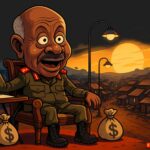 Ugandan Politics Exposed: The Illusion of Choice and Managed Opposition
 Bobi Wine & NUP Corruption: The Inside Story of Uganda’s Opposition Crisis
 The Unspoken Truth: Is the 1995 Ugandan Constitution Still Relevant?
 Digital Exile: How Ugandan Writers Are Conquering Censorship
 Uganda 2026 Elections: Full Analysis of Presidential Debate & Candidates’ Visions
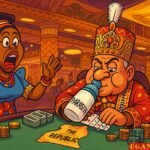 Beyond the Throne: A Critique of Royal Authority in Modern Ugandan Politics
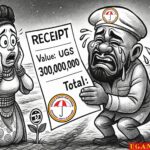 Bobi Wine’s NUP: Empty Chairs, Walkover MPs, and the Crisis of Opposition Strategy