

Uganda’s Diaspora Convention: Extraction, Not Partnership, in Kampala
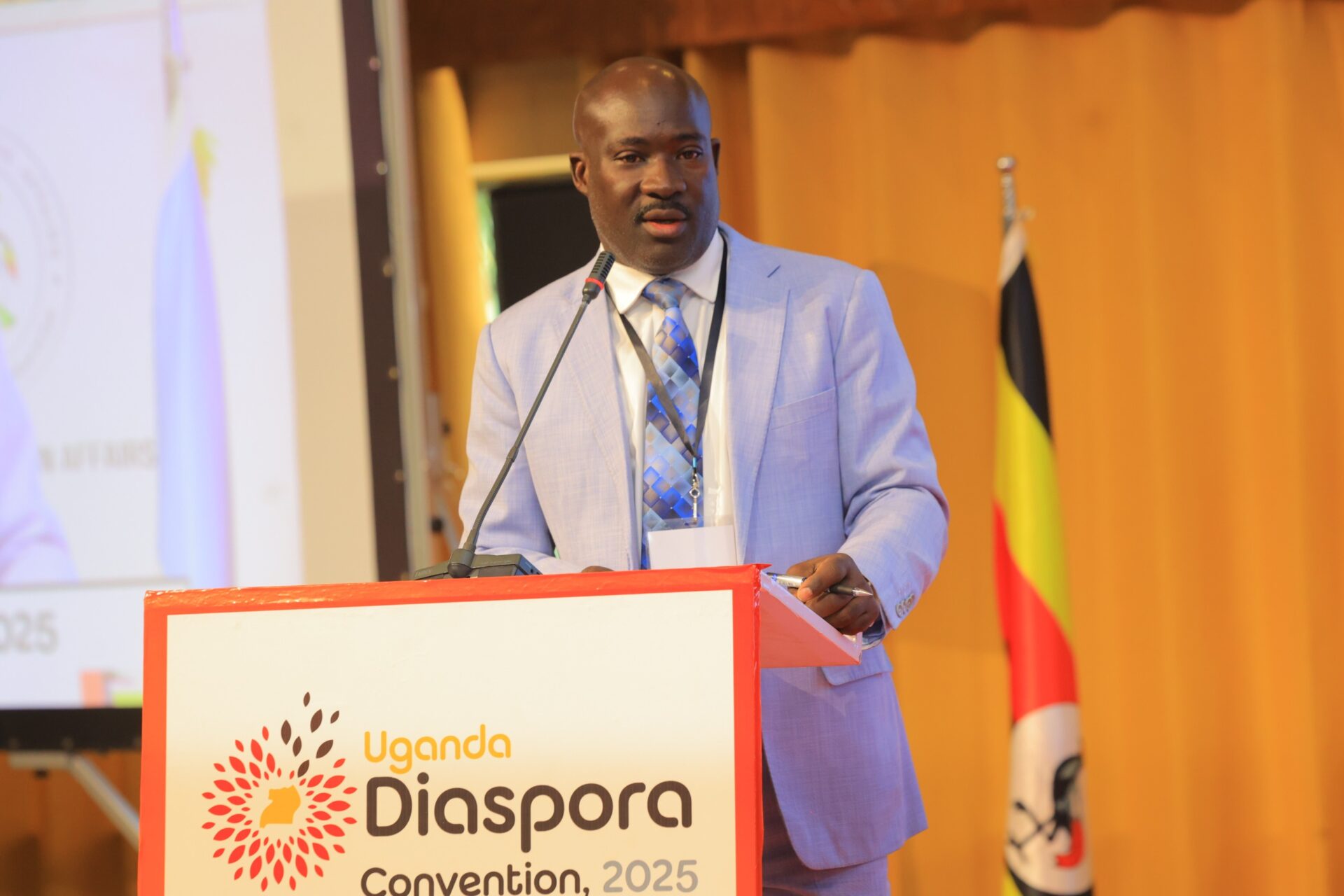
In December 2025, the Ugandan government convened its 2nd National Diaspora Convention at Kampala’s Speke Resort Munyonyo, orchestrated by the Ministry of Foreign Affairs under the theme “The Role of the Diaspora in the Economic and Commercial Diplomacy Strategy.” Presided over by officials including Amb. Johnny Muhindo, Minister Ruth Nankabirwa, and Permanent Secretary Vincent Bagiire Waiswa, the three-day forum presented a unified vision of transforming diaspora wealth from household remittances into structured investments in national projects. The state outlined ambitious blueprints, from the 10-Fold Growth Strategy and the Uganda Refinery Project in Hoima with partner Alpha MBM, to mobilising savings via NSSF and the Bank of Uganda.
 Yet, beneath this official narrative of partnership and progress lies a more complex and contentious reality. This analysis critically examines the convention’s pronounced gaps: the deliberate exclusion of political refugees, the unaddressed epidemic of systemic corruption, and the stark disconnect between technocratic boasts of rising electricity capacity and the lived experience of unreliable access and unaffordable tariffs. We scrutinise the push to redirect remittances into government securities, the instrumentalisation of professionals like Stephen Musana, and the underlying tensions of a regime seeking diaspora capital while silencing diaspora critique. This comprehensive exploration questions whether the convention fostered genuine engagement or merely refined the mechanisms of elite extraction, leaving the grassroots struggle and the voices of the displaced firmly outside the conference hall doors.
Twenty Key Points of Analysis
The Illusion of Altruism: How the State Seeks to Convert Survival into Capital
The Ugandan government’s appeal to its diaspora to transcend mere “household consumption” is a masterful piece of political and economic theatre. It employs the language of national development to execute a subtle, yet profound, act of re-framing. At its core, this manoeuvre seeks to dismantle the existing, organic value of remittances and rebuild it in an image that serves the interests of a concentrated elite. To understand this, one might recall the old adage: “You cannot have your cake and eat it.” The state, in this instance, is attempting to commandeer the ingredients, the kitchen, and the very act of baking, while promising the diaspora a slice of a future cake it may never taste.
Here is a comprehensive breakdown of this calculated framing:
1. The Devaluation of Immediate, Human-Centric Value:
Remittances sent for “household consumption” – for school fees, medical bills, housing, and daily sustenance – represent a direct, efficient, and responsive form of welfare. This flow of capital bypasses the state’s notoriously leaky coffers and corrupt bureaucracies, going straight to the point of need. It is a form of grassroots, person-to-person solidarity economics that recognises the urgency of now. By labelling this as a lesser contribution to be moved “beyond,” the state implicitly argues that the survival of ordinary families is not a priority economic activity. It dismisses the dignity embedded in this direct support.2. The Extraction and Redirection towards State-Centric Projects:
The call is not truly for “investment” in a broad sense, but for investment through formal, state-sanctioned channels. Whether via government securities, specified bank products, or partnerships with state-affiliated agencies, the goal is to redirect fluid, diasporic capital into rigid, systemic funnels. This serves two main purposes for the ruling apparatus:Fiscal Easing: It provides non-tax revenue to a government whose budget is often strained by militarisation, patronage, and grand corruption. Diaspora purchases of treasury bonds, for instance, directly finance the state’s operations without the need for political reform or accountability.
Elite Economic Reinforcement: “Structured investment” typically means large-scale infrastructure, energy, or commercial projects tied to conglomerates with close ties to the regime. These projects often result in land dispossession for communities and profit concentration for a few, while being hailed as “development.”
3. The Political Neutralisation of Diaspora Agency:
The individual Ugandan abroad, making sacrifices to support their loved ones, exercises direct economic agency. They decide who gets what, and when. This decentralised power is viewed as a threat. By channelling these funds into formal vehicles, the state seeks to collectivise and thus politicise the diaspora contribution. The contribution becomes part of a national statistic, a testament to the regime’s ability to mobilise resources, blurring the line between voluntary support and implicit endorsement of its policies. The diaspora’s role is transformed from independent actors to a captive financial arm of the state.4. The Masking of State Failure:
Remittances for consumption are a stark, quantitative indictment of the state’s failure to provide basic services, social protection, and a viable economic environment. If the state provided adequate healthcare, education, and livelihoods, the desperate need for these consumption remittances would fall. Rather than address these systemic failures, the state’s strategy is to capture the very resource filling the gaps it created. It is an attempt to profit from its own inadequacy.5. The Creation of a “Good Diaspora” vs. “Lesser Diaspora” Hierarchy:
This framing inherently creates a class system within the diaspora. The “ideal” diaspora member is the wealthy investor, the professional with skills to transfer, the individual who engages in “economic diplomacy.” The nurse in Camden or the care worker in Calgary sending back a monthly $200 for their family’s survival is relegated to a secondary, outdated category. This ignores the fact that, in aggregate, these smaller flows constitute the vast, stabilizing bulk of remittance income and represent profound sacrifice.In the Ugandan Context:
Under the dictatorship of Yoweri Museveni, where the state increasingly functions as a vehicle for elite accumulation, this re-framing is particularly cynical. The same government that has overseen the collapse of local industries, chronic underinvestment in public health, and an education system in crisis now positions itself as the wise steward of diaspora capital for “growth.” It asks for trust from those who have often left due to a lack of opportunity and political repression, offering them a role in projects that frequently enrich the very network perpetuating that repression.
Conclusion:
The call to move “beyond remittances” is not a progressive evolution; it is a calculated act of expropriation. It seeks to disconnect resources from their humane, grassroots purpose and weld them to a state-led project of crony capitalism. It asks the diaspora to stop feeding their families directly and instead hand the bread to a gatekeeper who promises a future bakery, all while ignoring why the people are hungry in the first place. They are, in essence, being asked to fund the very system that may have necessitated their exile or economic migration, all under the beguiling banner of patriotism and progress. The struggle, therefore, is not merely about economics, but about who defines value, who controls resources, and for whose ultimate benefit. The autonomous, life-giving power of direct solidarity poses a quiet threat to centralised, extractive power—and the state’s discourse is designed precisely to neuter that threat.
The Architecture of Capture: Formalising Diaspora Extraction in Uganda
The proposed comprehensive diaspora policy, heralded at the Munyonyo convention, is best understood not as a framework for liberation, but as a blueprint for sophisticated capture. It represents the move from ad-hoc, informal extraction to a systematised process of wealth channelling, designed to serve the entrenched interests of the ruling class under the dictatorship of Yoweri Museveni. This is the formalisation of a funnel, where the wide aperture collects the hard-earned resources of the scattered diaspora, and the narrow spout directs it into vessels that sustain the status quo. It brings to mind the old adage: “A fox may be cunning, but it is the trapper who designs the snare.” The policy is the snare, dressed up as an invitation to the feast.
Here is a comprehensive analysis of this policy as an instrument of extraction:
1. From Organic Flow to Institutional Capture:
Currently, diaspora remittances flow through a mosaic of informal channels, mobile money, and direct transfers to families. This decentralised system, while costly, retains a degree of autonomy. The individual decides the recipient and purpose. The new policy seeks to insert the state and its approved financial intermediaries as mandatory middlemen in this relationship. By creating “diaspora-friendly” products at the National Social Security Fund (NSSF) and select commercial banks, it aims to divert this flow into institutional pools. The state’s goal is to replace unpredictable, person-to-person solidarity with predictable, aggregate capital under its influence.2. The Illusion of “Security” and “Empowerment”:
The rhetoric used will emphasise “security,” “better returns,” and “national development.” This is the bait. In reality, NSSF, while presenting itself as a social security vehicle, has been historically susceptible to political influence and questionable investments aligned with state priorities rather than optimal returns for members. Channelling funds into government securities (treasury bonds) directly loans money to a regime known for grand corruption and militarised expenditure. The “security” offered is the security of the state’s fiscal needs, not necessarily the financial security of the diaspora contributor. It is empowerment of the state apparatus, not the individual.3. The Creation of a Captive Financial Base:
This policy aims to create a legally and morally sanctioned captive financial base for the regime. The diaspora, particularly those seeking to maintain ties or future return, will be encouraged—and later perhaps subtly pressured—to use these formal channels. This generates a long-term, low-cost revenue stream for the government and its allied banks. It is a strategy to shore up the domestic financial system, which is often leveraged to support crony businesses, with relatively stable foreign-exchange inflows from abroad. The diaspora becomes a kind of involuntary lender to the very system many fled.4. Data Surveillance and Political Leverage:
Formalisation grants the state unprecedented surveillance capacity. It transforms anonymous remittances into data points: who sends, how much, from where, and through which institution. This data is a potent political tool. It can map diaspora networks, identify high-value individuals for targeted persuasion, and potentially be used to apply subtle pressure on critics through their financial footprints. The policy is not merely economic; it is a mechanism of extended governance and control over a geographically dispersed population.5. Neutralising Diaspora as a Potential Source of Opposition Funding:
A decentralised diaspora with control over its funds can, in theory, resource independent initiatives, community projects, or critical voices outside state control. By offering a “structured” and “patriotic” alternative, the state aims to neuter this potential politically. It redirects economic energy towards state-sanctioned projects, ensuring that diaspora capital does not inadvertently fuel alternatives to the regime’s development narrative. It is a pre-emptive capture of resources that could otherwise support autonomous social power.6. The Ugandan Context: Extraction as Statecraft
Under Museveni’s dictatorship, the state has perfected the art of formalising extraction—from mining concessions to land acquisition. The diaspora policy is an extension of this logic into a new frontier. It aligns perfectly with a system where public institutions are often repurposed for private accumulation by a networked elite. The Uganda Investment Authority, the Uganda Registration Services Bureau, and the promoted commercial banks are not neutral actors; they operate within a political ecosystem where access and success are frequently contingent on allegiance and connection.
Conclusion: The Shearing Without the Bleating
The comprehensive diaspora policy is the design for a more efficient shearing shed. The wool—the wealth of the diaspora—is to be collected in an orderly fashion, with promises of it being spun into finer cloth for the nation. Yet, the ownership of the loom and the design of the garment remain firmly in the hands of the same small group that has always held them. It is a strategy to ensure that the resources of those who left seeking better opportunities are ultimately harnessed to perpetuate the very conditions that made their departure necessary. It formalises a parasitic relationship, giving it the respectable veneer of policy, law, and financial instrument. True empowerment would mean diaspora control over their collective capital to fund autonomous, community-driven projects, bypassing the state entirely. But that would require dismantling the snare, not decorating it.
The Curated Chorus: On the Silenced Majority of Uganda’s Diaspora
The meticulously staged convention at Munyonyo presented a very specific portrait of the Ugandan abroad: the investor, the corporate professional, the technical advisor. This was a gathering of accredited stakeholders, a symphony of elite voices performing a concerto of growth and partnership. Yet, this carefully composed piece was missing the fundamental rhythm and the dissonant, urgent melodies that truly characterise the diaspora experience. Where was the chorus? Where were the voices of the nurses on night shifts in Luton, the care workers navigating the chill of Toronto, the taxi drivers weaving through London’s streets, and—most damningly—the political refugees for whom return is a mortal risk?
 Their absence was not an oversight; it was the central, silent pillar of the event’s narrative. It brings to mind the adage: “A tree is known by its fruit.” The convention presented only the most polished, marketable fruit, deliberately ignoring the gnarled roots and the bruised, fallen produce that tell the complete story of the tree’s health.
Here is a comprehensive examination of this exclusion and its profound implications:
1. The Manufacturing of a “Acceptable” Diaspora:
By platforming certain voices, the state actively manufactures a sanitised, palatable identity for the diaspora. The successful professional is a testament to Ugandan “potential” and a validation of the regime’s purported openness. The investor is a source of capital. Their presence allows the state to say, “Look at these proud Ugandans, engaging constructively.” This curated image serves to drown out the more numerous, more critical, and more politically inconvenient realities of diaspora life. It recasts a phenomenon born largely from economic desperation and political fear into a story of voluntary, triumphant globalism.2. The Erasure of the Refugee: The Unforgivable Omission
The exclusion of political refugees is the most revealing silence. These individuals are the living, breathing evidence of state persecution, electoral violence, and the brutal suppression of dissent. To invite them would be to platform an indictment. Their experiences would shatter the narrative of “inclusive growth” and “partnership.” Their very existence contradicts the fiction of a unified nation marching towards prosperity. Their absence is a political necessity for the regime; acknowledging them would force an acknowledgement of the police cells, the enforced disappearances, and the partisan judiciary that forced them to flee. It would transform a development conference into a tribunal on human rights.3. The Devaluation of Labour over Capital:
The convention’s focus valorised diasporic capital and high-end skills transfer. It implicitly dismissed the immense value of collective labour that forms the backbone of remittances. The monthly stipends from care workers and drivers are not mere “consumption”; they are the foundational bedrock of foreign exchange, the quiet sustainers of whole villages and urban neighbourhoods. By not seeking their testimonies, the state communicated that their contribution, while its money is desired, their political and social voice is irrelevant. They are valued as senders of funds, not as holders of insight or experience worthy of a formal podium.4. The Illusion of Participatory Policy:
To claim a “comprehensive” diaspora policy is being forged without the testimony of its largest constituent groups is a fundamental deceit. It is like drafting agricultural policy without consulting subsistence farmers. The nurses and drivers could speak to the real costs of living, the exploitative recruitment agencies, the barriers to investing in smallholder agriculture back home, and the brutal reality of trying to support families amid rampant inflation. Their exclusion guarantees the resulting policy will be technocratic, top-down, and disconnected from the on-the-ground realities it purports to address, ensuring it serves systemic, rather than individual, needs.5. The Ugandan Context: Control Over Narrative as a Tool of Dictatorship
Under Museveni’s dictatorship, control over narrative is a primary instrument of power. The state cannot physically silence critics in London or Washington, but it can symbolically annihilate them in the domestic sphere. By refusing them a platform at a state-sanctioned “national” event, it reinforces to the audience at home that these voices are illegitimate, unpatriotic, or non-existent. It draws a sharp line: there are “good” diasporans who work with the regime, and there are “others” who are erased from the official story. This is a classic tactic of authoritarian consolidation, applied to a transnational community.Conclusion: The Power of the Uninvited
The empty chairs at Munyonyo spoke louder than any presidential advisor. They represented the deliberate fracture of community, the state’s attempt to splinter the diaspora into a useful, compliant segment and an invisible, inconvenient multitude. True diaspora power does not lie in pledging allegiance to state-designed vehicles. It resides in the collective might of its entirety—in the unions of nurses abroad, the associations of drivers, the networks of refugees documenting abuses. Their refusal to be erased, their persistence in sending lifelines directly to their people, and their continued testimony to the world about conditions in Uganda constitute a form of organic, decentralised power that no state policy can truly capture.
The convention’s guest list revealed the regime’s deepest fear: not the critic with a spreadsheet, but the united chorus of the excluded, whose very lives narrate a different, more honest story of the nation. The tree, in the end, will be judged by all its fruit—the showcased and the hidden alike.The Wolf’s Invitation: On the Paradox of the Displaced Investor
The Ugandan state’s outstretched hand to its diaspora, beckoning for investment and unity, encounters a profound and unspoken fracture. It reaches towards a community it has itself splintered, one that consciously includes citizens it has politically displaced. This is the core paradox: a regime that creates refugees through persecution simultaneously courts them as economic patrons. The “unified national message” thereby collapses under the weight of its own hypocrisy, becoming not a bridge but a carefully woven veil. It calls to mind the adage, “A wolf is no sheephound, though it may wear the fleece.” The state dons the fleece of national unity, but its actions—and the very existence of political exiles—reveal its true nature.
Here is a comprehensive examination of this debilitating inconsistency:
1. The Moral Bankruptcy of Selective Patrimony:
The state’s narrative relies on an unconditional, biological patriotism—the eternal pull of the “motherland.” However, this claim to kinship becomes morally bankrupt when applied to those it has threatened, tortured, or hounded into exile. To tell a political refugee, “You are a vital part of Uganda’s future, send your savings,” while maintaining the security apparatus that made their flight necessary, is a form of psychological and financial coercion. It leverages emotional ties against the very individuals whose safety the state has violated. It reduces nationhood to a transactional relationship, where the crimes of the state are to be absolved by the capital of its victims.2. The Erasure of Political Causality:
The “unified national message” deliberately flattens history. It presents the diaspora as a monolithic entity, forged by global economic forces or individual ambition. This narrative surgically excises political causation. It refuses to acknowledge that for a significant number, their exile is not a choice but a direct consequence of partisan violence, electoral intimidation, or the suppression of basic assembly and speech. By erasing this causality, the state seeks to depoliticise the diaspora, transforming political refugees into mere “economic migrants” or “investors,” thereby stripping their experience of its accusatory power.3. The Practical Contradiction of Trust-Based Investment:
At a practical level, the paradox renders the state an untrustworthy custodian. Investment requires a foundational belief in the rule of law, contract security, and impartial institutions. How can one who fled a system of partisan judiciary, weaponised prosecution, and state-sanctioned asset confiscation be expected to trust that same system with their life’s savings? The state asks for faith in its future projects while demonstrating a present-day reality of capricious and predatory governance. The very fact of a political refugee community stands as a living risk assessment, warning that today’s approved investment can become tomorrow’s politically targeted asset.4. The Ugandan Context: The Dictatorship’s Dual Strategy
Under Museveni’s dictatorship, this paradox is not a flaw but a feature of a dual-pronged strategy. The first prong is coercive control within borders, silencing dissent and eliminating political competition. The second is extractive outreach beyond borders, harnessing all available resources, including those of the displaced, to fund the stability of the regime. The “unified national message” is the tool that attempts to glue these two incompatible realities together. It is a performance of normalcy and inclusion for international and diasporic consumption, designed to whitewash the domestic reality of repression. The refugee is the living proof that the glue is false.5. The Insult of Conditional Belonging:
Ultimately, the state offers a conditional belonging to the displaced: you may belong to the economic nation if you disavow the political self. Your money is welcome, but your testimony, your experience, and your cause are not. You are invited back into the fold not as a citizen with restored rights and dignity, but as a creditor expected to fund your own oppressor’s legacy projects. This turns the concept of patriotism on its head, demanding loyalty to a land while excusing betrayal by its governing power.Conclusion: The Un-United Nations
The refugee paradox exposes the “unified national message” as a fraudulent construct. True unity cannot be built upon forced exile; genuine national investment cannot be sourced from those whose citizenship was rendered unsafe by the state. The persistence of a political refugee community is the permanent, unanswerable critique of the regime’s legitimacy. Their very existence dismantles the unified narrative, proving that the nation is deeply and fundamentally divided between the rulers and the ruled, the secure and the hunted.
 For the state to truly embrace its diaspora, it would first have to cease creating refugees. Until that day, its invitations will ring hollow, a wolf’s call wearing the thinnest of fleeces. The power of the displaced, therefore, lies not in heeding the call to invest, but in persistently, publicly embodying the truth of why they left—keeping the paradox alive and unhealed, as a testament to justice denied.
The Gilded Circle: How Conventions Consolidate Power, Not Communities
The panel discussions at Munyonyo, beneath the veneer of open dialogue and sectoral strategy, served a more fundamental and enduring purpose: the fortification of a gilded circle. This was not a marketplace of competing ideas, but a curated salon for the mutual recognition and alignment of two elite strata: the economically successful diaspora professional and the politically connected regime insider. Such gatherings function as social lubricant for the machinery of state-aligned capital, ensuring that influence and opportunity circulate within a closed loop. It brings to mind the adage, “Old wine is poured into new bottles.” The convention presented itself as a novel, inclusive vessel, but the contents—the concentration of access and privilege—remained a familiar vintage, preserved and redistributed among the powerful.
Here is a comprehensive analysis of this process of elite networking as a mechanism of control:
1. The Alchemy of Legitimacy Exchange:
The interaction performs a crucial alchemy. The regime-connected individual—the Senior Presidential Advisor, the ministry technocrat—bestows a sense of official legitimacy and access upon the diaspora professional. In return, the diaspora professional, through their participation and expressed “partnership,” bestows a sense of external validation and technocratic credibility upon the regime. The professional’s presence signals to the world that “serious people” are engaging, softening the image of a dictatorship. This transactional networking reinforces the idea that meaningful engagement must flow through, and be blessed by, this connected class.2. The Exclusionary Design of “Expertise”:
By platforming only certain “success stories”—the pharmaceutical executive, the tech entrepreneur, the senior advisor—the event actively defines what constitutes a valuable diasporic voice. It marginalises the expertise of the community organiser, the grassroots development worker, or the critical academic. This design ensures that discussions on “ease of engagement” or “policy coherence” are framed from the top down, focusing on streamlining large investments or formal joint ventures, not on enabling small-scale, community-controlled projects that might operate outside state patronage networks.3. The Reinforcement of a Neopatrimonial Logic:
The networking inherently follows a neopatrimonial logic, where economic success is intertwined with political allegiance. For a diaspora professional, securing a meeting with a presidential advisor at such an event is a potential business asset. This reinforces the enduring Ugandan reality that prosperity is often secured through proximity to power, not merely through market innovation or technical skill. The convention thus becomes a training ground in this unofficial curriculum, teaching that integration into the national economy requires integration into its entrenched political networks.4. The Illusion of Meritocracy and the Reality of Gatekeeping:
The panel composition creates an illusion of meritocratic inclusion. It suggests that anyone with sufficient professional stature can gain a seat at the table. However, this obscures a stringent political gatekeeping function. An outspoken critic of the regime, no matter how professionally accomplished, would never receive an invitation to such a platform. Therefore, the “elite” being networked is a pre-vetted elite, one whose success is deemed non-threatening and whose cooperation is assured. This ensures that the flow of ideas and partnerships remains within boundaries acceptable to the state.5. The Ugandan Context: Network as an Instrument of Dictatorship
Under Museveni’s prolonged rule, the state has evolved into a complex network of patronage, where political loyalty is the primary currency for economic opportunity. Events like the Diaspora Convention are extensions of this domestic network onto a global stage. They serve to identify diasporic individuals who can be brought into the fold, not as citizens with rights, but as compliant nodes in this extended system. It is a strategy for recruiting offshore assets—both financial and reputational—to stabilise the onshore regime.The Senior Presidential Advisor is not merely a participant; they are a warden of the gateway, ensuring only the useful and the pliant pass through.Conclusion: The Closed Loop of Power
The networking at Munyonyo was therefore the opposite of community building. It was an exercise in strategic consolidation. It connected the dots of power, drawing a map where influence flows between Kampala’s political core and select, external economic outposts, deliberately bypassing the vast, unstructured diaspora multitude. This closed loop is designed to be self-perpetuating: the regime gains external capital and credibility, while the connected diasporan gains preferential access and insider status. It strengthens the very architecture of centralised control that many in the wider diaspora find oppressive. True diaspora power would manifest in assemblies that explicitly exclude such gatekeepers, in networks that bypass state channels entirely to link farmers’ cooperatives directly with diaspora savings clubs, or engineers abroad with community-owned energy projects. But such a horizontal model of power threatens the vertical, patron-client logic upon which the dictatorship stands. The gilded circle, then, is not a forum for dialogue; it is a ritual of reaffirmation for a system that thrives on concentrated access, ensuring that even those who left must, if they wish to engage officially, pay homage to its keepers.
The Ailing Tree: How State Dialogue Ignores the Rot at the Roots
The panel discussions on vital sectors like health and education at the diaspora convention followed a predictable and revealing script. The conversation was meticulously directed towards high-level partnerships, technical skill transfers, and private investment opportunities. This focus, while presented as visionary, deliberately bypassed the elephant in the room: the chronic, systemic failure of the state to fulfil its basic obligations, a failure which diaspora remittances perpetually and heroically attempt to patch. It is akin to the adage, “feeding the leaves while starving the roots.” The state, through its curated dialogue, offers fertiliser for a few showy branches—new clinics, digital learning tools—while ignoring the poisoned soil and rotten roots that cause the tree’s sickness in the first place.
Here is a comprehensive examination of this critical omission and its implications:
1. The Misdiagnosis of the Problem:
The framing assumes the primary issues in health and education are a lack of advanced technology, specialised professionals, or capital. This is a profound misdiagnosis. The core pathologies are systemic governance failures: the haemorrhaging of public funds through corruption, the political appointment of incompetent administrators, the chronic underpayment and demoralisation of frontline workers like nurses and teachers, and the inequitable distribution of resources that favours urban centres over rural grassroots communities. Remittances are not a top-up; they are a desperate life-support system for families navigating this broken public sphere. By ignoring this, the state absolves itself of responsibility.2. The Privatisation by Stealth:
Focusing on diaspora investment in these sectors is a push for the further privatisation of essential human services. It invites the diaspora to build private schools and hospitals that cater to those who can pay, implicitly accepting the state’s abandonment of its duty to provide universal, quality services. This creates a two-tier system: one for a minority funded by remittances and formal investment, and a crumbling, underfunded public system for the poor majority. The diaspora’s wealth is thus mobilised not to fix the public system, but to build a parallel, exclusive one, entrenching inequality.3. The Exploitation of Community Solidarity:
Diaspora remittances for school fees and hospital bills represent the ultimate expression of decentralised, community-based welfare. This organic system directly redistributes resources based on immediate need and intimate knowledge. The state’s strategy seeks to capture and redirect this solidarity into centralised, formal projects. It asks communities to stop paying for individual children’s education directly and instead invest in a “state-of-the-art educational facility” that may be inaccessible to their own relatives, or mired in procurement scandals. It attempts to convert social capital into financial capital for state-aligned projects.4. The Political Function of the Omission:
Addressing the root causes—corruption, cronyism, and maladministration—would require a direct, confrontational political dialogue. It would mean the diaspora demanding accountability from the very officials sitting on the panels. Such a conversation is politically impossible under the current dictatorship. Therefore, the discourse is steered towards technical, apolitical “solutions” that do not threaten the power structures benefiting from the status quo. Talking about a new MRI machine donated by diasporan doctors is safe; discussing the budget theft that left the public hospital without power or basic antibiotics is not.5. The Ugandan Reality: Subsidising State Failure
In Uganda, where the national budget is consistently skewed towards security and patronage, and where scandals like the mismanagement of Global Fund health financing are routine, the diaspora’s consumption remittances are a massive, unofficial subsidy for state failure. They allow the government to neglect social services without facing immediate, total societal collapse. The convention’s dialogue attempts to transition this subsidy from emergency life-support to a more structured investment in the regime’s own legacy projects, without fixing the underlying conditions that make the life-support necessary.Conclusion: The Autonomous Power of Direct Action
The “grassroots omission” is ultimately a refusal to acknowledge the most powerful form of diaspora action: autonomous, direct support. The nurse in London who pays her sister’s medical bills is engaging in a more efficient, more accountable, and more humane form of healthcare provision than any state-private partnership currently on offer. Her action bypasses the corrupt middleman and delivers care precisely where it is needed. The state’s model seeks to reinsert itself as that middleman.
True transformation in health and education would begin with the state dismantling its own systems of graft and political control over services. Until that happens, the most radical and effective diaspora contribution remains the unmediated transfer of resources that keeps their loved ones alive and educated, despite the state, not because of it. This grassroots network of survival is a silent, powerful indictment—a testament to a people’s resilience in the face of a government that feeds the leaves with one hand, while systematically poisoning the roots with the other.The Gilded Cage: On the Illusion of Power and the Reality of Darkness
The statistic presented—57.2% national electricity access—was offered as a gleaming trophy of progress, a definitive number signifying modernity and momentum. Yet, like many aggregates emanating from a centralised authority, this figure constructs a carefully curated reality, one that dissolves under the weight of lived experience. It brings to mind the adage, “All that glitters is not gold.” The official percentage glitters with technical achievement, but it masks a core truth: installed generation capacity is a commodity controlled by the state, while accessible, reliable, and affordable power is a tool of liberation and production for the people. The former can be celebrated in conference halls; the absence of the latter is felt in the daily struggle of workshops, farms, and homes.
Here is a comprehensive deconstruction of this critical data disconnect:
1. The Tyranny of the Aggregate:
A national access percentage is a statistical sleight of hand that obscures profound geographical and economic injustice. It seamlessly blends near-universal access in affluent urban neighbourhoods of Kampala with the pervasive darkness in rural districts of Karamoja, Kigezi, or West Nile. For a subsistence farmer or a rural tradesperson, the national percentage is a meaningless abstraction; their reality is defined by an unconnected grid, the prohibitive cost of connection fees, or reliance on expensive, polluting alternatives. The aggregate creates the illusion of shared progress while cementing a landscape of stark inequality.2. The Mirage of “Access”:
Even where the grid reaches, “access” is a fluid and often empty promise. It does not equate to reliable, constant, or affordable supply. Chronic load-shedding, unpredictable outages, and violent voltage fluctuations are the unspoken companions of a connected meter. For a nascent entrepreneur running a welding workshop, a milling machine, or a refrigeration unit, this volatility is a business killer. The installed capacity at Karuma Dam is irrelevant if the local transformer blows out once a week or if the tariffs consume all profit. The state celebrates the generation of electrons while disavowing responsibility for their quality and consistency as an economic tool.3. The Political Economy of Power Generation:
The focus on mega-project installed capacity (1,837 MW to 3,127 MW) serves a political, not just an economic, purpose. These large-scale hydropower and oil projects are pillars of regime legacy and epicentres of patronage. They facilitate large international loans and contracts, creating lucrative opportunities for the networked elite in construction, consultancy, and supply. They are monuments of centralised control. In contrast, democratised, decentralised energy solutions—rooftop solar micro-grids owned by communities, small-scale biomass—distribute both power and economic agency. The state’s model prioritises control over generation assets rather than empowering widespread, productive consumption.4. The Ugandan Context: Power as a Metaphor for Control
Under Museveni’s dictatorship, this disconnect is a potent metaphor for the broader governance model. Centralised statistics mirror centralised power. The state claims ownership of the narrative of development, just as it controls the national grid. The gleaming percentage is a performance of competence for international financiers and diaspora investors, designed to attract capital that further entrenches the existing system. Meanwhile, the failure to deliver reliable, affordable power to the grassroots is a function of the same institutionalised corruption, mismanagement, and indifference that characterises other public services. The grid, like the state, reaches many but serves the interests of a concentrated few reliably.5. The Productive Use Deferred:
Ultimately, the data disconnect defers the promise of industrialisation and grassroots economic revolution. Electricity for a few hours of evening lighting is not transformative. Transformation requires predictable, affordable power for productive use: irrigation pumps, dairy coolers, carpentry tools, and digital hubs. By boasting of access while ignoring quality and affordability, the state acknowledges a connection to the populace but denies them the tool for true economic autonomy. It offers a flickering bulb for survival, not a steady current for liberation from poverty.Conclusion: Beyond the Meter
The 57.2% is not a lie, but it is a strategic truth—a half-picture. It counts meters, not opportunity; connections, not capability. True empowerment would be measured not by megawatts at the dam, but by the constant hum of machinery in a rural workshop, the sustained chill of a fisherman’s storage unit, and the all-night glow of a community-led digital library. These are the metrics of a people powered for their own purposes. The state’s chosen statistic, however, illuminates its own priorities: the consolidation of infrastructural control and the performance of progress, while the productive energy of the nation remains uncounted, unstable, and unrealised.
 The people are shown the glittering percentage, yet too often remain in the practical dark, their potential unplugged by a system that values the appearance of power more than its equitable distribution.
The Mirage on the Horizon: When National Growth Obscures Personal Ruin
The pronouncement of a “10-Fold Growth Strategy” aiming for a “$500 billion economy” resonates in boardrooms and convention halls with the allure of an inevitable, gleaming future. Yet, for the majority of Ugandans, these figures exist in a parallel universe of abstraction, a statistical mirage that bears no relation to the topography of their daily lives. This disconnect is not incidental; it is structural. It brings to mind the adage, “A rising tide lifts all boats.” The regime’s growth narrative is predicated on this trickle-down logic. However, the reality for ordinary citizens is one where the tide is artificially held back for a privileged few, while most are left stranded on a shrinking shore, battered by the waves of immediate economic survival.
Here is a comprehensive examination of this chasm between narrative and reality:
1. The Architecture of Abstract Ambition:
Top-down growth targets are fundamentally political instruments, not economic plans. They are designed for legibility and appeal to international financial institutions, global investors, and a rising middle class whose aspirations they capture. A “$500 billion economy” is a headline, a legacy marker for a long-serving dictator. It says nothing about distribution, dignity, or ecological cost. It reduces the complex, lived humanity of a nation to a single, feverishly pursued financial aggregate, divorcing policy from the sustenance of actual communities.2. The Lived Reality They Deliberately Exclude:
This grandiose narrative actively excludes the foundational crises of livelihood:Inflation: While the economy is touted to grow, the purchasing power of the Ugandan shilling evaporates. The price of posho, transport, and paraffin becomes a daily calculus of despair, a reality no “10-fold” promise mitigates.
Unemployment: Abstract growth in sectors like oil, gas, and large-scale infrastructure is often capital-intensive, not labour-intensive. It creates few jobs while displacing many. The burgeoning youth population faces a stagnant pool of informal, precarious work, not the dignified employment the narrative implies.
Land Grabs: Perhaps the most visceral contradiction. The very “growth” projects touted—agribusiness ventures, mining concessions, infrastructure corridors—often necessitate the dispossession of communal land. A farmer’s ancestral land, their sole means of subsistence, is stripped away to serve a national GDP target they will never benefit from. Their livelihood is literally sacrificed at the altar of abstract growth.
3. The Political Function of the Future Tense:
A focus on a distant, spectacular future (the $500 billion horizon) serves to justify present austerity and oppression. It is a tool for deferring accountability. Current suffering—collapsing public services, corruption scandals, political repression—can be framed as necessary, if painful, steps on the path to this glorious future. It asks people to endure the erosion of their present for a promised future that is forever receding, always a few more five-year plans away.4. The Ugandan Context: Growth as Regime-Perpetuation
Under Museveni’s dictatorship, this growth narrative is essential for maintaining a veneer of legitimacy and securing foreign debt. It provides a technocratic language that disguises a political project of concentration. The growth envisioned is one that flows through state-controlled or state-allied channels: large contracts, licensed monopolies, and export-oriented projects that benefit a networked elite. The inflation is a consequence of mismanagement and graft; the unemployment stems from an economy skewed toward capital over labour; the land grabs are a direct mechanism of capital accumulation for the powerful. The growth strategy is not a solution to these problems; it is their catalyst.5. The Autonomy of Survival Economics:
In stark contrast to this imposed, abstract future stands the autonomous, present-tense economy of ordinary Ugandans. This is the economy of the street vendor, the boda boda rider, the smallholder farmer trading at a local market, and the intricate web of informal savings clubs (esusu). This ecosystem operates on solidarity, immediate need, and mutual aid, not top-down targets. It is the realm where diaspora remittances for “consumption” are actually invested—in daily survival. This decentralized, grassroots economy is what truly sustains the population, despite the state’s extractive policies and fantastical projections.Conclusion: The Sovereignty of the Present
The “10-Fold Growth Strategy” is a castle built on paper, its blueprints unfurled in air-conditioned rooms. The livelihood reality is the muddy, contested, and vibrant ground upon which people actually live and strive. The profound disconnect reveals that this growth is not intended to be universally shared; it is a project of and for a ruling consortium. True development would start from the opposite direction: from securing land rights, stabilising prices for essentials, and fostering dignified work. It would measure success in stable meals, secure homes, and community control over resources, not in bewildering billions detached from human scale.
The power of ordinary Ugandans lies in their relentless focus on the sovereignty of the present—on navigating the real economy of now. Their resilience is a silent rebuttal to the distant mirage, a testament to the fact that a nation’s health cannot be found in a spreadsheet’s cell, but in the strength of its people’s daily, autonomous struggle to sustain life itself. The glittering horizon promises a future for the state; the struggle on the ground secures a present for the people.
The Gilded Cage: Commercial Diplomacy and the Silence on Freedom
The convention’s unwavering focus on “Economic and Commercial Diplomacy” is not a neutral choice of theme; it is a deliberate act of political and moral triage. It surgically separates the nation’s economic potential from the contested body of its civic and political life. This creates a sterile, transactional space where the state can engage its global citizens solely as investors and partners, while placing a veil over the conditions of repression and exclusion that define daily reality for many at home and which originally propelled countless skilled individuals abroad. It calls to mind the adage, “To talk of the rope in the house of the hanged.” The state cordially invites the diaspora into its grand parlour to discuss trade and investment, while insisting that the most urgent, hanging questions of justice and liberty are vulgarities that must not be mentioned.
Here is a comprehensive examination of this calculated prioritisation:
1. The Doctrine of Separation:
The theme enforces a rigid doctrine that commerce and human rights are distinct, unrelated spheres. This is a fiction. Investment security, contract enforcement, and a predictable business environment are inextricably linked to an independent judiciary, a free press, and institutional accountability—all of which are components of civic and political freedom. By sidelining governance, the state asks the diaspora to build economic structures on foundations it acknowledges are politically rotten, hoping the new facades will make everyone forget the decay beneath.2. The Sanitisation of the Diaspora Motive:
This focus actively rewrites the diaspora’s biography. For many, the decision to leave was a direct result of shrinking civic space, political harassment, or a lack of meaningful electoral choice. “Commercial Diplomacy” reframes this profound political experience as a simple quest for better professional opportunity. It depoliticises their exile, transforming critics and refugees into mere “economic migrants” or “skills exporters.” This allows the state to welcome their capital and expertise without ever having to acknowledge, let alone address, the grievances that drove them out.3. The Instrumentalisation of Patriotism:
The appeal is cloaked in a specific, demand-free patriotism. It suggests that loving Uganda means investing in its GDP, not necessarily advocating for the rights of its citizens. It reduces national belonging to a financial and technical relationship, divorcing it from any commitment to justice or popular sovereignty. This creates a perverse incentive: the more one acquiesces to the regime’s narrative of purely economic development, the more “patriotic” one is deemed; the more one raises issues of governance, the more one is framed as a disruptive outsider.4. The Ugandan Context: Diplomacy as a Legitimacy-Laundering Mechanism
For Museveni’s dictatorship, which faces consistent criticism from international human rights bodies and sections of the global diplomatic community, “Commercial Diplomacy” is a vital tool for legitimacy laundering.By engaging powerfully with diaspora and foreign investors on purely economic terms, it cultivates a coalition of actors with a vested interest in “stability” and “growth,” implicitly encouraging them to downplay or ignore systemic abuses. It builds a firewall of commercial partnerships designed to shield the regime from political pressure, arguing that such pressure jeopardises “development.”5. The Practical Consequences of the Silence:
This sidelining has direct, damaging effects. It means:No forum to address the legal and physical harassment of journalists, activists, and opposition supporters whose families may be in the diaspora.
No mechanism to discuss how corruption and nepotism in procurement directly undermine the very investments being solicited.
No safe space to explore how community land rights, routinely violated for large-scale “commercial” projects, are the bedrock of sustainable local economies.
It renders the diaspora’s profound concerns for their relatives’ safety and civic dignity as irrelevant noise in the signal of high finance.
Conclusion: The Unsustainable Bargain
The “Commercial Diplomacy” theme offers a bankrupt bargain: participate in an economic future by agreeing to forget the political present. It asks for a partnership built on a wilful, collective amnesia. However, sustainable development—the kind that is just and resilient—cannot be built upon a foundation of silenced grievances and institutionalised fear. True diaspora engagement would be holistic, recognising that people invest not just in markets, but in communities; not just in infrastructure, but in justice.
The diaspora’s most powerful leverage may, therefore, lie in refusing this artificial separation. It resides in consistently, intelligently tying the discussion of investment to the preconditions of accountable governance and civic freedom. To remind all parties that commerce without justice is merely extraction, and that diplomacy without human rights is merely a transaction between elites. The convention’s theme sought to build a gilded cage of economic talk. The task is to insist that the doors of a wider, freer political conversation remain stubbornly, vocally open. For in that uncomfortable space lies the only possibility for a nation truly built by all its people, not just managed for the benefit of a few.
The Hollow Harvest: When National Savings Eclipse Community Survival
The state’s encouragement to funnel diaspora remittances into government securities—treasury bonds and bills—is presented as a patriotic elevation of personal savings into national development. In reality, it is a sophisticated mechanism of fiscal expediency, a means of securing cheap, stable financing for a state apparatus whose expenditure often outpaces its legitimate revenue and whose budgetary priorities are frequently divorced from popular welfare. It brings to mind the adage, “Robbing Peter to pay Paul.” In this case, the state acts as the intermediary, quietly redirecting resources from the pockets of the diaspora and their dependent families (Peter) into its own coffers and those of its financial beneficiaries (Paul), to settle its own accounts.
Here is a comprehensive analysis of this redirection and its implications:
1. The Mechanics of a Low-Cost Loan:
Diaspora remittances flowing into household budgets are a form of decentralised social security. When redirected into government bonds, they become a low-cost, long-term loan to the state. This provides the Treasury with foreign-exchange-denominated financing without the conditionalities of international lenders or the political difficulty of raising taxes. For a government facing budget shortfalls and ambitious, often prestige-driven, infrastructure projects, this diaspora capital is a tempting pool of liquidity. The interest paid to the diaspora bondholder is less a return on investment in development, and more the servicing cost of a debt taken to maintain state operations.2. The Development Mirage:
The argument that this funds “development” is a mirage unless the state’s expenditure is both transparent and equitable. Given well-documented issues with grand corruption, procurement scandals, and the bloated cost of security and patronage, there is no guarantee that this captured diaspora capital funds schools or clinics rather than opulent buildings or security apparatus used for internal control. The diaspora saver becomes a creditor financing a system whose spending choices they cannot audit or influence, and which may actively undermine the communities they seek to support.3. The Beneficiaries: Bondholders vs. Citizens:
This model primarily benefits two parties:The State: It gains a compliant creditor base with an emotional stake in the country’s stability, reducing reliance on more scrutinising external markets.
The Financial Elite: Large commercial banks and brokerages that act as intermediaries for these securities earn fees and strengthen their balance sheets. The existing domestic elite, who already hold significant government debt, see the stability of their own investments bolstered by this new influx of diaspora capital.
The losers are the grassroots communities who see the flexible, need-responsive lifeline of remittances converted into a rigid, long-term financial instrument whose benefits are filtered through a state they often distrust.
4. The Ugandan Context: Financing the Enduring Regime
Under Museveni’s dictatorship, public debt has been a tool for consolidating power, funding a sprawling security sector, and creating economic dependencies. Encouraging diaspora investment in government debt is a strategy to socialise the cost of regime perpetuation. It asks those who left, in part due to a lack of opportunity, to fund the very entity whose policies constrain that opportunity. It is a way of leveraging familial obligation and national sentiment to underwrite a political project, blurring the line between voluntary investment and a thinly veiled, emotional levy.5. The Erosion of Autonomous Resilience:
The most profound damage is to community-level resilience. Remittances used for consumption, small-business capital, or emergency medical bills represent a direct, agile response to local conditions. They are a form of non-state welfare and grassroots capital formation. Redirecting this flow into centralised state debt dismantles this autonomous safety net and replaces it with a promise of trickle-down development that may never materialise. It substitutes immediate, tangible support for a distant, abstract claim on the state—a poor bargain for those living hand-to-mouth.Conclusion: The Choice Between Sovereigns
The push for remittance redirection presents a stark choice between two types of sovereignty: state financial sovereignty and community economic sovereignty. The former seeks to strengthen the central treasury’s balance sheet. The latter is embodied in the diaspora’s direct, unmediated support for their families and communities, which builds independent capacity from the ground up.
True economic empowerment would involve creating channels for diaspora capital to flow directly into community-owned cooperatives, renewable energy micro-grids, or small-holder agricultural collectives—bypassing the state’s extractive financial architecture entirely. The state’s model, however, is designed to harvest this capital for its own purposes. It is not an investment in inclusive development, but a fiscal stopgap that mortgages the people’s present survival for the state’s future stability, ensuring that the remittance lifeline ultimately sustains the system, not subverts it. The hollow harvest yields grain for the granaries of power, while leaving the fields of everyday life fallow.The Gilded Invitation: On Hollow Honours and the Reality of Repression
The Permanent Secretary’s pledges of “trust and inclusion,” coupled with the promise of formal honours for the diaspora, constitute a carefully staged performance of state benevolence. This performance, however, is conducted upon a stage littered with the evidence of its own contradiction. It brings to mind the adage, “Actions speak louder than words.” While the words emanating from Munyonyo speak of unity and celebration, the unambiguous actions of the state’s security apparatus—both within Uganda and beyond its borders—tell a story of intimidation, coercion, and violent exclusion. This creates not a promise, but a profound and dangerous illusion.
Here is a comprehensive examination of this illusion and the reality it seeks to conceal:
1. The Function of Performative Inclusion:
The offer of “inclusion” and “honours” is a soft-power mechanism designed to induce compliance and silence. It creates a transactional paradigm: acceptance into the state’s recognised circle is contingent upon the diaspora’s adherence to a non-critical, commercially focused engagement. To be “honoured” is to be sanitised, to have one’s narrative stripped of political dissent and moulded into the state’s preferred image of the patriotic, apolitical investor. It is inclusion on strictly curated terms, where the price of admission is the suppression of one’s conscience and the abandonment of solidarity with those targeted by the regime.2. The Documented Counter-Narrative of Coercion:
This performance wilfully ignores the well-established pattern of transnational repression. Critics abroad—journalists, activists, and ordinary citizens using digital platforms to voice dissent—have faced coordinated intimidation. This ranges from online surveillance and smear campaigns to direct threats. More potently, the state exercises pressure through the harassment of kin remaining in Uganda, a tactic that turns family members into pawns to silence diaspora critics. Phone calls from security agencies, arbitrary summonses, and overt surveillance of relatives are tools used to send a clear message: your criticism has consequences for those you love. This is the antithesis of “trust and inclusion”; it is a strategy of fear and control that reaches across continents.3. The “Honour” as a Tool of Division:
The plan to formally honour select diasporans is not an act of unity, but one of strategic division. It seeks to split the diaspora community into two categories: the “good,” honoured, and compliant, versus the “bad,” critical, and excluded. This politicises the very notion of diaspora contribution, framing it not as a universal right of civic engagement, but as a privilege bestowed by the state upon its friends. It attempts to manufacture a loyalist diaspora leadership that can act as a buffer against wider, more critical voices, and to discredit those voices as unpatriotic.4. The Ugandan Context: The Dictatorship’s Dual Face
Under Museveni’s dictatorship, this duality is a standard mode of operation. The state routinely presents a constitutional, modernising face to the world and to capital, while simultaneously wielding a security-centric, coercive fist against perceived threats domestically and in exile. The convention at Munyonyo showcased the first face: the articulate technocrat, promising policy and partnership. The experiences of critics and their families reveal the second: the opaque security apparatus that operates with impunity. The pledge of “trust” is thus not just hollow; it is a deliberate part of the masquerade, an attempt to airbrush the fist out of the official portrait.5. The Corruption of Social Trust:
This disconnect fundamentally corrupts the possibility of genuine social trust. Trust cannot be pledged by an entity that simultaneously demonstrates its readiness to punish and intimidate. True inclusion would require a foundational amnesty and a cessation of these coercive practices. Instead, the state offers a conditional, performative inclusion that requires the diaspora to ignore its own lived experiences and the plight of its most vulnerable members. It asks for trust while actively breeding fear.Conclusion: Beyond the Illusion—The Autonomy of Solidarity
Therefore, the diaspora’s most powerful rebuttal to this illusion lies in rejecting the state’s terms of engagement and affirming its own autonomous solidarity. True honour resides not in state-bestowed titles, but in the unwavering support for those facing repression. Meaningful inclusion is not granted by a ministry; it is built through horizontal networks of mutual aid that protect critics, support targeted families, and channel resources directly to communities, bypassing the state’s apparatus entirely.
The state’s offer is a gilded invitation into a cage of acceptable discourse. To accept it is to legitimise the very structures of coercion that make the invitation necessary. The path of integrity leads away from the spotlight of hollow honours and towards the steadfast, if less celebrated, work of building authentic, unmediated connections that uphold dignity and justice—not because the state allows it, but precisely because it cannot. In this space, actions of solidarity do indeed speak infinitely louder than the state’s carefully scripted words.The Silent Quarry: On the Unspoken Predator in the Room
The convention’s agenda, brimming with sectoral strategies and financial products, contained a deafening silence on the most pervasive and debilitating factor in Uganda’s economic landscape: systemic corruption. In a nation perennially languishing near the bottom of global corruption perception indices, the failure to host a substantive, actionable dialogue on securing diaspora capital from graft was not an oversight; it was a telling omission. It brings to mind the adage, “The wolf guards the henhouse.” The state, which through its networked elites is often the primary beneficiary of grand corruption, was here asking the diaspora hens to trust it with their eggs, while refusing to acknowledge the wolf at the door—or indeed, within the walls.
Here is a comprehensive examination of this critical silence and its profound implications:
1. The Acknowledgment Void:
The absence of corruption as a central agenda item creates a void where trust should be. For any investor, security of capital is paramount. For a diaspora investor, aware of stories of inflated contracts, nepotistic procurement, and judicial manipulation, this security is the first question. By not placing guarantees against graft at the heart of the discussion, the state signals that it is either unwilling or unable to provide them. It asks for investment under the existing, corrupted rules of the game, where success may depend less on enterprise and more on one’s ability to navigate, and pay for, patronage networks.2. The Reality of “Ease of Doing Business”:
Agencies like the Uganda Investment Authority tout “ease of doing business,” but this often translates in practice to ease of extraction for connected individuals. The real barriers—unofficial fees, bureaucratic sabotage unless bribes are paid, and the risk of asset appropriation by powerful actors—were left unaddressed. Discussing digital land registry portals is meaningless if an official can be paid to alter records, or if a military officer can claim community land for a private venture with state backing. The diaspora is being sold a streamlined concept of investment that exists only on paper, divorced from the messy, expensive, and predatory reality.3. The Ugandan Context: Corruption as a System of Governance
Under Museveni’s dictatorship, corruption has evolved beyond mere criminality into a functional system of political control and economic redistribution for a ruling consortium. It serves to concentrate wealth, reward loyalty, and finance the patronage networks that sustain the regime. Therefore, a genuine, transparent mechanism to secure diaspora investment from graft would require dismantling a core pillar of the state’s own power structure. It is an existential contradiction. The silence at the convention reflects this: to speak honestly of curbing corruption would be to question the fundamental operating logic of the regime itself.4. The Deterrent Unspoken:
This unaddressed reality is the single greatest deterrent to the formal, structured investment the state claims to desire. The intelligent diasporan understands that channelling funds through official vehicles does not immunise them from predation; it may simply deliver them more efficiently into the ecosystem of extraction. A bond can be dishonoured; a business can be strangled by rent-seeking officials; a partnership can see its equity diluted by powerful, uninvited “local partners.” The state’s failure to confront this speaks louder than any investment brochure.5. The Implied Alternative: Autonomous, Grounded Channels
This glaring omission inadvertently makes the strongest case for informal, community-grounded investment channels. When formal institutions are conduits for graft, security is found in social capital, not legal paperwork. Diaspora funds pooled into a village savings group to buy a communal maize mill, or sent to a trusted cousin to expand a known family business, are subject to social accountability and familial obligation—forces often more powerful and reliable than a compromised court system. The state’s silence on corruption legitimises these autonomous, off-grid forms of economic solidarity as the only rational choice for those seeking genuine impact and security.Conclusion: The Uninvited Guest
The unmentioned spectre of corruption haunted every panel discussion at Munyonyo. It was the uninvited guest that defined the room. By refusing to name and address it, the state demonstrated that its version of “partnership” requires the diaspora to willingly blind itself to the paramount risk. True economic engagement would begin with a ruthless, independent audit of institutional integrity and the creation of diaspora-monitored escrow accounts and community-controlled investment vehicles with transparent governance.
That this was not proposed reveals the convention’s true purpose: not to protect diaspora capital for development, but to attract it into the very system that consumes capital for its own perpetuation. The wolf, after all, does not build a safer henhouse; it simply paints the door and asks for more chickens.The Gilded Chain: Resource Extraction and the Illusion of Shared Fortune
The detailed update on the Uganda Refinery Project and the East African Crude Oil Pipeline, replete with percentages of stakes held by the UAE’s Alpha MBM, was presented as a triumph of economic statecraft. This is what can be termed Resource Nationalism Theatre: a performance of sovereign control and future riches, staged to obscure the entrenched reality of elite capture and socialised risk. It brings to mind the adage, “A gold chain is still a chain.” The state parades the glittering prospect of oil wealth as a national ornament, while for communities in Hoima and along the pipeline’s path, the experience remains one of confinement—to disrupted livelihoods, broken promises, and a future decided in distant boardrooms.
Here is a comprehensive examination of this theatre and the obscured realities behind the curtain:
1. The Spectacle of Sovereign Deals:
Announcing partnerships with foreign entities like Alpha MBM serves a dual purpose. First, it projects an image of a state competently managing complex international finance, a narrative crucial for attracting further foreign investment. Second, it creates a veneer of patriotic achievement, suggesting the nation’s resources are being leveraged by its leaders for the common good. However, this spectacle distracts from the fundamental questions: Who truly benefits from the deal’s architecture? What are the terms of sovereignty traded for capital and expertise? The celebration of the deal itself replaces scrutiny of its substance.2. The Local Reality: Dispossession and Deferred Compensation
While the deal is signed in Kampala and Abu Dhabi, the immediate and visceral impact is felt locally. For communities:Land Acquisition has often been fraught with coercion, inadequate compensation, and the destruction of ancestral attachment to land that is not merely an asset but a source of identity and sustenance.
Environmental and Social Risks—potential spills, water contamination, and social disruption—are borne almost entirely by these communities, while the profits will be allocated between the state and its foreign partners.
Promises of jobs and development remain largely unfulfilled, with most skilled employment going to outsiders and local benefits limited to temporary, menial labour. The wealth generated flows upwards and outwards, not horizontally through the community.
3. The Ugandan Context: Extraction as a Pillar of the Dictatorship
Under Museveni’s dictatorship, control over massive resource projects is not merely economic policy; it is a core mechanism of political consolidation. These projects:Generate vast centralized revenue that bypasses parliamentary scrutiny and public accountability, flowing directly into state coffers where it can be deployed for security and patronage.
Create lucrative opportunities for the networked elite in construction, logistics, and service provision, further binding their interests to the regime.
Justify the securitisation of regions like the Albertine Graben, where community protest can be framed as a threat to “national assets” and met with state force.
The partnership with Alpha MBM is not an aberration; it is the model. It represents a fusion of international capital with domestic authoritarian power, where both gain stability and profit, while dissociating themselves from the local consequences.
4. The Illusion of Inevitable Progress:
The narrative presented is one of linear, inevitable progress: reserves are tapped, pipelines built, and revenue flows. This technocratic fatalism silences alternative visions. It dismisses questions about the wisdom of fossil fuel lock-in amidst a climate crisis, or whether a different model of development—centred on agro-ecology, decentralised renewables, and community-owned tourism—might offer more sustainable and equitable prosperity. The theatre presents a single, non-negotiable script for development, authored by the powerful.5. The Autonomy of Resistance and Re-imagination:
In the face of this theatre, the most potent force is the persistent, grounded resistance and re-imagination from affected communities and their allies. This includes:The steadfast refusal to accept inadequate compensation.
The documentation of environmental and social impacts.
The articulation of alternative, community-led development plans that prioritise food sovereignty, ecological health, and cultural integrity over extractive revenue.
This resistance is not an obstacle to progress, but a demand for a different kind of progress—one where the value of a community, its land, and its way of life is not rendered invisible by the glitter of a petro-dollar.
Conclusion: Beyond the Theatre of Extraction
The update on the oil project was a performance designed to foster a passive, investor-friendly patriotism. It asked the diaspora and the nation to watch the spectacle and share in the imagined future wealth, without questioning the distribution of pain and power in the present. True resource sovereignty would look radically different: it would begin with the free, prior, and informed consent of communities; it would involve transparent, community-held trusts for revenue sharing; and it would subject every deal to the harsh light of public debate.
The gold chain of oil wealth, forged in secret deals and polished for public display, remains a chain if it binds the many to the decisions of the few. The path to genuine wealth lies not in adorning the state with more links, but in the collective work of forging a society where resources serve the people, not where people are served up as resources. The theatre’s final act is not yet written, and its most critical reviewers are not in the plush seats of Munyonyo, but on the red earth of Hoima, holding the line between extraction and existence.
The Poisoned Tree: On Demanding Fruit from Severed Branches
The state’s exhortation for the diaspora to galvanise exports in “creative content” and “knowledge sectors” presents a supreme irony. It is a request that those who were, often, compelled to leave due to a stifling environment of limited opportunity and political constraint, should now become the external engine for sectors that failed to retain them. It brings to mind the adage, “You cannot graft a healthy branch onto a poisoned tree and expect it to bear wholesome fruit.”
The diaspora represents talented branches that grew away from the boot; the state now asks them to channel their vitality back into a system whose very soil—the governance and institutional framework—remains unchanged and toxic to organic, inclusive growth.Here is a comprehensive examination of this flawed proposition:
1. The Paradox of the Demand:
The call is inherently paradoxical. It acknowledges the diaspora’s possession of world-class skills, networks, and creative capital—assets forged and honed abroad. Yet, it refuses to confront the primary reason these assets are located abroad: the systemic failure to cultivate and retain such talent at home. This failure encompasses not just wages, but academic freedom, intellectual property protection, reliable digital infrastructure, and a civic space where creativity and critical thought are not viewed as threats. The state asks for a remedy while denying the diagnosis.2. Brain Drain as a Symptom, Not a Strategy:
The significant emigration of doctors, engineers, software developers, writers, and academics is not a neutral economic phenomenon; it is a continuous referendum on governance. It represents the flight of human capital from environments of frustration, corruption, and precariousness towards realms of greater stability, meritocracy, and intellectual freedom. To then frame this diaspora as a standing reserve battalion for national export growth is to treat a symptom—the exodus—as a planned extension of state strategy, absolving the state of its role in causing the condition.3. The Ignored Root: The Governance Deficit
Thriving “knowledge sectors” and dynamic “creative content” industries are not built by diaspora remittances alone. They require:Robust, uncensored intellectual inquiry and artistic expression.
Transparent and fair regulatory environments for start-ups and micro-enterprises.
Reliable, affordable utilities and internet as a public good, not a luxury.
A judicial system that impartially protects copyrights and contracts.
These are foundations the state has consistently failed to pour. Instead, it seeks to bypass the hard work of institution-building by outsourcing the growth of these sectors to those who exited the crumbling foundations.
4. The Ugandan Context: Extracting Value from Exile
Under Museveni’s dictatorship, this push aligns with a pattern of extracting value from the consequences of the regime’s own policies. The political and economic environment precipitates a brain drain; the state then seeks to capture the output of that drained talent through “diaspora direct investment” and “knowledge transfer,” without reforming the environment that caused the drain. It is a form of political arbitrage: maintaining a closed, controlled system at home while profiting from the openness of systems abroad where its citizens have found refuge. The diaspora’s success becomes a smokescreen for domestic failure.5. The Autonomy of Diaspora Choice:
This dynamic places the diaspora in a position of significant, if unacknowledged, power. Their choice is fundamental: to legitimise this extraction or to redirect their energies. The most impactful “export” they might cultivate could be the export of democratic practices, ethical business models, and support for autonomous civil society—not merely creative content for global streaming platforms. Their leverage lies in insisting that engagement in knowledge and creative sectors must be predicated on transformative changes in the domestic landscape that fosters such sectors: academic freedom, digital rights, and the rule of law.Conclusion: From Extraction to Cultivation
True national advancement in knowledge and creativity cannot be parachuted in by a diaspora acting as an external prosthesis. It must be organically cultivated in fertile ground. The state’s demand is a diversion from the real work of tilling that ground—of dismantling censorship, ending the politicisation of education, and guaranteeing the liberties that allow innovation to flourish.
The diaspora, therefore, faces a choice beyond being mere exporters. They can be catalysts for the conditions that would make their own return, or the flourishing of those who remain, possible. The poisoned tree will not heal by grafting on healthy branches from afar; it requires detoxifying the soil itself. The diaspora’s most valuable export may not be a film or a software patch, but an unwavering commitment to the principles of governance that would allow a thousand films and software companies to grow, untethered and unafraid, from Ugandan soil itself.The Fresh Paint on Rusted Beams: RAPEX and the Theatre of Reform
The promotion of the Rationalisation of Agencies and Public Expenditure (RAPEX) as a cornerstone of prudent governance, redirecting savings to “priority sectors,” is a performance of state efficiency. Yet, in the absence of transparent, independently audited implementation, such reforms risk becoming little more than a fiscal sleight of hand. They provide a legitimising language for reshuffling resources within the state’s own sprawling apparatus, often strengthening the hands of those who control the levers of patronage. It brings to mind the adage, “You cannot cure a festering wound by merely applying a fresh bandage.” RAPEX, as presented, is the new bandage—clean, official, and reassuring. But it does nothing to address the infection of systemic graft beneath; it may even conceal its worsening condition.
Here is a comprehensive examination of this reform as a potential smokescreen:
1. The Theatrics of Austerity and Efficiency:
Announcing reforms like RAPEX serves a vital performative function. It signals to international financial institutions, donors, and a weary public that the state is “doing something” about waste. It creates a narrative of a lean, purposeful government redirecting resources from bureaucratic bloat to healthcare and roads. This theatre is politically crucial for a regime facing scrutiny over its expenditure. However, the performance focuses entirely on the act of redirecting, not on the transparent destination and application of the redirected funds. The closure or merger of an agency matters less than whether the saved millions are then spent on a genuinely needed health centre or disappear into a nebulous “security” budget or over-inflated contracts awarded to cronies.2. The Patronage Consolidation Mechanism:
Without independent oversight, rationalisation can easily become a tool for political purging and loyalist consolidation. It offers a technocratic pretext to dissolve agencies headed by less-than-loyal officials or to merge competing fiefdoms under a more reliable ally. The “savings” realised might then be redeployed not by objective need, but to bolster budgets of departments or projects that serve key constituencies within the ruling network. The reform thus becomes a means of streamlining not for efficiency, but for enhanced political control over the state’s financial spigots, centralising discretionary power in fewer, more trusted hands.3. The Ignored Root: The Political Economy of Waste
RAPEX targets the bureaucratic symptoms of waste—multiple agencies with overlapping functions—while ignoring the political cause of that waste. In a system where public agencies are often used as reservoirs for patronage employment and vehicles for rent-seeking, creating new structures or merging old ones does not eliminate the motive. The waste is not an accidental inefficiency; it is a feature of a system that uses public resources to purchase political loyalty. True reform would require dismantling the incentive structure that makes the state a tool for elite accumulation, an undertaking far beyond the administrative tinkering of RAPEX.4. The Ugandan Context: Reform as a Regime Survival Tool
Under Museveni’s protracted dictatorship, periodic “reform” agendas are a well-worn tactic for managing external perception and internal tensions. They offer a narrative of renewal and progress without necessitating political liberalisation or a genuine assault on corruption networks. By championing RAPEX, the state can point to a concrete policy, deflecting criticism about overall governance. The diverted savings, even if partially used for visible projects, become visual proof of the regime’s effectiveness, further entrenching the idea that development can only flow from this centralised, managerial state, however flawed its foundations.
5. The Alternative: Autonomous Accountability and Community-Led Prioritisation
The smokescreen of top-down reform like RAPEX underscores the necessity of building accountability from outside and below. Meaningful efficiency would be driven by:Community-Based Social Audits: Where citizens’ groups, not state-appointed auditors, track local budget allocations and project implementation.
Direct Diaspora-Community Partnerships: Where diaspora funds bypass the state treasury entirely to finance specific, community-prioritised projects with transparent, real-time reporting.
Robust, Protected Whistleblowing Channels: That exposes corruption not as a generic evil, but in specific acts within agencies, whether merged or not.
This model shifts the focus from the state’s internal reorganisation to the people’s power to monitor and dictate how resources are used in their name.
Conclusion: Beyond the Bandage
Therefore, the promotion of RAPEX without ironclad, independent audit trails is less a reform and more a re-branding exercise. It changes the labels on the state’s machinery while leaving its engine of patronage untouched. True fiscal responsibility would be evidenced not by press releases about redirected savings, but by open books, prosecuted corruption cases, and budgets co-created with civic input.
 The fresh bandage of RAPEX may look impressive, but it is applied by the same hands that benefit from the wound remaining open. The diaspora, and all citizens, should be less concerned with the theatre of rationalisation and more focused on the fundamental question: who controls the scalpel, the medicine, and the healing process? Until that control is democratised, every reform risks being merely another layer concealing the decay within, a confident presentation of new paint on beams corroded to their core.
The Human as Export: On the Reduction of a Diaspora to a Utility
The state’s characterisation of the diaspora as an “extension of export power” and a reservoir for “skills transfer” constitutes a profound act of conceptual diminishment. It transforms a diverse, politically conscious, and multifaceted global community into a monolithic economic instrument—a mere appendage to the national project as defined by the ruling centre. This framing is not an honour; it is a circumscription. It brings to mind the adage, “To a man with a hammer, everything looks like a nail.” To the state, fixated on extraction and growth metrics, the diaspora resembles not a body of citizens with rights, experiences, and critiques, but a useful tool to be wielded for commercial and technical ends.
Here is a comprehensive examination of this instrumentalisation:
1. The Erasure of Political Subjectivity:
By defining value solely through an economic lens—export promotion, investment, skills—the state actively erases the diaspora’s political subjectivity. This framing denies the legitimacy of their critiques regarding governance, human rights, and electoral integrity. It suggests that their proper role is to be a “neutral” technical or financial asset, not a stakeholder with a voice in shaping the political environment that affects their families and their potential return. Their lived experience of why they left is rendered irrelevant; only their capacity to send back value matters.2. The Extraction of Social Capital:
The call for “skills transfer” is a targeted extraction of social and intellectual capital built abroad. It asks individuals to donate the expertise acquired in often more meritocratic and open systems to bolster institutions at home that may be rife with the very nepotism and corruption they escaped. This creates a deeply contradictory demand: contribute your learned efficiency to a system whose inefficiency is political and intentional. It is an attempt to harvest the fruits of liberal education and professional environments to patch the failures of an illiberal state, without addressing the root causes of those failures.3. The Manufactured Dichotomy: Patriotism vs. Critique
This instrumental framing manufactures a false dichotomy. It posits that true patriotism is expressed solely through economic contribution, while political critique is framed as disloyalty or unhelpful negativity. This dichotomy is a powerful silencing mechanism. It allows the state to welcome the diaspora’s money and expertise while rejecting their moral and political concerns, creating a purely transactional relationship where conscience is an inconvenient barrier to “development.”4. The Ugandan Context: The Dictatorship’s Demand for Compliant Assets
Under Museveni’s dictatorship, this is a coherent strategy. A state that conflates its own survival with the national interest cannot tolerate a diaspora that functions as an independent, critical political force. Therefore, it must redefine that diaspora into a category it can manage: a non-political, revenue-generating asset. This allows the regime to access the diaspora’s resources—both financial and reputational—without engaging with their potential as a platform for accountability, alternative narratives, or support for oppressed civil society. The diaspora is useful only insofar as it remains an instrument, not an agent.5. The Assertion of Unmediated Agency:
The most potent response to this instrumentalisation is the diaspora’s conscious assertion of its full, unmediated agency. This means:Rejecting the narrow definition of their role as purely economic.
Insisting that meaningful “partnership” must include dialogue on governance and justice.
Leveraging their position to channel resources and attention not just to state-prioritised projects, but directly to community-led initiatives, independent media, and grassroots organisations that operate outside state patronage.
Using their security abroad to articulate critiques and disseminate information, acting as a free press and a civic watchdog in exile.
Conclusion: Beyond the Toolbox
To be an “extension of export power” is to be a tool in someone else’s hands. True power lies in setting one’s own agenda. The diaspora’s greatest potential lies not in fulfilling a state-assigned function, but in exercising its collective intelligence, resources, and moral authority autonomously. This might mean organising to provide independent election observation, creating platforms for uncensored scholarly and artistic exchange, or building transparent funds for victims of political persecution.
The state’s instrumental frame is a cage made of economic expectation. The key to its lock is the refusal to accept the definition, and the unwavering commitment to act as full human beings—citizens, critics, and custodians of a future that must be built on justice, not just GDP. The man with a hammer may see only nails, but the diaspora is the very hand that can choose to set the hammer down and build something entirely new. Their agency is not a gift to be granted by the state, but a sovereign right to be exercised in spite of it.The Smiling Sentinel: On the Unseen Architecture of Control
Beneath the polished surface of the diaspora convention, with its handshakes and policy drafts, lies the immutable foundation of the Ugandan state: its extensive and opaque security apparatus. The event, for all its talk of “open engagement,” almost certainly functioned as a simultaneous listening post and display of soft-power surveillance. For the diaspora critic, the invitation to participate is not a simple call to dialogue; it is a potential risk-calculation exercise, where the benefits of engagement are weighed against the unseen consequences for themselves and, more pressingly, for family members back home. This reality suffocates the possibility of genuine, critical dialogue before a single word is spoken. It brings to mind the adage, “The lion’s den is never empty.” The state may dress the entrance with welcoming banners, but the sentinel within—watchful, patient, and potent—remains, fundamentally altering the nature of the encounter.
Here is a comprehensive examination of this submerged security dynamic:
1. The Dual Purpose of the Gathering:
Such conventions serve a dual, contradictory purpose. Overtly, they are forums for networking and policy discussion. Covertly, they are highly efficient intelligence-gathering operations. They provide the state with a consolidated register of diaspora individuals, their current professional status, their affiliations, and their apparent attitudes. Who attends? Who speaks cautiously? Who asks challenging questions? The data collected is not merely for database enrichment; it is for risk assessment, mapping networks of influence, and identifying individuals for either future co-option or targeted discredit.2. The Mechanics of the Chilling Effect:
The “chilling effect” is not a vague atmosphere but a calculated outcome of known state practices. For a diaspora critic, participation risks:Digital and Physical Surveillance: Attendance may invite increased monitoring of their communications with contacts in Uganda or trigger profiling.
The “Kinetic” Leverage: The most powerful deterrent is the state’s documented use of familial pressure. A critic’s outspokenness at Munyonyo could result in heightened harassment of their relatives—through arbitrary questioning, bureaucratic obstruction, or overt intimidation by local security actors. This turns family into hostages to silence.
Future Exclusion and Blacklisting: Critical voices may find themselves permanently excluded from future “engagement,” officially branded as troublesome, and their potential to conduct business or secure property in Uganda legally complicated.
3. The Ugandan Context: The Dictatorship’s Pervasive Eye
Under Museveni’s rule, the security services are not a neutral arm of the state but a central pillar of regime maintenance. Their mandate extends far beyond conventional crime prevention into the realm of political control. This apparatus is skilled in transnational repression—monitoring exiles, deploying digital surveillance, and applying pressure across borders. Therefore, an event organised by the Ministry of Foreign Affairs cannot be disentangled from this overarching security architecture. The Permanent Secretary’s pledge of “trust” is rendered absurd when the very act of engaging with the state requires moving through an environment shaped by its distrustful, pervasive gaze.4. The Corruption of Dialogue:
This underlying security reality corrupts the very possibility of dialogue. Authentic dialogue requires a degree of psychological safety and parity between participants. When one party holds the unspoken power to inflict consequences on the other’s loved ones, all exchanges become performative. Questions are softened, critiques are muted, and consensus is manufactured not through debate, but through unspoken coercion. The convention thus produces not a true meeting of minds, but a carefully stage-managed play, where the script of “partnership” must not be deviated from.5. The Imperative for Autonomous Spaces:
This analysis does not advocate for disengagement, but for a clear-eyed recognition of the state’s terms. It underscores the absolute necessity of building and protecting autonomous spaces for dialogue that exist outside the state’s orchestrated and monitored forums. Meaningful diaspora discourse must occur in:Secure, independent digital platforms.
Forums organised by diaspora communities themselves, on their own terms.
Alliances with international civil society and parliamentary bodies that can provide a measure of protective scrutiny.
In these spaces, the diaspora can formulate its critiques, share experiences of repression, and develop strategies of solidarity and support that are not filtered through the regime’s panopticon.
Conclusion: The Uninvigilated Conversation
The ultimate power of the diaspora, therefore, may lie in consciously stepping out of the state’s illuminated theatre and into the shadows where unmonitored, truthful conversation can occur. The state’s convention offers a gilded podium under a watchful light. The more potent strategy is to reject both the podium and the light, to cultivate conversations in spaces the sentinel cannot reach or influence.
The lion’s den, however dressed, is designed for the lion’s benefit. True safety and authenticity for the diaspora lie in the collective resolve to meet elsewhere—in the unscripted, uninvigilated spaces where trust is built through shared risk and solidarity, not shattered by the smiling sentinel’s ever-present watch. The most critical dialogue about Uganda’s future will not be found in the conference halls of Munyonyo, but in the confidential, courageous conversations that happen well beyond its walls, where the fear of the den no longer dictates the terms of speech.The Exceptional Shield: On the Weaponisation of Diaspora Success
The strategic showcasing of professionals such as Stephen Musana and Badru Ntege serves a precise political function beyond mere recognition. It is an act of narrative weaponisation, where individual merit and resilience are deliberately extracted from their full context and deployed as a shield for the state. These success stories are presented as proof of the regime’s viability, promoting the idea that talent can thrive under its framework. This carefully curated display brings to mind the adage, “The exception proves the rule.” In this case, the state elevates the exceptional few to implicitly argue that the systemic rule—of constrained opportunity, institutional graft, and political exclusion—is not an absolute barrier, thereby shifting the blame for any lack of progress onto the individual, not the structure.
Here is a comprehensive examination of this co-option:
1. The Construction of a “Model Minority” Diaspora:
By platforming specific, highly successful individuals, the state constructs a propaganda archetype: the Diasporan Who Succeeded. This figure is implicitly contrasted with those who have not achieved similar prominence. The narrative suggests that success is a product of personal grit and cleverness alone, deliberately obscuring the role of chance, the privilege of access to foreign education and markets, or the fact that their achievements were often realised despite, not because of, the conditions in Uganda. It creates a divisive, morally charged hierarchy within the diaspora itself.2. The Erasure of Systemic Context:
This showcasing surgically removes the individual’s journey from the hostile ecosystem they likely navigated. It does not mention:The crumbling public education system they may have escaped before accessing quality training abroad.
The lack of venture capital or clean governance that would allow a similar start-up to flourish in Kampala.
The pervasive “know-who” rather than “know-how” culture that stifles innovation for those without political connections.
The story is sanitised, stripping it of its most instructive political elements. Their success becomes an anecdote for regime endorsement, not a case study in overcoming systemic failure.
3. The Political Utility of the Success Story:
For the dictatorship of Yoweri Museveni, these stories are invaluable tools. They serve to:Foster Illusory Hope: They suggest the system is permeable to talent, encouraging others to endure its hardships rather than challenge them.
Externalise Failure: By implying that success is individually attainable, any lack of national progress can be framed as a collective shortcoming of the citizenry’s drive, not a result of predatory governance.
Neutralise Critique: It becomes harder to levy broad systemic criticism when the state can point to these “examples” and accuse critics of being negative or unpatriotic. The successful individual is transformed into a silent, unwilling endorser of the status quo.
4. The Ugandan Reality: Success despite, Not Because of
The unspoken truth is that many such professionals represent capital and talent flight. Their acumen was developed and applied in ecosystems with greater stability, enforceable contracts, and intellectual freedom—conditions the Ugandan state has failed to provide. To use their achievements to legitimise that same state is a profound contradiction. It is akin to celebrating a plant that flourished after being transplanted to richer soil as proof of the original soil’s fertility.5. Reclaiming the Narrative: Solidarity over Symbolism
The antidote to this co-option lies in the diaspora’s collective refusal to be used as isolated symbols. This involves:The showcased individuals themselves using their platforms to honestly contextualise their journeys, acknowledging the systemic barriers they witnessed or faced.
The wider diaspora, consistently shifting the focus from exceptional individual cases to the collective condition of the millions whose potential is stunted by the very system celebrating the few.
Directing investment and mentorship not just through state-touted channels, but towards initiatives that explicitly aim to dismantle those systemic barriers—such as scholarships for students from oppressed regions, or funding for independent civic monitoring groups.
Conclusion: Beyond the Pawn
Ultimately, the state’s tactic seeks to turn diaspora success into a political pawn. The move is to separate the individual from the community, and the achievement from its context. True honour for the diaspora’s accomplishments lies not in their ceremonial display by the state, but in their deployment as tools for structural critique and equitable change.
The exceptional individual does not disprove the oppressive rule; they often most vividly illustrate what is possible in its absence. The diaspora’s power, therefore, rests in uniting behind a shared narrative that celebrates genuine success while relentlessly attacking the barriers that make it the exception rather than the norm. It is to insist that every story of individual triumph must also be a demand for a system where such a story is commonplace, not propaganda.The Painted Door and the Rusted Lock: On the Fiction of Frictionless Bureaucracy
The pledges emanating from the convention to streamline processes at the Uganda Investment Authority (UIA) and Uganda Registration Services Bureau (URSB) present a vision of a modern, efficient state eager to welcome diaspora capital. Yet, this official promise exists in stark opposition to the deeply embedded, well-understood reality of these institutions. The pledge of “ease” is systematically undermined by the unofficial economy of bureaucratic friction, where delays, “lost” files, and inexplicable requirements create a market for facilitation payments. This brings to mind the adage, “You can paint the door, but it does not fix the rusted lock.” The state is offering a freshly painted portal of digital registration and one-stop shops, while leaving the corroded, obstructive mechanisms of the lock—the human gatekeepers and their arbitrary power—fundamentally unchanged.
Here is a comprehensive examination of this fundamental contradiction:
1. The Theatre of Digital Modernisation:
The promotion of online portals and reduced turnaround times is a performance of technocratic progress. It creates measurable, reportable metrics—”registration in 24 hours”—that can be showcased to donors and investors. However, this performance often masks a parallel, shadow system. The digital platform may exist, but its successful navigation can still be made contingent upon “consultancy fees” paid to intermediaries with insider connections, or upon in-person “verifications” that introduce old-fashioned bottlenecks. The ease is for the system on paper; the friction remains in its practice.2. Bureaucratic Grease as a System of Control and Extraction:
The need for “grease” or “kitu kidogo” is not an aberration; it is a formalised informal economy intrinsic to the state’s operation. It serves dual purposes:A Regressive Taxation: It acts as an unofficial tax on enterprise, extracting resources from businesses, particularly those without political patrons, and redistributing them among lower-level civil servants whose formal wages are often inadequate.
A Political Filter: It functions as a mechanism of control. Those with connections or a willingness to pay can navigate quickly. Those who are critical, or whose businesses are not aligned with powerful interests, can be subjected to endless, creativity obstructive compliance demands. This filters economic activity towards the compliant and the connected.
3. The Ugandan Context: Patronage as the Operating System
Under Museveni’s dictatorship, the state bureaucracy is not a neutral service provider but an extension of a patronage-based political system. Positions within bodies like the UIA and URSB are often rewards for loyalty. The discretionary power inherent in these positions—the power to delay, to demand extra documentation, to interpret regulations narrowly—is a key currency. To genuinely remove the need for “grease” would be to dismantle a primary source of rent and political management for a vast network of supporters. Therefore, pledges of reform are structurally limited; they cannot eliminate the very reason these institutions exist in their current form.4. The Diaspora’s Specific Vulnerability:
For the diasporan investor, this presents a acute dilemma. Physically distant and often unfamiliar with the latest informal “rates,” they are particularly susceptible to predation. They may invest in official fees and legal advice, only to find progress halted until a local “facilitator” is hired. This reality makes the promise of “ease” not just misleading, but a potential trap that can lead to significant sunk costs and frustration, eroding the very trust the convention sought to build.5. The Alternative: Bypassing the Official Gatekeepers
This acknowledged reality pushes rational economic actors towards autonomous or parallel channels. This manifests as:Investing through trusted family networks in existing informal businesses rather than registering new, visible entities.
Pooling resources within diaspora communities to create informal credit schemes that fund community projects without ever interacting with the URSB.
Demanding, as a condition of engagement, not just digital forms but transparent, public logs of application processing times and third-party, independent audits of institutional practices.
Conclusion: The Lock Before the Door
The state’s promise is focused on the door—its appearance and advertised accessibility. But the true barrier is the rusted lock of a bureaucracy designed for extraction, not service. Genuine “ease of engagement” would require a radical, transparent dismantling of the gatekeepers’ discretionary power and the patronage networks they feed. It would mean making the bureaucracy truly accountable to the public, not to a political chain of command.
Until then, the painted door is merely a facade. The diaspora, and all citizens, are left with a choice: to pay for the unofficial key to the rusted lock, to spend endless time trying to force it, or to invest their energy in building entirely new structures of economic cooperation that do not require gaining entry to the state’s guarded house at all. The most efficient engagement may ultimately be that which engages least with the official pathways altogether, finding its ease in the trust and direct action of community, not in the perpetually promising but perpetually gated institutions of the state.The Stage and the Street: On the Deliberate Duality of a Nation
The carefully curated narrative of the Diaspora Convention presented a singular, aspirational Uganda: a nation of public-private partnerships, rising megawatts, and strategic exports. This was a performance on a polished stage, under bright lights, following a script of inevitable progress. Yet, this performance demanded a fundamental and deliberate act of silencing. It required muting the parallel, cacophonous, and urgent story of the other Uganda—the nation beyond the resort walls where the reality is not one of investment seminars, but of nocturnal abductions, shuttered NGO offices, and the daily calculus of survival under soaring market prices. This brings to mind the adage, “The emperor’s new clothes.” The convention wove a splendid garment of technocratic achievement, demanding that all in attendance admire its finery, while willfully ignoring the widespread, visible suffering that proves the nation is, in fact, naked of justice and equity.
Here is a comprehensive examination of this constructed duality:
1. The Manufactured Narrative: The Uganda of the Brochure
On stage, Uganda is a rational, investable entity. It is mapped by GDP growth targets, infrastructure blueprints, and sectoral strategies. Its heroes are investors and professionals; its currency is data and deals. This narrative is designed for external consumption—to attract capital, secure loans, and project an image of stable management. It is a story told in the future tense, always on the cusp of a breakthrough, a story that reduces citizenship to a stakeholder role in an economic project.2. The Suppressed Narrative: The Uganda of Lived Experience
Off stage, Uganda is a land of visceral, present-tense struggle. This narrative is written in the experiences of:Families of the Abducted: Who keep vigil, not in boardrooms, but in police stations and courts, seeking relatives seized by security forces in unmarked vehicles, their “crime” often being dissent or mere association.
The Civic Space Shrinking: Where journalists self-censor, community organisers face relentless administrative harassment, and the simple act of assembling to criticise power is rendered impossible by a web of laws and intimidation.
The Grassroots Struggle: Where the conversation is not about bond yields, but about the price of posho; not about export diversification, but about whether this season’s harvest will cover school fees and medical bills for a family. This is an economy of bare subsistence, propped up by remittances and informal mutual aid, operating in the shadow of the state’s grand projects.
3. The Purpose of the Dichotomy: Political Alchemy
The dictatorship of Yoweri Museveni depends on maintaining this stark separation. It is a form of political alchemy where the leaden reality of oppression is transmuted into the gold of development rhetoric for international audiences. The convention was an act of forcible narration, an attempt to define which Uganda is “real” and worthy of diaspora engagement. By celebrating the “modern, investing Uganda,” it implicitly frames the “Uganda of abductions and subsistence” as an aberration, a temporary setback, or worse, the deserved consequence of insufficient patriotism or poor individual choices.4. The Silencing Mechanism:
This is not a passive omission but an active silencing. Including the stories of the disappeared, the harassed, or the economically strangled would fundamentally rupture the desired narrative. It would force an acknowledgement that the “ease of doing business” is irrelevant when there is no ease of being a citizen; that installed electricity capacity is a cruel joke in a home where a breadwinner has been forcibly disappeared. The security apparatus that enables the latter reality ensures it has no place in the scripted theatre of the former.5. Rejecting the False Choice: Embracing the Contradiction
The diaspora, and all critical observers, must reject this imposed choice between the two Ugandas. The true, complete portrait of the nation is held in the tension between them. The gleaming conference centre and the safe house; the oil pipeline map and the community stripped of its land; the diaspora bond and the mother using mobile money to pay a ransom disguised as a legal fee.Conclusion: Beyond the Stage Lights
Therefore, the convention’s ultimate failure was its insistence on a single, state-approved story. Authentic engagement begins by listening for the stories the microphone was switched off to avoid. The diaspora’s most profound role is not to applaud the performance on the stage, but to shine an unflinching light on the drama unfolding in the street.
They must use their security, resources, and voices to amplify the silenced narrative: to fund independent legal defence for the arbitrarily detained, to support grassroots cooperatives that build subsistence into sustainability, and to tirelessly narrate the full, unvarnished truth of the nation. The emperor’s new clothes are a fiction. Real patriotism lies not in pretending to admire the weave, but in pointing, with unwavering clarity, to the vulnerable body politic underneath, and working in solidarity to clothe it in the fabric of dignity, justice, and true self-determination. The tale of one Uganda is a lie; the future depends on reckoning with the truth of both.
 The same government that has overseen the collapse of local industries, chronic underinvestment in public health, and an education system in crisis now positions itself as the wise steward of diaspora capital for “growth.” It asks for trust from those who have often left due to a lack of opportunity and political repression, offering them a role in projects that frequently enrich the very network perpetuating that repression.
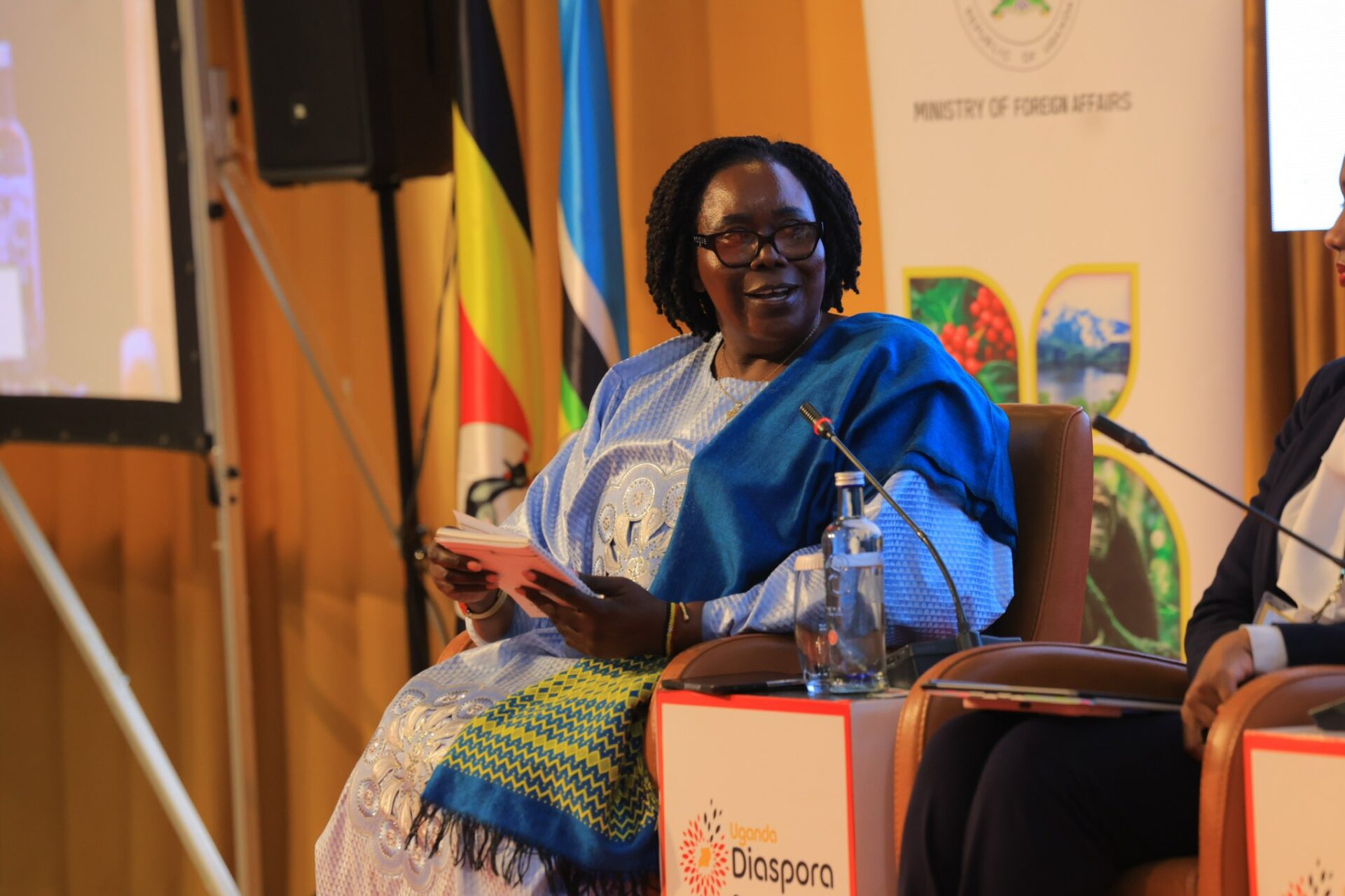 The Uganda Investment Authority, the Uganda Registration Services Bureau, and the promoted commercial banks are not neutral actors; they operate within a political ecosystem where access and success are frequently contingent on allegiance and connection.
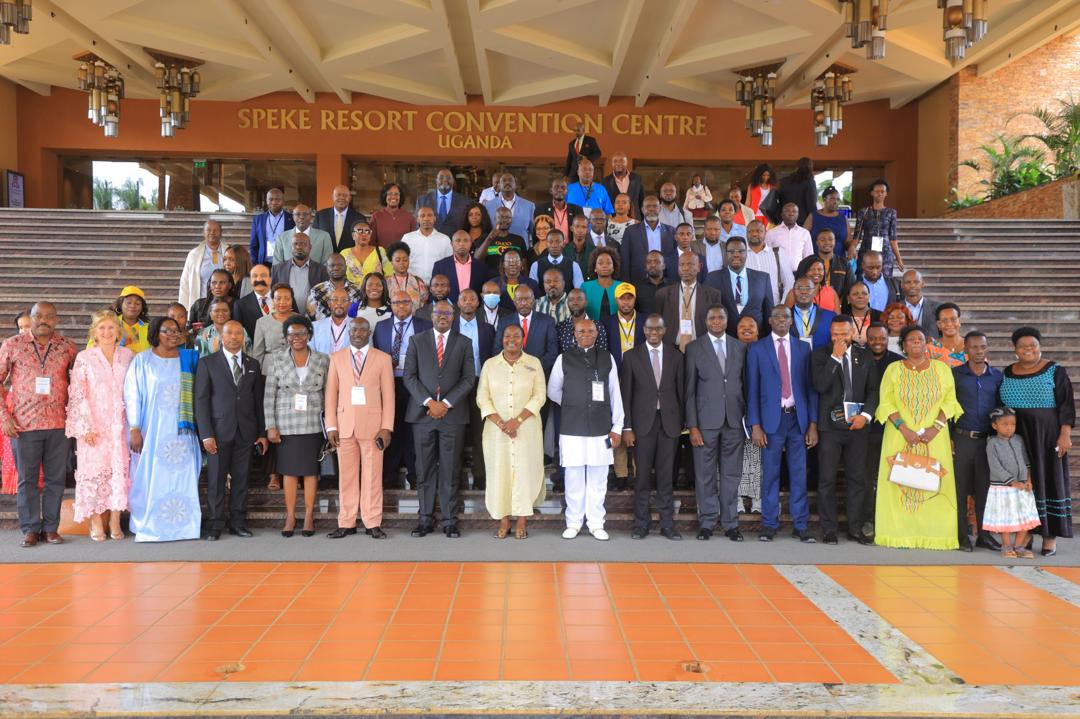 Their absence was not an oversight; it was the central, silent pillar of the event’s narrative. It brings to mind the adage: “A tree is known by its fruit.” The convention presented only the most polished, marketable fruit, deliberately ignoring the gnarled roots and the bruised, fallen produce that tell the complete story of the tree’s health.
 The convention’s guest list revealed the regime’s deepest fear: not the critic with a spreadsheet, but the united chorus of the excluded, whose very lives narrate a different, more honest story of the nation. The tree, in the end, will be judged by all its fruit—the showcased and the hidden alike.
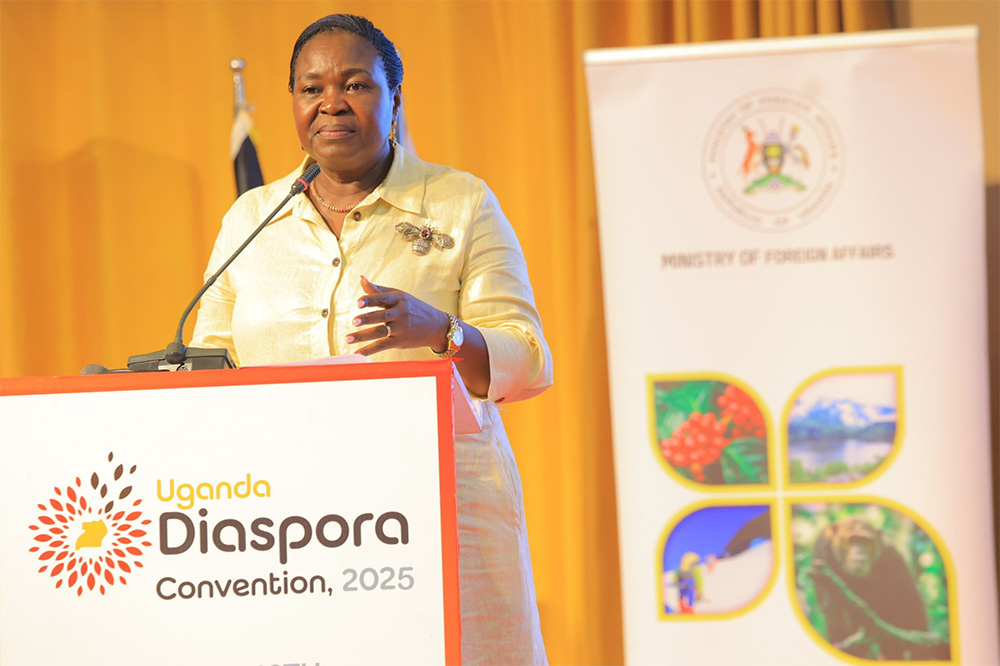 For the state to truly embrace its diaspora, it would first have to cease creating refugees. Until that day, its invitations will ring hollow, a wolf’s call wearing the thinnest of fleeces. The power of the displaced, therefore, lies not in heeding the call to invest, but in persistently, publicly embodying the truth of why they left—keeping the paradox alive and unhealed, as a testament to justice denied.
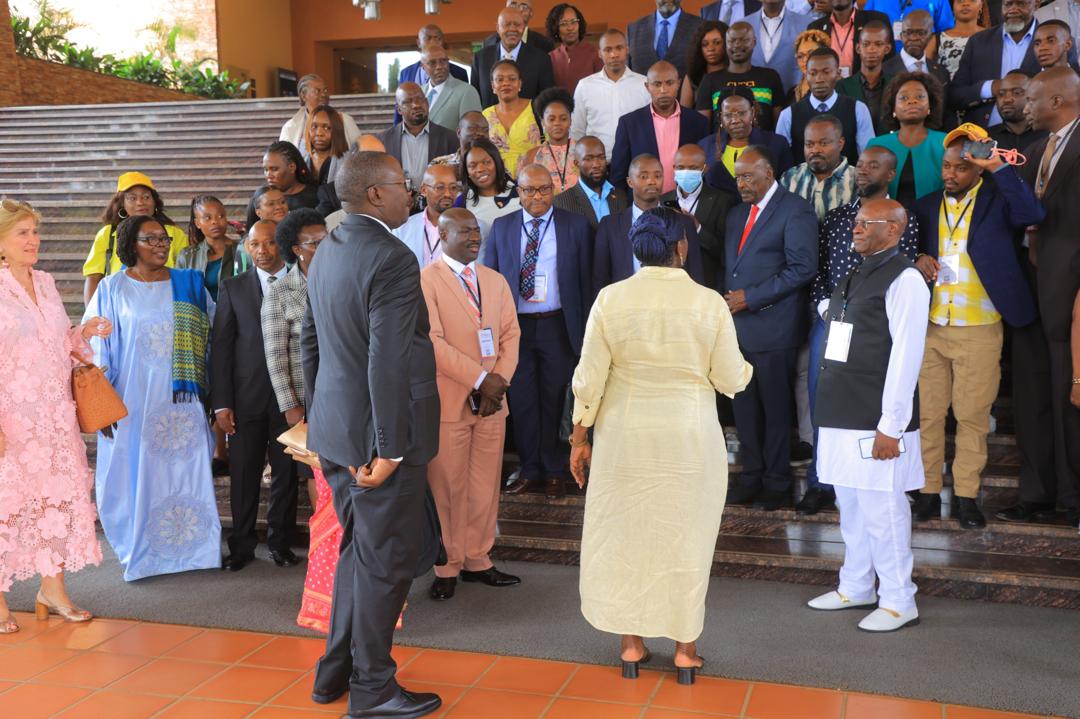 The Senior Presidential Advisor is not merely a participant; they are a warden of the gateway, ensuring only the useful and the pliant pass through.
 True transformation in health and education would begin with the state dismantling its own systems of graft and political control over services. Until that happens, the most radical and effective diaspora contribution remains the unmediated transfer of resources that keeps their loved ones alive and educated, despite the state, not because of it. This grassroots network of survival is a silent, powerful indictment—a testament to a people’s resilience in the face of a government that feeds the leaves with one hand, while systematically poisoning the roots with the other.
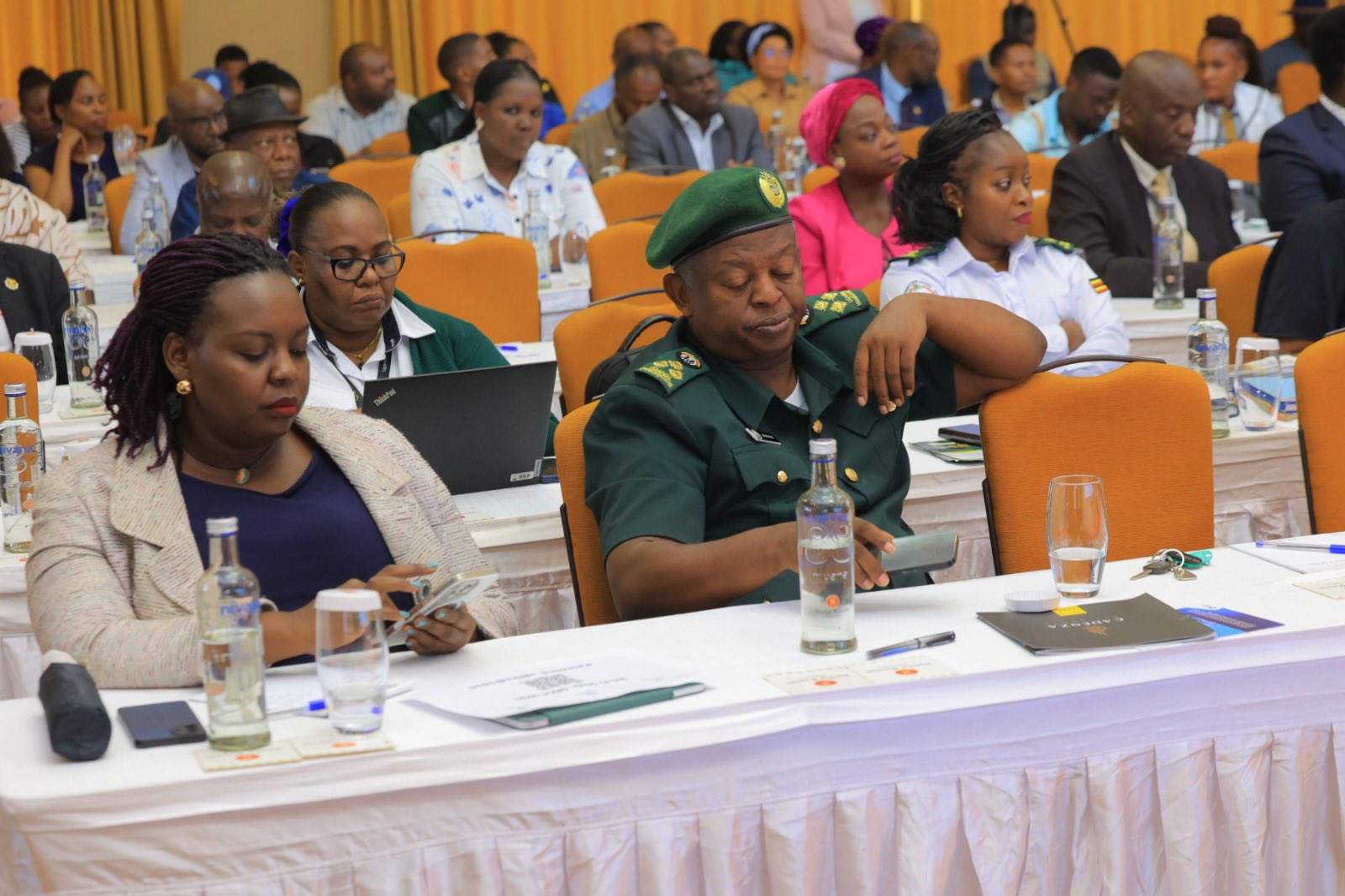 The people are shown the glittering percentage, yet too often remain in the practical dark, their potential unplugged by a system that values the appearance of power more than its equitable distribution.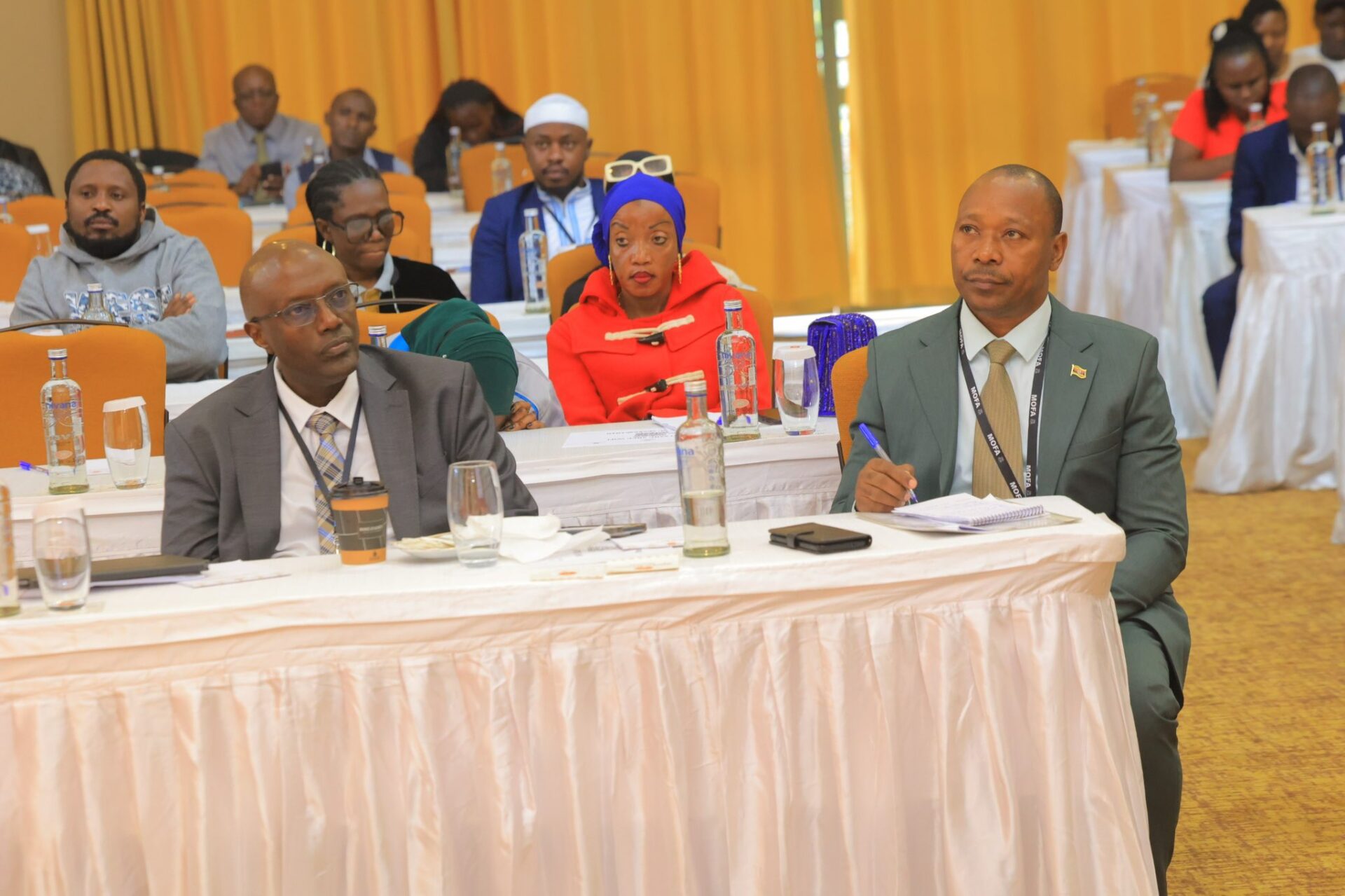
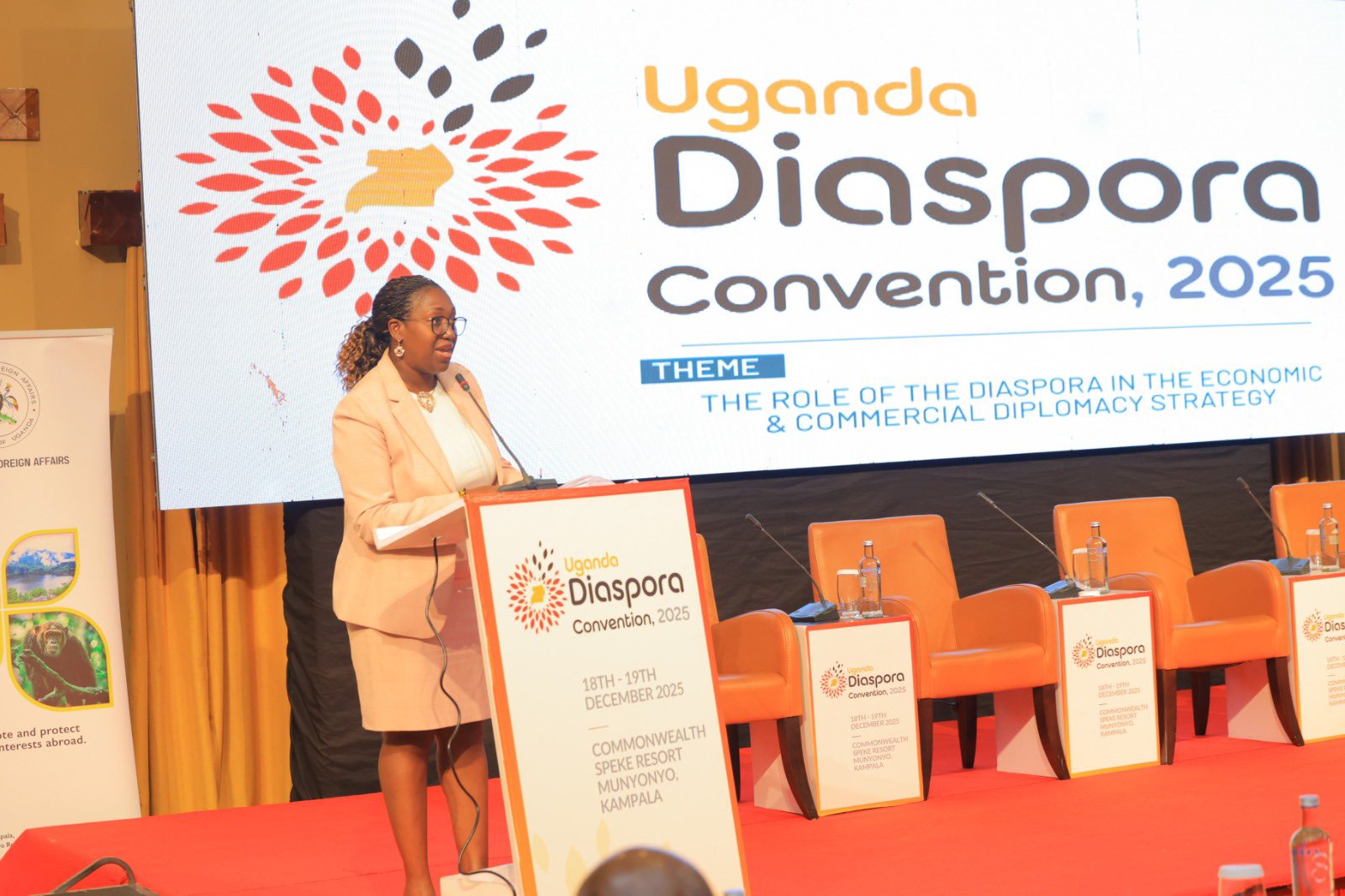
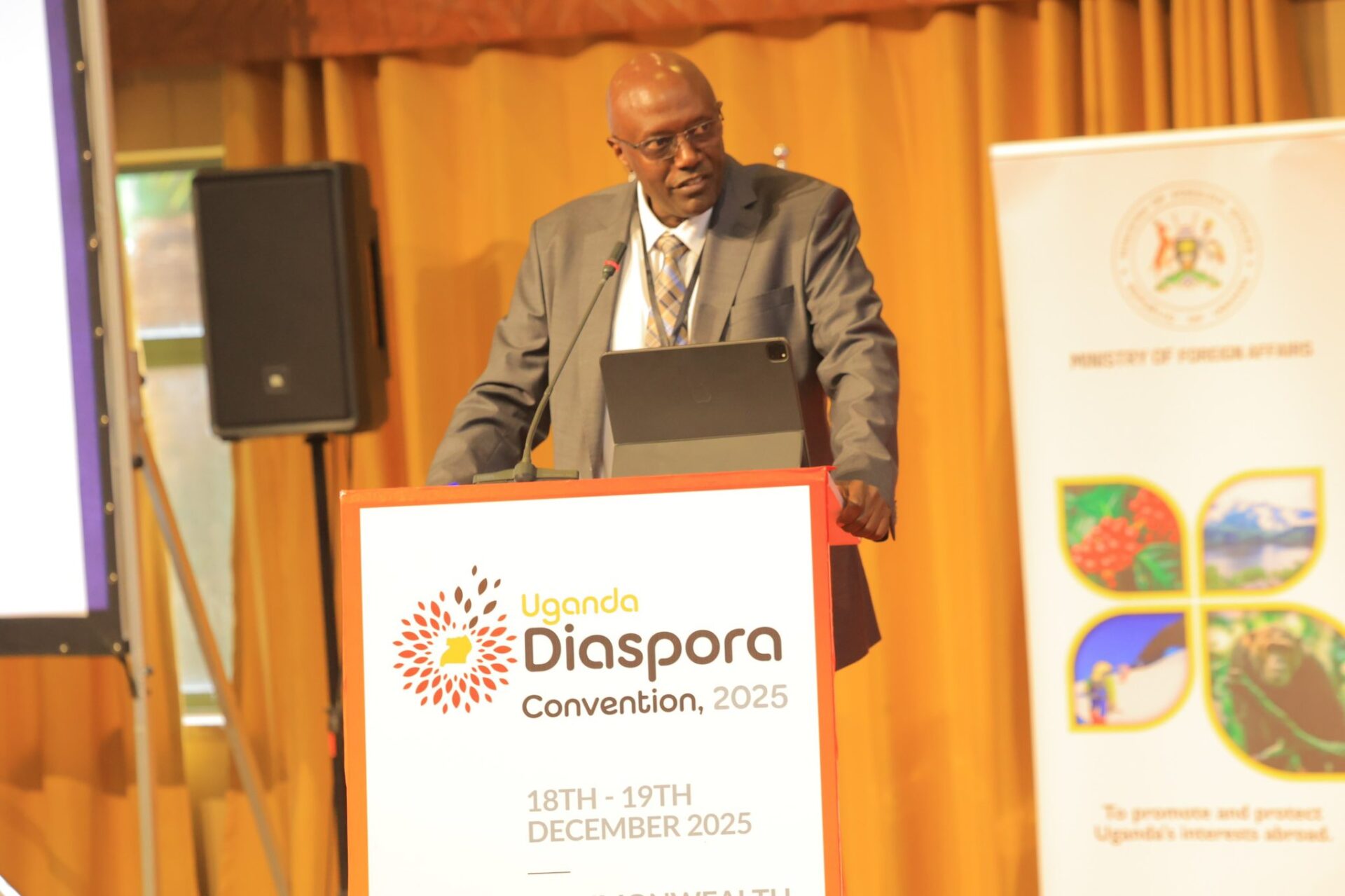
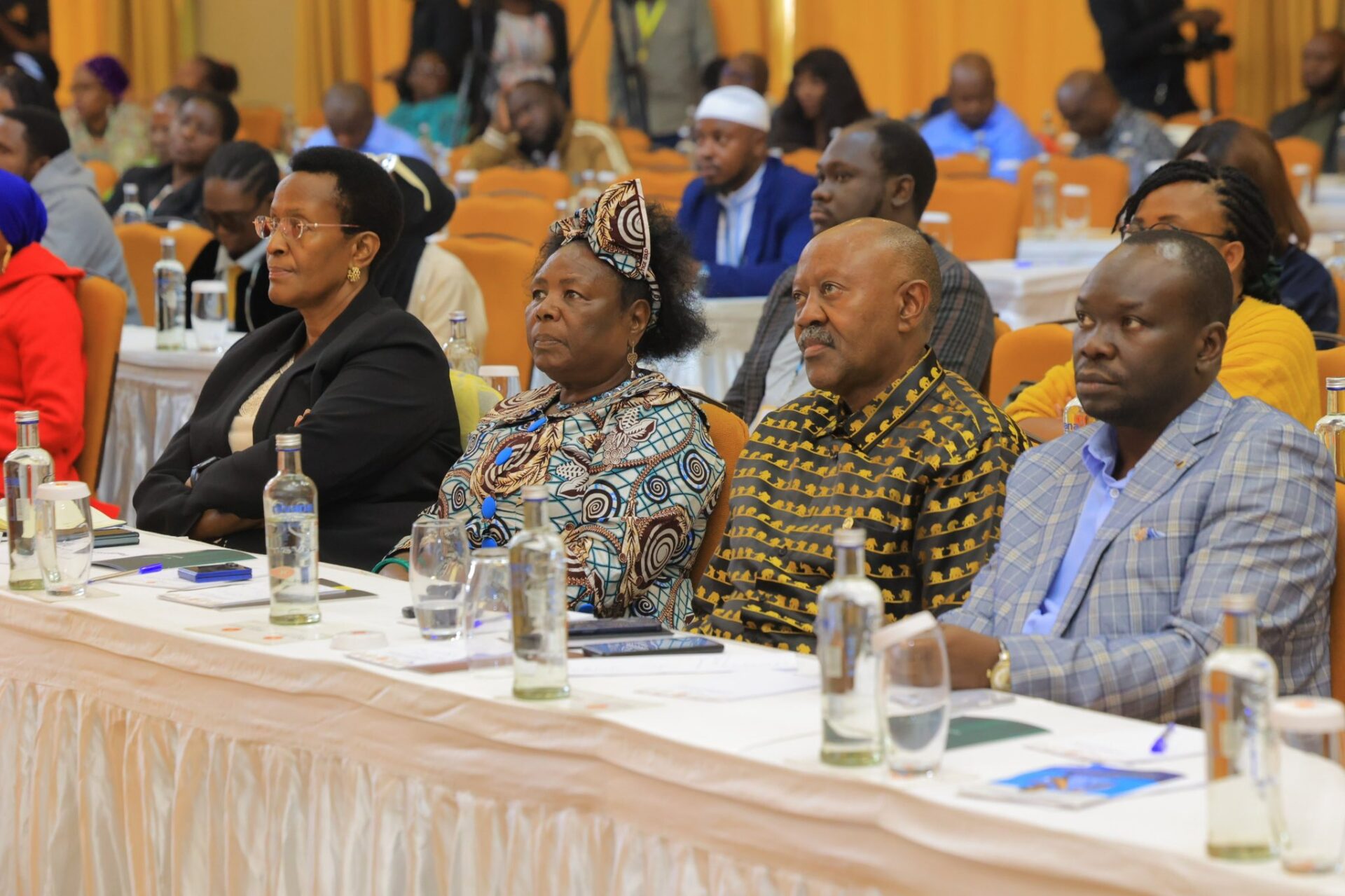


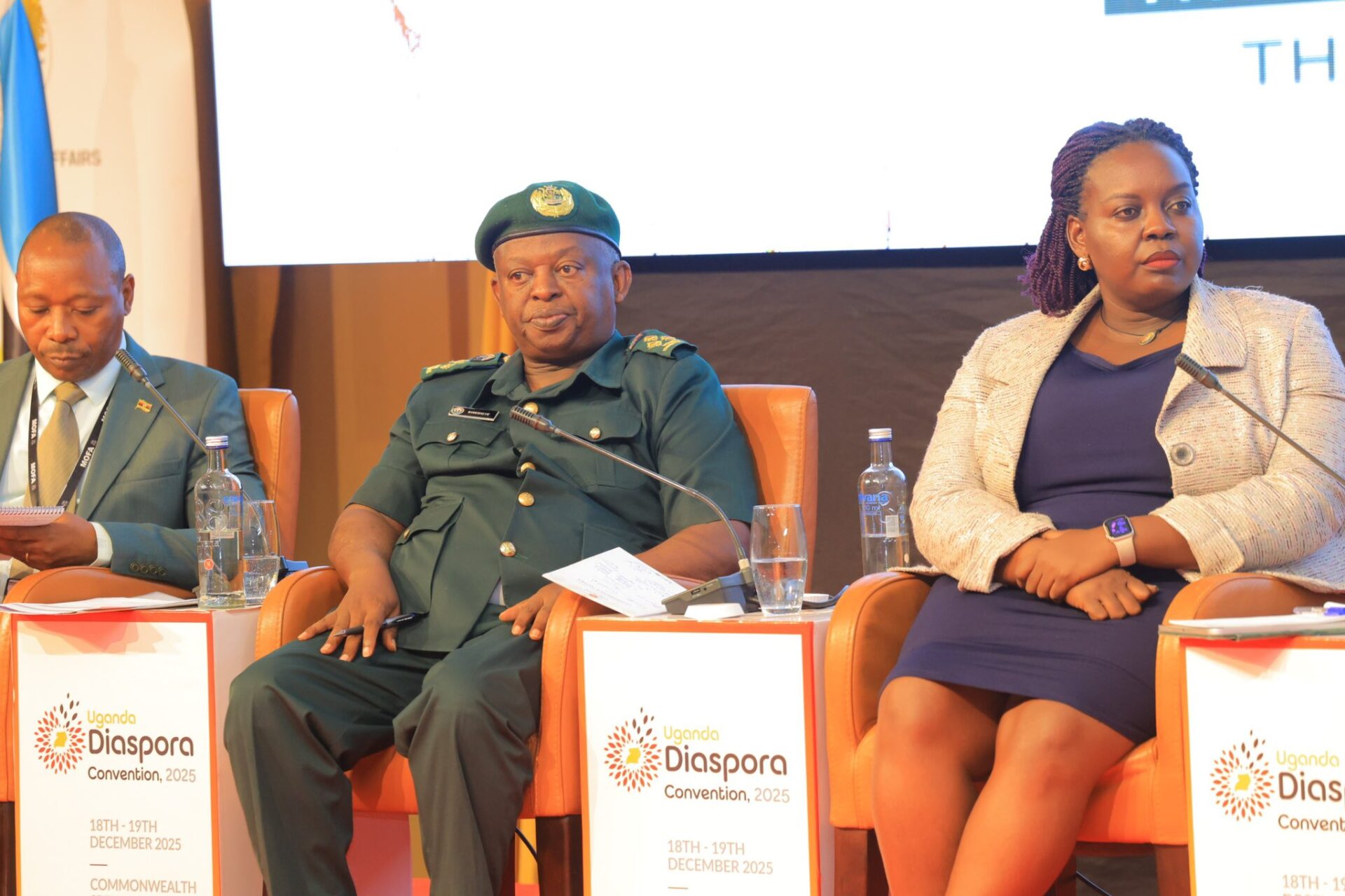
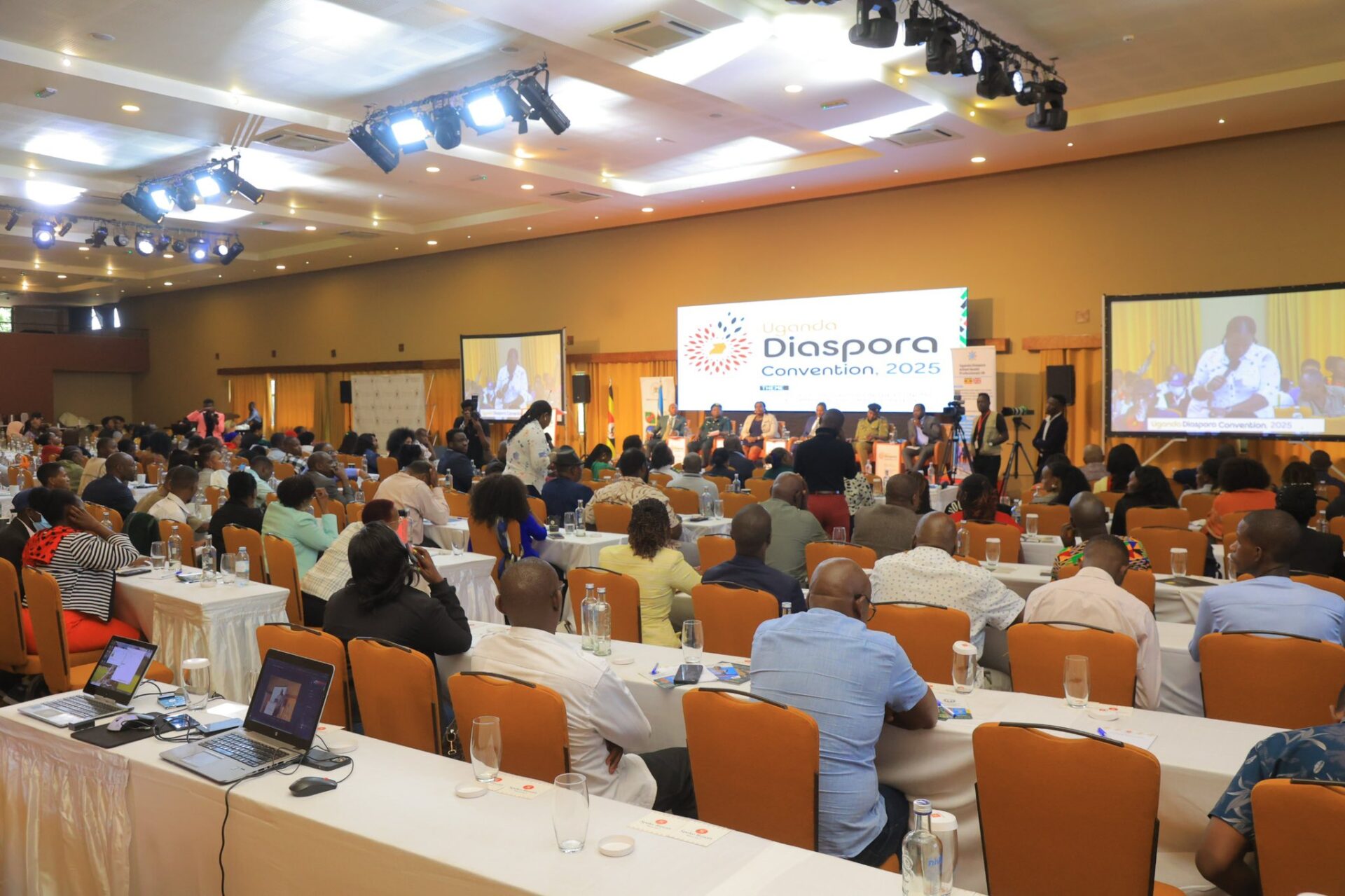 By engaging powerfully with diaspora and foreign investors on purely economic terms, it cultivates a coalition of actors with a vested interest in “stability” and “growth,” implicitly encouraging them to downplay or ignore systemic abuses. It builds a firewall of commercial partnerships designed to shield the regime from political pressure, arguing that such pressure jeopardises “development.”
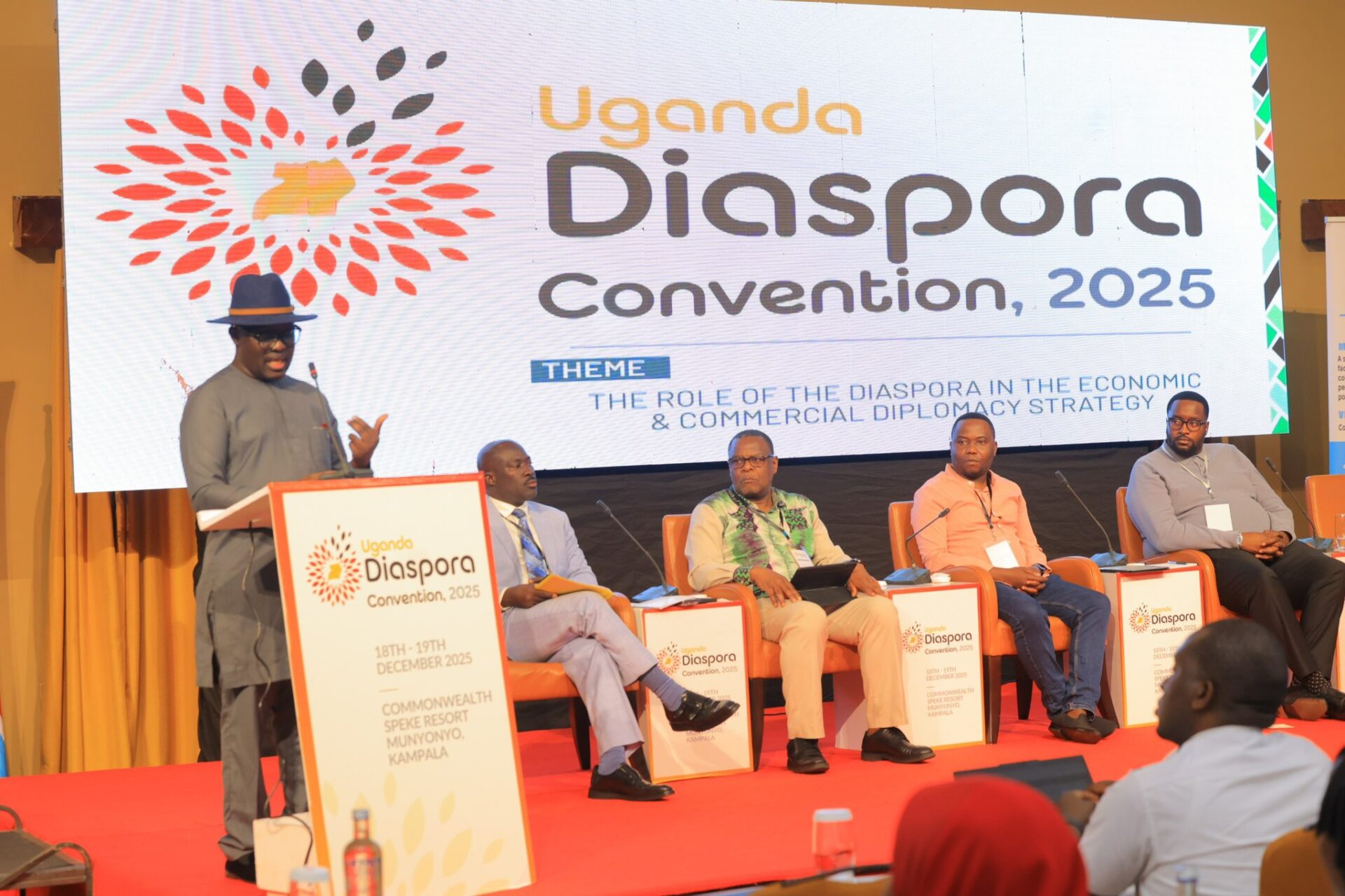 True economic empowerment would involve creating channels for diaspora capital to flow directly into community-owned cooperatives, renewable energy micro-grids, or small-holder agricultural collectives—bypassing the state’s extractive financial architecture entirely. The state’s model, however, is designed to harvest this capital for its own purposes. It is not an investment in inclusive development, but a fiscal stopgap that mortgages the people’s present survival for the state’s future stability, ensuring that the remittance lifeline ultimately sustains the system, not subverts it. The hollow harvest yields grain for the granaries of power, while leaving the fields of everyday life fallow.
 The state’s offer is a gilded invitation into a cage of acceptable discourse. To accept it is to legitimise the very structures of coercion that make the invitation necessary. The path of integrity leads away from the spotlight of hollow honours and towards the steadfast, if less celebrated, work of building authentic, unmediated connections that uphold dignity and justice—not because the state allows it, but precisely because it cannot. In this space, actions of solidarity do indeed speak infinitely louder than the state’s carefully scripted words.
 That this was not proposed reveals the convention’s true purpose: not to protect diaspora capital for development, but to attract it into the very system that consumes capital for its own perpetuation. The wolf, after all, does not build a safer henhouse; it simply paints the door and asks for more chickens.
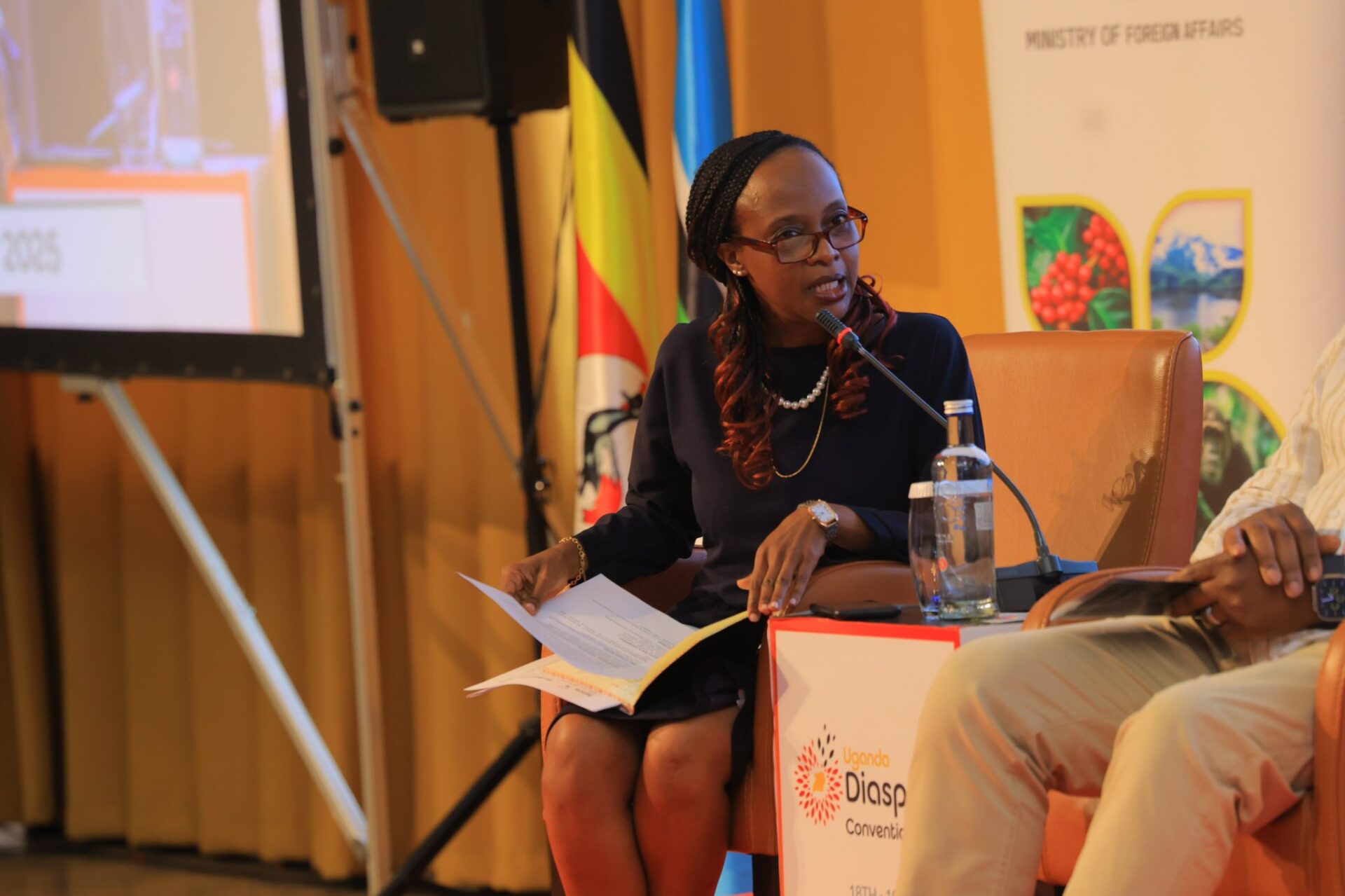 The diaspora represents talented branches that grew away from the boot; the state now asks them to channel their vitality back into a system whose very soil—the governance and institutional framework—remains unchanged and toxic to organic, inclusive growth.
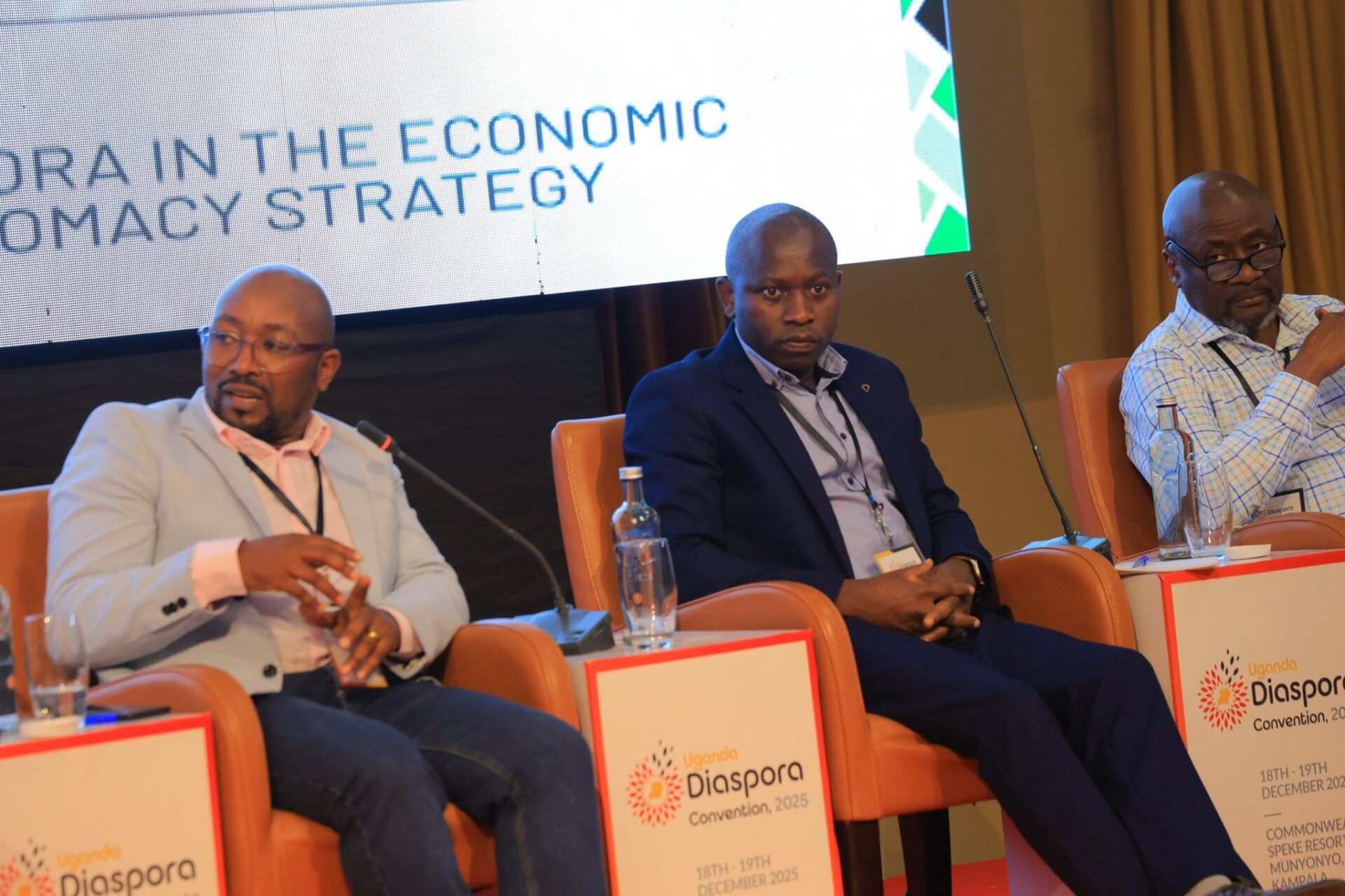 The diaspora, therefore, faces a choice beyond being mere exporters. They can be catalysts for the conditions that would make their own return, or the flourishing of those who remain, possible. The poisoned tree will not heal by grafting on healthy branches from afar; it requires detoxifying the soil itself. The diaspora’s most valuable export may not be a film or a software patch, but an unwavering commitment to the principles of governance that would allow a thousand films and software companies to grow, untethered and unafraid, from Ugandan soil itself.
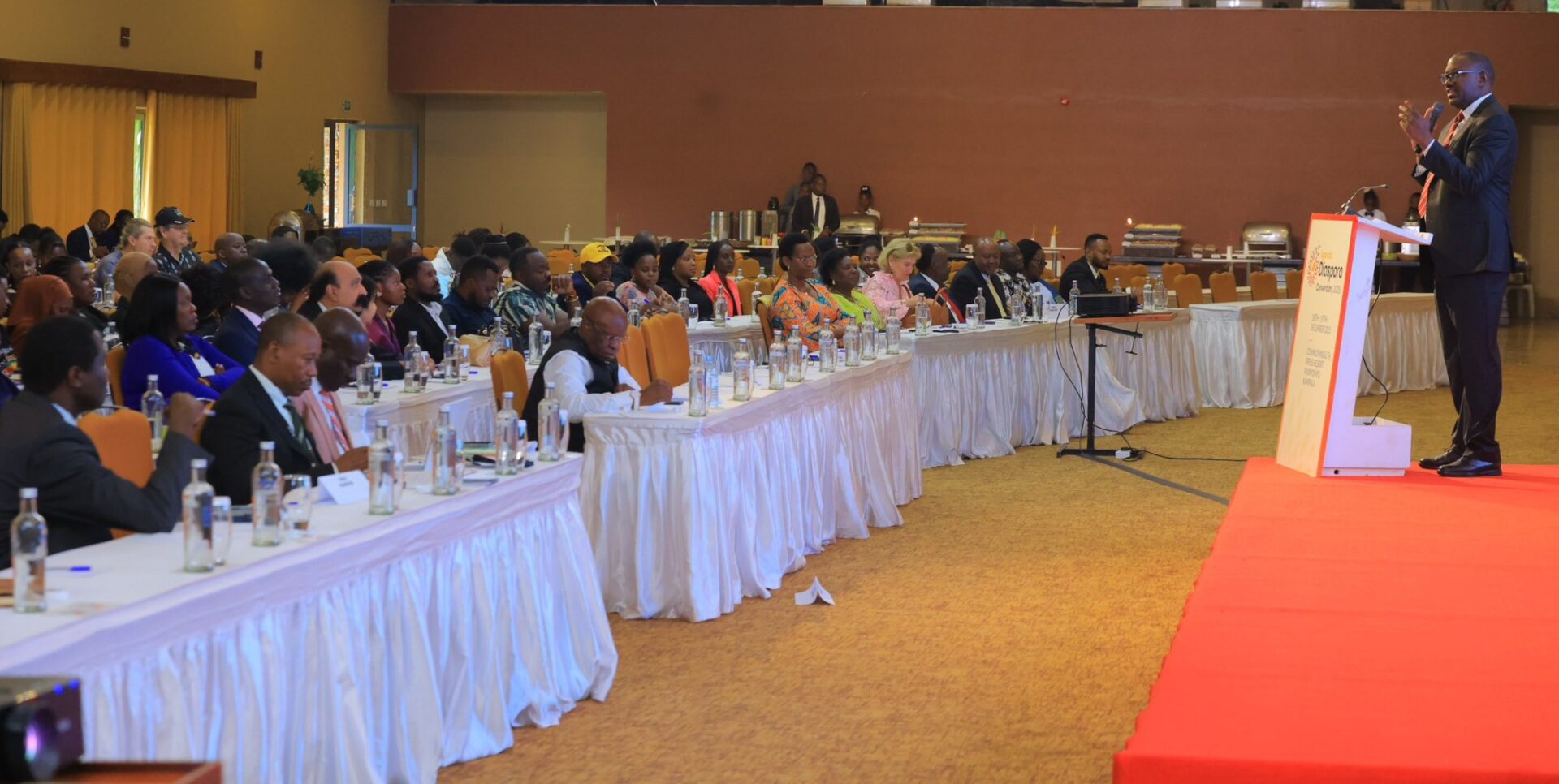 By championing RAPEX, the state can point to a concrete policy, deflecting criticism about overall governance. The diverted savings, even if partially used for visible projects, become visual proof of the regime’s effectiveness, further entrenching the idea that development can only flow from this centralised, managerial state, however flawed its foundations.
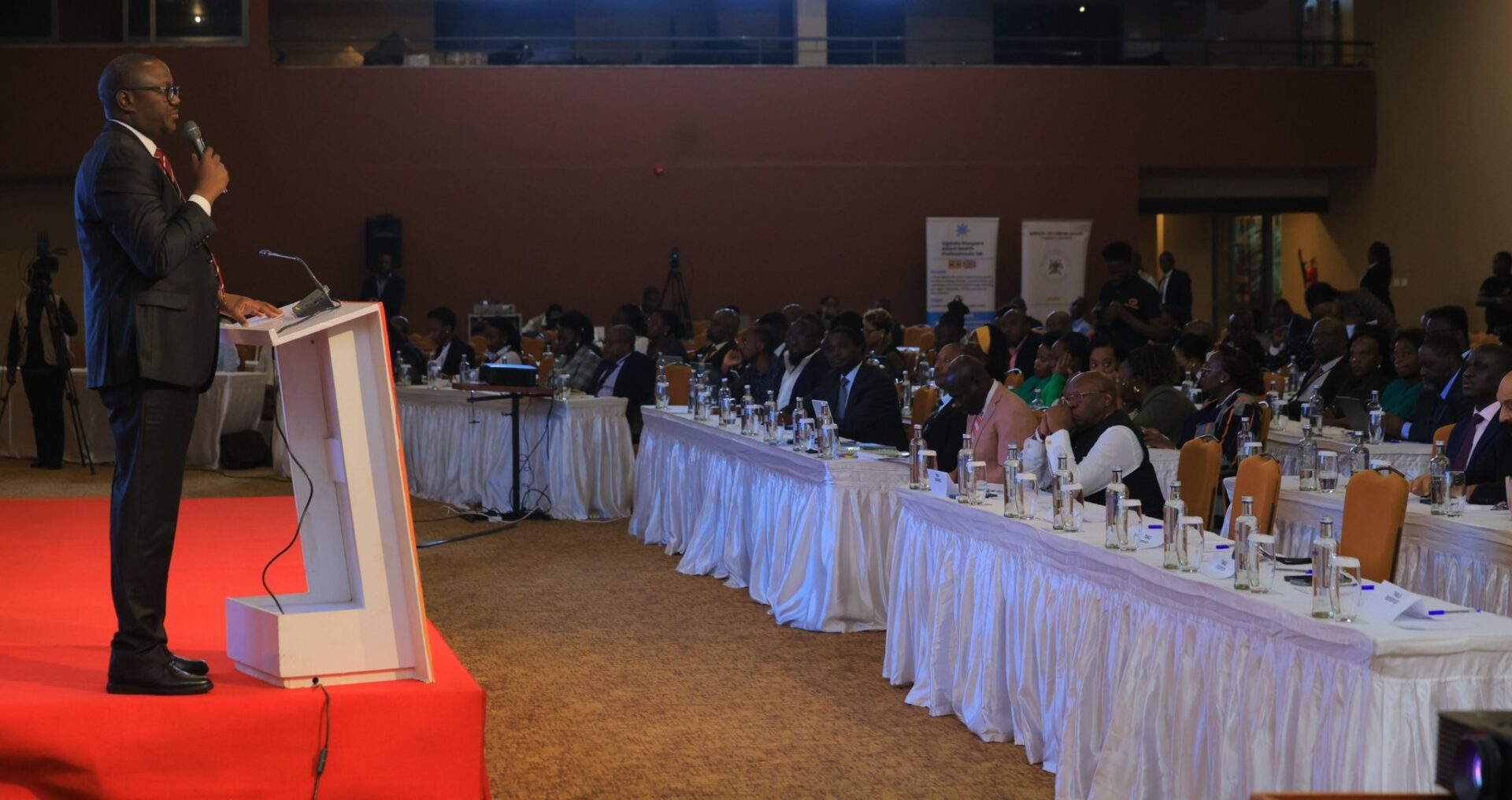 The fresh bandage of RAPEX may look impressive, but it is applied by the same hands that benefit from the wound remaining open. The diaspora, and all citizens, should be less concerned with the theatre of rationalisation and more focused on the fundamental question: who controls the scalpel, the medicine, and the healing process? Until that control is democratised, every reform risks being merely another layer concealing the decay within, a confident presentation of new paint on beams corroded to their core.
 The state’s instrumental frame is a cage made of economic expectation. The key to its lock is the refusal to accept the definition, and the unwavering commitment to act as full human beings—citizens, critics, and custodians of a future that must be built on justice, not just GDP. The man with a hammer may see only nails, but the diaspora is the very hand that can choose to set the hammer down and build something entirely new. Their agency is not a gift to be granted by the state, but a sovereign right to be exercised in spite of it.
 The lion’s den, however dressed, is designed for the lion’s benefit. True safety and authenticity for the diaspora lie in the collective resolve to meet elsewhere—in the unscripted, uninvigilated spaces where trust is built through shared risk and solidarity, not shattered by the smiling sentinel’s ever-present watch. The most critical dialogue about Uganda’s future will not be found in the conference halls of Munyonyo, but in the confidential, courageous conversations that happen well beyond its walls, where the fear of the den no longer dictates the terms of speech.
 The exceptional individual does not disprove the oppressive rule; they often most vividly illustrate what is possible in its absence. The diaspora’s power, therefore, rests in uniting behind a shared narrative that celebrates genuine success while relentlessly attacking the barriers that make it the exception rather than the norm. It is to insist that every story of individual triumph must also be a demand for a system where such a story is commonplace, not propaganda.
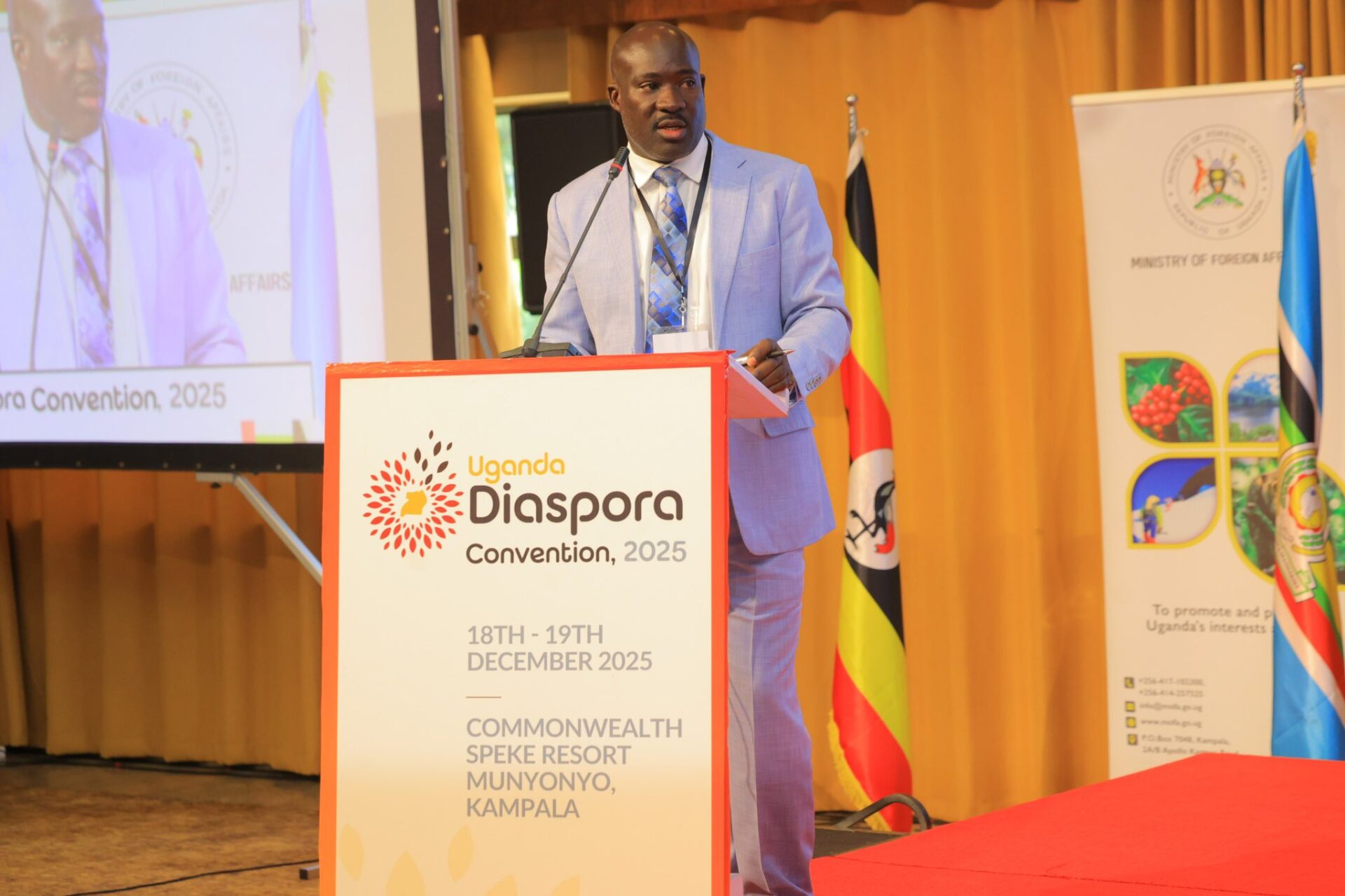 Until then, the painted door is merely a facade. The diaspora, and all citizens, are left with a choice: to pay for the unofficial key to the rusted lock, to spend endless time trying to force it, or to invest their energy in building entirely new structures of economic cooperation that do not require gaining entry to the state’s guarded house at all. The most efficient engagement may ultimately be that which engages least with the official pathways altogether, finding its ease in the trust and direct action of community, not in the perpetually promising but perpetually gated institutions of the state.
The Gilded Mirror: A Critical Unmasking of the Convention’s True Purpose
The proceedings at Speke Resort Munyonyo can be most accurately understood not as a dialogue, but as an elaborate piece of political theatre. Its primary function was not to listen, but to broadcast; not to engage in critique, but to manufacture consent. From a perspective that scrutinises power structures and their self-perpetuation, the event stands revealed as a sophisticated exercise in elite resource mobilisation and narrative control, designed to serve the entrenched interests clustered around the dictatorship of Yoweri Museveni and its affiliated business consortium.
This critique examines the machinery behind the performance.
1. The Stage-Managed Narrative of Inevitable Progress
The convention served as a gilded mirror, held up to reflect only a flattering, state-approved image of Uganda. Every statistic cited, from electricity access to GDP targets, was selectively deployed to construct an aura of technocratic momentum. This deliberate presentation brings to mind the adage, “All that glitters is not gold.” The glittering data points on PowerPoint slides distract from the corroded reality of their implementation. Boasts of increased power generation ignore the corruption scandals in the energy ministry and the prohibitive tariffs that keep small enterprises in the dark. This weaponisation of data is not informative; it is hypnotic, designed to lull observers into a belief in linear, state-managed progress, thereby silencing questions about its true costs and beneficiaries.
2. The Co-option of Community into Capital
At its core, the event sought to execute a profound conceptual shift: transforming the diaspora from a body of citizens with rights and grievances into a pool of stakeholders and financial assets. The language of “partnership” and “inclusive growth” is the velvet glove around an iron fist of extraction. By reframing the relationship as transactional, the state seeks to absolve itself of its obligations—to provide security, justice, and opportunity—while laying claim to the diaspora’s capital and credibility. The “structured role” on offer is a cage, its bars forged from treasury bonds and sanctioned investment vehicles, funnelling wealth directly into systems that reinforce the status quo.
3. The Conspicuous Silence as an Admission of Guilt
The most telling analysis lies in the strategic omissions. The exclusion of political refugees—those living, breathing evidence of state persecution—was not an oversight but a necessity. Their presence would have torn aside the curtain, revealing the raw machinery of fear and violence that underpins the regime. Similarly, the deafening silence on concrete, enforceable anti-corruption mechanisms spoke volumes. To acknowledge the systemic graft documented by the Auditor General would be to admit that the state is not a neutral arbiter for investment, but a contested arena where success is often determined by patronage, not merit. These silences are the foundation upon which the entire staged event was built.
4. The Ugandan Reality: Perpetuation Through Extraction
Ultimately, the convention was a ritual of elite perpetuation. In a political economy where the lines between the ruling party, the state, and favoured business interests are deliberately blurred, fresh capital streams are vital for maintaining patronage networks and funding apparatuses of control. The diaspora’s resources are targeted as a lucrative, emotionally vulnerable new frontier. The event aimed to mobilise these resources, providing the regime with both financial liquidity and a veneer of democratic legitimacy through diaspora endorsement, all while offering nothing in return but the promise of participating in a growth story that systematically excludes the majority.
Conclusion: Rejecting the Reflection
The true measure of the diaspora’s agency will be its collective refusal to accept this gilded reflection as reality. It lies in insisting that any meaningful partnership must first address the erasures and silences—the plight of the refugee, the scourge of corruption, the violence meted out to dissent. It resides in channelling resources not into the state’s coffers, but into the hands of communities and into support for the independent civic institutions that the state seeks to marginalise.
The convention offered a mirror that flatters the powerful. The task is to look beyond it, to the unvarnished truth of a nation where power is concentrated and justice is commodified. Real progress will begin not with celebrating skewed statistics in a lakeside resort, but with the difficult, decentralised work of building a society where no single centre has the power to dictate the narrative or harvest the wealth of its people for its own endurance. The glittering image is a phantom; the future belongs to those building on the solid, if unadorned, ground of truth and equity.
The Crossroads of Conscience: A Final Reckoning for Diaspora Engagement
The polished spectacle of the 2nd Diaspora Convention has concluded, but the profound questions it deliberately left unasked now hang in the air, heavier and more pressing than any policy draft. The event has laid bare a fundamental crossroads, not merely of investment, but of moral and political conscience. It brings to mind the adage, “A wolf in sheep’s clothing is still a wolf.” The state has donned the fleece of partnership and progress, but its underlying nature—predatory, extractive, and coercive—remains unchanged. The diaspora now stands at the junction of two paths: one of compliant transaction, the other of transformative solidarity.
The Choice Presented: Complicity or Clarity
The convention offered a seductive, streamlined path: to become a financier of the status quo. It presented a sanitised, investable brand of “Uganda” scrubbed clean of its political abrasions. To follow this path is to accept a debilitating fiction. It is to believe that one can fund turbines at Karuma without indirectly subsidising the security apparatus that displaces communities; or that buying a government bond is unrelated to the systemic corruption that voids the bond’s value for public welfare. This is not investment; it is a form of moral laundering, where the diaspora’s capital is used to bleach the regime’s record, providing it with both funds and a facade of external endorsement.
The Silenced Majority and the Meaning of Patriotism
Meanwhile, the authentic Uganda—the nation of struggle, ingenuity, and resilience that exists in villages, markets, and in the quiet defiance of ordinary people—was rendered a spectre at the feast. True patriotism cannot be founded on the exclusion of the persecuted and the silent suffering of the grassroots. Authentic love for one’s homeland is expressed not in cheques written to its oppressors, but in unwavering solidarity with those they oppress. The highest form of diaspora engagement, therefore, may often look like supporting the very elements the state demonises: independent family farms over agribusiness monopolies, community legal aid networks over a co-opted judiciary, and grassroots documentation of rights abuses over state propaganda.
Towards an Engagement of Integrity
Thus, the convention’s failure is its greatest lesson. It reveals that no state-orchestrated forum can host the necessary conversation. That dialogue must happen elsewhere: in the secure meetings of diaspora associations, in alliances with international labour and human rights organisations, and in the direct, unmediated link between diaspora savings and community-controlled projects. Engagement with integrity must be:
Clear-Eyed: Acknowledging the full reality of dictatorship, corruption, and coercion as the primary inhibitors of development.
Autonomous: Operating through channels that bypass, rather than bolster, patrimonial state institutions.
Solidarity-Based: Prioritising the flow of resources to where they protect human dignity and foster self-sufficiency from the ground up—be it a farmer’s cooperative, an independent newspaper, or a scholarship for a student from a marginalised region.
Final Reflection: Beyond the Transaction
In the end, the diaspora’s power does not lie in becoming a captive auxiliary to the state’s treasury. It resides in its capacity to be a free, critical, and connective force. The wolf will always seek the flock. The role of the discerning diaspora is not to provide more sheep, but to remove the clothing, sound the alarm, and help build independent, fortified sanctuaries of genuine community and mutual aid.
The convention asked for resources without representation. The answer must be a demand for justice before investment. For in that stubborn, principled stance lies not the abandonment of Uganda, but the deepest commitment to its people—a commitment to the idea that a nation’s true wealth is measured not in the megawatts it generates for elites, but in the justice and opportunity it secures for every one of its citizens, at home and in exile.
The Emperor’s New Clothes: A Final Unravelling of the Diaspora Convention Narrative
The 2nd Diaspora Convention in Munyonyo can be comprehensively understood not as a genuine dialogue, but as an elaborate performance of statecraft. It was an exercise in narrative control and resource channelling, designed to present the interests of a concentrated political and economic consortium as synonymous with the national interest. Its ultimate goal was not to empower a dispersed citizenry, but to discipline it; not to listen, but to direct. This brings to mind the adage, “The emperor’s new clothes.” The regime presented itself in the finest robes of progress and inclusion, woven from the threads of growth statistics, policy drafts, and partnership jargon. A critical, unwavering look, however, reveals the stark reality underneath a project of perpetuation, not transformation.
Here is a final, synthesising critique that ties the convention’s threads into a coherent pattern of power:
1. The Central Contradiction: Extraction Disguised as Partnership
Every pillar of the convention rested on a foundational contradiction. It sought to formalise and monetise a relationship—between the state and its diaspora—that for most exists precisely to escape or bypass the state’s failures. The call to move “beyond remittances” sought to divert funds from direct household survival into impersonal state securities. The “structured investment” channels were designed to replace autonomous, community-responsive support with capital flows controlled by Kampala-based elites and their foreign partners. This was not partnership; it was the formalisation of a new frontier for extraction, targeting the savings of those who had already voted with their feet.
2. The Manufactured Diaspora: Inclusion as Exclusion
The convention meticulously manufactured an “acceptable” diaspora identity: the apolitical professional, the compliant investor, the technical advisor. By platforming this identity and pledging to “honour” it, the state performed an act of political triage. It drew a bright line between the “good” diasporan, who engages on purely commercial terms, and the “bad” diasporan—the political refugee, the critical voice, the grassroots organiser. True inclusion would have required grappling with the reasons for exile and criticism. Instead, the state offered a hollow inclusion predicated on the silence of those very voices, rendering the most profound grievances officially invisible.
3. The Illusion of Technocratic Salvation
The entire event was steeped in a technocratic illusion—the belief that complex political and social crises can be solved by policy drafts, sectoral panels, and financial products. This illusion served to depoliticise discussion. By focusing on “commercial diplomacy,” it sidelined the commercialised corruption that undermines all investment. By boasting of electricity capacity, it masked the unreliable access that stifles productivity. By announcing oil deals, it obscured the local dispossession they cause. This technocratic frame is the preferred language of authoritarian modernisation, as it suggests problems are merely managerial, not rooted in the distribution of power and justice.
4. The Ugandan Reality: The Dictatorship’s Offshore Lifeline
Under Museveni’s dictatorship, this convention was a logical manoeuvre. Having consolidated power through a blend of coercion, patronage, and control over domestic resources, the regime is now seeking to secure its offshore lifeline. The diaspora represents a vast reservoir of foreign exchange, skills, and potential legitimacy. The convention’s objective was to construct a reliable pipeline for these resources, integrating them into the existing domestic system of elite accumulation without altering that system’s oppressive foundations. It was an attempt to ensure that even those who fled contribute to stabilising the structure they fled from.
5. The Unspoken Alternative: Autonomous Power and Horizontal Solidarity
Against this vertical, state-centric model, the only coherent and ethical response is the reaffirmation of horizontal solidarity and autonomous power. The true strength of the diaspora lies not in becoming a creditor to the state, but in:
Strengthening the direct, person-to-person remittance lifelines that sustain millions.
Building transparent, community-controlled investment vehicles that bypass state coffers.
Using their relative security abroad to amplify the voices of the repressed and document injustices, acting as a counterweight to the state’s narrative control.
Fostering knowledge and resource exchanges directly between communities, trade unions, and grassroots cooperatives, building a resilient parallel economy from the bottom up.
Final Conclusion: Rejecting the Weave
The convention’s narrative was, in the end, a fragile weave. Its threads—growth targets, access statistics, and honour pledges—cannot hold together when the fabric of the state is frayed by corruption, repression, and exclusion. To see through the emperor’s new clothes is to recognise that real development will never be delivered from above through structured extraction.
The future of Uganda’s prosperity lies not in the sealed boardrooms of Munyonyo, but in the unregulated, vibrant, and stubborn spaces where people organise their own survival and dream their own futures. The diaspora’s most powerful role is not as a captive investment arm, but as a free, critical, and imaginative force that supports these autonomous spaces, challenging the very need for the emperor’s procession altogether. The true convention of consequence is not one that is organised by a ministry, but one that emerges organically from the shared struggle for dignity, beyond the reach of the state’s gilded loom.

RELATED PUBLICATIONS:
 Uganda’s Energy Efficiency and Conservation Bill 2024: A Comprehensive Analysis
 Uganda’s 2026 Election Manifestos: A Deep Dive into Promises vs. Delivery
 Profitability Assessment of Uganda’s Public Corporations and State Enterprises
 Ugandan Politics Exposed: The Illusion of Choice and Managed Opposition
 The Politics of Patronage: Analysing Museveni’s Leadership Style in Uganda
 Uganda Police Force Defends Arrests, Denies Kidnap Allegations
 The Illusion of Dialogue:The Real Meaning of Uganda’s IPOD Dialogue & Political Theatre
 The Unspoken Truth: Is the 1995 Ugandan Constitution Still Relevant?
 Digital Exile: How Ugandan Writers Are Conquering Censorship
 Uganda 2026 Elections: Full Analysis of Presidential Debate & Candidates’ Visions