

A Nation at a Crossroads: Decoding Uganda’s Pivotal 2026 Presidential Debate
As Uganda gears up for its decisive 2026 general elections, the nation stands at a profound political juncture. The recent televised presidential debate, featuring five prominent opposition contenders, served not merely as a campaign event but as a stark national audit. With the long-standing incumbent absent, the podium became a platform for raw diagnosis and competing prescriptions for a country grappling with the legacy of decades of centralised power.
This comprehensive analysis dissects the core visions presented by figures such as Robert Kyagulanyi (Bobi Wine), advocating for a “New Uganda”; Nathan Nandala Mafabi, prioritising economic revival; and Mugisha Muntu, championing values-based governance. It delves into the radical push for systemic change, including Frank Bolera’s case for federalism and Joseph Mirzi’s model of regional governments, framed as direct antidotes to what candidates identified as endemic corruption, youth unemployment, and a security apparatus perceived as serving the regime over the people.
Moving beyond a simple debate recap, we explore the deeper, often unspoken questions the event raised: Is the solution to Uganda’s crises a change of leadership within the existing state structure, or a fundamental reimagining of power itself? This introduction unpacks the key themes of governance, economic justice, and national renewal that will define the battle for State House, setting the stage for a detailed examination of the policies, promises, and political philosophies shaping Uganda’s most consequential election in a generation.
The Stage is Set: A Raw Look at Uganda’s 2026 Presidential Debate
Introduction
In a charged studio under the bright lights of NTV and Spark TV, five men stepped onto a podium not just to debate, but to define a nation’s crossroads. The 2025 Presidential Debate, a precursor to the 2026 general elections, was more than a political formality; it was a stark audit of 40 years under the same leadership and a visceral cry for change from a young, restless population. With the incumbent absent, the arena belonged to the challengers, each attempting to convince a weary yet hopeful nation that they hold the key to unlocking Uganda’s stifled potential. This was not merely about policies, but about survival, dignity, and the very soul of a country at a tipping point.
The Race for State House: Analysing Uganda’s 2026 General Elections
Uganda is gearing up for its 2026 general elections, a pivotal moment in the nation’s democratic journey.1 As the country looks to the future, a diverse field of presidential candidates is presenting their vision to the electorate, promising change and new direction. An NTV presidential debate recently brought some of the key contenders face-to-face to discuss pressing national issues, from governance and corruption to youth unemployment and the economy.
The Candidates and Their Core Messages
Five prominent opposition figures took to the podium to articulate why they should be the next resident of State House, with the primary target of their critique being the long-standing incumbent government.
| Candidate | Political Party | Core Theme/Focus | Key Problem Identified |
| Frank Bolera | Revolutionary People’s Party (RPP) | Federalism / Systemic Change | Yoweri Museveni and the system of governance |
| Joseph Mirzi | Conservative Party (CP) | Regional Governments / Decentralisation | Centralisation of authority and poor education system |
| Nathan Nandala Mafabi | Forum for Democratic Change (FDC) | Fixing the Economy / Money in Pockets | Corruption (greed), Poverty, Injustice |
| Robert Kyagulanyi Ssentamu (Bobi Wine) | National Unity Platform (NUP) | New Uganda / Opposition Force | (Implied) Need for change and democratic space |
| Mugisha Muntu | Alliance for National Transformation (ANT) | Values-based Politics / Governance | Government’s failure to convert wealth into prosperity |
⚖️ The Governance Question: Federalism vs. Regionalism
A central thread running through the opposition’s pitch is the need to fundamentally alter the system of governance, arguing that the current centralised structure is the root of the nation’s woes.
Frank Bolera (RPP) passionately advocated for federalism, stating that the two biggest problems facing Uganda are President Museveni and the current system of governance. He pledged that in his first 100 days, Uganda would transition to a federal state, arguing that without changing the system, the country will “remain in the same problems” even with a new president.
Joseph Mirzi (CP) proposed the institution of regional governments. He sees Uganda as a “sinking boat in an ocean” and believes that these small regional governments, numbering around 16, must share power, resources, and responsibilities with the central government. His core argument is that this model would ease service delivery and generate a significant number of jobs.
💰 Economy and Corruption: Where is the Wealth?
The economic health of Uganda and the endemic issue of corruption were major talking points for the candidates, directly addressing the struggles of the average Ugandan citizen.
Nathan Nandala Mafabi (FDC) centred his campaign on “fixing the economy and money in our pockets.” He laid the nation’s problems at the feet of a three-faced crisis: corruption (greed), poverty, and injustice.2 As a Certified Public Accountant (CPA) and former Leader of the Opposition, his focus is on the tangible impact on poor mothers and fathers who are unable to “make enough to feed their families.”
Mugisha Muntu (ANT), a retired Major General, has built his political approach on a calm, values-based method, primarily focusing on addressing governance issues.3 He has been critical of the current government’s “failure to convert the country’s wealth into prosperity,” implying that the nation possesses resources, but poor governance and potential corruption prevent them from benefiting the population.
🎤 The New Guard: Youth and Political Transition
The presence of figures like Robert Kyagulanyi Ssentamu (Bobi Wine) underscores the theme of political transition and the mobilisation of the youth vote.4 The former musician, actor, and businessman, known popularly as “Bobi Wine,” leads the National Unity Platform (NUP). Having transitioned to politics, he gained massive prominence as a critic of the incumbent and previously ran for president in 2021. His movement, often linked to the “People Power” slogan, represents a significant force for change, particularly among Uganda’s young, unemployed population, which faces an increasingly difficult job market.
The five major themes identified for the NTV debate reflected the nation’s primary concerns:
Youth, Unemployment, and Jobs
Security, Governance, and Justice
Technology and the Future of Work
Infrastructure Development
The Health Sector
As the 2026 general elections approach, the debate has clearly established the main battlefield: a push for fundamental systemic change, decentralised power, and an economic overhaul that directly addresses poverty and corruption in the hope of creating a “New Uganda.”
20 Key Points from the Debate Arena
A Vacant Throne and the Echoes of Power
Within the stark, illuminated arena of the televised debate, the most profound presence was an absence. The dictator’s chair stood conspicuously empty, a silent, towering spectre over the proceedings. This was no mere political no-show; it was a pantomime of power, demonstrating that after forty years, the regime no longer feels the need to defend itself on a stage of equals. It operates beyond debate, beyond confrontation, in a realm where its authority is considered a settled, unchallengeable fact.
Robert Kyagulanyi, speaking with the raw frustration of a generation that has known no other ruler, framed this absence as a stolen opportunity. It was a chance to publicly dissect what he termed “forty years of lies” – to demand a direct accounting for the promised prosperity that never materialised, for the peace that masks systemic violence, and for the development that lines the pockets of a kleptocratic clique while communities wither. The empty podium became a perfect metaphor: a regime that is everywhere in its oppressive influence, yet nowhere to be found when called to account.
From a perspective rooted in grassroots liberation and deep scepticism of all concentrated, coercive power, this absence is deeply telling. It reveals a truth that Ugandans live daily: the state, as currently constituted, is not a participatory entity. It is a distant, extractive engine, a colonial inheritance perfected into a personal fiefdom. Its refusal to engage in open dialectic is an admission that its legitimacy cannot survive genuine, unfiltered scrutiny. It relies not on the consent of the governed, but on the perpetuation of myth, the fatigue of the populace, and the brutal efficiency of its security apparatus.
The dictator’s no-show was a masterclass in what the revolutionary thinker James Scott might call the “public transcript” of power. It broadcasts the message: You are not worthy of my direct engagement. Yet, in the vibrant, searing critiques of those who did stand at the podium, one could hear the stirrings of a powerful “hidden transcript” – the simmering collective understanding and rage of the people, now breaking into the open. Kyagulanyi’s attempt to confront the ghost was an effort to shatter the regime’s carefully managed spectacle, to force the invisible hand of power into the light.
In this context, an old adage rings true: “The fish rots from the head.” The stagnation, the corruption, the brutal inequalities that define modern Uganda – these are not accidents of policy but the logical outcomes of a system where ultimate power is concentrated, unaccountable, and eternal. The rotting head, absent and decaying in its isolated palace, poisons the entire body politic. The stench of its decay – in the form of neglected hospitals, gutted schools, and militarised streets – is what the other candidates were left to articulate, shouting their diagnoses at the empty seat of the disease itself.
Thus, the ghost at the podium was not a void, but a fullness. It was filled with the unanswerable questions of millions, the weight of stolen decades, and the glaring evidence of a regime that has nothing left to say to its people. It confirmed that the fundamental battle for Uganda is not between different political platforms on a stage, but between a people’s yearning for self-determination and a calcified structure of domination that has withdrawn even from the pretence of dialogue. The task, therefore, transcends replacing one figure with another. It demands the radical dismantling of the throne itself and the creation of entirely new forms of communal governance, built from the village upwards, where power is never again so alienated that its holder can simply choose not to show up.
A Generation Betrayed: The Manufactured Idleness of Uganda’s Youth
The debate’s most chilling revelation was not a scandal, but a statistic: a demographic truth so vast it threatens to become a historical verdict. With over 73% of the nation under the age of 30, Uganda is not merely a youthful country; it is a country held hostage by the stolen future of its majority. The sterile term “youth time-bomb” sanitises a raw, lived reality of systemic abandonment. This is not a natural disaster, but a calculated outcome. When only 37% of this generation have any form of work and a staggering 40% are cast into a void of idleness—neither learning nor earning—what you witness is not an economic failure, but the smooth functioning of a particular kind of power.
From a perspective that views all statecraft through the lens of whom it serves and who it subdues, this mass idleness is a feature, not a bug. A dictator’s grip does not thrive on a population of engaged, critical, and economically autonomous young citizens. It flourishes in a landscape of desperation. An idle, hopeless youth is a resource to be manipulated: a pool for cheap, exploitative labour when needed; a demographic to be pacified with pitiful handouts during election cycles; and a source of social tension that can be used to justify ever greater police militarisation and the suppression of dissent. The regime’s sycophants speak of “youth programmes” and “parish development models,” but these are mere sprinklers trying to douse a wildfire of structural violence. They are designed to manage poverty, not to dismantle the architecture that produces it.
This crisis is the direct harvest of a political economy built on extraction, not generation. An education system gutted of meaning, producing graduates for jobs that do not exist. An agricultural sector, the lifeblood of the many, deliberately crippled to create dependency. An industrial policy that serves foreign capital and a comprador class, not local ingenuity. The energy and intellect of millions are treated as a surplus to be controlled, not a national treasure to be nurtured. This is the legacy of four decades of the dictator’s rule: not the development of human potential, but its systematic containment.
In this engineered wilderness of idleness, the old adage proves brutally true: “The devil finds work for idle hands.” The regime, in creating this vast idle class, has itself become the devil. The “work” it finds for these hands is not productive labour, but the desperate, day-to-day struggle for survival that consumes all revolutionary potential. It is the work of queuing for a bribe-laden government tender, of scrambling for a motorbike taxi space in an oversaturated market, of being pitted against one another for the crumbs from a feast they will never attend. This idle energy, when it does not turn inward in despair, is cynically channelled into ethnic strife or political thuggery—always serving to fracture solidarity and reinforce the need for a strong, disciplining hand from above.
Therefore, the “youth time-bomb” is, in reality, a fuse lit by the state itself. The profound radical response to this is not to beg the regime for more jobs within its rotten system, but to recognise that true liberation begins with reclaiming the right to define work itself. It means building, from the ground up, circuits of mutual aid and cooperative enterprise that exist outside the dictator’s extractive networks. It means transforming idle hands into the hands that build community clinics, that restore seed banks, that create people’s theatres and independent media. The crisis of youth is the starkest evidence that the centralised Ugandan state has abdicated its most basic social contract. The solution will not come from the empty podium in Kampala, but from the idle hands in the villages and slums, as they learn to build, together, a world where their labour, creativity, and very lives are no longer someone else’s disposable surplus.
The Scaffolding of Power: Decentralisation as Liberation or Illusion?
Within the debate, the most concrete structural challenge to the regime’s monolithic power came in the form of a single, potent idea: radical devolution. Proposals by Frank Bira and Joseph Miri for federal states or powerful regional governments were not mere administrative adjustments; they were blueprints for a political earthquake aimed at shattering the concentrated authority that has defined the dictator’s reign. To understand their radical potential, one must first see the current Ugandan state for what it is: a colonial-era apparatus perfected into a instrument of personalistic control, where every road, every school grant, and every policing directive must flow from the centre, ensuring dependence and enforcing loyalty.
From a perspective that views all unjust hierarchy as the root of oppression, this Kampala-centric model is the very engine of subjugation. It drains wealth and autonomy from the peripheries to feed the political machine at the core. The soil of Busoga, the minerals of Karamoja, the labour of Bunyoro—all are converted into political capital that circulates only within the capital’s inner circles. Bira’s call for a 16-state federation and Miri’s demand for regions to retain 60% of local taxes are, therefore, direct attacks on this extractive pipeline. They represent a profound demand for communities to regain sovereignty over their resources and their destinies, to make decisions based on local knowledge rather than distant diktat.
However, the true radical critique probes deeper. The question is not merely where power sits, but what kind of power it is. Would a federal structure simply create sixteen smaller, potentially competing centres of coercive authority, replicating the same model of top-down governance on a regional scale? Could it empower new local elites—regional governors and ministers—who might become little dictators in their own fiefdoms, maintaining the same culture of patronage and suppression? The danger is that without a simultaneous, deeper dismantling of the very logic of state power—its monopoly on violence, its bureaucratic alienation, its tendency to create ruling classes—devolution could merely decentralise corruption, not abolish it.
This tension echoes the timeless adage: “The chain may have many links, but it is no less a chain.” Reforging the centralised chain of command into sixteen smaller, regional chains does not free the people; it may only bind them more intricately. The revolutionary potential of devolution lies not in creating new tiers of government, but in fostering the creation of directly democratic, popular assemblies from the village upwards—councils that are recallable, rotational, and rooted in communal need rather than party patronage. It is about building power from below until the imposing, irrelevant structure at the top simply withers away from disuse.
Thus, the proposals for federalism and radical devolution are a vital recognition of the disease: the malignant concentration of power. They are the first, necessary step in a longer journey. But the cure must go beyond rearranging the furniture of the state. It must involve the people themselves building new forms of social organisation—cooperatives, community defence networks, people’s tribunals, and ecological stewardship councils—that operate on principles of mutual aid, direct action, and horizontal solidarity. The goal is not to petition a kinder, closer master in a regional capital, but to become ungovernable by any master at all. The real victory would be when the communities of Uganda are so self-reliant, so politically alive from the grassroots, that the debate over where to locate central power becomes irrelevant, because its very necessity has been consigned to the dustbin of history.
The Lifeblood of the Regime: Corruption as the Engine of Control
In the theatre of the debate, a rare moment of unanimous condemnation arose around the issue of grand corruption. Gregory Mugisha Muntu’s figure—a haemorrhage of UGX 10 trillion annually—was not presented as a failing, but as a direct indictment. This is not mere mismanagement or moral failing among bureaucrats; it is the precise, operational logic of the dictator’s rule. To call it a “cancer” is to mistake a vital organ for a disease. This systematic larceny is the circulatory system of the regime, the essential mechanism by which loyalty is purchased, opposition is neutered, and the population is kept in a state of destitute dependency.
From a perspective that examines power through its material foundations, this corruption is the primary economic activity of the state. It functions as a privatised tax, levied not for any communal good, but for the sustenance of a parasitic class of regime sycophants, security chiefs, and politically connected cartels. The stolen billions represent more than missing roads or empty hospital shelves; they represent the deliberate sabotage of public capacity. A functioning school, a stocked clinic, a paved rural road—these are institutions of potential independence. They foster a populace with health, education, and means of commerce, a populace less easily manipulated and controlled. By diverting the wealth needed to sustain them, the regime actively manufactures crisis and fragility, ensuring that every citizen’s survival is predicated on appealing to the very patronage networks that rob them.
This is why anti-corruption drives under the dictatorship are forever chasing small fry while the sharks swim untouched. The big fish are not an aberration; they are the ecosystem. The scandal of the iron sheets, the plunder of the pension fund, the inflated contracts for phantom projects—these are not bugs in the system, they are its core programming. They are the “wages” paid to the enforcers and ideologues of the regime. To truly end this corruption would not be to reform the state, but to dismantle its current reason for being. It would require cutting out the very heart of a system built on allocation by loyalty, rather than need or merit.
The process brings to mind the adage: “A fish rots from the head down.” The staggering, systemic theft suffusing every ministry and agency is not a grassroots phenomenon; it is a directive, a cultural norm set by the apex. The dictator and his inner circle exemplify and enforce a politics of plunder, creating a cascade of predation, where each tier of authority must steal enough to satisfy those above and enrich those below. The rot is not incidental; it is intentional, a strategy of governance that substitutes shared prosperity for vertical chains of bribery and kickbacks.
Therefore, the radical response to this “cancer” cannot be a stronger “medicine” administered by the same doctors who are causing the illness—more anti-corruption commissions, more rhetoric from the same podiums. The cure lies in a profound disengagement from the poisoned circulatory system itself. It necessitates building parallel structures of accountability and provision rooted in the community: people’s audit committees to monitor local projects, cooperative economies that keep wealth circulating within communities, and direct action to reclaim stolen resources. It means recognising that the fight against corruption is not a call for cleaner rulers, but for a total end to the ruler-siphoned model of resource distribution. The ultimate goal is to render the regime’s corrupt networks obsolete by creating a society where wealth is collectively generated and democratically managed, leaving nothing for the parasites at the top to steal.
The Deliberate Famine: Sabotage of the Land and Its People
The diagnosis offered by the candidates—of a gutted agricultural sector—cuts to the very heart of the Ugandan condition. This is not a story of unfortunate neglect or bad weather. It is a narrative of deliberate, strategic ruination. Uganda’s profound agrarian potential, its capacity for food sovereignty and rural prosperity, has been systematically dismantled. The collapse of cooperative unions, the financial desert where credit should flow, and the scandal of phantom government funds are not failures of policy. They are the successful execution of a political strategy aimed at one overriding goal: severing the people’s autonomous relationship with the land to make them supplicants of the state.
From a standpoint that views control over sustenance as the primary lever of power, the regime’s actions are chillingly logical. A prosperous, self-organising peasantry is a direct threat. Cooperative unions are not merely economic tools; they are schools of solidarity, where farmers pool resources, set their own prices, and build collective power beyond the reach of middlemen and state mandarins. Their collapse was essential. In their place, farmers are cast into isolation, forced to face exploitative markets alone, their vulnerability turned into a profit stream for regime-connected cartels that control inputs, transport, and prices.
Similarly, the inaccessibility of credit and the mystery of the so-called “agricultural funds” serve the same master. By denying farmers the capital to invest in their own land and improve their yields, the state ensures they remain in a cycle of subsistence, unable to accumulate wealth or independence. The funds that do exist—like the paltry, divisive Parish Development Model—are not designed to uplift but to manage poverty and create new chains of patronage. They are sprinklers on a desert, creating dependency on the very hand that turned off the water. This financial strangulation ensures that the immense wealth generated from the soil does not remain in the hands of those who work it, but is siphoned upward to feed the urban political machine.
This engineered crisis brings to mind the adage: “He who controls the breadbasket, controls the people.” The dictator understands this ancient truth perfectly. By breaking the backbone of the agrarian economy, he does more than impoverish the majority; he transforms them from citizens with a stake in their own production into a desperate, manageable mass. Hunger is a powerful disciplinarian. A population scrambling for its next meal, for school fees, for medicine, has little time or energy to challenge the architects of its scarcity. Its political imagination is narrowed to survival, making it susceptible to the petty handouts and empty promises dispensed during election seasons.
Therefore, the path to liberation is irrevocably tied to the land. The radical response is not to petition the regime for better loans or resurrect its co-optive cooperatives. It is an act of reclamation and reconstruction. It means farmers secretly reviving their own solidarity networks—seed-sharing collectives, informal credit circles based on mutual trust, and community granaries that operate outside the state’s manipulative markets. It is about rebuilding a grassroots economy of the soil, where knowledge, tools, and harvests are shared communally, creating pockets of genuine self-sufficiency. This is not merely an economic project; it is a profound act of political defiance. It is the process of wresting control of the breadbasket back from the dictator’s grasp, stalk by stalk, field by field, until the people are fed by their own hands and organised by their own wills, rendering the regime’s destructive power over their dinner tables utterly obsolete.
The Uniformed Cage: When Guardians Become Jailers
The condemnation in the debate was unambiguous: the police and army, in their current form, are not institutions of public safety but instruments of private terror. This is no accidental metamorphosis. The deliberate transformation of security from a public service into the dictator’s private praetorian guard is the most lucid illustration of where true power resides and whom it exists to serve. The uniform has been stripped of any pretence to civic duty and now functions as the stark, visible symbol of a regime that views its own people not as citizens to protect, but as subjects to control, intimidate, and, if necessary, break.
To analyse this through a lens sceptical of all coercive hierarchy is to see the inevitable conclusion of concentrating monopoly violence in the hands of an unaccountable clique. The security apparatus does not combat crime; it manages dissent. Its primary mission is not to ensure a woman can walk safely at night, but to ensure the dictator sleeps soundly in his State House. The beatings at rallies, the disappearances, the occupation of villages, and the torture in safe houses are not excesses; they are the core function. The regime’s sycophants, clad in uniform or plain clothes, are not keepers of the peace but enforcers of a deeply violent peace—the peace of the grave, the peace of silent submission.
This perversion fulfils the grim adage: “To a man with a hammer, everything looks like a nail.” Having forged an entire state into a tool for his own perpetuation, the dictator now sees every expression of public will, every murmur of discontent, every organised effort at community self-reliance as a threat to be hammered down. The security forces are that hammer. Their deployment is not a response to chaos, but a manufacturing of it, designed to teach the population the cost of defiance. Their very presence in communities is not protective but predatory, a constant reminder that autonomy will be met with overwhelming, brutal force.
Therefore, the cry for “security sector reform” is tragically insufficient. You cannot reform a hammer into a garden trowel; its fundamental purpose is violence. The radical conclusion is that true security can never be granted from above by institutions designed for oppression. It must be grown from below, organically and collectively. It means communities developing their own systems of watchfulness and conflict resolution, rooted in mutual respect and restorative justice, not in fear and punishment. It means building such profound levels of social solidarity, economic shared interest, and transparent local governance that the need for an external, armed enforcer becomes absurd. The goal is not to have a kinder policeman, but to create a society where the policeman, as an agent of distant, tyrannical power, is an irrelevant relic. The ultimate security lies not in more guns controlled by the state, but in the unbreakable bonds of community that make the state’s violent intermediaries unnecessary. When people are their own guardians, the dictator’s jailers find no one left to arrest.
Polishing the Hammer: The Futility of Reform Without Revolution
The solutions proffered by Bira and Muntu—demilitarising the police, renaming institutions, depoliticising commands—are well-intentioned recognitions of a festering wound. They correctly identify the symptoms: an institution that terrorises rather than serves that answers to a political master rather than the public good. Yet, from a standpoint that questions the very legitimacy of imposed authority, these proposals risk becoming a dangerous fantasy: the belief that the core function of the dictator’s primary instrument of control can be altered through rebranding and administrative reshuffles. This is an attempt to cure a sickness of purpose with medicine meant for a sickness of conduct.
The notion of “professionalisation” within the current architecture is a profound contradiction. A profession implies a service ethic, a code of conduct rooted in civic duty, and accountability to the community. But what is the “profession” of the current apparatus? Its expertise is in crowd suppression, intelligence gathering on dissidents, and enforcing the will of a single individual over the constitution. You cannot “depoliticise” the command structure of an entity whose sole reason for existence is political survival. The dictator’s sycophants in uniform did not accidentally seize the levers of power; they were installed there precisely because their loyalty was to the regime, not to any abstract concept of justice or public service. To imagine they can be retrained into benevolent public servants is to ignore why they were hired and promoted in the first place.
This endeavour brings to mind the adage: “You cannot teach a scorpion not to sting; it is its nature.” The fundamental nature of the security forces, as presently constituted, is to sting the populace on behalf of the ruler. Changing its name from “Force” to “Service” while it continues to occupy communities, break up gatherings, and arrest critics is merely giving the scorpion a new, friendlier label. The sting remains. The violence is not a result of poor training; it is the outcome of a clear mandate from the top. A depoliticised command in a hyper-politicised state is an impossibility—it would be swiftly removed or subverted, for it would cease to be useful to the only power that matters.
Therefore, the radical path forward understands that security must be utterly reimagined from its foundations. It is not about professionalising the state’s monopoly on violence, but about dismantling the monopoly itself and redistributing the concept of safety back to the people. True security begins when communities themselves become the primary guardians of their own wellbeing—through neighbourhood assemblies that address grievances, through networks of mutual defence that protect against crime without resorting to state torture chambers, and through social solidarity so strong that deprivation and desperation (the root causes of most insecurity) are eliminated at source. The goal is not a polite, efficient police service that still enforces unjust laws, but the construction of a social order where such a centralised, coercive institution is rendered redundant. The ultimate “reform” is not to fix the hammer, but to build a world where nothing needs to be hammered into submission.
The Anatomy of a Protection Racket: Budgeting for Fear, Starving Hope
Nathan Nandala Mafabi’s indictment of the colossal security budget was more than a fiscal critique; it was a precise unveiling of the regime’s moral and political bankruptcy. The allocation of UGX 9.7 trillion—a figure so vast it defies the lived reality of most Ugandans—is not a misallocation. It is a direct and conscious investment. An investment not in the security of the people, but in the security of the ruler. This budget is the definitive ledger, proving that the Ugandan state has ceased to be a public project and has become a private fortress, with the entire treasury mobilised as a moat and its citizens treated as potential besiegers.
From a perspective that views state expenditure as a map of its priorities, this budget is a chilling cartography. It meticulously charts the conversion of national wealth into instruments of fear. Every armoured vehicle, every rifle for a special forces unit, every salary for an intelligence officer monitoring dissent, represents a deliberate choice. It is a choice against stocking a hospital pharmacy, against paying a living wage to teachers, against providing genuine seed capital to farmers’ cooperatives. The economic insecurity of the citizenry—the gnawing anxiety over school fees, medical bills, and the next meal—is not an unfortunate side-effect of this spending. It is its necessary condition. A population drowning in daily economic terror is a population easier to dominate, one whose energy is consumed by survival, not by political challenge.
This perversion of the very idea of “security” confirms the adage: “When the shepherd becomes a wolf, the flock must learn to guard itself.” The regime, armed to the teeth with resources plundered from the flock, has unequivocally revealed its predatory nature. Its security apparatus does not guard against external wolves; it is the wolf within the fold. The UGX 9.7 trillion is the budget for maintaining the teeth and claws of this internal predator, ensuring it can continue to feed on the populace with impunity. To petition this wolf for a fairer distribution of resources is a futile form of negotiation with one’s own devourer.
Therefore, the radical response to this misplaced priority is a total rejection of its underlying logic. It is the understanding that true security will never be funded by a budget designed to suppress it. The task is to build un-budgetable, un-appropriatable forms of collective safety from the ground up. This means communities organising their own economic resilience through shared granaries and credit pools that neutralise the terror of destitution. It means fostering such profound local solidarity and networks of mutual aid that the community itself becomes its own first responder, its own dispute resolver, its own source of stability. The goal is to make the obscene security budget irrelevant by creating social structures so robust, so self-reliant, and so horizontally connected that the fortress in Kampala, for all its trillions, finds it has nothing left to protect but its own isolated, paranoid inhabitants. The people’s security will be found not in the dictator’s budget, but in the wealth of their own cooperation.
Beyond the Plantation: Re-imagining Labour Beyond the Master’s Ledger
The candidates’ blueprints for employment—be it through creative industries, agro-processing, or tourism—are significant not merely as economic proposals, but as fragmented recognitions of a profound truth: Uganda’s people are not idle by nature, but by design. The dictator’s economic model is a form of enforced unemployment, a plantation logic where the only valued labour is that which directly enriches the central power or its sycophants. These proposals, therefore, attempt to sketch economies that exist for the people themselves. Yet, from a standpoint deeply sceptical of all structures that centralise value and power, a critical question remains: who will own these engines, and who will truly benefit from their hum?
Robert Kyagulanyi’s focus on the creative industry and cottage factories touches a vital nerve. These are spheres of inherent decentralisation, rooted in individual and community talent. However, under the current extractive regime, a thriving creative industry is quickly co-opted, its artists pressured into becoming praise-singers, its markets controlled by cartels. Cottage factories can easily become sweatshops servicing a supply chain that still funnels profits to a distant elite. Similarly, Nathan Nandala Mafabi’s agro-processing, without a radical shift in land and capital ownership, risks merely adding a new layer of exploitation—processing plants owned by a new class of bosses, buying cheap from desperate farmers and selling dear. Gregory Mugisha Muntu’s tourism, if managed by the same kleptocratic state, will see beaches and wildlife reserves leased to foreign conglomerates, with locals serving as poorly paid waiters and guards in their own stolen paradise.
This dynamic echoes the timeless adage: “He who pays the piper calls the tune.” The fundamental issue is not the type of work, but who controls the instruments of work and the wealth it generates. A job in a regime-owned agro-plant, a foreign-owned hotel, or a politically connected media house is not liberation; it is a different form of indentured service, where the worker’s livelihood is a tool for their continued political compliance. The “piper”—the state and its capitalist partners—will always demand a tune of loyalty and silence.
Therefore, the truly radical vision for employment transcends creating jobs within a hierarchical system. It demands the creation of autonomous productive commons. This means:
The creative industry as a network of artist collectives and community-owned media cooperatives, controlling their own production and distribution, using art not for entertainment alone but as a tool for social truth-telling and cultural archiving beyond state propaganda.
Agro-processing owned and managed by federations of revived farmers’ cooperatives, where the value added to a coffee bean or a maize harvest circulates within and benefits the community that grew it, building local wealth and resilience.
Tourism re-conceived as community ecological stewardship, where villages themselves manage guest lodges, guide services, and cultural experiences, ensuring the revenue sustains the environment and the people who are part of it, not external shareholders.
The goal is not to be employed by a master, but to become a master of one’s own labour in free association with others. It is to build an economy of the commons, where workplaces are owned by those who work them, where value is decided democratically, and where the very concept of a “job” is transformed from a gift from above into a dignified act of communal self-provisioning. This is how the engine of employment is not just started, but its ownership is transferred from the dictator’s garage to the village square.
The Captured Current: Energy as a Tool of Enfeeblement
The critique of exorbitant electricity costs strikes at a modern, vital artery of any sovereign people: the power to power themselves. In Uganda, this is not an infrastructural shortcoming but a political stranglehold. The prohibitive cost of energy is a deliberate brake on productive autonomy, a calculated mechanism to ensure that the means of modern production—factories, workshops, processing plants—remain stunted, foreign-owned, or entirely stillborn. Bobi Wine’s pledge to renegotiate the exploitative contracts, like that of the Bujagali Dam, is a recognition that the nation’s very electricity flows through circuits of neo-colonial ransom, designed to enrich external financiers and their local compradors while disabling Ugandan industry.
From a perspective that sees control over essential resources as the bedrock of domination, the energy sector is a masterclass in enforced dependency. The dictator’s regime did not merely inherit an expensive power deal; it actively champions an economic model where vital public goods are privatised into enclaves of extortion. High tariffs are not an accident; they are a filter. They ensure that only large, often foreign-backed capital can afford to operate at scale, while local artisans, small manufacturers, and community cooperatives are priced out of the formal economy before they can even begin. This creates a permanent state of economic infancy, where Ugandans are condemned to be hewers of wood and drawers of water in their own land, unable to add significant value to their own raw materials because the cost of the kilowatt-hour makes it impossible.
This engineered scarcity brings to mind the adage: “He who controls the spice, controls the universe.” In the 21st century, the essential spice is energy. By controlling its price and distribution, the regime and its partners control the pace and ownership of development. They decide which enterprises thrive and which suffocate in the dark. It is a form of economic suffocation, ensuring that the creative and productive potential of the population is stifled, keeping them reliant on imported goods and subordinate to the whims of global capital. The “power problem” is, therefore, a power problem in the political sense—a blatant disempowerment of the many for the benefit of the very few.
Therefore, the radical solution extends beyond renegotiating a single contract with the current master. It demands a fundamental reclamation of energy as a commonwealth, not a commodity. This means:
Asserting complete public sovereignty over energy generation and distribution, ripping it from the hands of profiteers and placing it under direct, transparent, and democratic community stewardship.
Actively fostering and subsidising decentralised, renewable energy systems—solar micro-grids, small-scale hydro—owned and managed by communities, cooperatives, and unions. This breaks the monopoly of the centralised grid and its political gatekeepers.
Directing this democratised, affordable energy not towards enriching shareholders, but towards powering the autonomous productive commons: the community-owned agro-processing plants, the artisan workshops, the local ICT hubs.
The goal is to shatter the notion that energy is a privilege to be purchased from a ruler or his foreign patrons. It must be transformed into a right, generated and shared by the people for the people. True power does not come from begging the dictator for a lower bill; it comes from building our own grids, capturing our own sun and water, and using that liberated current to energise a future built by our own hands, free from the crippling tariffs of a parasitic state.
The Arithmetic of Exploitation: From Stolen Hours to Stolen Lives
Bobi Wine’s pledge regarding the Minimum Wage Bill is not merely a policy proposal; it is an attempt to surgically address foundational violence. The figure of UGX 3,500 a day is not a market rate, but a moral obscenity. It is the precise numerical expression of a regime’s valuation of its people’s time, sweat, and life—a valuation that renders them less than human. This exploitation is the silent engine of the so-called “economic growth” touted by the dictator’s sycophants, a growth built not on innovation or productivity, but on the systematic theft of hours from the lives of the multitude.
To analyse this through a lens that sees economics as a manifestation of power relations is to understand that the absence of a minimum wage is not an oversight. It is a strategic imperative for a political order reliant on a captive, desperate, and perpetually insecure workforce. A population struggling to survive on pittances is a population with no time for political education, no resources for organisation, and no security to risk dissent. Poverty is the most effective policeman. By ensuring wages remain at a level of mere biological subsistence, the regime guarantees that the worker’s entire existence is consumed by the scramble for the next meal, forever turning the wheel of an economy that enriches only those at the apex. The dictator’s refusal to sign the bill was a conscious act to preserve this architecture of mass immiseration.
This state-sanctioned theft confirms a brutal adage: “The labourer is worthy of his hire, but the tyrant is worthy of his discount.” The current system is one of extreme discounting, where the true value created by the worker—in the flower farm, the factory, the shop—is ruthlessly discounted by the combined forces of the capitalist owner and the repressive state that ensures no collective bargaining can occur. The UGX 3,500 is the “tyrant’s price,” a cost calculated to maximise destitution and docility in equal measure.
Therefore, while legislating a minimum wage is a necessary and immediate act of restitution, the radical vision must look beyond the legal minimum to the horizon of economic liberation. True wage justice cannot be fully granted by a parliamentary act from above; it must be seized and defended from below through unassailable collective power. This requires:
The cultivation of militant, independent workers’ councils and syndicates in every sector, capable of striking and bargaining not just for a number on a payslip, but for control over working conditions and a direct share in the profits their labour creates.
The creation of solidarity economies where communities bypass the exploitative wage system altogether, developing cooperative enterprises where there are no bosses and no employees, only members sharing the proceeds of their common endeavour.
Recognising that a “fair wage” in an unjust system is a temporary fix. The ultimate goal is the abolition of the wage system itself as a tool of class subjugation, moving towards a society where the means of production are communally held, and the fruits of labour are distributed according to need and agreed upon by all, not dictated by the owners of capital and their political enforcers.
The fight for a minimum wage is a fight for breath within a drowning current. But the radical struggle is to drain the pool of exploitation altogether and build a new shore where work is an act of communal fulfilment, not a sentence of daily theft. It is to ensure that the worth of a person’s life is never again reduced to a figure that can be debated in a parliament or denied by a dictator’s unsigned decree.
The Labyrinth and the Minotaur: A Debate on the Nature of the Beast
The debate revealed a schism that defines all struggles against entrenched power: is the enemy a monstrous individual lurking in the heart of the maze, or is it the very design of the labyrinth itself? Frank Bira’s insistence that the problem is “Mr. M7 and the system of governance” places a sharp focus on architecture. He identifies the dictator not merely as a rogue actor, but as the logical, living product of a centralised, vertical, and extractive political structure—a Minotaur born from and sustained by the labyrinth’s walls. His federalist solution is thus an attempt to demolish that labyrinth and build a new, decentralised layout where power cannot again coalesce into a single, monstrous form.
Conversely, the focus on leadership character and anti-corruption vigour offered by others believes the beast can be slain and replaced with a benevolent guardian, leaving the labyrinth’s corridors largely intact. This perspective holds that with a righteous leader at the helm, the same systems of ministries, police commands, and tax collection could function justly. It is a belief that morality can disinfect institutions whose very purpose has been corrupted.
From a standpoint that views all unchecked, hierarchical power as inherently corrupting, Bira’s analysis cuts closer to the bone. A labyrinth designed to channel all wealth, authority, and legitimacy to a central chamber will inevitably produce a Minotaur to occupy it. The dictator is not an aberration; he is the pinnacle of the system’s purpose. To focus solely on his character is to mistake the symptom for the disease. The system of governance—with its patronage networks, its coercive monopoly, and its economic capture—manufactures sycophants, encourages plunder, and crushes autonomy as a matter of course. A “good” leader placed within this labyrinth would either be consumed by it, or would be forced to become a revolutionary wrecking ball against its very foundations, not merely its current occupant.
This dilemma is captured in the adage: “The master’s tools will never dismantle the master’s house.” The institutions of the centralised Ugandan state—its presidency, its army, its bureaucracy—were forged as tools of control, first by colonial masters and now by the domestic dictator. To seize these tools with the hope of using them for liberation is a profound error. They are designed to command, to extract, and to suppress. A federal rearrangement that simply creates smaller regional ‘master’s houses’ with the same tools may just decentralise the tyranny.
Therefore, the truly radical path understands that the labyrinth must not be renovated or even just subdivided, but rendered obsolete. It is not about finding a better Minotaur or building smaller mazes. It is about creating a society that needs no maze at all. This means building from the village and neighbourhood upwards: creating people’s assemblies for direct decision-making, forming community guard rotations for genuine security, and developing networks of mutual aid and cooperative economics that function without permission from any central capital. The goal is to make the very concept of a distant, overpowering ‘system of governance’ redundant by nurturing a social fabric so strong, so self-reliant, and so horizontally connected that the old labyrinth, and any beast within it, simply crumbles from disuse. The change required is not personal, nor merely systemic—it is civilisational.
The Factory of Misfits: An Education System Designed for Obedience, Not Liberation
Joseph Miri’s critique of Uganda’s education system strikes at a mechanism of profound social control masquerading as public service. The disconnect between classroom and livelihood is not a failure of planning, but the hallmark of a system engineered for a specific, malignant purpose. It functions not to ignite critical thought or cultivate self-sufficiency, but to produce a specific product: a generation trained for dependence, moulded to fit into non-existent slots in a stagnant economy, and psychologically prepared for a life of grateful submission to either a state patron or a corporate master.
From a perspective that views pedagogy as a battleground for the future, the current curriculum is a tool of pacification. It prioritises rote memorisation over critical inquiry, obedience over innovation, and the passive absorption of facts over the active application of knowledge for communal problem-solving. This creates a populace that is literate but not critically conscious, skilled in passing exams but disempowered in transforming their material reality. By design, it manufactures frustration—a surplus of aspiration with no sanctioned outlet—which then becomes a lever of control. The graduate, debt-ridden and unemployed, is left to beg for a position from the very state that educated them for a job that does not exist, deepening the cycle of patronage and powerlessness.
This perversion of education’s purpose brings to mind the adage: “If you give a man a fish, you feed him for a day. If you teach a man to fish, you own him for a lifetime.” The Ugandan state, under the dictator, has mastered a third, more sinister option: it teaches a man to fish using theoretical diagrams for a lake that has been drained, then sells him a permit, all while owning the only remaining pond. The system creates a perpetual debtor-class of the educated, dependent on the regime for the opportunity to use skills for which there is no autonomous platform. Education becomes a long-term bond of indenture, not a tool of emancipation.
Therefore, Miri’s call for an “overhaul” must be radicalised beyond producing graduates for absorption into a broken economy. True educational liberation demands a complete severing of learning from the logic of the market and the state. It requires:
Pedagogy of the Communal: Shifting the focus from individual careerism to collective capability. Education must be rooted in local ecology, history, and need—teaching agricultural science tied to the specific soils of the community, engineering principles applied to maintaining local water sources, and health sciences dedicated to village clinics.
Knowledge as a Commons: Dismantling the gatekept, certificate-driven model and fostering skill-sharing networks, popular libraries, and community-run workshops where practical knowledge (from midwifery to solar-panel repair) is exchanged freely, validated by practice and community need, not by a ministry’s stamp.
Learning Through Doing: Integrating education directly into the fabric of the solidarity economy. The classroom becomes the cooperative farm, the community media centre, or the repair workshop. The measure of success is not a grade, but a tangible contribution to the wellbeing and resilience of one’s community.
The goal is not to produce graduates for a system that exploits them, but to cultivate communities of auto-didacts and practitioners who are building their own system. It is to transform education from a factory producing obedient misfits for a non-existent job market into an endless, open-source conversation that empowers people to feed, heal, build, and govern themselves. When learning is woven directly into the work of sustaining and enriching the community, the disconnect between education and “employment” vanishes, because the learner is already productively engaged in the work of freedom.
The Curated Zoo: Tourism as Theft and Theatre
Gregory Mugisha Muntu’s identification of tourism as a “sleeping giant” is economically astute but politically naive in the context of the current order. He correctly sees the potential for a value-chain of employment, but under the dictator’s regime, this chain is not for the people; it is one that binds them. Uganda is not a sleeping giant; it is a captive one, its majestic landscapes, wildlife, and cultures treated as commodities in a show curated for foreign consumption, with the proceeds pocketed by a consortium of international investors and their local enforcers. The contrast with Kenya and Tanzania is not a matter of marketing but of ownership and purpose.
From a perspective that views land and heritage as inalienable commons, the current tourism model is a form of polite dispossession. Communities are displaced from ancestral lands to create “pristine” parks. Their cultural practices are packaged into evening entertainment shows for foreign guests, divorcing them from meaning and reducing them to spectacle. The jobs created are largely servile—waiters, cleaners, guides—positions that offer a wage but no stake, no control, and no power over the vast wealth extracted from their own backyards. The “value-chain” Muntu envisions is, in practice, a trickle-down drip from a bucket controlled by others, a perfect metaphor for the entire extractive economy.
This dynamic confirms a stark adage: “When the lion’s story is told, the hunter will always be the hero.” Under the current system, Uganda is the lion—its story, its beauty, its very essence is narrated, packaged, and sold by the “hunters”: the foreign tour operators, the luxury lodge conglomerates, and the regime’s sycophants who broker the deals. The communities who are part of that landscape become mere supporting actors, or worse, poachers in their own narrative, while the real predators are celebrated as bringers of investment and development.
Therefore, the radical reimagining of tourism is not about better marketing for the existing hunter’s tale. It is about seizing the means of narration and ownership. It demands:
Community Sovereignty Over Resources: The unconditional return of control over parks, forests, and historical sites to the communities that border and embody them. Let them be the stewards, the managers, and the primary beneficiaries.
Decommodified Exchange: Moving beyond the tourist-client relationship to foster genuine cultural and ecological exchange. This could mean visitors participating in and learning from community-led conservation projects, or immersive homestays where revenue goes directly to households, not corporate accounts.
The Tourist as Guest, not Consumer: Building a tourism model where visitors are welcomed into a living social and ecological fabric under terms set by the community—terms that respect carrying capacities, cultural sanctity, and the right of a community to say no.
The “sleeping giant” is not the tourism sector, but the power of the people to define their relationship with their own land and heritage. The goal is to awaken not a low-hanging fruit for corporate plucking, but a fierce, collective guardianship. True tourism would then become an act of solidarity, where outsiders come to witness not a curated zoo, but the vibrant, self-determined life of a people and their environment, contributing directly to the sustenance of that autonomy. The giant that must be awakened is not an industry, but the sovereign will of the communities, turning the entire country from a resort for the global elite into a lived, defended, and shared commons.
The Self-Written Licence: Tinkering with the Dictator’s Rulebook
The consensus among the candidates for constitutional change—clipping the wings of the executive and restoring term limits—is a necessary but profoundly limited admission. It acknowledges that the problem is not merely the current pilot, but the fact he was allowed to build the aircraft to his own specifications and grant himself a licence to fly it in perpetuity. The dictator’s greatest legal triumph was turning the constitution from a covenant between citizens into a personal user manual, a document engineered to convert democratic safeguards into instruments of personal hegemony. To speak of “re-engineering” this document is to recognise it as a corrupted blueprint, but the radical question remains: who does the engineering, and for what ultimate purpose?
From a standpoint that views all constitutions as living testaments to a society’s balance of power, the current one is a fossilised record of total victory for one man and his clique. Its immense presidential powers are not an accident of design; they are the design. Term limits were not “lifted” by a neutral process; they were surgically removed by a political body acting under duress, demonstrating that no parchment barrier can hold against a regime that controls the very institutions meant to interpret and defend it. To believe that simply rewriting these clauses will prevent a future “vicious cycle” is to believe that a cage, once rebuilt, cannot be bent again by a determined occupant with control over the locksmiths.
This presents a political version of the adage: “The law, in its majestic equality, forbids the rich as well as the poor to sleep under bridges.” The constitution, in its theoretical majesty, may forbid all from overstaying their welcome. But in practice, its majesty is dictated by those who hold the monopoly on force and patronage. A new document, drafted by a political class still shaped by decades of vertical power, risks creating a new set of majestic, unenforceable ideals that a future autocrat could again subvert from within the very offices it creates. The focus on term limits and powers addresses the symptom—the endless reign—but not the disease: the existence of an office so potent that it inspires endless reigns.
Therefore, the truly radical constitutional vision is not one of re-engineering the machinery of state, but of dispersing its very essence into the community. It means moving beyond the obsession with presidential powers and asking a more fundamental question: why should such concentrated, centralised authority exist at all? The goal must be to build a socio-political reality where power is so radically embedded in local assemblies, community councils, and rotating, recallable delegates that the notion of a “president” with vast prerogatives becomes an absurd anachronism.
The new “constitution” would not be a single document debated in Kampala, but a living set of agreements and protocols forged in village gatherings, trade syndicates, and neighbourhood assemblies. It would encode the right of communities to manage their resources, to provide for their own security, and to federate with others voluntarily. In this vision, term limits are irrelevant because no one person can accumulate that much power to begin with. The vicious cycle is broken not by writing a better rule for the ruler’s game, but by ending the game altogether and building a society that governs itself from the roots upward, making the dictator’s old playbook fit only for the archives of tyranny.
The Unwritten Code: Changing the Soil, Not Just the Fence
Gregory Mugisha Muntu’s piercing observation that “constitutions alone are not the issue” moves the diagnosis from the realm of legal parchment to the murky terrain of collective psyche. It identifies the true battleground: not the written rules that fence in power, but the unwritten, corrosive culture that grows like a weed through its cracks and eventually strangles the fence itself. This culture—of impunity for the connected, of patronage as a political currency, of authority as an entitlement to plunder—is the nutrient-rich soil in which the dictator’s rule flourishes. It is a social disease that infects every interaction, from the police checkpoint to the ministry office, rendering the finest constitutional clauses sterile and inert.
From a perspective that sees politics as an expression of deeply ingrained social relations, this culture is the dictator’s most enduring legacy. It is a system of lived values, taught not in schools but through daily example: that might make right, that loyalty is rewarded with licence to steal, and that the collective good is a fiction to be exploited. A new leader with “conviction” entering this polluted ecosystem faces a formidable choice: be consumed by it, spending all moral capital in a futile fight against its pervasive logic, or become its new high priest. The culture replicates itself because it is rational within the framework of concentrated power; it is the ‘common sense’ of survival in a vertical society where all blessings flow from the top.
This reality underscores the adage: “You can sow good seed in barren ground, and still reap no harvest.” A beautiful, just constitution is the seed. But if planted in the barren, poisoned soil of a patronage-based, fear-driven political culture, it will wither and die. The most passionately worded term limits or anti-corruption clauses are rendered meaningless when the police colonel knows he will be protected by his patron, the magistrate fears a phone call from State House, and the civil servant sees wealth not in their salary but in their willingness to divert public funds into the right pockets. The ground itself must be made new.
Therefore, the radical project is one of cultural terraforming. It is a conscious, collective effort to create a new “common sense” rooted in horizontal solidarity rather than vertical submission. This means:
Pre-figuring the Future in the Present: Building the ethos of the desired society now, within the shell of the old. This is the practice of creating spaces—in cooperatives, community assemblies, solidarity networks—where decisions are made by consensus, resources are shared according to need, and accountability is direct and personal.
Withdrawing Consent from the Old Culture: Actively dismantling the prestige of the patronage system by glorifying self-reliance and mutual aid, by shaming corruption rather than admiring ill-gotten wealth, and by creating parallel systems of honour and respect that exist entirely outside state-sanctioned hierarchies.
Leadership as Service, Not Sovereignty: Cultivating a model where those who coordinate do so on a rotating, recallable basis, with no special privileges, living and working directly alongside those they serve. This makes the concept of a detached, ruling “leader” alien.
Changing the culture is not about finding better leaders for a broken system; it is about breaking the system’s hold on our minds and interactions. It is to create, from the ground up, a social fabric so dense with trust, mutual aid, and collective responsibility that the old culture of impunity finds no host body in which to live. The harvest will come only when we have collectively become the fertile ground for a new way of being.
The Fragmented Chorus: The Promise and Peril of Opposition Unity
Robert Kyagulanyi’s unequivocal “Yes” to post-election collaboration was a fleeting but potent moment of political clarity. It acknowledged a fundamental truth that transcends policy papers and manifestos: the primary, urgent demand from the streets, villages, and slums of Uganda is not for a specific ideological programme, but for an end—an end to the dictatorship, its sycophants, and the suffocating system it embodies. This “Yes” was a tactical nod to the raw, collective hunger for change, recognising that in the face of a monolithic adversary, fragmentation is a luxury the oppressed cannot afford. It spoke to a potential unity of purpose, a fleeting alignment of disparate forces against a common enemy.
Yet, from a perspective that views politics as the perpetual conflict between hierarchy and liberation, this “coalition spirit” is fraught with profound contradictions. Unity against a dictator is a necessary first step, but unity for what? The podium itself displayed the schism: between those who seek to capture and reform the centralised state, and those, however faintly, who hint at its dismantling. A coalition built solely on the negative goal of removal risks becoming a vessel for the lowest common denominator—a mere changing of the guard. Once the common enemy is gone, what prevents this fragile alliance from shattering, with the most powerful fragments rushing to seize the empty throne and recreate the old order under new management? The history of liberation struggles is littered with such tragic reversals, where the revolutionary coalition becomes the new ruling class.
This dilemma is captured in the adage: “The enemy of my enemy is my friend—until he becomes my enemy.” The dictator is the clear, present enemy. But the moment he falls, the deeper, structural enemies—the logic of centralised power, the culture of patronage, the economics of extraction—will remain. Will the former “friends” on the podium then turn their energies to combating these deeper foes, or will they become their new embodiments? A coalition for power is not the same as a coalition for liberation. The former seeks to occupy the palace, the latter to demolish its foundations and build something entirely new on the commons.
Therefore, the radical imperative is to channel the undeniable energy for unity not merely into an electoral pact, but into a popular front of construction. This means building unity from below, not just among leaders on a podium. It necessitates:
Forging Grassroots Solidarity Networks: Creating durable, practical alliances between farmers’ cooperatives, urban worker syndicates, community defence councils, and student unions—alliances based on mutual aid and direct action, not just electoral pacts.
Establishing a Common Social Contract: Moving beyond “removing the dictator” to publicly crafting, from the bottom up, the irreducible principles of a post-dictatorship society: community control of resources, direct democratic decision-making, and economic democracy.
Maintaining Popular Sovereignty: Ensuring that any tactical, top-level coalition remains permanently accountable to, and disposable by, these organised grassroots structures. The power must flow from the people’s assemblies, not trickle down from a coalition agreement in Kampala.
Kyagulanyi’s “Yes” is a starting gun, not a finish line. True unity will be measured not by a shared stage on election night, but by a shared commitment to ensuring that no one who stands on that stage ever again holds the kind of power that makes such a desperate coalition necessary. The goal is not a united opposition to win an election, but a united people, organised from the ground up, who make elections a mere formality in a society they already control.
The Peace of the Graveyard: Justice as the Antidote to the Dictator’s ‘Stability’
The philosophical linkage drawn by Mafabi and Muntu between security and justice is a direct challenge to the very cornerstone of the dictator’s legitimacy. For decades, the regime has peddled a perverse definition of peace: the silence of the cowed, the stillness of the exhausted, the “absence of conflict” enforced by the boot, the baton, and the barrel of a gun. Muntu’s correction—that true peace is the presence of justice—strips away this deceit. It argues that the pervasive, gnawing insecurity Ugandans feel is not a failure of policing, but the direct result of a system built on a foundation of profound, institutionalised injustice. The dictator offers the peace of the graveyard; they speak of the peace of the thriving commons.
From a perspective that views the state’s monopoly on “law and order” as a tool of class control, the current system is one where justice is a commodity, available only to the highest bidder or the most politically connected. What passes for ‘security’ is, in reality, the protection of this unjust order. The police secure the corrupt official’s ill-gotten property; the courts secure the regime’s political victories; the army secures the borders of an economic system that dispossesses the majority. This is not security for the people; it is security from the people, from their rage, and from their inevitable demand for restitution. The fear that stalks the streets is the offspring of this systemic injustice—the fear of arbitrary arrest, of land grabs without recourse, of working a full day for a wage that is theft.
This exposes the regime’s core deception, encapsulated in the adage: “You cannot build a stable house on a foundation of sand.” The dictator’s edifice of ‘peace and stability’ is precisely such a construction. Its foundation is the shifting sand of stolen elections, plundered resources, and legalised impunity for the powerful. No matter how many armed guards are placed on its parapets, the structure is inherently insecure, perpetually on the verge of collapse into the chaos from which it claims to protect the nation. The tremors of discontent are not external threats, but the natural settling of this rotten foundation.
Therefore, the radical pursuit of justice is not about appealing to the dictator’s courts or reforming his police. It is the active, collective construction of a new foundation altogether. This means:
Creating Parallel Systems of Restorative Justice: Developing community-based circles for conflict resolution that focus on repair, reconciliation, and addressing root causes, rejecting the state’s model of punitive, politically motivated detention.
Practising Economic and Social Redress: Organising land reclamation efforts, forming cooperatives to bypass exploitative markets, and building community health and education projects that directly remedy the injustices of deprivation.
Cultivating a Culture of Collective Accountability: Fostering social norms where power is constantly scrutinised by the collective, where leaders are recallable, and where the community itself is the ultimate arbiter of fairness, rendering the state’s corrupt judiciary irrelevant.
To build true security is to build justice, not as a promise from above, but as a lived reality from below. It is to replace the fear of the bully with the confidence of the collective. When communities can feed, heal, educate, and adjudicate for themselves according to shared principles of fairness, the dictator’s “security” apparatus is exposed for what it is: not a shield for the people, but a cage for their potential. The most secure society is not the one with the most soldiers, but the one where justice is so deeply woven into the fabric of daily life that the concept of a ruling dictator becomes an absurd and distant memory.
The Harvest of Ruin: A Catalogue of Crimes, Not Misfortunes
The grim portrait painted by the candidates is not a collection of unrelated tragedies or simple poor governance. It is a coherent, systemic harvest. Each image—the family barricaded with their goats, the barren hospital shelf, the civil service position auctioned to the highest bidder—is a direct yield from seeds sown by the dictatorship. This is not a nation failing; it is a nation being actively and deliberately unmade, its social fabric unravelled thread by thread to service the logic of absolute power. These are not symptoms of a struggling state, but evidence of a successful project of social sabotage.
From a standpoint that views society as an ecosystem, the regime functions as an invasive, parasitic species. Its survival depends on creating the very conditions of scarcity, fear, and dysfunction it then claims to manage. People sleep with their livestock because the regime’s economic policies have created such desperate poverty that theft is a survival instinct, while its “security” apparatus is too busy protecting the dictator to guard a peasant’s pen. Hospitals lack drugs because the budget for medicine has been diverted into the pockets of procurement officers, who are themselves mere links in a patronage chain leading to the top. Jobs are sold because the state has ceased to be a public service and has become a private franchise, where positions are investments for the connected, to be recouped through corruption from a defenceless populace. Each scene is a stage in the same cycle: the creation of a problem, the privatisation of its “solution,” and the extraction of profit from human desperation.
This manufactured reality confirms a stark adage: “A society grows great when old men plant trees in whose shade they know they shall never sit.” The dictator’s regime inverts this wisdom utterly. It is a project of generational arson, where old men in power deliberately burn down the forests—of public trust, of institutional integrity, of economic hope—to keep themselves warm for a night, leaving only ashes for the young. They are not planting trees; they are auctioning off the timber of the nation’s future. The portraits from the campaign trail are snapshots of the resulting scorched earth.
Therefore, the radical response to this catalogue of ruin cannot be a plea for the arsonists to become gardeners. It is the hard, communal work of reseedling the commons from the ground up. This means:
Creating Unassailable Spaces of Mutual Aid: Building community health funds and medicine-sharing networks that bypass the hollowed-out Ministry of Health. Forming neighbourhood watch systems based on solidarity, not fear, to protect homes and livestock.
Constructing a Moral and Economic Parallel Society: Developing ethical hiring practices within cooperatives and people’s assemblies, where contribution, not corruption, determines role and reward. Fostering economies where value is based on need and work, not on bribes and connections.
Documenting and Broadcasting the Crime Scene: Using every means to ensure these portraits are not dismissed as campaign rhetoric, but are etched into the public record as an indelible indictment of the system, mobilising not for pity but for righteous restitution.
The nation described by the candidates is the dictator’s creation. The task now is not to describe it better, but to build a different one in its place, root by root, starting in the shadows of the burnt-out trees. It is to plant the seeds of a society so resilient, so deeply rooted in collective care, that the very soil becomes toxic to the parasites who would seek to rule over it. The new nation will be built not from their words, but from our direct, ungovernable actions.
The Illusion of the Podium and the Reality of the Soil
The spectacle of the debate, for all its charged rhetoric and revealing diagnoses, ultimately unfolded beneath a shadow of profound political theatre. The empty chair of the dictator was not an absence, but a statement: the regime has graduated from debate to pure diktat. Meanwhile, the candidates, for all their varied prescriptions, were left to dissect the symptoms of a terminal illness infecting the body politic—an illness called the State itself. Their analyses, from the stolen billions to the barren hospitals, were correct in diagnosis but constrained in vision, offering new managers for a burning house, or at best, blueprints for a slightly different, perhaps subdivided, mansion on the same condemned land.
From a perspective that views all concentrated, unaccountable power as the original sin of politics, the Ugandan condition is not an anomaly but a logical conclusion. The dictatorship is not a personal deviation but the perfected form of a vertical, extractive model inherited and weaponised. Its “stability” is the stability of the grave; its “peace” is the silence of the broken. The debate revealed the fruits of this system: a youth generation deliberately rendered idle, an agrarian majority strategically impoverished, a security apparatus transformed into a occupying force, and a national wealth stream hijacked for the lubrication of a patronage machine so vast it has become the economy itself.
This reality brings to mind the adage: “You cannot use the master’s tools to dismantle the master’s house.” The candidates, to varying degrees, were proposing new ways to hold or reshape those very tools—the presidency, the treasury, the constitution, the police. Yet, these institutions were forged for command and control, not for liberation. A reformed police force still upholds unjust laws; a federal president still concentrates too much hope in one office; a well-funded ministry still operates within a logic of top-down distribution that inevitably curdles into corruption. The tools themselves are the problem.
Therefore, the radical imperative that hums beneath the debate’s surface is not about who should wield power, but about rendering such wielding unnecessary. The future of Uganda will not be won on a podium in Kampala, but in the daily, quiet, relentless work of building the commons. This is the unspoken manifesto:
To replace the security apparatus with community-based networks of mutual protection and restorative justice, where safety is a collective practice, not a service delivered by a violent, politicised institution.
To replace the extractive economy with a tapestry of cooperatives, where land, tools, and capital are held in common, value is decided democratically, and work benefits the worker and their community directly.
To replace the hollowed-out state with a confederation of directly democratic assemblies—in villages, neighbourhoods, and workplaces—linked by recallable delegates, where power is constantly dissolved back into the community that created it.
To replace the culture of patronage with a culture of solidarity, where dignity comes from contribution to the collective good, and where the very idea of seeking a “big man” to solve one’s problems becomes a mark of shame, not of savvy.
The debate highlighted the collapse. Our task is not to debate the salvage, but to grow a new world from the fertile soil of that ruin. It is to organise, not for a better ruler, but for the confidence to rule ourselves. The ultimate answer to the dictator’s empty chair is not to fill it with a better person, but to gather the people from the room, step outside, and build a society where such a chair—and the power it represents—has no place at all. The new Uganda will have no podium, only circles; no presidents, only participants; no subjects, only sovereign communities. This is not a political campaign; it is a civilisational project, and its first act is to turn away from the stage and face each other.

RELATED PUBLICATIONS:
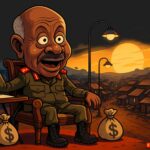 Ugandan Politics Exposed: The Illusion of Choice and Managed Opposition
 Uganda’s 2026 Election Manifestos: A Deep Dive into Promises vs. Delivery
 The NUP Corruption Allegations: A Sign of a Deeper Political Failure?
 Bobi Wine & NUP Corruption: The Inside Story of Uganda’s Opposition Crisis
 Uganda Police Force Defends Arrests, Denies Kidnap Allegations
 The Unspoken Truth: Is the 1995 Ugandan Constitution Still Relevant?
 Empowering Tomorrow’s Leaders: The Transformative Role of Student Elections at Rainbow International School Uganda
 Uganda’s Energy Efficiency and Conservation Bill 2024: A Comprehensive Analysis
 The Politics of Patronage: Analysing Museveni’s Leadership Style in Uganda
 Makerere University Guild Election Commission: Leadership Elected for 91st Guild President Election
 Uganda Police Briefing: Jennifer Nakangubi (Full Figure)& Electoral Neutrality Pledge
 US-Uganda Asylum Seeker Transfer Deal: What You Need to Know
 Digital Exile: How Ugandan Writers Are Conquering Censorship
 Financial and Operational Woes Plague Uganda National Airlines
 Mealtime in a Ugandan Primary School: A Delightful Experience
 Profitability Assessment of Uganda’s Public Corporations and State Enterprises
 Colonial Legacies and Ethnonationalism in Uganda: The Acholi, Obote, and Post-Independence Struggles
 GOMBE Junior School Kikajjo-Nateete: Historic Prefects’ Campaign Ignites Passion for Leadership in Uganda
 Parliamentary Insights: Debating Education Reform, Climate Change, and Regional Unity in Uganda
 Uganda’s Future Leaders: Highlights from the Hillside Schools Naalya Swearing-In Ceremony
 Jennifer Nakangubi (Full Figure) Assault: How Social Media Amplified Violence Against Women in Uganda
 The Illusion of Dialogue:The Real Meaning of Uganda’s IPOD Dialogue & Political Theatre
 The Psychology of a Sycophant: Serving Museveni’s Regime in Uganda